Hazel Forsyth
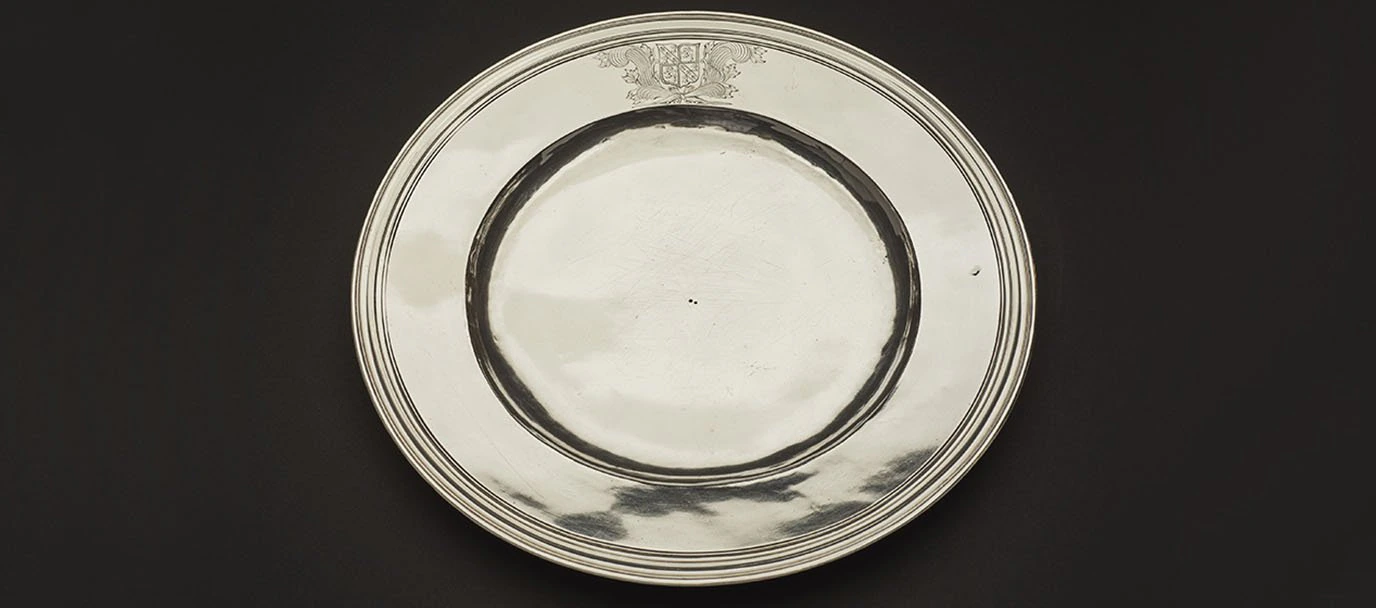
“This is the 17th-century equivalent of the posh family tea set that’s brought out for special occasions. It is a dinner plate, but is made of silver, which elevates its status somewhat; people mostly ate off pewter back then as it was cheap and hard-wearing.
The diarist MP and glutton Samuel Pepys was a social climber who ensured his considerable wealth was reflected in his domestic arrangements. He liked to host extravagant dinner parties, which were calculated to attract the attention of influential people who he dazzled with displays of silver and his growing status in society.
It’s entertaining to read his accounts of just how eager he was to impress. Recording one of his social gatherings in 1667, he writes in his diary: ‘… but, Lord! to see with what envy they looked upon all my fine plate was pleasant; for I made the best shew I could, to let them understand me and my condition, to take down the pride of Mrs Clerke, who thinks herself very great …’
Pepys was snobbish, vain and arrogant, but there is a lot to commend him for. He showed a great deal of moral courage, for example, by staying in London during both the plague and the Great Fire, when most people packed up and left.
This plate is hallmarked London 1681-82, so he was still obviously collecting silver later in life. Along with considerable knife and fork scratch marks, the plate also bears Pepys’ coat of arms, which was identified by an art dealer when the silverware came to light on the London market early last year.
The arms connect the plate to images in the Pepys Library at Magdalen College, Cambridge, and match those found on the only two other surviving Pepys plates, which are in collections in the US.
I was particularly keen to acquire the plate not only for the Pepys connection, but also because recent work at Goldsmiths’ Hall, London, has enabled us to attribute the maker’s mark of MK more precisely. It was made at the workshop of Mary King in Foster Lane, just around the corner from this museum. We know from the probate inventory of her late husband that she carried on running the family business with some flair, apparently, as she took on many apprentices.
The plate is on display in the War, Plague and Fire gallery of the museum, with all the other history associated with those tumultuous times documented for us in Pepys’ invaluable diary. My longer-term aspiration is to eventually display it in our new West Smithfield building with other treasures such as the Cheapside Hoard, so we can consider the issue of reuse and recycling.
Everyone from the court downwards often sent precious metals to be melted down for either refashioning or to collect the cash in times of hardship when sentiment about such luxuries was put firmly to one side.”
The Museum of London is expected to open in its new West Smithfield home in 2024. Hazel Forsyth is the senior curator, medieval and post-medieval, at the Museum of London