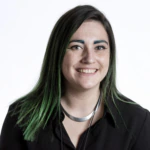
“You don’t have to overthink or intellectualise community engagement, you just have to get out there and say hello really,” says Nat Edwards, the director of the Thackray Medical Museum in Leeds.
The museum, housed in an old hospital, has just begun a £4m refurbishment called A Healthy Future, which will finish in May 2020. One of the first steps towards it has been to boost community engagement with the Thackray, particularly in a local inner-city area called Harehills, which has a very diverse population and some difficult economic challenges.
“We’ve just launched a scheme called Hello Harehills, where we hand out postcards that give free entry to families or groups to the museum,” says Edwards. “We’ve been handing them out in the local area, barber shops, cafes and sweet shops and found people have really been using them. Just a couple of days ago 16 guys from a local men’s group came to the museum.”
Leeds is an important centre for medicine. In addition to the Thackray, the city is also the location of St James’s University Hospital, Europe’s largest teaching hospital, and Leeds Teaching Hospitals is one of the biggest NHS trusts in the country. Edwards wants the Thackray to be the first step on what he’s calling the “medical mile”.
When he started at the museum six months ago, he hadn’t really picked up on how important the health sector is to Leeds. “It gives fundamental character and really drives the region,” he says.
Local resonance
His new-found familiarity with the area has altered his perception of the museum too. “I thought of the Thackray as a rather quirky museum that was a bit of a curiosity, one that I enjoyed visiting of course,” he says. “But when I started here and could have a really good think about the museum and its collection, its location and the building itself, a lot of things started falling into place.”
The Thackray is an independent organisation, not attached to any medical body, and even the regular funding that it receives from the Thackray Medical Research Trust is very much arm’s length, for specific outputs that Edwards and his team agree on.
Fittingly, the museum is housed in an ex-medical building, the original incarnation of St James’s Hospital, which provided medical care for the poor and sits opposite the old mass graves in Beckett Street Cemetery, which was built in response to a cholera outbreak in 1849. Like the city, the Thackray has developed somewhat haphazardly over the years, and the aim of the redevelopment is to address this.
A healthy future
“We’re definitely keeping our Victorian street,” Edwards says. “You don’t find many displays that make people physically sick.”
It’s not about being frivolous though. “We don’t want to be indulgent but we can be a bit silly or a bit quirky, because if you can trigger those kinds of personal reactions and experiences the payoff is huge,” he says. “It’s all part of the fun of being an independent museum. With the refurbishment we can play with it, but play with it in a meaningful way.”
The non-conformity of the Thackray must be enjoyable for Edwards and his staff, and independence allows them to tell the stories they want to rather than what stakeholders would require. This must appeal to a maverick like Edwards.
He was a political campaigner from his student years in Warwick, and took himself to London on a whim at the start of his career.
“I phoned up the British Museum and asked if they had any jobs going, which they didn’t,” he recalls. “I was travelling to London to see a friend, so I said, ‘why don’t you interview me anyway, because that would save you having to pay my expenses to come down separately’.” They called him back the following day and gave him an admin role in the press department.
At about the same time, Edwards had met a woman running a modelling agency. “Which, if you think about it, is quite exciting, but I was not only arrogant but a complete plonker, because, as I said, I’d been interested in student politics, and I saw fashion and modelling as the most narcissistic expression of self-indulgence.”
So, Edwards decided against modelling, and instead focused his energy on museums and heritage. He has worked with all sorts of collections – archaeological, art, natural history, transport, literary – across the UK.
But it’s his time in Glasgow that Edwards cites as particularly formative. Working for the Open Museum as senior curator aged 26, Edwards saw some particularly radical moves in the museum world. Set up in the early 1990s, the Open Museum’s mission is to take collection objects to people who cannot get to their local museum.
“The idea was that by taking the collections out and working in partnership with people collaboratively to co-produce, co-create and co-curate exhibitions – although we didn’t use any of those words in those days – you would not only get the collections out but also break down barriers,” Edwards says.
Rule breaking
One particular moment sticks out as pivotal for Edwards – the redevelopment of the People’s Palace in Glasgow. The project included an initiative where he worked with different community groups on the displays.
It’s meaningful stories like these that Edwards is hoping to build into the Thackray’s new interpretation. “A young Bradford-based doctor, Almas Ahmad, approached us a couple of weeks after I started because she was looking for a location to do a photoshoot,” he says. “She’s developed a really innovative product – acid and heat proof foundation – to protect women who are at risk of acid attacks, of whom, unfortunately, there are too many.”
Edwards enquired why she wanted to do the photoshoot at the Thackray and she said: “When I was at primary school, I came here on a school trip from Bradford, and I was inspired to want to be a doctor. I bought a pen from the gift shop, took it home, gave it to my dad and said, ‘I’m going to be a doctor one day’.”
Ahmed’s father said: “I’ll keep this, and when you qualify as a doctor you can write your first prescription with it.” When she graduated, he presented the Thackray pen and Ahmed did write her first prescription with it.“It’s a fantastic story,” says Edwards. “We talk about museums changing lives all the time, and they do, but Ahmed has not just changed one life, she’s potentially changed life for a lot of people.”
Nat Edwards has been the director of the Thackray Medical Museum in Leeds for six months.
His first job was as senior assistant at the National Galleries of Scotland, which was followed by work in the press office at the British Museum, London. He went on to be a curator there.
In 1993, Edwards was appointed as senior curator at the Open Museum in Glasgow where he stayed for eight years. He became the director of the Burns National Heritage Park in 2001 and then the education and interpretative services manager at the National Library of Scotland in 2004.
He was appointed as the director of the Robert Burns Birthplace Museum in 2009, run by the National Trust for Scotland (NTS) where he was also programme director for the David Livingstone Bicentenary. He was appointed the assistant director (south) for the NTS in 2014. He was the head of masterplan (north) for the Science Museum Group for a year before he joined the Thackray.
The Thackray Medical Museum in Leeds was established with money from the sale of the Thackray Medical Company in 1990.
The family-run chemist shop was sold to enable the wider public to learn more about the story of medicine.
The museum, which is independent, is housed in what was the Leeds Union Workhouse, which opened in 1861. In 1925 it became St James’s Hospital, but by the 1990s it was unfit for medical use and the museum opened there in 1997.
The museum, housed in an old hospital, has just begun a £4m refurbishment called A Healthy Future, which will finish in May 2020. One of the first steps towards it has been to boost community engagement with the Thackray, particularly in a local inner-city area called Harehills, which has a very diverse population and some difficult economic challenges.
“We’ve just launched a scheme called Hello Harehills, where we hand out postcards that give free entry to families or groups to the museum,” says Edwards. “We’ve been handing them out in the local area, barber shops, cafes and sweet shops and found people have really been using them. Just a couple of days ago 16 guys from a local men’s group came to the museum.”
Leeds is an important centre for medicine. In addition to the Thackray, the city is also the location of St James’s University Hospital, Europe’s largest teaching hospital, and Leeds Teaching Hospitals is one of the biggest NHS trusts in the country. Edwards wants the Thackray to be the first step on what he’s calling the “medical mile”.
When he started at the museum six months ago, he hadn’t really picked up on how important the health sector is to Leeds. “It gives fundamental character and really drives the region,” he says.
Local resonance
His new-found familiarity with the area has altered his perception of the museum too. “I thought of the Thackray as a rather quirky museum that was a bit of a curiosity, one that I enjoyed visiting of course,” he says. “But when I started here and could have a really good think about the museum and its collection, its location and the building itself, a lot of things started falling into place.”
The Thackray is an independent organisation, not attached to any medical body, and even the regular funding that it receives from the Thackray Medical Research Trust is very much arm’s length, for specific outputs that Edwards and his team agree on.
Fittingly, the museum is housed in an ex-medical building, the original incarnation of St James’s Hospital, which provided medical care for the poor and sits opposite the old mass graves in Beckett Street Cemetery, which was built in response to a cholera outbreak in 1849. Like the city, the Thackray has developed somewhat haphazardly over the years, and the aim of the redevelopment is to address this.
A healthy future
The scheme will revitalise all of the public exhibition areas, but it will also solve some of the physical access and circulation problems that the museum has, says Edwards. The interpretation will widen the context of the displays, instead of just talking about the big names in medical and scientific discovery.
One of the Thackray’s longstanding main draws is its gruesome exhibits, which include an amputation scene and a rather fragrant Victorian street, complete with butchery scene. “We’re definitely keeping our Victorian street,” Edwards says. “You don’t find many displays that make people physically sick.”
It’s not about being frivolous though. “We don’t want to be indulgent but we can be a bit silly or a bit quirky, because if you can trigger those kinds of personal reactions and experiences the payoff is huge,” he says. “It’s all part of the fun of being an independent museum. With the refurbishment we can play with it, but play with it in a meaningful way.”
The non-conformity of the Thackray must be enjoyable for Edwards and his staff, and independence allows them to tell the stories they want to rather than what stakeholders would require. This must appeal to a maverick like Edwards.
He was a political campaigner from his student years in Warwick, and took himself to London on a whim at the start of his career.
“I phoned up the British Museum and asked if they had any jobs going, which they didn’t,” he recalls. “I was travelling to London to see a friend, so I said, ‘why don’t you interview me anyway, because that would save you having to pay my expenses to come down separately’.” They called him back the following day and gave him an admin role in the press department.
At about the same time, Edwards had met a woman running a modelling agency. “Which, if you think about it, is quite exciting, but I was not only arrogant but a complete plonker, because, as I said, I’d been interested in student politics, and I saw fashion and modelling as the most narcissistic expression of self-indulgence.”
So, Edwards decided against modelling, and instead focused his energy on museums and heritage. He has worked with all sorts of collections – archaeological, art, natural history, transport, literary – across the UK.
But it’s his time in Glasgow that Edwards cites as particularly formative. Working for the Open Museum as senior curator aged 26, Edwards saw some particularly radical moves in the museum world. Set up in the early 1990s, the Open Museum’s mission is to take collection objects to people who cannot get to their local museum.
“The idea was that by taking the collections out and working in partnership with people collaboratively to co-produce, co-create and co-curate exhibitions – although we didn’t use any of those words in those days – you would not only get the collections out but also break down barriers,” Edwards says.
Rule breaking
One particular moment sticks out as pivotal for Edwards – the redevelopment of the People’s Palace in Glasgow. The project included an initiative where he worked with different community groups on the displays.
“At that time, Section 28 was being enforced, which made it illegal for public bodies to promote homosexuality,” says Edwards. “Glasgow interpreted this by taking the LGBT publication The Pink Paper off display in the public libraries and putting it under the counter with the special collections, so you had to go and ask for it and feel embarrassed about it.
"So, we asked a group called the Lesbian Avengers, who did all sorts of protests and stunts, to do one of the displays showcasing LGBT life in the city. Not many people were doing that kind of stuff at the time. It was, strictly speaking, illegal.”
It’s meaningful stories like these that Edwards is hoping to build into the Thackray’s new interpretation. “A young Bradford-based doctor, Almas Ahmad, approached us a couple of weeks after I started because she was looking for a location to do a photoshoot,” he says. “She’s developed a really innovative product – acid and heat proof foundation – to protect women who are at risk of acid attacks, of whom, unfortunately, there are too many.”
Edwards enquired why she wanted to do the photoshoot at the Thackray and she said: “When I was at primary school, I came here on a school trip from Bradford, and I was inspired to want to be a doctor. I bought a pen from the gift shop, took it home, gave it to my dad and said, ‘I’m going to be a doctor one day’.”
Ahmed’s father said: “I’ll keep this, and when you qualify as a doctor you can write your first prescription with it.” When she graduated, he presented the Thackray pen and Ahmed did write her first prescription with it.“It’s a fantastic story,” says Edwards. “We talk about museums changing lives all the time, and they do, but Ahmed has not just changed one life, she’s potentially changed life for a lot of people.”
Nat Edwards at a glance
Nat Edwards has been the director of the Thackray Medical Museum in Leeds for six months.
His first job was as senior assistant at the National Galleries of Scotland, which was followed by work in the press office at the British Museum, London. He went on to be a curator there.
In 1993, Edwards was appointed as senior curator at the Open Museum in Glasgow where he stayed for eight years. He became the director of the Burns National Heritage Park in 2001 and then the education and interpretative services manager at the National Library of Scotland in 2004.
He was appointed as the director of the Robert Burns Birthplace Museum in 2009, run by the National Trust for Scotland (NTS) where he was also programme director for the David Livingstone Bicentenary. He was appointed the assistant director (south) for the NTS in 2014. He was the head of masterplan (north) for the Science Museum Group for a year before he joined the Thackray.
Thackray Medical Museum at a glance
The Thackray Medical Museum in Leeds was established with money from the sale of the Thackray Medical Company in 1990.
The family-run chemist shop was sold to enable the wider public to learn more about the story of medicine.
The museum, which is independent, is housed in what was the Leeds Union Workhouse, which opened in 1861. In 1925 it became St James’s Hospital, but by the 1990s it was unfit for medical use and the museum opened there in 1997.
From 1 May, the museum galleries, cafe and shop will close temporarily during a £4m refurbishment, to be completed in May 2020.