When Hannah Firth started her job as the visual arts programmer for Chapter Arts Centre in Cardiff in 2001, she was in at the deep end – no exhibitions were in place at all.
“The previous visual arts programmer had left a few months before, and it was at a time when Chapter was struggling for funding,” Firth says. “It was terrifying on the one hand, but really exciting on the other. Normally when you start a job like that you inherit two years of programme. I inherited nothing, but it was great because it meant that I immediately got to know the arts scene in Wales.”
Chapter Arts Centre was founded by a group of artists more than 40 years ago. It bills itself as “an ambitious, multi-artform venue that presents, produces and promotes international art, live performance and film alongside a dynamic social space”. The centre runs theatre productions, screens films, puts on contemporary art exhibitions. Throughout its history, Chapter has maintained a strong social element and worked hard to foster local connections.
“We very much talk about ourselves as an arts centre for the community, not a community arts centre or community centre,” says Firth. Over her 16 years at Chapter, Firth has moved from being visual arts programmer to her current role of director of visual arts and programme.
“My role at Chapter then compared to my role now is so vastly different,” she says. “Now that I’m director of programme here – not just of visual arts – I pull together strands across film, theatre, visual arts, and also with the team in the cafe bar as well.”
The Welsh connections she made when she first arrived at Chapter are still crucial.
“It was, and continues to be, really important for me to have a really good dialogue with and understanding of the local and Wales-wide arts scene,” she says. “Although Wales is quite a small nation it’s quite geographically disparate, and if you’re based in Cardiff it feels more natural to look to Bristol or London than to Llandudno, North Wales or West Wales. Part of my job is to make sure that I give a good sense of perspective to the arts scene in Wales.”
Wales in Venice
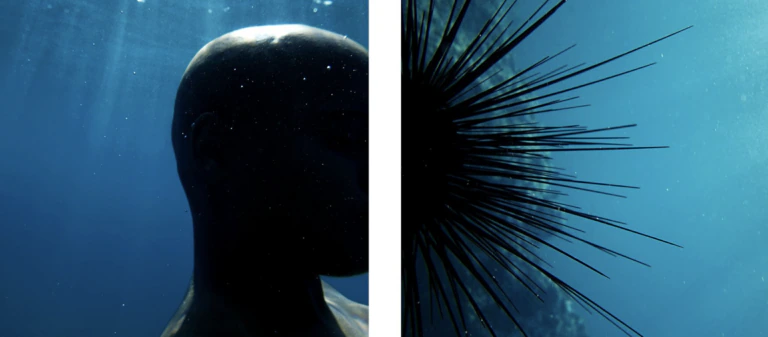
Firth is the curator of Cymru yn Fenis (Wales in Venice), which is commissioned by Arts Council of Wales for the Welsh Pavilion at the Venice Biennale (13 May – 26 November). The pavilion will host Cardiff-born multimedia artist James Richards this year.
“He’s making a suite of new work for Venice, and has worked on the audio part of the installation in collaboration with two students from the Royal Welsh College of Music and Drama who are partnering with us.”
Despite curating Wales in Venice, Firth still has a full workload at Chapter. But she has put exhibitions and programmes in place with experienced co-curators and collaborators for when she’s in Venice. A group show of contemporary artists, These Rotten Words (until 11 June), is one of those. Firth is also co-curating Cardiff’s international festival of photography, Diffusion (1-31 May), which is themed on revolution this year.
Does the mountain of work ever get to her? “Lots of things have kept me awake at night while working on Venice – those horrible moments where you wake up after a nightmare about forgetting something on the truck and you can’t go back and get it. Sometimes I wake up in a cold sweat.”
But Firth is still inspired by what she does. “My heart lies in working on the ground with artists. That’s the thing that I absolutely passionately love doing.”
Audiences in Cardiff will get to see the work that Richards is producing for Venice as it will go on show at the centre this autumn. “Chapter has an international perspective but it’s rooted in the local,” Firth says. “It’s about how you make that international-national programme relevant to artists and audiences in Cardiff, Wales and the wider UK.”
On the move
Before Chapter, Firth worked at the Stills Gallery in Edinburgh, where she started as a curator before becoming acting director. Firth obviously has a gift for being promoted, having started at entry-level in two roles and ending up a managing director in both, and becoming a director at Chapter.
Having worked across the UK, what would Firth most like to see change about the arts sector? “To see the networks outside London strengthened, looking at what I see as a very privileged position of working outside that perceived centre of the art world,” she says. “It gives us more flexibility and more opportunities to take risks, experiment and develop ideas.”
She says that the first step to a more collaborative approach to working is consolidating relationships that already exist with other venues across the UK.
“The touring model is not the only way of working – we should be co-commissioning more and strengthening that model for the benefit of artists,” she says. “It also showcases the diversity of programmes outside London, when it is often difficult to get people to travel to see things.”
Firth says that fostering grassroots work is also essential to furthering the sector’s development. She has helped set up a programme for Cardiff Metropolitan arts students to visit and work in Venice for four weeks during the biennale. She says that when they return they’ll have mentoring and professional development support over a structured period of time too.
“Professional artists have to submit forms, get sponsors – it’s not just making,” she says. “A bad statement can be the difference between being selected or not. It’s critical.”
Artists taking part will attend networking events in Cardiff with curators and artists, and do health and safety training. “We want to foster them and show them that there’s a community ready to support them,” says Firth, who’d like to see the programme rolled out across Wales eventually.
Nurturing this local talent is central to Chapter, which rents out about 40 studios to artists. The centre also has a community garden run by volunteers, but noticeably the gallery entrance is dominated by its generously proportioned cafe, which was added in 2009 as part of the centre’s reopening.
Firth describes the cafe as a “third space” where people come to meet and work. “The number of people who use us as a studio is probably much greater than 40 in reality.”
Firth wants to help people get ahead however she can, whether with a bit of guidance, a helping hand, or a bit of risk-taking.
What’s the biggest leap of faith Firth has taken professionally? In 2008, artist duo Heather and Ivan Morison showed her a photograph of a dinosaur hanging from a helicopter in the sky, and said to her that’s what they wanted to make for an offsite programme while Chapter was closed for redevelopment. Firth says: “I said brilliant, how are we going to do it?”
The result was Ultrasaurus, a shared civic space, loved by the community where it was installed in Portsmouth. It was sadly short-lived because of a fire that destroyed it in 2010, so the project never completed a planned move to Cardiff.
But Firth has a can-do attitude and has lots of other ambitious plans to bring high-quality art projects to Wales.
She manages – with the help of dedicated staff teams – the programming of theatre film and art exhibitions, as well as themed seasons at the centre.
Firth has a degree in the history of modern art, design and film from the University of Northumbria.
After university, Firth worked in a cafe while volunteering at A-N Magazine, a visual-arts publication based in Sunderland. She was promoted to managing editor within four years.
In 1998 she began working as curator at the Stills Gallery in Edinburgh, and was promoted to the role of acting director by 2001, before starting at Chapter.
Firth curated the Welsh Pavilion for the Venice Biennale in 2007, and is working on 2017’s Welsh Pavilion.
The centre underwent a major redevelopment in 2009. It now comprises exhibition spaces and a cinema, and regularly hosts music and theatre. It also rents nearly 40 studios out to a diverse array of artists, and also has a volunteer-run community garden.
Chapter receives about 800,000 visitors a year – before the redevelopment, the figure was around 400,000.
The centre is funded by Arts Council of Wales along with a range of other supporters, but earns 63% of its income. Annual turnover is about £4.3m.
About 60 full-time equivalents run the centre, with the help of 136 volunteers.
“The previous visual arts programmer had left a few months before, and it was at a time when Chapter was struggling for funding,” Firth says. “It was terrifying on the one hand, but really exciting on the other. Normally when you start a job like that you inherit two years of programme. I inherited nothing, but it was great because it meant that I immediately got to know the arts scene in Wales.”
Chapter Arts Centre was founded by a group of artists more than 40 years ago. It bills itself as “an ambitious, multi-artform venue that presents, produces and promotes international art, live performance and film alongside a dynamic social space”. The centre runs theatre productions, screens films, puts on contemporary art exhibitions. Throughout its history, Chapter has maintained a strong social element and worked hard to foster local connections.
“We very much talk about ourselves as an arts centre for the community, not a community arts centre or community centre,” says Firth. Over her 16 years at Chapter, Firth has moved from being visual arts programmer to her current role of director of visual arts and programme.
“My role at Chapter then compared to my role now is so vastly different,” she says. “Now that I’m director of programme here – not just of visual arts – I pull together strands across film, theatre, visual arts, and also with the team in the cafe bar as well.”
The Welsh connections she made when she first arrived at Chapter are still crucial.
“It was, and continues to be, really important for me to have a really good dialogue with and understanding of the local and Wales-wide arts scene,” she says. “Although Wales is quite a small nation it’s quite geographically disparate, and if you’re based in Cardiff it feels more natural to look to Bristol or London than to Llandudno, North Wales or West Wales. Part of my job is to make sure that I give a good sense of perspective to the arts scene in Wales.”
Wales in Venice
Firth is the curator of Cymru yn Fenis (Wales in Venice), which is commissioned by Arts Council of Wales for the Welsh Pavilion at the Venice Biennale (13 May – 26 November). The pavilion will host Cardiff-born multimedia artist James Richards this year.
“He’s making a suite of new work for Venice, and has worked on the audio part of the installation in collaboration with two students from the Royal Welsh College of Music and Drama who are partnering with us.”
Despite curating Wales in Venice, Firth still has a full workload at Chapter. But she has put exhibitions and programmes in place with experienced co-curators and collaborators for when she’s in Venice. A group show of contemporary artists, These Rotten Words (until 11 June), is one of those. Firth is also co-curating Cardiff’s international festival of photography, Diffusion (1-31 May), which is themed on revolution this year.
Does the mountain of work ever get to her? “Lots of things have kept me awake at night while working on Venice – those horrible moments where you wake up after a nightmare about forgetting something on the truck and you can’t go back and get it. Sometimes I wake up in a cold sweat.”
But Firth is still inspired by what she does. “My heart lies in working on the ground with artists. That’s the thing that I absolutely passionately love doing.”
Audiences in Cardiff will get to see the work that Richards is producing for Venice as it will go on show at the centre this autumn. “Chapter has an international perspective but it’s rooted in the local,” Firth says. “It’s about how you make that international-national programme relevant to artists and audiences in Cardiff, Wales and the wider UK.”
On the move
Before Chapter, Firth worked at the Stills Gallery in Edinburgh, where she started as a curator before becoming acting director. Firth obviously has a gift for being promoted, having started at entry-level in two roles and ending up a managing director in both, and becoming a director at Chapter.
Having worked across the UK, what would Firth most like to see change about the arts sector? “To see the networks outside London strengthened, looking at what I see as a very privileged position of working outside that perceived centre of the art world,” she says. “It gives us more flexibility and more opportunities to take risks, experiment and develop ideas.”
She says that the first step to a more collaborative approach to working is consolidating relationships that already exist with other venues across the UK.
“The touring model is not the only way of working – we should be co-commissioning more and strengthening that model for the benefit of artists,” she says. “It also showcases the diversity of programmes outside London, when it is often difficult to get people to travel to see things.”
Firth says that fostering grassroots work is also essential to furthering the sector’s development. She has helped set up a programme for Cardiff Metropolitan arts students to visit and work in Venice for four weeks during the biennale. She says that when they return they’ll have mentoring and professional development support over a structured period of time too.
“Professional artists have to submit forms, get sponsors – it’s not just making,” she says. “A bad statement can be the difference between being selected or not. It’s critical.”
Artists taking part will attend networking events in Cardiff with curators and artists, and do health and safety training. “We want to foster them and show them that there’s a community ready to support them,” says Firth, who’d like to see the programme rolled out across Wales eventually.
Nurturing this local talent is central to Chapter, which rents out about 40 studios to artists. The centre also has a community garden run by volunteers, but noticeably the gallery entrance is dominated by its generously proportioned cafe, which was added in 2009 as part of the centre’s reopening.
Firth describes the cafe as a “third space” where people come to meet and work. “The number of people who use us as a studio is probably much greater than 40 in reality.”
Firth wants to help people get ahead however she can, whether with a bit of guidance, a helping hand, or a bit of risk-taking.
What’s the biggest leap of faith Firth has taken professionally? In 2008, artist duo Heather and Ivan Morison showed her a photograph of a dinosaur hanging from a helicopter in the sky, and said to her that’s what they wanted to make for an offsite programme while Chapter was closed for redevelopment. Firth says: “I said brilliant, how are we going to do it?”
The result was Ultrasaurus, a shared civic space, loved by the community where it was installed in Portsmouth. It was sadly short-lived because of a fire that destroyed it in 2010, so the project never completed a planned move to Cardiff.
But Firth has a can-do attitude and has lots of other ambitious plans to bring high-quality art projects to Wales.
Hannah Firth at a glance
Hannah Firth has worked at Chapter Arts Centre in Cardiff for 16 years, starting there as the director of visual arts, and being promoted to the role of director of visual arts and programme in 2015. She manages – with the help of dedicated staff teams – the programming of theatre film and art exhibitions, as well as themed seasons at the centre.
Firth has a degree in the history of modern art, design and film from the University of Northumbria.
After university, Firth worked in a cafe while volunteering at A-N Magazine, a visual-arts publication based in Sunderland. She was promoted to managing editor within four years.
In 1998 she began working as curator at the Stills Gallery in Edinburgh, and was promoted to the role of acting director by 2001, before starting at Chapter.
Firth curated the Welsh Pavilion for the Venice Biennale in 2007, and is working on 2017’s Welsh Pavilion.
Chapter Arts Centre at a glance
Chapter Arts Centre was established in Cardiff in 1971 by a group of artists. Over the following two years, they set up the centre at the old Canton High School, where Chapter is still based today.The centre underwent a major redevelopment in 2009. It now comprises exhibition spaces and a cinema, and regularly hosts music and theatre. It also rents nearly 40 studios out to a diverse array of artists, and also has a volunteer-run community garden.
Chapter receives about 800,000 visitors a year – before the redevelopment, the figure was around 400,000.
The centre is funded by Arts Council of Wales along with a range of other supporters, but earns 63% of its income. Annual turnover is about £4.3m.
About 60 full-time equivalents run the centre, with the help of 136 volunteers.