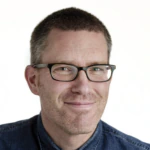
The first Liverpool Biennial that Sally Tallant oversaw two years ago was partly about getting to know the city and its arts community but this year’s event is the one that she has made her own.
Tallant moved from the Serpentine Gallery in London, where she was the head of exhibitions and programmes, to become the director of the biennial in late 2011.
The timing meant much of the programme had been set up by her predecessor, Lewis Biggs, who is now the curator of the 2014 Folkestone Triennial. But she learned a lot from the 2012 festival and quickly developed a plan for the event’s future.
A key aim was to make the Liverpool Biennial more active and visible all the time rather than being something that just popped its head up every other year.
So Tallant has developed a programme of exhibitions, talks, publications and other events that run all year round. This was part of a wider plan to connect better with the public and the artistic community and to give a clearer message about what the biennial is.
“I think the biennial when I arrived had always done really good work but I don’t think it was visible to the world,” Tallant says.
“It was important to really try to communicate to the public what we have done so that they can find a way to access it. I think contemporary art is a barrier sometimes, some people are not sure if they want to engage with it.”
This strategy meant Tallant and her team spent a lot of time working on marketing, communications and social media, including rebuilding the website.
In 2012, the event was branded the UK Biennial of Contemporary Art. And Tallant has totally revamped the biennial team, with only three members of staff remaining from the old setup.
A lot of effort has also been spent on developing partnerships, which are vital to all biennials as they don’t have their own permanent venues to show art.
“We work closely in the city and have an organisation called Larc [the Liverpool Arts Regeneration Consortium, an alliance of the city’s major cultural organisations] where the arts institutions meet every two weeks. It means we are very strong as a sector.”
As well as the well-established cultural organisations, there are also a number of recent arrivals on the Liverpool arts scene, including the Royal Standard, an artist-led gallery, studios and social workspace, and the Cactus gallery.
“Things are happening in the city so I think the arts ecology is pretty healthy. Quite a lot of organisations got standstill funding [in the recent National Portfolio Organisation announcement from Arts Council England] but nobody got massive cuts.”
The Liverpool Biennial did well, receiving an uplift from the arts council. Tallant says this extra money will be spent on a project to work with housing providers to attract more artists to live and work in the city.
“I genuinely believe that we have a important role to play in building a community of artists and a context in which artists can make work, thrive and be challenged,” Tallant says.
“People can have a house here and you can have a quality of life that is not possible in London. Artists can live here without worrying about not being able to survive – and we need them.”
She has also developed a learning programme for those interested in working with the biennial to explain and interpret contemporary art to the public.
This includes The City is a School, a pop-up concept that is open to all and includes free weekly sessions exploring the biennial and its artists. This is part of a programme to train mediators to work with the public during the biennial and improve the visitor experience.
The Liverpool Biennial has had a mixed response from art critics since it began in 1999, with some questioning whether the themes have worked and the overall coherence of the programme. This year’s festival has again attracted mixed reviews although it is more focused than some past events.
The main show – titled A Needle Walks Into a Haystack – has been curated by Brussels-based Mai Abu ElDahab, who is from Cairo, and Anthony Huberman, who works in New York.
It consists of a large group exhibition and four solo shows and takes place in a number of venues, including the Old Blind School on Hardman Street, Tate Liverpool, the Bluecoat and the Foundation for Art and Creative Technology (Fact).
The US painter James McNeill Whistler is at the Bluecoat, while a new commission by French architect Claude Parent can be seen at Tate Liverpool. At Fact there is a new commission by Sharon Lockhart, a US artist whose work addresses social subjects, mainly through film and photography.
The group show at the Old Blind School features 16 artists who have been commissioned to create new works and are also showing existing works.
“It’s a good balance of pre-existing work and new commissions and I hope it means that what you will see here is a very thoughtfully and carefully curated exhibition,” Tallant says.
“It is really exciting to commission new work and it’s one of the things we can do that is very difficult for a lot of museums and galleries. Another great wish of mine is that if we do commission work it goes into public collections if possible and it has a life outside the biennial.”
Whatever the success of this year’s festival, one of the advantages of the biennial format is that it allows the organisers to reinvent the concept for each new event.
“I have developed a 10-year plan, which gives us a loose framework around which we can work, but I like the idea that this biennial is very different from the last one,” Tallant says. “We are learning as we go and we have the great privilege of inventing ways of working, which is fun.”
Tallant also says that being bold and experimental is important to her and biennials mean you can do this.
“The biennial format allows people to take risks and to do things outside an institutional framework, or to make up a new institutional framework, without the burden of running a building. I suppose the biggest challenge is how you build a sustainable organisation that is resilient and financially viable in this economic climate but also not boring or over-stabilised.
““I think it is important that we are an inherently risk-taking organisation and that runs through everything we do. I want us all to feel lively and challenged on a daily basis.”
Sally Tallant became the director of the Liverpool Biennial in November 2011. Before that she was the head of programmes at the Serpentine Gallery, London, which she joined in 2001.
Tallant is a former trustee of the Chisenhale Gallery in east London, a trustee of Metal and a board member of the International Biennial Association.
She has an MA in curating contemporary art from the Royal College of Art, London.
The Liverpool Biennial was founded in 1999 and it attracted more than 500,000 visitors over its 10-week run in 2012. It has shown the work of over 350 artists from 72 countries.
The organisation is an Arts Council England National Portfolio Organisation and was one of the few visual arts organisations to receive an uplift in the recent funding announcement. It is receiving £688,335 in 2014-15 but this will jump to £788,355 from 2015-16 onwards. The organisation has 40 staff members as well as four freelance curators.
This year’s biennial has been curated by Mai Abu ElDahab, a curator from Cairo living in Brussels, and Anthony Huberman, a curator and writer from Geneva who is based in New York. The 2014 biennial ends on 26 October.
Tallant moved from the Serpentine Gallery in London, where she was the head of exhibitions and programmes, to become the director of the biennial in late 2011.
The timing meant much of the programme had been set up by her predecessor, Lewis Biggs, who is now the curator of the 2014 Folkestone Triennial. But she learned a lot from the 2012 festival and quickly developed a plan for the event’s future.
A key aim was to make the Liverpool Biennial more active and visible all the time rather than being something that just popped its head up every other year.
So Tallant has developed a programme of exhibitions, talks, publications and other events that run all year round. This was part of a wider plan to connect better with the public and the artistic community and to give a clearer message about what the biennial is.
“I think the biennial when I arrived had always done really good work but I don’t think it was visible to the world,” Tallant says.
“It was important to really try to communicate to the public what we have done so that they can find a way to access it. I think contemporary art is a barrier sometimes, some people are not sure if they want to engage with it.”
This strategy meant Tallant and her team spent a lot of time working on marketing, communications and social media, including rebuilding the website.
In 2012, the event was branded the UK Biennial of Contemporary Art. And Tallant has totally revamped the biennial team, with only three members of staff remaining from the old setup.
A lot of effort has also been spent on developing partnerships, which are vital to all biennials as they don’t have their own permanent venues to show art.
“We work closely in the city and have an organisation called Larc [the Liverpool Arts Regeneration Consortium, an alliance of the city’s major cultural organisations] where the arts institutions meet every two weeks. It means we are very strong as a sector.”
As well as the well-established cultural organisations, there are also a number of recent arrivals on the Liverpool arts scene, including the Royal Standard, an artist-led gallery, studios and social workspace, and the Cactus gallery.
“Things are happening in the city so I think the arts ecology is pretty healthy. Quite a lot of organisations got standstill funding [in the recent National Portfolio Organisation announcement from Arts Council England] but nobody got massive cuts.”
The Liverpool Biennial did well, receiving an uplift from the arts council. Tallant says this extra money will be spent on a project to work with housing providers to attract more artists to live and work in the city.
“I genuinely believe that we have a important role to play in building a community of artists and a context in which artists can make work, thrive and be challenged,” Tallant says.
“People can have a house here and you can have a quality of life that is not possible in London. Artists can live here without worrying about not being able to survive – and we need them.”
She has also developed a learning programme for those interested in working with the biennial to explain and interpret contemporary art to the public.
This includes The City is a School, a pop-up concept that is open to all and includes free weekly sessions exploring the biennial and its artists. This is part of a programme to train mediators to work with the public during the biennial and improve the visitor experience.
The Liverpool Biennial has had a mixed response from art critics since it began in 1999, with some questioning whether the themes have worked and the overall coherence of the programme. This year’s festival has again attracted mixed reviews although it is more focused than some past events.
The main show – titled A Needle Walks Into a Haystack – has been curated by Brussels-based Mai Abu ElDahab, who is from Cairo, and Anthony Huberman, who works in New York.
It consists of a large group exhibition and four solo shows and takes place in a number of venues, including the Old Blind School on Hardman Street, Tate Liverpool, the Bluecoat and the Foundation for Art and Creative Technology (Fact).
The US painter James McNeill Whistler is at the Bluecoat, while a new commission by French architect Claude Parent can be seen at Tate Liverpool. At Fact there is a new commission by Sharon Lockhart, a US artist whose work addresses social subjects, mainly through film and photography.
The group show at the Old Blind School features 16 artists who have been commissioned to create new works and are also showing existing works.
“It’s a good balance of pre-existing work and new commissions and I hope it means that what you will see here is a very thoughtfully and carefully curated exhibition,” Tallant says.
“It is really exciting to commission new work and it’s one of the things we can do that is very difficult for a lot of museums and galleries. Another great wish of mine is that if we do commission work it goes into public collections if possible and it has a life outside the biennial.”
Whatever the success of this year’s festival, one of the advantages of the biennial format is that it allows the organisers to reinvent the concept for each new event.
“I have developed a 10-year plan, which gives us a loose framework around which we can work, but I like the idea that this biennial is very different from the last one,” Tallant says. “We are learning as we go and we have the great privilege of inventing ways of working, which is fun.”
Tallant also says that being bold and experimental is important to her and biennials mean you can do this.
“The biennial format allows people to take risks and to do things outside an institutional framework, or to make up a new institutional framework, without the burden of running a building. I suppose the biggest challenge is how you build a sustainable organisation that is resilient and financially viable in this economic climate but also not boring or over-stabilised.
““I think it is important that we are an inherently risk-taking organisation and that runs through everything we do. I want us all to feel lively and challenged on a daily basis.”
Tallant at a glance
Sally Tallant became the director of the Liverpool Biennial in November 2011. Before that she was the head of programmes at the Serpentine Gallery, London, which she joined in 2001.
Tallant is a former trustee of the Chisenhale Gallery in east London, a trustee of Metal and a board member of the International Biennial Association.
She has an MA in curating contemporary art from the Royal College of Art, London.
Liverpool Biennial at a glance
The Liverpool Biennial was founded in 1999 and it attracted more than 500,000 visitors over its 10-week run in 2012. It has shown the work of over 350 artists from 72 countries.
The organisation is an Arts Council England National Portfolio Organisation and was one of the few visual arts organisations to receive an uplift in the recent funding announcement. It is receiving £688,335 in 2014-15 but this will jump to £788,355 from 2015-16 onwards. The organisation has 40 staff members as well as four freelance curators.
This year’s biennial has been curated by Mai Abu ElDahab, a curator from Cairo living in Brussels, and Anthony Huberman, a curator and writer from Geneva who is based in New York. The 2014 biennial ends on 26 October.