Some contemporary artists spend their lives crisscrossing the globe attending glamorous exhibition openings, biennials and art fairs. But the latest show at Nottingham Contemporary of Haitian art inspired by Vodou focuses on a very different kind of artist.
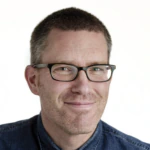
“Haiti has produced a phenomenal number of inspired artists, most of whom had little or no access to formal education and lived, and continue to live, in great poverty,” says Alex Farquharson, the director of Nottingham Contemporary and the co-curator of Kafou: Haiti, Art and Vodou (until 6 January 2013).
The exhibition, which Farquharson has curated with photographer, film-maker and artist Leah Gordon, features about 200 works by 40 artists from the 1940s to today. Most of them had little contact with the mainstream art world, reflecting the country’s international isolation after its 1791-1804 revolution.
This exclusion was created by the great colonial powers, who feared that slave emancipation would spread elsewhere if the Caribbean country’s story became widely known.
This isolation is believed to be one of the main reasons why Vodou developed so pervasively in Haiti.
About 90% of Haitians are thought to follow the belief system and it is a major source of imagery in Haitian art. The exhibition is named after Kafou, the Vodou spirit of the crossroads, where the mortal and immortal worlds meet. Some of the spirits are related to actual historical figures in the revolution, and this can be seen in the art.
“This work [by the Haitian artists] really jumps out because it is doing things,” says Farquharson, who visited Haiti with Gordon to research the exhibition.
“It involves pictorial invention and surprising subject matter that equates to the kind of visual and symbolic surprises that artists are in the quest for in trying to show us something new. In that sense, that’s what makes this exhibition fit within a programme that is mainly dedicated to contemporary art.
“And you discover a lot that you should know about your own history by looking at Haiti,” continues Farquharson.
“The fact that we know so little about it is a consequence of the world powers not wanting us to know anything about it – they did not recognise Haitian independence and when they could not silence it altogether, they demonised it.”
Revolution has inspired artistic endeavour elsewhere, such as the constructivist movement that followed the Russian Revolution. Some of the artists involved in constructivism featured in the recent Building the Revolution exhibition at the Royal Academy of Arts, and in July 2013 the same venue will hold a show dedicated to art that grew out of the 1910 Mexican Revolution.
Negotiation skills
Kafou: Haiti, Art and Vodou was not the easiest exhibition to put together, perhaps reflecting how hard regional art galleries have to work to develop attractive and interesting programmes.
Many of the works are owned by private collectors based in North America and Europe, which meant a lot of negotiating to secure the loans.
But Farquharson believes all the effort has been worth it as he expects the exhibition to raise the profile of Haiti in the art world as well as being a big draw for audiences.
“Artists are always in search of new ways of doing things and new ways of looking at the world – that’s what drives new art,” says Farquharson. “But that can also happen through art that has been marginalised and hopefully it [the Haitian art] will be a revelation.”
Nottingham Contemporary has attracted 700,000 people since it opened in November 2009, 50% above its target. Well over half its visitors are under 35 years old and it has an extensive education and events programme that works in tandem with the exhibitions.
But has Farquharson found it difficult to maintain the momentum of those opening few months when regional, national and international press coverage shone a spotlight on the £20m venue?
“Inevitably something peaks at the time of a launch,” he says. “Virtually all venues experience that and we opened with David Hockney and in a way you can’t open with anything bigger.
“But I hope that what we present is at least as good as what we were doing in our first year and it is always changing,” he continues.
“That’s the great thing about not being a collections-based institution. Collections are wonderful things if they are really rich but it’s not something that has the same flux as a changing programme.”
Farquharson, who grew up in Buckinghamshire, has been at Nottingham Contemporary since 2007, two years before it opened. So he is in a good position to see how the gallery has made an impact on the city in terms of making it more attractive to business, visitors and students.
But beyond its economic impact (the gallery estimates it has added £23m to the local economy in its first three years), Farquharson also points to the broader benefits that the gallery can bring.
“An institution like this should aspire to be a point for intense communication around the culture of the day,” he says. “I think the best art leads you to think about all kinds of questions. And art is open ended in a way that very few other social phenomena are, particularly contemporary art because of its sheer diversity.”
Nottingham Contemporary is one of a new generation of lottery-funded regional galleries that has transformed the arts landscape in England over the past five years or so.
Venues such as Turner Contemporary in Margate, Hepworth Wakefield, the Towner in Eastbourne and Firstsite in Colchester have made contemporary art far more accessible to many people.
“It will be really interesting to see what happens as a consequence of places like this,” Farquharson says. “I think what we are seeing, and we will understand this better as years go by, is that the art of today will become more and more ingrained in the cultural life of the nation.”
Nottingham Contemporary is only a few years old, but it already feels like the end of an era for this breed of regional art galleries. There are fewer gaps to fill in terms of arts provision, and budgetary constraints mean that the arts council is unlikely to plough huge amounts of lottery money into high-profile new-builds.
But, for Farquharson, there is still much to look forward to. “The exciting thing is we now have these things and that is far more exciting than not having them and thinking about them as a future possibility. We have them and it’s how they are used and what happens in them that is exciting. The challenge is to sustain that in a tougher climate.”
The difficulty with philanthropy
This tough financial climate is hanging over all publicly funded cultural organisations. And for regional arts venues, the promise of relief through greater support from philanthropic giving is proving a tough nut to crack.
Nottingham Contemporary has received Catalyst money, which aims to help arts organisations secure more money from private sources. Farquharson says this will help the gallery make inroads but it will take time and venues such as his will always struggle to compete with contemporary art institutions in London and their proximity to wealthy individuals, particularly art collectors.
“It is unrealistic to expect in Britain anything like the level of philanthropic giving that you get in America,” says Farquharson.
“In America there are all kinds of tax advantages for giving on that scale and there is a long, long tradition that is pretty unique, of very wealthy individuals giving to their local museum and having a lot of influence by sitting on the board and so on.
"So you have to begin to question the degree to which some museums are actually public with the huge individual influence that some board members in some situations have.”
For regional venues such as Nottingham Contemporary it will be decisions that are made about public funding of art and culture that will decide their fate, not the success, or otherwise, of schemes to encourage philanthropic giving. Farquharson says that even small cuts hit lean organisations very hard.
“Ultimately, public institutions need to be adequately funded and without that funding art institutions could be at risk,” he says.
“We have to hope that in future the right political decisions are made to sustain what has been an immense investment and an investment that has already paid off. It would be such a shame if all this went to waste.”
Alex Farquharson has been the director of Nottingham Contemporary since 2007, preparing for its opening two years later.
He has curated a number of exhibitions during his time at the gallery, including its current show, Kafou: Haiti, Art and Vodou (until 6 January 2013). He will also be curating Aquatopia: The Imaginary of the Deep, an exhibition that will open in October 2013.
Before Nottingham Contemporary Farquharson curated exhibitions such as the British Art Show 6 and he was exhibitions director at Spacex in Exeter and the Centre for Visual Arts in Cardiff. He also taught on the curating contemporary art MA at the Royal College of Art in London.
Nottingham Contemporary has attracted more than 700,000 visitors since opening in November 2009. The building was designed by Caruso St John, the architects behind the redevelopment of the V&A Museum of Childhood in London.
The gallery employs 50 staff and its main funders are Arts Council England (as a national portfolio organisation it is receiving £1m in 2012-13) and Nottingham City Council.
It has partnerships with the University of Nottingham and Nottingham Trent University, which fund programmes of films and discussions related to the exhibitions.
Supporters include the auction houses Sotheby’s and Christie’s and gallerists Victoria Miro and Sadie Coles. In May, Nottingham Contemporary was awarded a £240,000 Catalyst grant from the arts council to help improve its fundraising.
“Haiti has produced a phenomenal number of inspired artists, most of whom had little or no access to formal education and lived, and continue to live, in great poverty,” says Alex Farquharson, the director of Nottingham Contemporary and the co-curator of Kafou: Haiti, Art and Vodou (until 6 January 2013).
The exhibition, which Farquharson has curated with photographer, film-maker and artist Leah Gordon, features about 200 works by 40 artists from the 1940s to today. Most of them had little contact with the mainstream art world, reflecting the country’s international isolation after its 1791-1804 revolution.
This exclusion was created by the great colonial powers, who feared that slave emancipation would spread elsewhere if the Caribbean country’s story became widely known.
This isolation is believed to be one of the main reasons why Vodou developed so pervasively in Haiti.
About 90% of Haitians are thought to follow the belief system and it is a major source of imagery in Haitian art. The exhibition is named after Kafou, the Vodou spirit of the crossroads, where the mortal and immortal worlds meet. Some of the spirits are related to actual historical figures in the revolution, and this can be seen in the art.
“This work [by the Haitian artists] really jumps out because it is doing things,” says Farquharson, who visited Haiti with Gordon to research the exhibition.
“It involves pictorial invention and surprising subject matter that equates to the kind of visual and symbolic surprises that artists are in the quest for in trying to show us something new. In that sense, that’s what makes this exhibition fit within a programme that is mainly dedicated to contemporary art.
“And you discover a lot that you should know about your own history by looking at Haiti,” continues Farquharson.
“The fact that we know so little about it is a consequence of the world powers not wanting us to know anything about it – they did not recognise Haitian independence and when they could not silence it altogether, they demonised it.”
Revolution has inspired artistic endeavour elsewhere, such as the constructivist movement that followed the Russian Revolution. Some of the artists involved in constructivism featured in the recent Building the Revolution exhibition at the Royal Academy of Arts, and in July 2013 the same venue will hold a show dedicated to art that grew out of the 1910 Mexican Revolution.
Negotiation skills
Kafou: Haiti, Art and Vodou was not the easiest exhibition to put together, perhaps reflecting how hard regional art galleries have to work to develop attractive and interesting programmes.
Many of the works are owned by private collectors based in North America and Europe, which meant a lot of negotiating to secure the loans.
But Farquharson believes all the effort has been worth it as he expects the exhibition to raise the profile of Haiti in the art world as well as being a big draw for audiences.
“Artists are always in search of new ways of doing things and new ways of looking at the world – that’s what drives new art,” says Farquharson. “But that can also happen through art that has been marginalised and hopefully it [the Haitian art] will be a revelation.”
Nottingham Contemporary has attracted 700,000 people since it opened in November 2009, 50% above its target. Well over half its visitors are under 35 years old and it has an extensive education and events programme that works in tandem with the exhibitions.
But has Farquharson found it difficult to maintain the momentum of those opening few months when regional, national and international press coverage shone a spotlight on the £20m venue?
“Inevitably something peaks at the time of a launch,” he says. “Virtually all venues experience that and we opened with David Hockney and in a way you can’t open with anything bigger.
“But I hope that what we present is at least as good as what we were doing in our first year and it is always changing,” he continues.
“That’s the great thing about not being a collections-based institution. Collections are wonderful things if they are really rich but it’s not something that has the same flux as a changing programme.”
Farquharson, who grew up in Buckinghamshire, has been at Nottingham Contemporary since 2007, two years before it opened. So he is in a good position to see how the gallery has made an impact on the city in terms of making it more attractive to business, visitors and students.
But beyond its economic impact (the gallery estimates it has added £23m to the local economy in its first three years), Farquharson also points to the broader benefits that the gallery can bring.
“An institution like this should aspire to be a point for intense communication around the culture of the day,” he says. “I think the best art leads you to think about all kinds of questions. And art is open ended in a way that very few other social phenomena are, particularly contemporary art because of its sheer diversity.”
Nottingham Contemporary is one of a new generation of lottery-funded regional galleries that has transformed the arts landscape in England over the past five years or so.
Venues such as Turner Contemporary in Margate, Hepworth Wakefield, the Towner in Eastbourne and Firstsite in Colchester have made contemporary art far more accessible to many people.
“It will be really interesting to see what happens as a consequence of places like this,” Farquharson says. “I think what we are seeing, and we will understand this better as years go by, is that the art of today will become more and more ingrained in the cultural life of the nation.”
Nottingham Contemporary is only a few years old, but it already feels like the end of an era for this breed of regional art galleries. There are fewer gaps to fill in terms of arts provision, and budgetary constraints mean that the arts council is unlikely to plough huge amounts of lottery money into high-profile new-builds.
But, for Farquharson, there is still much to look forward to. “The exciting thing is we now have these things and that is far more exciting than not having them and thinking about them as a future possibility. We have them and it’s how they are used and what happens in them that is exciting. The challenge is to sustain that in a tougher climate.”
The difficulty with philanthropy
This tough financial climate is hanging over all publicly funded cultural organisations. And for regional arts venues, the promise of relief through greater support from philanthropic giving is proving a tough nut to crack.
Nottingham Contemporary has received Catalyst money, which aims to help arts organisations secure more money from private sources. Farquharson says this will help the gallery make inroads but it will take time and venues such as his will always struggle to compete with contemporary art institutions in London and their proximity to wealthy individuals, particularly art collectors.
“It is unrealistic to expect in Britain anything like the level of philanthropic giving that you get in America,” says Farquharson.
“In America there are all kinds of tax advantages for giving on that scale and there is a long, long tradition that is pretty unique, of very wealthy individuals giving to their local museum and having a lot of influence by sitting on the board and so on.
"So you have to begin to question the degree to which some museums are actually public with the huge individual influence that some board members in some situations have.”
For regional venues such as Nottingham Contemporary it will be decisions that are made about public funding of art and culture that will decide their fate, not the success, or otherwise, of schemes to encourage philanthropic giving. Farquharson says that even small cuts hit lean organisations very hard.
“Ultimately, public institutions need to be adequately funded and without that funding art institutions could be at risk,” he says.
“We have to hope that in future the right political decisions are made to sustain what has been an immense investment and an investment that has already paid off. It would be such a shame if all this went to waste.”
Alex Farquharson at a glance
Alex Farquharson has been the director of Nottingham Contemporary since 2007, preparing for its opening two years later.
He has curated a number of exhibitions during his time at the gallery, including its current show, Kafou: Haiti, Art and Vodou (until 6 January 2013). He will also be curating Aquatopia: The Imaginary of the Deep, an exhibition that will open in October 2013.
Before Nottingham Contemporary Farquharson curated exhibitions such as the British Art Show 6 and he was exhibitions director at Spacex in Exeter and the Centre for Visual Arts in Cardiff. He also taught on the curating contemporary art MA at the Royal College of Art in London.
Nottingham Contemporary at a glance
Nottingham Contemporary has attracted more than 700,000 visitors since opening in November 2009. The building was designed by Caruso St John, the architects behind the redevelopment of the V&A Museum of Childhood in London.
The gallery employs 50 staff and its main funders are Arts Council England (as a national portfolio organisation it is receiving £1m in 2012-13) and Nottingham City Council.
It has partnerships with the University of Nottingham and Nottingham Trent University, which fund programmes of films and discussions related to the exhibitions.
Supporters include the auction houses Sotheby’s and Christie’s and gallerists Victoria Miro and Sadie Coles. In May, Nottingham Contemporary was awarded a £240,000 Catalyst grant from the arts council to help improve its fundraising.