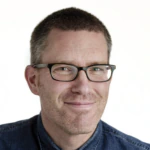
There are a number of strands running through Martin Roth’s career and a major one is world’s fairs.
The German-born Roth, who replaced Mark Jones as the director of London’s Victoria and Albert Museum (V&A) in September 2011, has long been aware how Prince Albert used the profits from the Great Exhibition of 1851 to buy land and build a range of scientific and artistic institutions that became to be known Albertopolis.
The legacy of this is venues such as the V&A as well as Imperial College, the Natural History Museum, the Science Museum and others.
Roth studied the effect of world’s fairs on museums when he was a student in Germany and later went to Paris to continue investigating the subject. Further on in his career he became directly involved in a fair himself, when he developed a range of exhibitions for the Expo 2000 in Hanover.
“I’ve learned a lot about world’s fairs and their history and you can imagine how I need it today, with Albertopolis and the legacy of world’s fairs here,” Roth says.
Another thing that had a major impact on Roth’s career, and indeed his whole life, was the reunification of Germany in 1990 following the fall of the Berlin Wall.
At the time he was a curator at the German Historical Museum in Berlin. After the wall came down, one of the projects he developed was a temporary exhibition for the German Hygiene-Museum in Dresden in the former East Germany. His work led to the offer of a permanent job.
“Working in Dresden changed my life completely,” says Roth. “It was like going to a completely different world; no phone system, no fax, nothing worked. I had one of those early mobile phones that was like a suitcase and if I wanted to phone Western Germany I had to go on the roof of the museum as there was sometimes a connection.”
Creating an engaging museum
Roth says he worked day and night to save the museum, which had made a lot of people redundant before his arrival. As a result, he almost had to reinvent it from scratch.
He did this by creating an exhibition and events programme that addressed challenging social topics such as abortion as part of a wider remit to engage people. This included working with young neo-Nazis and teaching them about racism and German history.
“I used the museum as a social institution, a platform and a kind of community centre,” says Roth. Today, the German Hygiene-Museum has an international reputation and acts as an important public forum for dialogue between science and society.
Reunification was a hard time in Germany but it did give many people like Roth the chance to take on important jobs at a relatively young age.
“Reunification changed a lot of careers,” says Roth. “Without it I’m sure I would be sitting somewhere in a museum in south Germany or be doing something completely different. And you had to be quite young to survive this challenge because it was really tough. I don’t know how many nights I spent in the museum, working on an exhibition, sleeping for two hours in the office.”
Roth worked for nearly 10 years at the German Hygiene-Museum and then joined the Expo 2000 in Hanover where he oversaw a huge exhibition budget. He wanted to do something completely different after the Expo and thought it might be difficult to continue his career in museums.
“Being involved in an Expo, working with politics and schmoozing around, normally you are dead and you can’t come back into high culture,” he says. “Then, to my surprise, the Saxonian government called and said ‘we want you to come back and take on all the museums in Dresden’. If you say no to this it is like committing professional suicide and I was really interested in doing it, so I did it.”
Roth adopted three main strands when he took over as director general of the Dresden State Art Collections, which comprises 12 museums and galleries. One was to bring research back to the museum, the other was a capital programme of building and reconstruction, while the third was to put Dresden back on the international cultural map.
The city has a fantastic range of collections and Roth says restoring its international reputation was the easiest of the three strands, even if there was some criticism that he was not focusing enough on Germany.
It is this track record in Dresden that made him attractive to the V&A, although he says when he was contacted by head-hunters about the job he gave them three names of possible candidates until they said it was him they wanted to talk to about the post.
But he says that the challenges at the V&A are very different than when he first joined the Dresden State Art Collections.
“The V&A is already on a very high level so working here is more like keeping the quality, although it’s difficult times in terms of budgets,” says Roth, who points to the start of the museum’s transformation under Elizabeth Esteve-Coll in the 1980s.
“This is a perfect example of how you can change a classical institution in a very modern way without just following some fashions in management. It’s extremely decent, it’s sound, it’s great and to keep that quality, that’s it.”
This is not to say that Roth does not have plans for the museum. He wants to streamline the decision-making process and is starting to devote more resources to contemporary architecture and product design.
He is also committed to FuturePlan, the V&A’s long-term project to restore and redesign its galleries, which is now in its second 10-year phase. In July local planners gave the green light to the museum’s £41m scheme to create an underground exhibition space on Exhibition Road.
Roth is also keen to up the V&A’s game in the digital arena and there are moves to develop a kind of Digital FuturePlan that would mirror the changes achieved in the physical space for visitors. A digital review presented to the board of trustees earlier this year recommended that the museum needed to make comprehensive changes in the way it develops, manages, staffs and funds its digital work.
But overall, Roth feels that he has inherited a healthy institution from his predecessor Mark Jones. Among the projects he has been left is V&A at Dundee, which is described as an “international centre of design for Scotland”. The project is a partnership between the V&A, the University of Dundee, the University of Abertay Dundee, Dundee City Council and Scottish Enterprise.
New collaborations
“I’m not really a supporter of ideas like the Guggenheim in Abu Dhabi, but I like international cooperation on the same level, same responsibilities,” says Roth, who believes that V&A at Dundee will be good for the museum.
“We need this kind of challenge,” says Roth, who is keen for the V&A to look for new ways to collaborate with other institutions. “But it is their responsibility, it is their money; we don’t invest money, not one penny [the Scottish Government has committed £15m to the project]. That is something I had to promise to the board and I agree.”
One of the issues Roth might have to deal with is how the V&A at Dundee would be affected by Scottish independence. But, as he says, the project could just move from being a national one to an international one.
In any case, Roth is very comfortable with working internationally. He says the collections at Dresden were deeply European rather than German, so it made no sense to operate purely on a national basis as the museums had strong connections with organisations all over the world.
Despite this international experience, he is also very aware of what he describes as the “Britishness” of the V&A. And he likes the idea of the V&A focusing on the impact that the Great Exhibition has on the UK today in terms of innovation and creativity.
“Just think about all those product designers coming out of Imperial College or the Royal College of Art, all the major car designers coming from here, and this is the legacy of the world’s fair and it’s just amazing.
"If you talk about all the great British designers, from Terence Conran, to Jonathan Ive to Kenneth Grange, that connection between design, technology and engineering, that is the V&A, that is our future. To showcase that legacy and what’s going on right now, being at the forefront of research, product development and design – that’s our dream.”
Martin Roth will give a keynote speech at the Museums Association conference in Edinburgh, 8-9 November, where he will be addressing issues such as V&A at Dundee
Martin Roth became the director of the Victoria and Albert Museum (V&A) in September 2011, replacing Mark Jones.
Before that he was the director general of the Dresden State Art Collections, where he oversaw 12 museums and galleries. He joined the institution in 2001 and led a major renovation and modernisation programme as well as the creation of a network of international partners.
He graduated from Eberhard Karls University Tuebingen, faculty of social and cultural science in 1984. In 1987 he received his PHD from the Eberhard Karls University Tuebingen, where he studied the political and historical background of German museums and exhibitions.
He was a curator at the German Historical Museum in Berlin from 1989 to 1991 and then became the director of the German Hygiene-Museum in Dresden, where he stayed for nearly 10 years. He was also the director of exhibitions at the German World’s Fair, Expo 2000, in Hanover.
He was the president of the German Museums Association from 1996 to 2003.
Roth was born in Stuttgart, Germany, in 1955.
The Victoria and Albert Museum (V&A) is Britain’s national museum of art and design. It was founded in 1837 as the Museum of the School of Design in Somerset House and moved to South Kensington in 1857.
In 2011-12, visitor figures to the V&A South Kensington (2,888,700) and the Museum of Childhood in Bethnal Green (443,300) were the highest ever for both venues.
Fundraising, including sponsorship, amounted to £11.4m in 2011-12 and objects valued at £1.3m were donated to the museum’s collections.
Government funding for 2011-12 was reduced to £41.4m (2010-11: £44.3m) following the comprehensive spending review in 2010. The museum had a small surplus of £86,000 for the period.
The German-born Roth, who replaced Mark Jones as the director of London’s Victoria and Albert Museum (V&A) in September 2011, has long been aware how Prince Albert used the profits from the Great Exhibition of 1851 to buy land and build a range of scientific and artistic institutions that became to be known Albertopolis.
The legacy of this is venues such as the V&A as well as Imperial College, the Natural History Museum, the Science Museum and others.
Roth studied the effect of world’s fairs on museums when he was a student in Germany and later went to Paris to continue investigating the subject. Further on in his career he became directly involved in a fair himself, when he developed a range of exhibitions for the Expo 2000 in Hanover.
“I’ve learned a lot about world’s fairs and their history and you can imagine how I need it today, with Albertopolis and the legacy of world’s fairs here,” Roth says.
Another thing that had a major impact on Roth’s career, and indeed his whole life, was the reunification of Germany in 1990 following the fall of the Berlin Wall.
At the time he was a curator at the German Historical Museum in Berlin. After the wall came down, one of the projects he developed was a temporary exhibition for the German Hygiene-Museum in Dresden in the former East Germany. His work led to the offer of a permanent job.
“Working in Dresden changed my life completely,” says Roth. “It was like going to a completely different world; no phone system, no fax, nothing worked. I had one of those early mobile phones that was like a suitcase and if I wanted to phone Western Germany I had to go on the roof of the museum as there was sometimes a connection.”
Creating an engaging museum
Roth says he worked day and night to save the museum, which had made a lot of people redundant before his arrival. As a result, he almost had to reinvent it from scratch.
He did this by creating an exhibition and events programme that addressed challenging social topics such as abortion as part of a wider remit to engage people. This included working with young neo-Nazis and teaching them about racism and German history.
“I used the museum as a social institution, a platform and a kind of community centre,” says Roth. Today, the German Hygiene-Museum has an international reputation and acts as an important public forum for dialogue between science and society.
Reunification was a hard time in Germany but it did give many people like Roth the chance to take on important jobs at a relatively young age.
“Reunification changed a lot of careers,” says Roth. “Without it I’m sure I would be sitting somewhere in a museum in south Germany or be doing something completely different. And you had to be quite young to survive this challenge because it was really tough. I don’t know how many nights I spent in the museum, working on an exhibition, sleeping for two hours in the office.”
Roth worked for nearly 10 years at the German Hygiene-Museum and then joined the Expo 2000 in Hanover where he oversaw a huge exhibition budget. He wanted to do something completely different after the Expo and thought it might be difficult to continue his career in museums.
“Being involved in an Expo, working with politics and schmoozing around, normally you are dead and you can’t come back into high culture,” he says. “Then, to my surprise, the Saxonian government called and said ‘we want you to come back and take on all the museums in Dresden’. If you say no to this it is like committing professional suicide and I was really interested in doing it, so I did it.”
Roth adopted three main strands when he took over as director general of the Dresden State Art Collections, which comprises 12 museums and galleries. One was to bring research back to the museum, the other was a capital programme of building and reconstruction, while the third was to put Dresden back on the international cultural map.
The city has a fantastic range of collections and Roth says restoring its international reputation was the easiest of the three strands, even if there was some criticism that he was not focusing enough on Germany.
It is this track record in Dresden that made him attractive to the V&A, although he says when he was contacted by head-hunters about the job he gave them three names of possible candidates until they said it was him they wanted to talk to about the post.
But he says that the challenges at the V&A are very different than when he first joined the Dresden State Art Collections.
“The V&A is already on a very high level so working here is more like keeping the quality, although it’s difficult times in terms of budgets,” says Roth, who points to the start of the museum’s transformation under Elizabeth Esteve-Coll in the 1980s.
“This is a perfect example of how you can change a classical institution in a very modern way without just following some fashions in management. It’s extremely decent, it’s sound, it’s great and to keep that quality, that’s it.”
This is not to say that Roth does not have plans for the museum. He wants to streamline the decision-making process and is starting to devote more resources to contemporary architecture and product design.
He is also committed to FuturePlan, the V&A’s long-term project to restore and redesign its galleries, which is now in its second 10-year phase. In July local planners gave the green light to the museum’s £41m scheme to create an underground exhibition space on Exhibition Road.
Roth is also keen to up the V&A’s game in the digital arena and there are moves to develop a kind of Digital FuturePlan that would mirror the changes achieved in the physical space for visitors. A digital review presented to the board of trustees earlier this year recommended that the museum needed to make comprehensive changes in the way it develops, manages, staffs and funds its digital work.
But overall, Roth feels that he has inherited a healthy institution from his predecessor Mark Jones. Among the projects he has been left is V&A at Dundee, which is described as an “international centre of design for Scotland”. The project is a partnership between the V&A, the University of Dundee, the University of Abertay Dundee, Dundee City Council and Scottish Enterprise.
New collaborations
“I’m not really a supporter of ideas like the Guggenheim in Abu Dhabi, but I like international cooperation on the same level, same responsibilities,” says Roth, who believes that V&A at Dundee will be good for the museum.
“We need this kind of challenge,” says Roth, who is keen for the V&A to look for new ways to collaborate with other institutions. “But it is their responsibility, it is their money; we don’t invest money, not one penny [the Scottish Government has committed £15m to the project]. That is something I had to promise to the board and I agree.”
One of the issues Roth might have to deal with is how the V&A at Dundee would be affected by Scottish independence. But, as he says, the project could just move from being a national one to an international one.
In any case, Roth is very comfortable with working internationally. He says the collections at Dresden were deeply European rather than German, so it made no sense to operate purely on a national basis as the museums had strong connections with organisations all over the world.
Despite this international experience, he is also very aware of what he describes as the “Britishness” of the V&A. And he likes the idea of the V&A focusing on the impact that the Great Exhibition has on the UK today in terms of innovation and creativity.
“Just think about all those product designers coming out of Imperial College or the Royal College of Art, all the major car designers coming from here, and this is the legacy of the world’s fair and it’s just amazing.
"If you talk about all the great British designers, from Terence Conran, to Jonathan Ive to Kenneth Grange, that connection between design, technology and engineering, that is the V&A, that is our future. To showcase that legacy and what’s going on right now, being at the forefront of research, product development and design – that’s our dream.”
Martin Roth will give a keynote speech at the Museums Association conference in Edinburgh, 8-9 November, where he will be addressing issues such as V&A at Dundee
Martin Roth at a glance
Martin Roth became the director of the Victoria and Albert Museum (V&A) in September 2011, replacing Mark Jones.
Before that he was the director general of the Dresden State Art Collections, where he oversaw 12 museums and galleries. He joined the institution in 2001 and led a major renovation and modernisation programme as well as the creation of a network of international partners.
He graduated from Eberhard Karls University Tuebingen, faculty of social and cultural science in 1984. In 1987 he received his PHD from the Eberhard Karls University Tuebingen, where he studied the political and historical background of German museums and exhibitions.
He was a curator at the German Historical Museum in Berlin from 1989 to 1991 and then became the director of the German Hygiene-Museum in Dresden, where he stayed for nearly 10 years. He was also the director of exhibitions at the German World’s Fair, Expo 2000, in Hanover.
He was the president of the German Museums Association from 1996 to 2003.
Roth was born in Stuttgart, Germany, in 1955.
V&A at a glance
The Victoria and Albert Museum (V&A) is Britain’s national museum of art and design. It was founded in 1837 as the Museum of the School of Design in Somerset House and moved to South Kensington in 1857.
In 2011-12, visitor figures to the V&A South Kensington (2,888,700) and the Museum of Childhood in Bethnal Green (443,300) were the highest ever for both venues.
Fundraising, including sponsorship, amounted to £11.4m in 2011-12 and objects valued at £1.3m were donated to the museum’s collections.
Government funding for 2011-12 was reduced to £41.4m (2010-11: £44.3m) following the comprehensive spending review in 2010. The museum had a small surplus of £86,000 for the period.