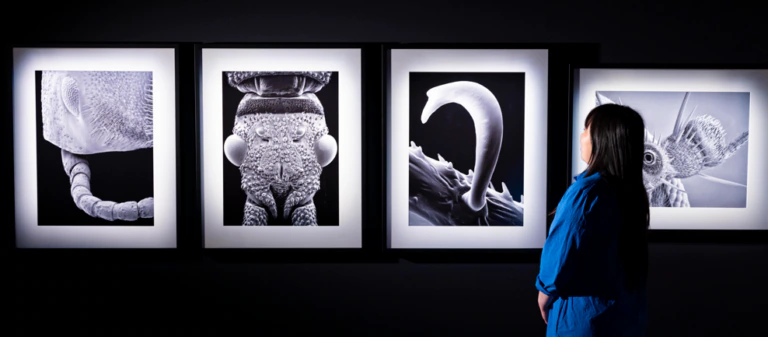
This year's Darwin bicentenary bash has, rather appropriately, evolved into a brand new species of collaborative cultural celebrations.
Spreading out from the naturalist's native Shrewsbury across central England, museums are clustering together for a golden year of anniversaries that commemorate how the region became the workshop of the world, the engine room of the British motor industry and the home of some of the best pottery and jewellery money could buy.
Museums are telling the tales of the great inventors, entrepreneurs, writers and composers who changed the world. They are also looking at momentous movements such as the first firing of the Industrial Revolution at Ironbridge Gorge and the small community up the road in Much Wenlock that became first modern "Olympic village".
The year-long shindig called Celebration of Imagination is being coordinated by the regional development agency - not the type of body usually associated with dipping a toe into deep cultural waters. But, Advantage West Midlands (AWM) sees long-term tourist potential in a heritage drive that also has a huge role to play in urban regeneration.
"Regional development agencies are traditionally good at investing in large infrastructure projects, but we've not been so good at a purely operational level," says Lindsey Wyke, AWM's cultural partnership manager.
"We haven't utilised heritage and the museum sector as much as we could in terms of regional tourism and there are obviously some fantastic assets here," Wyke adds. "So we have shifted our thinking and have invested in some of the anniversary exhibitions and coordinated a marketing campaign."
Until Wyke's arrival from the museum sector last year, AWM had no one on board with practical heritage experience and the plan was met with some scepticism.
"One or two people said that this could potentially be a 'male, stale and pale' campaign, but it's more about what the feats of those industrialists, inventors and innovators say about the region in which they lived and worked," she says.
Workshop of the world
"We're trying to change people's perceptions as many still associate the West Midlands with industrial decline. While we obviously have to be sensitive to the current economic situation, it's more important than ever that we celebrate the region's achievements."
Achievements don't come bigger than the first successful smelting of iron with coke rather than charcoal by the Quaker Abraham Darby 300 years ago at Coalbrookdale on the River Severn in Shropshire.
The breakthrough led to the introduction of inexpensive, high-quality iron and the industrial world turned; a couple of generations later, the spectacular Ironbridge across the gorge was built by Darby's grandson.
"It wasn't just a functional structure, it was a very bold and beautiful statement for what this new material could do," says Steve Miller, chief executive of the Ironbridge Gorge Museum Trust and one of the first proposers of the Celebration of Imagination campaign.
"This was always going to be a huge year for us," adds Miller. "Alongside the celebration, we were also keen to provide a springboard for discussing broader themes such as innovation and entrepreneurship, the coming together of people, materials and processes which still has a huge relevance today."
In these testing times for British manufacturing, Miller is keen that the Ironbridge World Heritage Site reflects how the nation still leads the world in many fields.
Ironbridge is marking its anniversary with the £12m redevelopment of its Blists Hill Victorian Town - complete with traditional drapers, post office and fresh fish shop - as well as an extensive facelift for the Old Furnace, where the whole story began 300 years ago.
Art of industry
Also at Ironbridge, Coalbrookdale 300, which runs until early 2010, documents how artists depicted the advent and development of the Industrial Revolution. The trust also held an international conference in June that looked at the impact of the Industrial Revolution on the modern world, including the influence of climate change.
"This was the first place in the world where fossil fuels were burned in significant quantity, so it could be argued it's the birthplace of global warming. We're happy to engage in that debate," says Miller.
"You obviously cannot impose the values of the present on the actions of people in the past, and entrepreneurs should always take risks. You can't look at the Old Furnace without thinking that new technologies were what it was all about in 1709 and it's likely that new technologies will play a huge role in solving the problems of climate change in the future."
Birmingham is celebrating its contribution to the industrial world by concentrating on the rich life and work of Matthew Boulton, who died in 1809.
A polymath, self-publicist and pioneering manufacturer, Boulton's achievements have been largely overshadowed by those of his more famous business partner, James Watt.
"There's a study to be done about why a manufacturer receives nowhere near the adulation of the engineer," says Chris Rice, head of heritage services at Birmingham Museums and Art Gallery, which is hosting a series of events aimed at raising the profile of the pioneer of modern production methods.
"Watts' son commissioned a glowing biography of his father, whereas Boulton's son did not," Rice says. "The Victorians later saw engineers as the geniuses of the age and Boulton has been viewed as a provincial figure. Watt was primarily known for the steam engine but Boulton did many things - some well, some badly, but always with great style."
In the 1760s, Boulton built the world-famous Soho Manufactory in Birmingham - a three-storey wonder that brought many different processes under one roof for the first time and provided accommodation for his workers behind a grand classical facade.
"People used to come to watch the steam engines, it was a major attraction of its time and had its own visitors' tearoom," says Rice.
Boulton - who began making buckles and buttons and ended up supplying all the coins of the realm while exporting the steam engine concept across the world - was a patron of the arts and also hosted monthly meetings of the self-styled 'Lunartiks' thinktank at his Soho House home, now a museum that showcases many of his most famous creations.
Conducting experiments and discussing the appliance of science by the light of a full moon were over-achievers such as Charles Darwin's two grandfathers, the philosopher and physician Erasmus Darwin and Josiah Wedgwood, along with Joseph Priestley, who discovered oxygen.
Almost 200 years later, as the 1960s were in full swing, the Mini was the vehicle of choice for the beautiful people. Celebrating its 50th birthday in 2009, the story of the car is being told at the Heritage Motor Centre, Gaydon.
"Advantage West Midlands were very keen for us to join their campaign as we give a more contemporary feel alongside some of the pre-20th century anniversaries," says Tim Bryan, head of collections and interpretation at the Heritage Motor Centre.
"Being linked to the Celebration of Imagination means that we can work closely with people at Wedgwood and Ironbridge and publicise each other's programmes; like most museums, we have seen a rise in the number of British visitors during the current downturn.
"For an independent museum, being part of the campaign means we can have access to the national media. Sometimes it's difficult to gain coverage when you're outside London."
Like many of its Celebration of Imagination colleagues, the centre has to chronicle hard times for British industry. It is currently working with the local community to record and commemorate the significance of the Longbridge factory where the Mini was made.
"A lot of the classic car companies have gone and manufacturers are having tough times again," says Bryan. "Who knows what the future holds?"
John Holt is a freelance journalist
Spreading out from the naturalist's native Shrewsbury across central England, museums are clustering together for a golden year of anniversaries that commemorate how the region became the workshop of the world, the engine room of the British motor industry and the home of some of the best pottery and jewellery money could buy.
Museums are telling the tales of the great inventors, entrepreneurs, writers and composers who changed the world. They are also looking at momentous movements such as the first firing of the Industrial Revolution at Ironbridge Gorge and the small community up the road in Much Wenlock that became first modern "Olympic village".
The year-long shindig called Celebration of Imagination is being coordinated by the regional development agency - not the type of body usually associated with dipping a toe into deep cultural waters. But, Advantage West Midlands (AWM) sees long-term tourist potential in a heritage drive that also has a huge role to play in urban regeneration.
"Regional development agencies are traditionally good at investing in large infrastructure projects, but we've not been so good at a purely operational level," says Lindsey Wyke, AWM's cultural partnership manager.
"We haven't utilised heritage and the museum sector as much as we could in terms of regional tourism and there are obviously some fantastic assets here," Wyke adds. "So we have shifted our thinking and have invested in some of the anniversary exhibitions and coordinated a marketing campaign."
Until Wyke's arrival from the museum sector last year, AWM had no one on board with practical heritage experience and the plan was met with some scepticism.
"One or two people said that this could potentially be a 'male, stale and pale' campaign, but it's more about what the feats of those industrialists, inventors and innovators say about the region in which they lived and worked," she says.
Workshop of the world
"We're trying to change people's perceptions as many still associate the West Midlands with industrial decline. While we obviously have to be sensitive to the current economic situation, it's more important than ever that we celebrate the region's achievements."
Achievements don't come bigger than the first successful smelting of iron with coke rather than charcoal by the Quaker Abraham Darby 300 years ago at Coalbrookdale on the River Severn in Shropshire.
The breakthrough led to the introduction of inexpensive, high-quality iron and the industrial world turned; a couple of generations later, the spectacular Ironbridge across the gorge was built by Darby's grandson.
"It wasn't just a functional structure, it was a very bold and beautiful statement for what this new material could do," says Steve Miller, chief executive of the Ironbridge Gorge Museum Trust and one of the first proposers of the Celebration of Imagination campaign.
"This was always going to be a huge year for us," adds Miller. "Alongside the celebration, we were also keen to provide a springboard for discussing broader themes such as innovation and entrepreneurship, the coming together of people, materials and processes which still has a huge relevance today."
In these testing times for British manufacturing, Miller is keen that the Ironbridge World Heritage Site reflects how the nation still leads the world in many fields.
Ironbridge is marking its anniversary with the £12m redevelopment of its Blists Hill Victorian Town - complete with traditional drapers, post office and fresh fish shop - as well as an extensive facelift for the Old Furnace, where the whole story began 300 years ago.
Art of industry
Also at Ironbridge, Coalbrookdale 300, which runs until early 2010, documents how artists depicted the advent and development of the Industrial Revolution. The trust also held an international conference in June that looked at the impact of the Industrial Revolution on the modern world, including the influence of climate change.
"This was the first place in the world where fossil fuels were burned in significant quantity, so it could be argued it's the birthplace of global warming. We're happy to engage in that debate," says Miller.
"You obviously cannot impose the values of the present on the actions of people in the past, and entrepreneurs should always take risks. You can't look at the Old Furnace without thinking that new technologies were what it was all about in 1709 and it's likely that new technologies will play a huge role in solving the problems of climate change in the future."
Birmingham is celebrating its contribution to the industrial world by concentrating on the rich life and work of Matthew Boulton, who died in 1809.
A polymath, self-publicist and pioneering manufacturer, Boulton's achievements have been largely overshadowed by those of his more famous business partner, James Watt.
"There's a study to be done about why a manufacturer receives nowhere near the adulation of the engineer," says Chris Rice, head of heritage services at Birmingham Museums and Art Gallery, which is hosting a series of events aimed at raising the profile of the pioneer of modern production methods.
"Watts' son commissioned a glowing biography of his father, whereas Boulton's son did not," Rice says. "The Victorians later saw engineers as the geniuses of the age and Boulton has been viewed as a provincial figure. Watt was primarily known for the steam engine but Boulton did many things - some well, some badly, but always with great style."
In the 1760s, Boulton built the world-famous Soho Manufactory in Birmingham - a three-storey wonder that brought many different processes under one roof for the first time and provided accommodation for his workers behind a grand classical facade.
"People used to come to watch the steam engines, it was a major attraction of its time and had its own visitors' tearoom," says Rice.
Boulton - who began making buckles and buttons and ended up supplying all the coins of the realm while exporting the steam engine concept across the world - was a patron of the arts and also hosted monthly meetings of the self-styled 'Lunartiks' thinktank at his Soho House home, now a museum that showcases many of his most famous creations.
Conducting experiments and discussing the appliance of science by the light of a full moon were over-achievers such as Charles Darwin's two grandfathers, the philosopher and physician Erasmus Darwin and Josiah Wedgwood, along with Joseph Priestley, who discovered oxygen.
Almost 200 years later, as the 1960s were in full swing, the Mini was the vehicle of choice for the beautiful people. Celebrating its 50th birthday in 2009, the story of the car is being told at the Heritage Motor Centre, Gaydon.
"Advantage West Midlands were very keen for us to join their campaign as we give a more contemporary feel alongside some of the pre-20th century anniversaries," says Tim Bryan, head of collections and interpretation at the Heritage Motor Centre.
"Being linked to the Celebration of Imagination means that we can work closely with people at Wedgwood and Ironbridge and publicise each other's programmes; like most museums, we have seen a rise in the number of British visitors during the current downturn.
"For an independent museum, being part of the campaign means we can have access to the national media. Sometimes it's difficult to gain coverage when you're outside London."
Like many of its Celebration of Imagination colleagues, the centre has to chronicle hard times for British industry. It is currently working with the local community to record and commemorate the significance of the Longbridge factory where the Mini was made.
"A lot of the classic car companies have gone and manufacturers are having tough times again," says Bryan. "Who knows what the future holds?"
John Holt is a freelance journalist
Celebration of Imagination exhibitions
Matthew Boulton: Selling what the World Desires (until 27 September), Birmingham Museum
Celebrating the local engineer with loans from national museums and private collectors as well as those owned by Birmingham Museums and Art Gallery (BMAG) and the City Archives. Other BMAG venues, including Soho House and the Museum of the Jewellery Quarter, are also running exhibitions.
Coalbrookdale 300 (until January 2010), Coalbrookdale Gallery, Ironbridge Gorge, Shropshire
Artistic responses to the Industrial Revolution include landscapes by William Williams in the 1770s. His views of Coalbrookdale are on display alongside his picture of the Iron Bridge, loaned by Shrewsbury Museums Service.
50 Years of the Mini (until 23 December), Heritage Motor Centre, Gaydon
An exhibition tracing the design, production and development of the iconic little car since the first Morris Mini Minor rolled off the production lines at Cowley in 1959. Other events include Mini fun runs, camping and various other Mini-friendly festivities.
Matthew Boulton: Selling what the World Desires (until 27 September), Birmingham Museum
Celebrating the local engineer with loans from national museums and private collectors as well as those owned by Birmingham Museums and Art Gallery (BMAG) and the City Archives. Other BMAG venues, including Soho House and the Museum of the Jewellery Quarter, are also running exhibitions.
Coalbrookdale 300 (until January 2010), Coalbrookdale Gallery, Ironbridge Gorge, Shropshire
Artistic responses to the Industrial Revolution include landscapes by William Williams in the 1770s. His views of Coalbrookdale are on display alongside his picture of the Iron Bridge, loaned by Shrewsbury Museums Service.
50 Years of the Mini (until 23 December), Heritage Motor Centre, Gaydon
An exhibition tracing the design, production and development of the iconic little car since the first Morris Mini Minor rolled off the production lines at Cowley in 1959. Other events include Mini fun runs, camping and various other Mini-friendly festivities.
Links
www.visittheheart.co.uk/celebration
www.visittheheart.co.uk/celebration