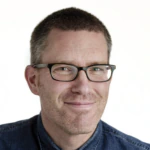
Ian Dejardin's early career revolved around knitwear, a far cry from his current position as director of the Dulwich Picture Gallery in south London.
"Me and my sister had first-class art degrees and as a result were unemployable. We both ended up running small knitwear businesses. I went to live in the Lake District and had a kind of Swallows and Amazons existence for seven years, which was absolutely wonderful. I felt like I had sort of retired in my 20s and then had to get a grip."
So when he hit 30, Dejardin left knitwear to take a postgraduate diploma in art gallery and museum studies at Manchester University.
This led to a brief period at English Heritage before joining the Royal Academy of Arts in 1988 as an assistant curator responsible for the permanent collection. He returned to English Heritage two years later as the curator at Kenwood, a role that soon expanded to include responsibility for other London properties.
"I stayed at English Heritage for seven years and I just sat there and the institution changed around me. I eventually ended up with this huge job title - senior curator and head of historic team in the London region. It was a big quango and I was a very small fish in a very big pool. I was in an office doing stuff, but not seeing paintings. So when the job of curator came up at Dulwich, I jumped at it."
Dejardin joined the gallery in 1998, spending more than a year at the museum before it started a £8m redevelopment, which was completed in 2000.
"I was so lucky, as I came at exactly the right moment. All the decisions had been made to refurbish, and much of the fundraising had happened. I also had a year of the old gallery before the refurbishment, with its funny old cork tiling on the floor and its rotting salmon wall colour. People loved it and were charmed by it, but it looked tatty."
Dejardin worked closely with Desmond Shawe-Taylor, the director when he joined, on raising the profile of Dulwich through the exhibitions programme. Shawe-Taylor resigned to become surveyor of the Queen's Pictures in 2005, and Dejardin had a decision to make.
"When Shawe-Taylor left, I had this great dilemma. I had always been a curator, and didn't know if I wanted to be a director, in the sense that I wasn't sure about issues such as fundraising and I felt I would lose contact with the collections. I agonised for about 20 minutes and what turned me round was that I was rapidly approaching 50 and I thought, do I want some 35 year old coming in and telling me what to do? The answer was a very firm no."
So did he make the right decision? "The good news is that I enjoy it. The worry was that I would take this job and be absolutely miserable and that you couldn't really step back to being a curator again. But the fact is my inner dictator emerged very quickly, although it was a bit disconcerting at first to say the same old rubbish and people actually rushed off and did it."
Engaging audiences
Dejardin's philosophy as a director is that everything the gallery does has to be outward facing and actively engage audiences. This is particularly important in the rarefied atmosphere of Dulwich, an upper middle-class time capsule with the rest of south London sprawling around it.
"Dulwich is the foothills of the Himalayas for most people in central London," Dejardin says. "It is seen as difficult to get to and that is the most difficult thing we have to deal with. So everything we do has to reach out, as you can't just expect people to turn up on your doorstep like they do at the National Gallery."
The museum does have a very keen local audience and has a remarkable Friends group with 6,000 members who raise about £200,000 a year for the gallery. But Dejardin is keen for the museum to reach further afield.
"What makes it amazing, is here we are in Southwark, the same borough as Tate Modern. There are 71 languages spoken, and it is one of the great cultural and ethnic melting pots of Europe. Our remit is not to the small circle of very wealthy people in Dulwich, although we are delighted to welcome them to the gallery and they support us, but it is to the broader south London, the whole of London and the nation beyond."
The gallery has long-been known for its innovative education work led by Gillian Wolfe, a former teacher who came to Dulwich in 1984 and is now its director of learning and public affairs. But Dejardin says the same outward-facing philosophy runs through all the museum's work.
Founding fathers
He puts part of the museum's spirit down to its founders, Francis Bourgeois and Noël Desenfans, who are both buried in a mausoleum in the main gallery. Much of the collection was put together by the pair of art dealers between 1790 and 1795 and was originally destined for the King of Poland.
But Poland was partitioned by its powerful neighbours and the king was forced to abdicate, leaving a royal collection with no real home. When it became obvious they would not be able to sell it in its entirety, they began to look at suitable institutions to bequeath it to. Bourgeois, who died in 1811, eventually decided on Dulwich College, and the gallery was founded by the terms of his will.
"Bourgeois's will is one of those remarkable documents," Dejardin says. "It effectively invents the public art gallery for this country, and embeds in that invention the principles of education, conservation and accessibility.
"Bourgeois did not leave it to the British Museum, which would have been the logical thing to do, because he found the museum too snooty, too elitist. Bourgeois and Desenfans are people's heroes in a way."
Some of the adventurousness of the museum's founders is maintained in the ambitious and varied range of exhibitions that Dejardin brings to the gallery.
"The exhibition programme is very much a reflection of my interests and beliefs, with input from colleagues, of course," he says. "I am very broad and catholic in my interests and am interested in anything and everything, which I think is shown in the exhibition programme."
This is apparent in this year's shows, which include an exhibition about Japanese woodblock artist Hiroshige, and a commission for artist Antoni Malinowski to create a work exploring the links between the gallery's collection and Poland. The current show, which Dejardin says is a gamble, is on American artist Saul Steinberg, a frequent contributor to the covers of the New Yorker magazine.
"There is a lot of tentativeness and people, especially in the current climate, are only going to back winners," Dejardin says. "We would like to back winners too, but because of our position, because we are independent, we can be more creative. But I don't want to be complacent - if I have two or three flops in a row I am in trouble."
For the moment, Dejardin is being positive. At the launch of Dulwich's exhibitions programme, he said: "We will all have to deal with the credit crunch, but my response to depression is to dance, dance, dance."
"Me and my sister had first-class art degrees and as a result were unemployable. We both ended up running small knitwear businesses. I went to live in the Lake District and had a kind of Swallows and Amazons existence for seven years, which was absolutely wonderful. I felt like I had sort of retired in my 20s and then had to get a grip."
So when he hit 30, Dejardin left knitwear to take a postgraduate diploma in art gallery and museum studies at Manchester University.
This led to a brief period at English Heritage before joining the Royal Academy of Arts in 1988 as an assistant curator responsible for the permanent collection. He returned to English Heritage two years later as the curator at Kenwood, a role that soon expanded to include responsibility for other London properties.
"I stayed at English Heritage for seven years and I just sat there and the institution changed around me. I eventually ended up with this huge job title - senior curator and head of historic team in the London region. It was a big quango and I was a very small fish in a very big pool. I was in an office doing stuff, but not seeing paintings. So when the job of curator came up at Dulwich, I jumped at it."
Dejardin joined the gallery in 1998, spending more than a year at the museum before it started a £8m redevelopment, which was completed in 2000.
"I was so lucky, as I came at exactly the right moment. All the decisions had been made to refurbish, and much of the fundraising had happened. I also had a year of the old gallery before the refurbishment, with its funny old cork tiling on the floor and its rotting salmon wall colour. People loved it and were charmed by it, but it looked tatty."
Dejardin worked closely with Desmond Shawe-Taylor, the director when he joined, on raising the profile of Dulwich through the exhibitions programme. Shawe-Taylor resigned to become surveyor of the Queen's Pictures in 2005, and Dejardin had a decision to make.
"When Shawe-Taylor left, I had this great dilemma. I had always been a curator, and didn't know if I wanted to be a director, in the sense that I wasn't sure about issues such as fundraising and I felt I would lose contact with the collections. I agonised for about 20 minutes and what turned me round was that I was rapidly approaching 50 and I thought, do I want some 35 year old coming in and telling me what to do? The answer was a very firm no."
So did he make the right decision? "The good news is that I enjoy it. The worry was that I would take this job and be absolutely miserable and that you couldn't really step back to being a curator again. But the fact is my inner dictator emerged very quickly, although it was a bit disconcerting at first to say the same old rubbish and people actually rushed off and did it."
Engaging audiences
Dejardin's philosophy as a director is that everything the gallery does has to be outward facing and actively engage audiences. This is particularly important in the rarefied atmosphere of Dulwich, an upper middle-class time capsule with the rest of south London sprawling around it.
"Dulwich is the foothills of the Himalayas for most people in central London," Dejardin says. "It is seen as difficult to get to and that is the most difficult thing we have to deal with. So everything we do has to reach out, as you can't just expect people to turn up on your doorstep like they do at the National Gallery."
The museum does have a very keen local audience and has a remarkable Friends group with 6,000 members who raise about £200,000 a year for the gallery. But Dejardin is keen for the museum to reach further afield.
"What makes it amazing, is here we are in Southwark, the same borough as Tate Modern. There are 71 languages spoken, and it is one of the great cultural and ethnic melting pots of Europe. Our remit is not to the small circle of very wealthy people in Dulwich, although we are delighted to welcome them to the gallery and they support us, but it is to the broader south London, the whole of London and the nation beyond."
The gallery has long-been known for its innovative education work led by Gillian Wolfe, a former teacher who came to Dulwich in 1984 and is now its director of learning and public affairs. But Dejardin says the same outward-facing philosophy runs through all the museum's work.
Founding fathers
He puts part of the museum's spirit down to its founders, Francis Bourgeois and Noël Desenfans, who are both buried in a mausoleum in the main gallery. Much of the collection was put together by the pair of art dealers between 1790 and 1795 and was originally destined for the King of Poland.
But Poland was partitioned by its powerful neighbours and the king was forced to abdicate, leaving a royal collection with no real home. When it became obvious they would not be able to sell it in its entirety, they began to look at suitable institutions to bequeath it to. Bourgeois, who died in 1811, eventually decided on Dulwich College, and the gallery was founded by the terms of his will.
"Bourgeois's will is one of those remarkable documents," Dejardin says. "It effectively invents the public art gallery for this country, and embeds in that invention the principles of education, conservation and accessibility.
"Bourgeois did not leave it to the British Museum, which would have been the logical thing to do, because he found the museum too snooty, too elitist. Bourgeois and Desenfans are people's heroes in a way."
Some of the adventurousness of the museum's founders is maintained in the ambitious and varied range of exhibitions that Dejardin brings to the gallery.
"The exhibition programme is very much a reflection of my interests and beliefs, with input from colleagues, of course," he says. "I am very broad and catholic in my interests and am interested in anything and everything, which I think is shown in the exhibition programme."
This is apparent in this year's shows, which include an exhibition about Japanese woodblock artist Hiroshige, and a commission for artist Antoni Malinowski to create a work exploring the links between the gallery's collection and Poland. The current show, which Dejardin says is a gamble, is on American artist Saul Steinberg, a frequent contributor to the covers of the New Yorker magazine.
"There is a lot of tentativeness and people, especially in the current climate, are only going to back winners," Dejardin says. "We would like to back winners too, but because of our position, because we are independent, we can be more creative. But I don't want to be complacent - if I have two or three flops in a row I am in trouble."
For the moment, Dejardin is being positive. At the launch of Dulwich's exhibitions programme, he said: "We will all have to deal with the credit crunch, but my response to depression is to dance, dance, dance."
Ian Dejardin at a glance
Ian Dejardin was born in Edinburgh in 1955. After working in the knitwear business in his 20s, he took a postgraduate diploma in art gallery and museum studies at Manchester University in 1987.
He then got a job at English Heritage for a brief period before joining the Royal Academy of Arts in 1988 as a curatorial assistant responsible for the permanent collection.
He rejoined English Heritage in 1990 as the curator of Kenwood House in north London and later became senior curator and head of historic team in the London region.
Dejardin joined the Dulwich Picture Gallery as a curator in 1998 and replaced Desmond Shawe-Taylor as its director in 2005.
Ian Dejardin was born in Edinburgh in 1955. After working in the knitwear business in his 20s, he took a postgraduate diploma in art gallery and museum studies at Manchester University in 1987.
He then got a job at English Heritage for a brief period before joining the Royal Academy of Arts in 1988 as a curatorial assistant responsible for the permanent collection.
He rejoined English Heritage in 1990 as the curator of Kenwood House in north London and later became senior curator and head of historic team in the London region.
Dejardin joined the Dulwich Picture Gallery as a curator in 1998 and replaced Desmond Shawe-Taylor as its director in 2005.