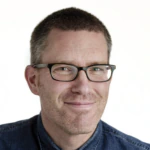
The thundering of kids' feet from the floor above Rhian Harris's office is a constant reminder that you are in the V&A's Museum of Childhood in east London. But as its new director, Harris has grand plans to get a few more adults pacing about upstairs.
"I think the museum needs a bit of reorientating in terms of being taken seriously as a national museum of childhood," she says. "That doesn't mean alienating family or school visitors. We want to deepen the experience for them, as we want to for everyone. But I don't want adults to feel alienated from visiting."
Harris says she hopes to build on the work of her predecessor, Diane Lees, who left last year to head the Imperial War Museum. Lees oversaw the redevelopment of the Museum of Childhood, which underwent two revamps in 2003 and 2006. The museum now attracts about 350,000 people a year and its visitor-profile does seem dominated by families with young children.
"My feeling is that it is treated a little bit as just a children's museum, and I have used it that way myself," adds Harris, who regularly visited with her young son before becoming its director. "You turn up, have a coffee with a friend, and the kids are running around looking at all the interactives. I am not sure how seriously people are looking at it and experiencing it as a museum."
Many of Harris's ambitions for the Museum of Childhood stem from her previous role as director of the Foundling Museum in central London. The museum tells the story of how a retired shipwright, Thomas Coram, created a hospital to care for abandoned babies. The Foundling Hospital opened in 1739 and looked after about 27,000 children until it closed in the 1950s.
Coram's venture attracted the support of the artist William Hogarth and composer George Frideric Handel, and they were among the many cultural figures who donated the artworks that are now in the Foundling Museum's collection.
Harris was the first professional curator for what was known as the Foundling Hospital Collection when she joined in 1995. She had a wide range of responsibilities.
"When I first arrived I was the only person working on the collection and my colleagues were social workers, administrators and the people who ran the charity [Coram, a registered charity, still works with vulnerable children and their families]," Harris says. "My title was curator, but I literally had to do everything for the first two years as there were no other staff."
Like many others in the sector who have cut their teeth at smaller museums, she feels that the experience has stood her in good stead. "I learned everything you need to do in a museum from the bottom upwards, so today I feel like I understand each element of how a museum works," Harris says. "I feel like have done most things as well as conceived an entire museum."
In 2001 Harris became the director of the Foundling Museum, which opened three years later after a long funding campaign that raised about £11.5m. Harris is proud of her achievements at the museum, which now has 18 full- and part-time staff, charges for entry and attracts about 35,000 visitors a year.
It features restored rococo rooms displaying works by artists such as Gainsborough, Hogarth and Reynolds as well as a temporary exhibition space, shop and cafe. But you get the feeling that the area that Harris is most proud of is the permanent exhibition that tells the story of Coram and the foundling children.
"There is the incredible poignancy to the story of Cor-am's struggle and society's response to helping vulnerable children," Harris says.
"Whenever I used to take people round the collection the thing that grabbed them was the tokens, these incredible objects, symbolic love tokens effectively, that women gave when they left their babies and children in the hospital. Even if people came to see a Hogarth, it was the tokens that used to grab them."
The experience that she gained in telling the story of the foundling children will feed strongly into her new role at the Museum of Childhood.
"One of the big first things I want to do is to have a strong narrative about childhood," Harris says. "I think that story is really missing from here. I particularly learned from the Foundling about how to tell a difficult story in a way that is poignant, not too sentimental, but clear and truthful."
Harris is already working on expanding the temporary exhibitions programme at the Museum of Childhood to include subjects that she hopes will give the museum some of the greater seriousness she is looking for. So she is planning more issues-based displays on topics such as autism and child slavery.
These are part of her aim to place the museum at the centre of the childhood community at a local, national and even international level. But it's not all going to be heavyweight topics. She wants to make links with the V&A's status as a museum
of art and design, and is looking at good quality children's design through an exhibition about playgrounds. She would also like to make stronger links with the East End's artistic community. And she wants to create a temporary exhibition for under-5s, who she believes are not catered for by many museums.
Harris's own childhood was spent in Wales, where her parents moved around a fair bit. Her involvement with museums during her school years centred on the national museum in Cardiff, where memories of the paintings and a "spooky and exciting" mock up of a mine stand out. She also spent time at St Fagans among its range of re-erected buildings.
Harris came to London after studying at the University of Essex and her first job was at the Wellcome Institute, which is just a stone's throw from the Foundling Museum. She now lives in Hackney, close to the Museum of Childhood, which is in neighbouring Tower Hamlets.
Living locally, being a regular visitor with her son and having worked at the Foundling Museum, all seemed to point to the Museum of Childhood as a potential next job. But Harris says she had not consciously thought about the Museum of Childhood as a potential move before Diane Lees announced her departure.
"It was not one of the places I was thinking of, so when I heard Di was leaving, everyone I knew said you have to apply for this and I suddenly thought 'oh gosh, yes I do, that makes complete sense'."
Now she is in post, Harris realises it's been a great move.
"I am absolutely loving it. The job takes me nicely out of my comfort zone and in some senses running the museum is simply on a different scale, and not that much different from the Foundling. But what is new and challenging is dealing with the V&A and I find that really exciting. There are all the things I am learning about how big institutions work, how nationals work and the challenges and opportunities that will bring."
And even if there are a few more adults wandering about the museum in the future, they will all have something that unites them with the younger visitors: "The universal quality of childhood is something that affects everyone," Harris says. "Everyone was a child."
"I think the museum needs a bit of reorientating in terms of being taken seriously as a national museum of childhood," she says. "That doesn't mean alienating family or school visitors. We want to deepen the experience for them, as we want to for everyone. But I don't want adults to feel alienated from visiting."
Harris says she hopes to build on the work of her predecessor, Diane Lees, who left last year to head the Imperial War Museum. Lees oversaw the redevelopment of the Museum of Childhood, which underwent two revamps in 2003 and 2006. The museum now attracts about 350,000 people a year and its visitor-profile does seem dominated by families with young children.
"My feeling is that it is treated a little bit as just a children's museum, and I have used it that way myself," adds Harris, who regularly visited with her young son before becoming its director. "You turn up, have a coffee with a friend, and the kids are running around looking at all the interactives. I am not sure how seriously people are looking at it and experiencing it as a museum."
Many of Harris's ambitions for the Museum of Childhood stem from her previous role as director of the Foundling Museum in central London. The museum tells the story of how a retired shipwright, Thomas Coram, created a hospital to care for abandoned babies. The Foundling Hospital opened in 1739 and looked after about 27,000 children until it closed in the 1950s.
Coram's venture attracted the support of the artist William Hogarth and composer George Frideric Handel, and they were among the many cultural figures who donated the artworks that are now in the Foundling Museum's collection.
Harris was the first professional curator for what was known as the Foundling Hospital Collection when she joined in 1995. She had a wide range of responsibilities.
"When I first arrived I was the only person working on the collection and my colleagues were social workers, administrators and the people who ran the charity [Coram, a registered charity, still works with vulnerable children and their families]," Harris says. "My title was curator, but I literally had to do everything for the first two years as there were no other staff."
Like many others in the sector who have cut their teeth at smaller museums, she feels that the experience has stood her in good stead. "I learned everything you need to do in a museum from the bottom upwards, so today I feel like I understand each element of how a museum works," Harris says. "I feel like have done most things as well as conceived an entire museum."
In 2001 Harris became the director of the Foundling Museum, which opened three years later after a long funding campaign that raised about £11.5m. Harris is proud of her achievements at the museum, which now has 18 full- and part-time staff, charges for entry and attracts about 35,000 visitors a year.
It features restored rococo rooms displaying works by artists such as Gainsborough, Hogarth and Reynolds as well as a temporary exhibition space, shop and cafe. But you get the feeling that the area that Harris is most proud of is the permanent exhibition that tells the story of Coram and the foundling children.
"There is the incredible poignancy to the story of Cor-am's struggle and society's response to helping vulnerable children," Harris says.
"Whenever I used to take people round the collection the thing that grabbed them was the tokens, these incredible objects, symbolic love tokens effectively, that women gave when they left their babies and children in the hospital. Even if people came to see a Hogarth, it was the tokens that used to grab them."
The experience that she gained in telling the story of the foundling children will feed strongly into her new role at the Museum of Childhood.
"One of the big first things I want to do is to have a strong narrative about childhood," Harris says. "I think that story is really missing from here. I particularly learned from the Foundling about how to tell a difficult story in a way that is poignant, not too sentimental, but clear and truthful."
Harris is already working on expanding the temporary exhibitions programme at the Museum of Childhood to include subjects that she hopes will give the museum some of the greater seriousness she is looking for. So she is planning more issues-based displays on topics such as autism and child slavery.
These are part of her aim to place the museum at the centre of the childhood community at a local, national and even international level. But it's not all going to be heavyweight topics. She wants to make links with the V&A's status as a museum
of art and design, and is looking at good quality children's design through an exhibition about playgrounds. She would also like to make stronger links with the East End's artistic community. And she wants to create a temporary exhibition for under-5s, who she believes are not catered for by many museums.
Harris's own childhood was spent in Wales, where her parents moved around a fair bit. Her involvement with museums during her school years centred on the national museum in Cardiff, where memories of the paintings and a "spooky and exciting" mock up of a mine stand out. She also spent time at St Fagans among its range of re-erected buildings.
Harris came to London after studying at the University of Essex and her first job was at the Wellcome Institute, which is just a stone's throw from the Foundling Museum. She now lives in Hackney, close to the Museum of Childhood, which is in neighbouring Tower Hamlets.
Living locally, being a regular visitor with her son and having worked at the Foundling Museum, all seemed to point to the Museum of Childhood as a potential next job. But Harris says she had not consciously thought about the Museum of Childhood as a potential move before Diane Lees announced her departure.
"It was not one of the places I was thinking of, so when I heard Di was leaving, everyone I knew said you have to apply for this and I suddenly thought 'oh gosh, yes I do, that makes complete sense'."
Now she is in post, Harris realises it's been a great move.
"I am absolutely loving it. The job takes me nicely out of my comfort zone and in some senses running the museum is simply on a different scale, and not that much different from the Foundling. But what is new and challenging is dealing with the V&A and I find that really exciting. There are all the things I am learning about how big institutions work, how nationals work and the challenges and opportunities that will bring."
And even if there are a few more adults wandering about the museum in the future, they will all have something that unites them with the younger visitors: "The universal quality of childhood is something that affects everyone," Harris says. "Everyone was a child."
Rhian Harris at a glance
Rhian Harris was born in Cardiff and has a degree in art history and theory from the University of Essex. She also has an MA in museum and gallery management from City University.
Her first museum job was in 1990 when she became a research assistant at the Wellcome Institute, later becoming a senior picture cataloguer.
In 1995 Harris joined the Thomas Coram Foundation as its first professional curator in post. She was made director in 2001 and oversaw the opening of the Foundling Museum three years later. She replaced Diane Lees as director of the Museum of Childhood
in September 2008.
Rhian Harris was born in Cardiff and has a degree in art history and theory from the University of Essex. She also has an MA in museum and gallery management from City University.
Her first museum job was in 1990 when she became a research assistant at the Wellcome Institute, later becoming a senior picture cataloguer.
In 1995 Harris joined the Thomas Coram Foundation as its first professional curator in post. She was made director in 2001 and oversaw the opening of the Foundling Museum three years later. She replaced Diane Lees as director of the Museum of Childhood
in September 2008.


