Major redevelopments are a steep learning curve for staff. As well as having to manage the project and all the disruption, there is also the danger of losing audiences if the museum has to close during the building work.
But shutting a museum can give staff the chance to think differently about their collections and make contact with a new, much wider public. Many museums are now viewing the transition not as a gap, but as a chance to enhance and extend their profile.
The Watts Gallery in Guildford is using its £10.1m restoration, which should be completed late next year, to reach an audience beyond faithful locals and those prepared to make the trip to Surrey.
Curator Mark Bills says the gallery is getting the collection out and about and showing some of the connections that the Victorian artist GF Watts had with London and elsewhere.
"We are making increasing loans to other institutions - for example, our portrait of Florence Nightingale to the Florence Nightingale Museum in London and a Surrey landscape to Godalming Museum."
In November, 80 works from the gallery set off on their first London outing for over a century. They have not visited the city since they were sent by the artist's wife, Mary, in 1905.
The two exhibitions in London include portraiture and landscape, and highlight the artist's social criticism and philosophical musings. GF Watts: Victorian Visionary is at the Guildhall Art Gallery until April and Parables in Paint is at St Paul's Cathedral until July. Victorian Visionary will travel to the Mercer Art Gallery in Harrogate in the autumn.
Bills says there have been downsides to loaning items and organising temporary exhibitions.
"It is taking a huge amount of work and involves huge costs. We wrote the costs in when we made our Heritage Lottery Fund (HLF) application, but it is important to think about these early on as part of the forward planning, and not just delivery of the building."
The Watts is keeping interest alive locally with a film being shown at an information point in the arts and crafts potteries building at Compton. Narrated by historian Tristram Hunt, it features Sandy Nairne, the director of the National Portrait Gallery, playwright Patrick Marber and sculptor Antony Gormley.
The popular tea-shop also remains open. And the gallery is continuing its education and outreach work with local schools, community groups and organisations such as HMP Send prison and Surrey Youth Justice Service.
Oxford's best-known museum, the Ashmolean, will be closed during 2009. "Incredibly, for the world's first public museum," says Edith Prak, its deputy director, "this is only the second time in the Ashmolean's 326-year history that we have closed. There will be no public access until the launch of the new Ashmolean in the late autumn of 2009."
Work began in earnest in 2005 when the antiquities, eastern art and coin collections were decanted into storage as the 19th-century galleries were demolished. "The impact of closure on staff and visitors has been very carefully planned for," Prak says.
A new building designed by Rick Mather Architects opens in November. In the meantime, to keep up interest in the museum, its shop will have an information point with news about the redevelopment and it will still be publishing its quarterly magazine with news on the project.
The museum will also be kept in the public eye through fine-art photographer Theo Chalmers' portraits of high-profile people such as author Philip Pullman and historian/television presenter Bettany Hughes, juxtaposed with artefacts from the Ashmolean's collections.
These are featuring on the back of London Express and Oxford City buses and in an online exhibition called My Ashmolean, My Museum.
Also in Oxford, the Pitt Rivers Museum redevelopment began in 2004. Its antiquated entrance area could no longer cope with visitor numbers.
When it reopens in May, it will cater for an extra 40,000 visitors each year in addition to its current 200,000. Although the galleries are closed, the library, teaching and admin departments remain accessible. The adjacent Oxford University Museum of Natural History will also stay open.
"We continue most of our behind-the-scenes functioning: answering collections-related and other public enquiries, delivering photographic services, conserving the collections and working on new displays, preparing new education and other materials," Pitt Rivers Museum director Michael O'Hanlon says.
"There was no alternative to total closure of the museum galleries (though its 2006 extension remains open) in this case," he continues. "Even had safety allowed it, it would have been unfair to visitors to subject them to the noise of the project. Our view was that it was better to close the galleries for a shorter defined period of time than spin it out."
Another big project is the £68m Museum of Liverpool, which is scheduled to open at Pier Head in 2011. The collection was housed in the Museum of Liverpool Life, which has been closed. "Everyone had to move out - our current temporary accommodation means that most staff working on the project are now based together, so in fact our communication has improved," says Janet Dugdale, director of urban history and former social history curator at the Museum of Liverpool Life.
"We planned two large-scale special exhibitions in other National Museums Liverpool venues, so this means collections from the Museum of Liverpool Life are currently on show. This year we have seen a 33 per cent increase in our visitors."
Opportunities to refocus
Exeter's Royal Albert Memorial Museum (RAMM) is closed for a three-year £15m expansion and modernisation programme. With funding from Exeter City Council, Renaissance and the HLF, the museum devised its Out and About programme to keep contact with its audiences. The museum attracted nearly a quarter of a million people in 2006-07, in a city of only 120,000.
Total closure of the RAMM was the only option, says Alan Caig, head of leisure and museums at Exeter City Council. The museums manager at Exeter City Museums, Camilla Hampshire, believes that there are significant gains. "We have reached new audiences, developed new ways of working and undertaken a ground-breaking community initiative."
The RAMM's ethnography department, under curator Tony Eccles, collaborated with David Mullin, collections officer at the Museum in the Park in Stroud, to create the exhibition Beauty - in the Eye of the Beholder. The project benefited both parties.
"Tony had the chance to exhibit items from a national collection to a new audience in a local history museum and the closure of the RAMM allowed us to gain access to it," says Mullin. "We could use the HLF funding to preserve and display parts of our own collection, attract repeat visitors and connect with non-museum visitors."
When the Ulster Museum closed for redevelopment in 2006, it immediately embarked on Reaching Out, a programme of 400 events taking place throughout Northern Ireland, including hoardings projects around Belfast. Staff organised displays of work all around the country, including 60 important paintings at the National Gallery in Dublin, the largest cooperative venture in the museums' history.
Other venues included the parliament buildings at Stormont, Hillsborough Castle and Fermanagh County Museum at Enniskillen Castle. Staff were offered the option of voluntary redundancy or being involved in collaborations, including one with the Foyle Film Festival and the Void art gallery in Derry.
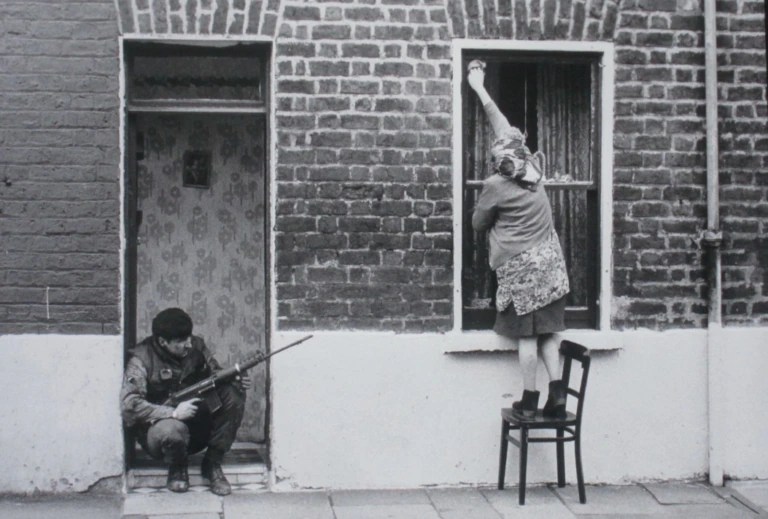
The revamped Ulster Museum will include a Troubles Gallery. Trevor Parkhill, keeper of history, says it will give people on both sides a chance to tell their own story and incorporate a new understanding of Irish history.
"Museums projects are challenging and complex", says Tim Cooke, chief executive of National Museums Northern Ireland. "They only come about as a result of a combination of many elements. Among the most important are clarity of vision, huge commitment from staff, and the involvement of stakeholders and funders.
"A lot of hard work has to be directed into joining all of those elements. Both the process and the passion have the ability to position museums at the heart of community and society in a new and different way. They engender a sense of pride and ownership and can engage a much broader audience."
Corinna Lotz is a freelance arts journalist
But shutting a museum can give staff the chance to think differently about their collections and make contact with a new, much wider public. Many museums are now viewing the transition not as a gap, but as a chance to enhance and extend their profile.
The Watts Gallery in Guildford is using its £10.1m restoration, which should be completed late next year, to reach an audience beyond faithful locals and those prepared to make the trip to Surrey.
Curator Mark Bills says the gallery is getting the collection out and about and showing some of the connections that the Victorian artist GF Watts had with London and elsewhere.
"We are making increasing loans to other institutions - for example, our portrait of Florence Nightingale to the Florence Nightingale Museum in London and a Surrey landscape to Godalming Museum."
In November, 80 works from the gallery set off on their first London outing for over a century. They have not visited the city since they were sent by the artist's wife, Mary, in 1905.
The two exhibitions in London include portraiture and landscape, and highlight the artist's social criticism and philosophical musings. GF Watts: Victorian Visionary is at the Guildhall Art Gallery until April and Parables in Paint is at St Paul's Cathedral until July. Victorian Visionary will travel to the Mercer Art Gallery in Harrogate in the autumn.
Bills says there have been downsides to loaning items and organising temporary exhibitions.
"It is taking a huge amount of work and involves huge costs. We wrote the costs in when we made our Heritage Lottery Fund (HLF) application, but it is important to think about these early on as part of the forward planning, and not just delivery of the building."
The Watts is keeping interest alive locally with a film being shown at an information point in the arts and crafts potteries building at Compton. Narrated by historian Tristram Hunt, it features Sandy Nairne, the director of the National Portrait Gallery, playwright Patrick Marber and sculptor Antony Gormley.
The popular tea-shop also remains open. And the gallery is continuing its education and outreach work with local schools, community groups and organisations such as HMP Send prison and Surrey Youth Justice Service.
Oxford's best-known museum, the Ashmolean, will be closed during 2009. "Incredibly, for the world's first public museum," says Edith Prak, its deputy director, "this is only the second time in the Ashmolean's 326-year history that we have closed. There will be no public access until the launch of the new Ashmolean in the late autumn of 2009."
Work began in earnest in 2005 when the antiquities, eastern art and coin collections were decanted into storage as the 19th-century galleries were demolished. "The impact of closure on staff and visitors has been very carefully planned for," Prak says.
A new building designed by Rick Mather Architects opens in November. In the meantime, to keep up interest in the museum, its shop will have an information point with news about the redevelopment and it will still be publishing its quarterly magazine with news on the project.
The museum will also be kept in the public eye through fine-art photographer Theo Chalmers' portraits of high-profile people such as author Philip Pullman and historian/television presenter Bettany Hughes, juxtaposed with artefacts from the Ashmolean's collections.
These are featuring on the back of London Express and Oxford City buses and in an online exhibition called My Ashmolean, My Museum.
Also in Oxford, the Pitt Rivers Museum redevelopment began in 2004. Its antiquated entrance area could no longer cope with visitor numbers.
When it reopens in May, it will cater for an extra 40,000 visitors each year in addition to its current 200,000. Although the galleries are closed, the library, teaching and admin departments remain accessible. The adjacent Oxford University Museum of Natural History will also stay open.
"We continue most of our behind-the-scenes functioning: answering collections-related and other public enquiries, delivering photographic services, conserving the collections and working on new displays, preparing new education and other materials," Pitt Rivers Museum director Michael O'Hanlon says.
"There was no alternative to total closure of the museum galleries (though its 2006 extension remains open) in this case," he continues. "Even had safety allowed it, it would have been unfair to visitors to subject them to the noise of the project. Our view was that it was better to close the galleries for a shorter defined period of time than spin it out."
Another big project is the £68m Museum of Liverpool, which is scheduled to open at Pier Head in 2011. The collection was housed in the Museum of Liverpool Life, which has been closed. "Everyone had to move out - our current temporary accommodation means that most staff working on the project are now based together, so in fact our communication has improved," says Janet Dugdale, director of urban history and former social history curator at the Museum of Liverpool Life.
"We planned two large-scale special exhibitions in other National Museums Liverpool venues, so this means collections from the Museum of Liverpool Life are currently on show. This year we have seen a 33 per cent increase in our visitors."
Opportunities to refocus
Exeter's Royal Albert Memorial Museum (RAMM) is closed for a three-year £15m expansion and modernisation programme. With funding from Exeter City Council, Renaissance and the HLF, the museum devised its Out and About programme to keep contact with its audiences. The museum attracted nearly a quarter of a million people in 2006-07, in a city of only 120,000.
Total closure of the RAMM was the only option, says Alan Caig, head of leisure and museums at Exeter City Council. The museums manager at Exeter City Museums, Camilla Hampshire, believes that there are significant gains. "We have reached new audiences, developed new ways of working and undertaken a ground-breaking community initiative."
The RAMM's ethnography department, under curator Tony Eccles, collaborated with David Mullin, collections officer at the Museum in the Park in Stroud, to create the exhibition Beauty - in the Eye of the Beholder. The project benefited both parties.
"Tony had the chance to exhibit items from a national collection to a new audience in a local history museum and the closure of the RAMM allowed us to gain access to it," says Mullin. "We could use the HLF funding to preserve and display parts of our own collection, attract repeat visitors and connect with non-museum visitors."
When the Ulster Museum closed for redevelopment in 2006, it immediately embarked on Reaching Out, a programme of 400 events taking place throughout Northern Ireland, including hoardings projects around Belfast. Staff organised displays of work all around the country, including 60 important paintings at the National Gallery in Dublin, the largest cooperative venture in the museums' history.
Other venues included the parliament buildings at Stormont, Hillsborough Castle and Fermanagh County Museum at Enniskillen Castle. Staff were offered the option of voluntary redundancy or being involved in collaborations, including one with the Foyle Film Festival and the Void art gallery in Derry.
The revamped Ulster Museum will include a Troubles Gallery. Trevor Parkhill, keeper of history, says it will give people on both sides a chance to tell their own story and incorporate a new understanding of Irish history.
"Museums projects are challenging and complex", says Tim Cooke, chief executive of National Museums Northern Ireland. "They only come about as a result of a combination of many elements. Among the most important are clarity of vision, huge commitment from staff, and the involvement of stakeholders and funders.
"A lot of hard work has to be directed into joining all of those elements. Both the process and the passion have the ability to position museums at the heart of community and society in a new and different way. They engender a sense of pride and ownership and can engage a much broader audience."
Corinna Lotz is a freelance arts journalist
Whitechapel Art Gallery, London
Reopening: Spring 2009 after two-year redevelopment.
Activities: Has continued to hold exhibitions and events such as live music, late evenings, films and poetry readings, plus outreach projects and off-site commissions.
Cost: £13.5m.
Architect: Robbrecht en Daem.
Lessons: "Keep facilities open to the public whenever possible and maintain good communications with stakeholders and audiences," says Rachel Mapplebeck, media relations and marketing manager at the Whitechapel.
Riverside Museum Project, Glasgow
Opening: 2011. Riverside Museum is replacing the Museum of Transport.
Activities: Museum of Transport is remaining open until collection has to be decanted into new premises.
Cost: £74m.
Architect: Zaha Hadid.
Lessons: "Closing down [Kelvingrove Art Gallery and Museum, Glasgow Museums' last big capital project] completely was a huge positive, in terms of both managing the refurbishment and marking a new beginning," says Mark O'Neill, head of arts and museums, Glasgow Museums.
Reopening: Spring 2009 after two-year redevelopment.
Activities: Has continued to hold exhibitions and events such as live music, late evenings, films and poetry readings, plus outreach projects and off-site commissions.
Cost: £13.5m.
Architect: Robbrecht en Daem.
Lessons: "Keep facilities open to the public whenever possible and maintain good communications with stakeholders and audiences," says Rachel Mapplebeck, media relations and marketing manager at the Whitechapel.
Riverside Museum Project, Glasgow
Opening: 2011. Riverside Museum is replacing the Museum of Transport.
Activities: Museum of Transport is remaining open until collection has to be decanted into new premises.
Cost: £74m.
Architect: Zaha Hadid.
Lessons: "Closing down [Kelvingrove Art Gallery and Museum, Glasgow Museums' last big capital project] completely was a huge positive, in terms of both managing the refurbishment and marking a new beginning," says Mark O'Neill, head of arts and museums, Glasgow Museums.