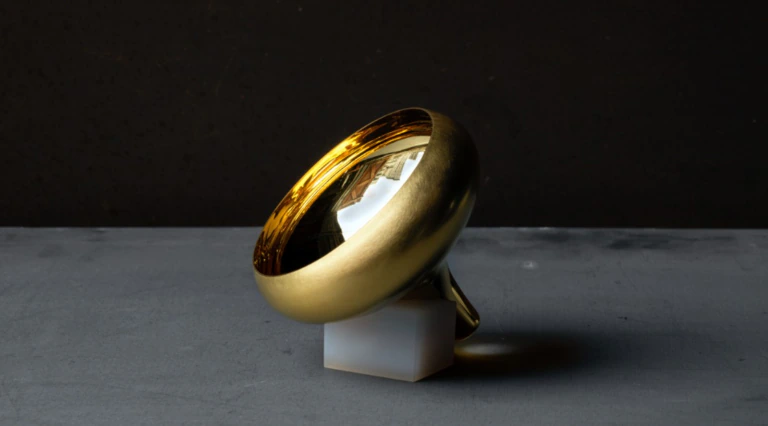
The Museum of Islamic Art, which opens in Doha next month, has been described as possibly the best new museum or gallery building anywhere in the world.
It is the swansong project of renowned architect IM Pei and has been built at an estimated cost of more than £200m. It will have 4,000 sq metres of exhibition space, making it one of the world's biggest museums of Islamic art.
Impressive statistics, but it's easy to be swept away by the sheer volume of museum development in the Middle East. The museum is just one of over a dozen new museums in the area that are scheduled to open in next decade. Art lovers, historians, maritime fans and children will all be well served if the planned museums and galleries come to fruition.
At first glance, the source of this cultural boom is obvious. Oil wealth has transformed the fortunes of the Gulf States over the past 40 years. Michael Rice, a consultant to various governments in the area since the 1970s, says the cultural boom is part of the incredible development that the states have undergone.
"When I first became involved in the area the infrastructure was basic. But now a great deal of oil money has been ploughed back into the local economy, including latterly into cultural heritage."
Barry Lord, co-president of consultants Lord Cultural Resources, has been working in the region for over 20 years. He agrees it has been a dramatic transformation. "They've got to the point where there's sufficient surplus and they can devote some of it to cultural pursuits."
Although governments and funders are coy about the exact amounts, conservative estimates run to billions of pounds. For this amount of investment a return is expected.
One of the most high-profile developments is Saadiyat Island in Abu Dhabi. By 2012 the residential and leisure complex will play host to four new museums, including satellites of the Louvre and the Guggenheim.
Boosting international tourism is one of the key reasons behind the development, so just as Dubai has carved out a place for itself as a mass tourism destination, Abu Dhabi is trying to recreate itself as a centre for cultural tourism.
Martyn Best, director of consultants Cultural Innovations, has been working in the Middle East for 20 years. He says that in many countries tourism underlies the current boom, but cultural pride and creating a cultural presence are also factors. "It's about pride in their own cultural heritage and a desire to see the preservation and interpretation of that heritage."
Lord agrees. He says there has been a decision on the part of the emirs and the royal families to place their culture in an international context and bring global culture to their people. "Their vision of their society and the place of Islamic culture in that society is that they see it in the historical context of Islam in the middle ages when Islam was a leader in architecture, mathematics and the visual arts."
Acquiring high-quality objects
Having huge resources to pour into cultural projects is a curator's dream and alongside the iconic buildings by high-profile architects, there is also the advantage of generous acquisition budgets and world-class facilities. And the emphasis is on quality as well as scale.
Oliver Watson, the director of Doha's Museum of Islamic Art, says that the aspiration for them has been to acquire objects of the highest quality and to house them in a flagship building. He describes the museum's back-of-house facilities as being "the envy of museums anywhere in the world".
He adds: "The collection may not be very large compared to established collections with a longer history, but in terms of quality it absolutely comparable."
There are concerns though about the sustainability of the new developments. While the global hike in oil prices might be helping to fuel the cultural boom, it may have negative repercussions in terms of the number of people willing to travel to the region.
Will western European visitors be willing to fly to the Louvre in Abu Dhabi when the "real thing" is only a train ride away in Paris? And will credit-crunched Americans be prepared to put aside their fears of terrorism to travel to the region?
Keith Gray, development director at design consultancy Haley Sharpe, has been working in the region for 15 years and is optimistic. "The Emirates are established as one of most important business hubs in the world. By default, the surrounding regions will benefit - as long as they don't overdevelop, they'll be OK." He puts their success so far down to "an incredible mixture of vision and confidence" and adds that "nothing has failed yet".
Building a tradition
Sue Underwood, who has worked in Sharjah Museums Department for the past three years, doesn't see the current glut of new museums as a boom, but more part of a long-term strategy. "Museums began to be developed in Sharjah 15 to 20 years ago. They are bone fide, credible, important museums."
The idea of importing museum brands, as with the Louvre and the Guggenheim, has not been without its critics. In France the Abu Dhabi deal has caused controversy, with the government and the museum accused of acting out of financial rather than cultural motives. It is reported to be worth over £800m to France and includes the loan of artworks, use of the Louvre brand and curatorial support and advice.
And there are potential pitfalls for the host country too, which could be seen as buying-in western culture at the risk of neglecting its own.
Martyn Best is cautious: "There needs to be a deep commitment to making western culture relevant to local audiences in these countries, but there's a danger that they just end up importing a brand. There are real debates going on about what the imported cultural brands really deliver and mean to the host countries."
In the short-term it may be as well relying on tourism to make up the visitor figures as until recently there has been little tradition of museum-visiting among local people.
Rice says that when he was first involved in the Gulf there was no concept of going to museums. He describes working on the Doha Museum from 1972 to 1974: "We noticed that local kids were coming in to the newly built museum buildings in the evenings and copying down the extensive texts there.
"We found out that they had been told by their teachers, who weren't local, that they had no history - but because of the museum they realised that they did have a history and they responded. When the museum opened, they brought their parents and grandparents."
In Abu Dhabi the Tourism Development and Investment Company, which is behind Saadiyat Island, is trying to develop a museum-going population. A wing of the Emirates Palace hotel has been devoted to an exhibition showing the design concepts for the island's cultural projects.
Alongside that is a temporary exhibition space that has already hosted the Arts of Islam: Treasures of the Nasser D Khalili Collection, which attracted an audience of 60,000 over three months, and Masterpieces from the Musée National Picasso, Paris - the first time the works of Picasso have been on public show in the Middle East. Both exhibitions had free entry.
Creating a professional class
Lord says starting with Islamic art, which has a built-in appeal to local audiences, and then moving on to a famous name such as Picasso, makes sense. "It's an educational sequence designed to cultivate a museum-going habit."
No museums in the UK have yet lent their brand to satellites in the Middle East, although many have some involvement in the area. The British Museum has an ongoing agreement with the Museum of Islamic Art in Doha to provide organisational support. And next year, Tate's Lure of the East exhibition travels to the Sharjah Art Museum.
One thing is certain and that is that the rapid pace of development is set to continue for the foreseeable future. Gray says that when he first went to the Gulf 15 years ago, most museums were underfunded and had little government support.
"There's been a huge step that bypasses the normal level of museum development seen elsewhere. They've gone global - the Middle East as a region is doing successfully what other regions have taken many decades to do."
But the lack of infrastructure and rapid pace of development have led to problems in the staffing of the new museums. Best says the situation is comparable with the Millennium Commission projects in UK. "They were all about getting the buildings up, but not much thought was given to how they would operate afterwards."
The key now will be ensuring that local curators, conservators and education staff are trained. Watson acknowledges that up until now they have had to look abroad for staff, but he is hopeful that this will change in the near future. "It's our ambition and intention that we will train local Qataris to take over specialist positions."
According to Underwood, there were no postgraduate degree courses in museum studies in Sharjah up until this year and the idea of a career in museums or the arts wasn't taken seriously. She says that is now changing. "What we need to make sure is that there are Emiratis there to run these new museums."
It is the swansong project of renowned architect IM Pei and has been built at an estimated cost of more than £200m. It will have 4,000 sq metres of exhibition space, making it one of the world's biggest museums of Islamic art.
Impressive statistics, but it's easy to be swept away by the sheer volume of museum development in the Middle East. The museum is just one of over a dozen new museums in the area that are scheduled to open in next decade. Art lovers, historians, maritime fans and children will all be well served if the planned museums and galleries come to fruition.
At first glance, the source of this cultural boom is obvious. Oil wealth has transformed the fortunes of the Gulf States over the past 40 years. Michael Rice, a consultant to various governments in the area since the 1970s, says the cultural boom is part of the incredible development that the states have undergone.
"When I first became involved in the area the infrastructure was basic. But now a great deal of oil money has been ploughed back into the local economy, including latterly into cultural heritage."
Barry Lord, co-president of consultants Lord Cultural Resources, has been working in the region for over 20 years. He agrees it has been a dramatic transformation. "They've got to the point where there's sufficient surplus and they can devote some of it to cultural pursuits."
Although governments and funders are coy about the exact amounts, conservative estimates run to billions of pounds. For this amount of investment a return is expected.
One of the most high-profile developments is Saadiyat Island in Abu Dhabi. By 2012 the residential and leisure complex will play host to four new museums, including satellites of the Louvre and the Guggenheim.
Boosting international tourism is one of the key reasons behind the development, so just as Dubai has carved out a place for itself as a mass tourism destination, Abu Dhabi is trying to recreate itself as a centre for cultural tourism.
Martyn Best, director of consultants Cultural Innovations, has been working in the Middle East for 20 years. He says that in many countries tourism underlies the current boom, but cultural pride and creating a cultural presence are also factors. "It's about pride in their own cultural heritage and a desire to see the preservation and interpretation of that heritage."
Lord agrees. He says there has been a decision on the part of the emirs and the royal families to place their culture in an international context and bring global culture to their people. "Their vision of their society and the place of Islamic culture in that society is that they see it in the historical context of Islam in the middle ages when Islam was a leader in architecture, mathematics and the visual arts."
Acquiring high-quality objects
Having huge resources to pour into cultural projects is a curator's dream and alongside the iconic buildings by high-profile architects, there is also the advantage of generous acquisition budgets and world-class facilities. And the emphasis is on quality as well as scale.
Oliver Watson, the director of Doha's Museum of Islamic Art, says that the aspiration for them has been to acquire objects of the highest quality and to house them in a flagship building. He describes the museum's back-of-house facilities as being "the envy of museums anywhere in the world".
He adds: "The collection may not be very large compared to established collections with a longer history, but in terms of quality it absolutely comparable."
There are concerns though about the sustainability of the new developments. While the global hike in oil prices might be helping to fuel the cultural boom, it may have negative repercussions in terms of the number of people willing to travel to the region.
Will western European visitors be willing to fly to the Louvre in Abu Dhabi when the "real thing" is only a train ride away in Paris? And will credit-crunched Americans be prepared to put aside their fears of terrorism to travel to the region?
Keith Gray, development director at design consultancy Haley Sharpe, has been working in the region for 15 years and is optimistic. "The Emirates are established as one of most important business hubs in the world. By default, the surrounding regions will benefit - as long as they don't overdevelop, they'll be OK." He puts their success so far down to "an incredible mixture of vision and confidence" and adds that "nothing has failed yet".
Building a tradition
Sue Underwood, who has worked in Sharjah Museums Department for the past three years, doesn't see the current glut of new museums as a boom, but more part of a long-term strategy. "Museums began to be developed in Sharjah 15 to 20 years ago. They are bone fide, credible, important museums."
The idea of importing museum brands, as with the Louvre and the Guggenheim, has not been without its critics. In France the Abu Dhabi deal has caused controversy, with the government and the museum accused of acting out of financial rather than cultural motives. It is reported to be worth over £800m to France and includes the loan of artworks, use of the Louvre brand and curatorial support and advice.
And there are potential pitfalls for the host country too, which could be seen as buying-in western culture at the risk of neglecting its own.
Martyn Best is cautious: "There needs to be a deep commitment to making western culture relevant to local audiences in these countries, but there's a danger that they just end up importing a brand. There are real debates going on about what the imported cultural brands really deliver and mean to the host countries."
In the short-term it may be as well relying on tourism to make up the visitor figures as until recently there has been little tradition of museum-visiting among local people.
Rice says that when he was first involved in the Gulf there was no concept of going to museums. He describes working on the Doha Museum from 1972 to 1974: "We noticed that local kids were coming in to the newly built museum buildings in the evenings and copying down the extensive texts there.
"We found out that they had been told by their teachers, who weren't local, that they had no history - but because of the museum they realised that they did have a history and they responded. When the museum opened, they brought their parents and grandparents."
In Abu Dhabi the Tourism Development and Investment Company, which is behind Saadiyat Island, is trying to develop a museum-going population. A wing of the Emirates Palace hotel has been devoted to an exhibition showing the design concepts for the island's cultural projects.
Alongside that is a temporary exhibition space that has already hosted the Arts of Islam: Treasures of the Nasser D Khalili Collection, which attracted an audience of 60,000 over three months, and Masterpieces from the Musée National Picasso, Paris - the first time the works of Picasso have been on public show in the Middle East. Both exhibitions had free entry.
Creating a professional class
Lord says starting with Islamic art, which has a built-in appeal to local audiences, and then moving on to a famous name such as Picasso, makes sense. "It's an educational sequence designed to cultivate a museum-going habit."
No museums in the UK have yet lent their brand to satellites in the Middle East, although many have some involvement in the area. The British Museum has an ongoing agreement with the Museum of Islamic Art in Doha to provide organisational support. And next year, Tate's Lure of the East exhibition travels to the Sharjah Art Museum.
One thing is certain and that is that the rapid pace of development is set to continue for the foreseeable future. Gray says that when he first went to the Gulf 15 years ago, most museums were underfunded and had little government support.
"There's been a huge step that bypasses the normal level of museum development seen elsewhere. They've gone global - the Middle East as a region is doing successfully what other regions have taken many decades to do."
But the lack of infrastructure and rapid pace of development have led to problems in the staffing of the new museums. Best says the situation is comparable with the Millennium Commission projects in UK. "They were all about getting the buildings up, but not much thought was given to how they would operate afterwards."
The key now will be ensuring that local curators, conservators and education staff are trained. Watson acknowledges that up until now they have had to look abroad for staff, but he is hopeful that this will change in the near future. "It's our ambition and intention that we will train local Qataris to take over specialist positions."
According to Underwood, there were no postgraduate degree courses in museum studies in Sharjah up until this year and the idea of a career in museums or the arts wasn't taken seriously. She says that is now changing. "What we need to make sure is that there are Emiratis there to run these new museums."
Cultural plans
Guggenheim, Saadiyat Island, Abu Dhabi, UAE
Opening: 2012
Cost: Guggenheim will receive estimated £225m
Size: 300,000 sq metres
Architect: Frank Gehry
Collection: Modern and contemporary art, including loans from the Guggenheim's collections
Louvre, Saadiyat Island, Abu Dhabi, UAE
Opening: 2012
Cost: £800m (est)
Size: 24,000 sq metres
Architect: Jean Nouvel
Consultant: Lord Cultural Resources
Collection: Islamic art, Asian art, classical antiquities, including loans from the Louvre and other French museums
Maritime Museum, Saadiyat Island, Abu Dhabi, UAE
Architect: Tadao Ando
Consultant: Lord Cultural Resources
Collection: will include aquarium
Massar Children's Discovery Centre, Syria
Opening: 2011
Cost: £40m
Size: 15,000 sq metres
Architect: Henning Larsen
Exhibition design: Cultural Innovations in association with Northern Light, Real Studios and Furneaux Stewart/KCA
Collection: The intention is to create a space for learning and dialogue for 5-to-15 year olds
Museum of Contemporary Art, Bahrain
Opening: 2012
Size: 10,000 sq metres
Architect: Zaha Hadid
Museum of Islamic Art, Doha, Qatar
Opening: November 2008
Cost: £160m
Size: 4,000 sq metres of exhibition space
Architect: IM Pei
Consultant: Cultural Innovations
Collection: Objects range from a fountainhead in the shape of a hind from the mosque in Cordoba to an amulet worn by the Shah Jahan and the earliest complete Persian carpet from 15th century. First floor will showcase Islamic art, literature and science; second floor will "celebrate diversity in Islamic art"
Museum of Islamic Civilization, Sharjah, UAE
Opened: June 2008
Size: 9,000 sq metres (total)
Collection: Housed in Souq Al Majarrah. Core collection of 5,000 objects. Includes Abu Bakr faith gallery, science and innovation gallery and four Islamic art galleries containing Quranic manuscripts, ceramics, metalwork and jewels ranging from 7th to 20th centuries
Sheikh Zayed National Museum, Saadiyat Island, Abu Dhabi, UAE
Opening: 2012
Cost: £30m (est)
Size: 12,000 sq metres
Architect: Foster + Partners
Collection: Social, political and natural history of region, featuring galleries devoted to UAE heritage, environment, and education
Other projects
Bedouin Heritage Museum, Abu Dhabi; Museum of Middle East Modern Art, Dubai; The Children's Museum, Jordan; National Museum, Oman
Guggenheim, Saadiyat Island, Abu Dhabi, UAE
Opening: 2012
Cost: Guggenheim will receive estimated £225m
Size: 300,000 sq metres
Architect: Frank Gehry
Collection: Modern and contemporary art, including loans from the Guggenheim's collections
Louvre, Saadiyat Island, Abu Dhabi, UAE
Opening: 2012
Cost: £800m (est)
Size: 24,000 sq metres
Architect: Jean Nouvel
Consultant: Lord Cultural Resources
Collection: Islamic art, Asian art, classical antiquities, including loans from the Louvre and other French museums
Maritime Museum, Saadiyat Island, Abu Dhabi, UAE
Architect: Tadao Ando
Consultant: Lord Cultural Resources
Collection: will include aquarium
Massar Children's Discovery Centre, Syria
Opening: 2011
Cost: £40m
Size: 15,000 sq metres
Architect: Henning Larsen
Exhibition design: Cultural Innovations in association with Northern Light, Real Studios and Furneaux Stewart/KCA
Collection: The intention is to create a space for learning and dialogue for 5-to-15 year olds
Museum of Contemporary Art, Bahrain
Opening: 2012
Size: 10,000 sq metres
Architect: Zaha Hadid
Museum of Islamic Art, Doha, Qatar
Opening: November 2008
Cost: £160m
Size: 4,000 sq metres of exhibition space
Architect: IM Pei
Consultant: Cultural Innovations
Collection: Objects range from a fountainhead in the shape of a hind from the mosque in Cordoba to an amulet worn by the Shah Jahan and the earliest complete Persian carpet from 15th century. First floor will showcase Islamic art, literature and science; second floor will "celebrate diversity in Islamic art"
Museum of Islamic Civilization, Sharjah, UAE
Opened: June 2008
Size: 9,000 sq metres (total)
Collection: Housed in Souq Al Majarrah. Core collection of 5,000 objects. Includes Abu Bakr faith gallery, science and innovation gallery and four Islamic art galleries containing Quranic manuscripts, ceramics, metalwork and jewels ranging from 7th to 20th centuries
Sheikh Zayed National Museum, Saadiyat Island, Abu Dhabi, UAE
Opening: 2012
Cost: £30m (est)
Size: 12,000 sq metres
Architect: Foster + Partners
Collection: Social, political and natural history of region, featuring galleries devoted to UAE heritage, environment, and education
Other projects
Bedouin Heritage Museum, Abu Dhabi; Museum of Middle East Modern Art, Dubai; The Children's Museum, Jordan; National Museum, Oman