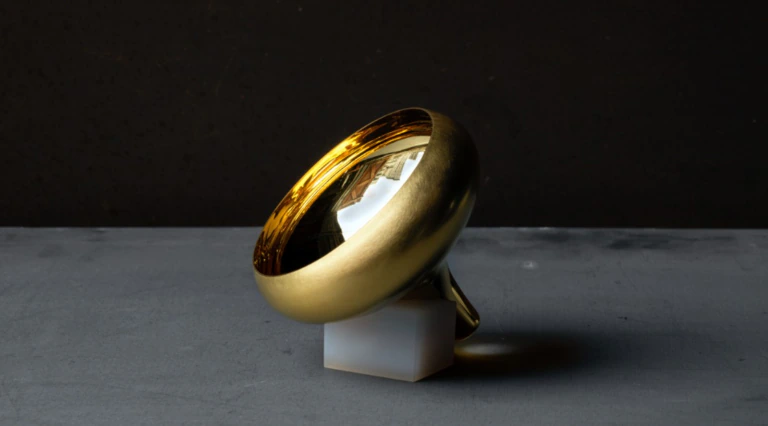
Take a wreath, its woven leaves like brown paper. But this isn't just any old wreath: it was thrown into the carriage carrying the king and prime minister, David Lloyd George, after the signing of the Versailles peace treaty in 1919.
As the PM's mistress, private secretary and, later, second wife, Frances Stevenson, wrote in her diary: "It fell in the King's lap but he handed it to D [Lloyd George]. 'This is for you,' he said. D has given it to me, & though it will fade, I will keep it all my life."
This victory wreath, belonging to the Lloyd George Museum in Wales, and its personal story is one of the items that will go into the Imperial War Museum London's (IWM) exhibition In Memoriam: Remembering the Great War, which opens in September. "We're using the ordinary to tell the extraordinary," says James Taylor, the acting head of research and information at the museum.
This is a milestone year for the IWM as it marks the 90th anniversary of the end of the first world war on 11 November 1918. The "war to end all wars" was the catalyst for the mu-seum's foundation.
"In the 20 years that I've been here, interest in the first world war has increased hugely, particularly as people are looking to the past to find a sense of identity," says Taylor.
The current fascination with family history is prompting more people to track down their ancestors' wartime exploits through the archives of local and national museums, according to Stuart Eastwood, curator at the King's Own Royal Border Regiment Museum in Carlisle. That trend looks set to continue as the 90th anniversary approaches.
People's stories
The IWM's In Memoriam exhibition is one of a series of shows, events and educational activities that museums are planning to mark the anniversary.
People's stories are at the heart of In Memoriam, says Cressida Finch, a researcher on the project. The exhibition will bring together multiple perspectives, ranging from the experiences of the last surviving first world war veterans, to accounts of what it was like to be in combat, to be wounded, or taken prisoner.
Soldiers' letters will sit alongside children's wartime toys, as well as ephemera and reminiscences from the home front. The idea is to reveal the personal stories behind the unprecedented military, industrial and civilian involvement in the war effort.
"We're not telling a battle-by-battle history of the first world war," says Finch. "We're picking out common and unusual experiences. They're human stories about what people went through. We'll also look back at the war from where we are today. We're creating opportunities for people to reflect on their links with the past and to make their own contribution."
Anniversaries like these offer an opportunity for museums to take the historical temperature, says Taylor. "In this case, it's a chance to reappraise how we remember a war that is often seen as a tragedy.
Of course, more than 750,000 British servicemen lost their lives, which is a huge figure, but we're trying to bring out other truths, too."
What's challenging is that the historiography around the war changes constantly, he says. "A lot of people come to the first world war through the war poets who, largely, tell one side of the story. We're also fighting against the Blackadder myths… These images are powerful and difficult to overcome. We're not going to confront people by saying that 'you're wrong', but the subject and our material is so rich that we're saying 'let's find a different way of looking at this'."
Personal insights can offer that breadth of perspective, says Dan Phillips, the deputy project director of Their Past Your Future (TPYF) educational programme.
"For every person for whom it was a horrible experience, you're able to find someone who found it life-affirming, and everything in between," he says. Personal stories can be a conduit for making connections between the past and the present - important when we're moving away from direct memory of the period.
Intergenerational contact
It was some of this thinking that gave impetus to TPYF, which is now in its second phase. The first phase ran from 2004 to 2006 and had its roots in the 60th anniversary of the second world war.
This UK-wide project is supported by the Big Lottery Fund and is being led by a partnership of the IWM; the Museums, Libraries and Archives Council; Northern Ireland Museums Council; National Library of Wales; and the Scottish Museums Council (now Museums Galleries Scotland).
One of the main drivers of the first phase was to encourage intergenerational contact between those who had lived through world war two and younger generations. The second phase has been extended to explore the impact of 20th-century conflict, and the project's outcomes are feeding into the programming for the first world war anniversary.
"TPYF was a welcome opportunity to engage with a younger age group and to hear their voices on issues such as remembrance and conflict generally," says Phillips. "The work has been formative in terms of looking forward for the museum as an institution."
He says the project allows for greater innovation because it is not tied to any one museum and encompasses a UK-wide programme of activities. "We're able to sit slightly outside institutional parameters and act as a testing ground for different approaches." He cites the success of the partnership I-Witness scheme, which brings together schools and individuals who have experienced conflict.
"It valued not only the schools' perspective, and their need to have a human resource, but also the learning that went on for the veterans and eyewitnesses," he says. "Through TPYF we unearthed a host of people who had never shared their experiences before."
In April, Phillips and Taylor accompanied a group of Surrey students on a visit to Thailand and Australia to learn about the impact of 20th-century conflict from an Australian perspective. The team hoped they would reassess their attitudes towards historical events.
Balancing priorities
Future plans include a national competition to give young people the chance to join a commemorative visit to the first world war battlefields in France and Belgium, a trip that will coincide with this year's 90th anniversary.
Deborah Dunning, the curator at the Gordon Highlanders Museum in Aberdeen, commends the interaction that TPYF has fostered. She says that when the exhibition on the second world war came to the museum, it helped them engage with more audiences.
"It helped us to develop our audience strategy, policy and the way we looked at interpretation. We're now focusing more on including people with the way that history should be commemorated," she says.
For the 90th anniversary, the museum will provide topical displays, themed talks and a variety of formal and informal educational workshops. Yet Dunning, like a number of curators, admits that it's been tough to track down sources of funding to help them mark the Armistice anniversary.
But even if partnerships and funding can be found, it's important to balance anniversary and special projects against the core responsibilities of operating a museum, says Stuart Eastwood.
Ultimately, it's a matter of priorities. "Armistice Day is one Sunday every year and, although dates are significant, we are working with this history all the time."
Juliana Gilling is a freelance journalist
As the PM's mistress, private secretary and, later, second wife, Frances Stevenson, wrote in her diary: "It fell in the King's lap but he handed it to D [Lloyd George]. 'This is for you,' he said. D has given it to me, & though it will fade, I will keep it all my life."
This victory wreath, belonging to the Lloyd George Museum in Wales, and its personal story is one of the items that will go into the Imperial War Museum London's (IWM) exhibition In Memoriam: Remembering the Great War, which opens in September. "We're using the ordinary to tell the extraordinary," says James Taylor, the acting head of research and information at the museum.
This is a milestone year for the IWM as it marks the 90th anniversary of the end of the first world war on 11 November 1918. The "war to end all wars" was the catalyst for the mu-seum's foundation.
"In the 20 years that I've been here, interest in the first world war has increased hugely, particularly as people are looking to the past to find a sense of identity," says Taylor.
The current fascination with family history is prompting more people to track down their ancestors' wartime exploits through the archives of local and national museums, according to Stuart Eastwood, curator at the King's Own Royal Border Regiment Museum in Carlisle. That trend looks set to continue as the 90th anniversary approaches.
People's stories
The IWM's In Memoriam exhibition is one of a series of shows, events and educational activities that museums are planning to mark the anniversary.
People's stories are at the heart of In Memoriam, says Cressida Finch, a researcher on the project. The exhibition will bring together multiple perspectives, ranging from the experiences of the last surviving first world war veterans, to accounts of what it was like to be in combat, to be wounded, or taken prisoner.
Soldiers' letters will sit alongside children's wartime toys, as well as ephemera and reminiscences from the home front. The idea is to reveal the personal stories behind the unprecedented military, industrial and civilian involvement in the war effort.
"We're not telling a battle-by-battle history of the first world war," says Finch. "We're picking out common and unusual experiences. They're human stories about what people went through. We'll also look back at the war from where we are today. We're creating opportunities for people to reflect on their links with the past and to make their own contribution."
Anniversaries like these offer an opportunity for museums to take the historical temperature, says Taylor. "In this case, it's a chance to reappraise how we remember a war that is often seen as a tragedy.
Of course, more than 750,000 British servicemen lost their lives, which is a huge figure, but we're trying to bring out other truths, too."
What's challenging is that the historiography around the war changes constantly, he says. "A lot of people come to the first world war through the war poets who, largely, tell one side of the story. We're also fighting against the Blackadder myths… These images are powerful and difficult to overcome. We're not going to confront people by saying that 'you're wrong', but the subject and our material is so rich that we're saying 'let's find a different way of looking at this'."
Personal insights can offer that breadth of perspective, says Dan Phillips, the deputy project director of Their Past Your Future (TPYF) educational programme.
"For every person for whom it was a horrible experience, you're able to find someone who found it life-affirming, and everything in between," he says. Personal stories can be a conduit for making connections between the past and the present - important when we're moving away from direct memory of the period.
Intergenerational contact
It was some of this thinking that gave impetus to TPYF, which is now in its second phase. The first phase ran from 2004 to 2006 and had its roots in the 60th anniversary of the second world war.
This UK-wide project is supported by the Big Lottery Fund and is being led by a partnership of the IWM; the Museums, Libraries and Archives Council; Northern Ireland Museums Council; National Library of Wales; and the Scottish Museums Council (now Museums Galleries Scotland).
One of the main drivers of the first phase was to encourage intergenerational contact between those who had lived through world war two and younger generations. The second phase has been extended to explore the impact of 20th-century conflict, and the project's outcomes are feeding into the programming for the first world war anniversary.
"TPYF was a welcome opportunity to engage with a younger age group and to hear their voices on issues such as remembrance and conflict generally," says Phillips. "The work has been formative in terms of looking forward for the museum as an institution."
He says the project allows for greater innovation because it is not tied to any one museum and encompasses a UK-wide programme of activities. "We're able to sit slightly outside institutional parameters and act as a testing ground for different approaches." He cites the success of the partnership I-Witness scheme, which brings together schools and individuals who have experienced conflict.
"It valued not only the schools' perspective, and their need to have a human resource, but also the learning that went on for the veterans and eyewitnesses," he says. "Through TPYF we unearthed a host of people who had never shared their experiences before."
In April, Phillips and Taylor accompanied a group of Surrey students on a visit to Thailand and Australia to learn about the impact of 20th-century conflict from an Australian perspective. The team hoped they would reassess their attitudes towards historical events.
Balancing priorities
Future plans include a national competition to give young people the chance to join a commemorative visit to the first world war battlefields in France and Belgium, a trip that will coincide with this year's 90th anniversary.
Deborah Dunning, the curator at the Gordon Highlanders Museum in Aberdeen, commends the interaction that TPYF has fostered. She says that when the exhibition on the second world war came to the museum, it helped them engage with more audiences.
"It helped us to develop our audience strategy, policy and the way we looked at interpretation. We're now focusing more on including people with the way that history should be commemorated," she says.
For the 90th anniversary, the museum will provide topical displays, themed talks and a variety of formal and informal educational workshops. Yet Dunning, like a number of curators, admits that it's been tough to track down sources of funding to help them mark the Armistice anniversary.
But even if partnerships and funding can be found, it's important to balance anniversary and special projects against the core responsibilities of operating a museum, says Stuart Eastwood.
Ultimately, it's a matter of priorities. "Armistice Day is one Sunday every year and, although dates are significant, we are working with this history all the time."
Juliana Gilling is a freelance journalist
At a glance
Imperial War Museum North is partnering with best-selling author Terry Deary and Scholastic Children's Books to present Horrible Histories: Frightful First World War - the Exhibition. Children will be able to smell wartime stenches, disguise themselves in a camouflage tree and peer into no man's land, complete with specially drawn illustrations by Horrible Histories' artist Martin Brown. Deary's writing will feature alongside wartime film, photographs and objects from the museum's collections. To 4 January 2009.
An "exciting story of bravery, spies and resilience against all odds" - that's the Post Office's contribution to the war effort, according to the British Postal Museum and Archive (BPMA) curator, Chris Taft. A temporary exhibition, The Last Post: Remembering the First World War, opens at the Churchill Museum and Cabinet War Rooms in November.
At the National Army Museum, the Faces of Battle exhibition, which details the skills surgeons brought to their disfigured military patients, runs until August, after which a permanent interactive Action Zone, based around the first and second world wars, will open in November. The museum will also host a touring exhibition, created by the City of Westminster Archives and backed by the Heritage Lottery Fund, about the pioneering black footballer and British Army officer, Walter Tull, who died on the Western Front in 1918.
Imperial War Museum North is partnering with best-selling author Terry Deary and Scholastic Children's Books to present Horrible Histories: Frightful First World War - the Exhibition. Children will be able to smell wartime stenches, disguise themselves in a camouflage tree and peer into no man's land, complete with specially drawn illustrations by Horrible Histories' artist Martin Brown. Deary's writing will feature alongside wartime film, photographs and objects from the museum's collections. To 4 January 2009.
An "exciting story of bravery, spies and resilience against all odds" - that's the Post Office's contribution to the war effort, according to the British Postal Museum and Archive (BPMA) curator, Chris Taft. A temporary exhibition, The Last Post: Remembering the First World War, opens at the Churchill Museum and Cabinet War Rooms in November.
At the National Army Museum, the Faces of Battle exhibition, which details the skills surgeons brought to their disfigured military patients, runs until August, after which a permanent interactive Action Zone, based around the first and second world wars, will open in November. The museum will also host a touring exhibition, created by the City of Westminster Archives and backed by the Heritage Lottery Fund, about the pioneering black footballer and British Army officer, Walter Tull, who died on the Western Front in 1918.