Walking towards Times Square you cannot escape the fact that you are in the heart of America's Big Apple: a cacophony of loud piped noise, the blaring horns of the many yellow cabs, and huge flashing animated billboards.
Although 'illegal drugs from ecstasy to crack are back in Times Square' we are assured that this time 'they are safely under glass'. The travelling exhibition Target America: Drug Traffickers, Terrorists and You, organised by the US government's Drug Enforcement Administration (DEA), has been touring America for the past two years.
New York is probably the most contentious venue to date.
The exhibition was at One Times Square, an area that until relatively recently was synonymous with drug dealing, drug-taking and crime. That was before ex-mayor Giuliani's zero-tolerance programmes removed the problem from public sight in the city.
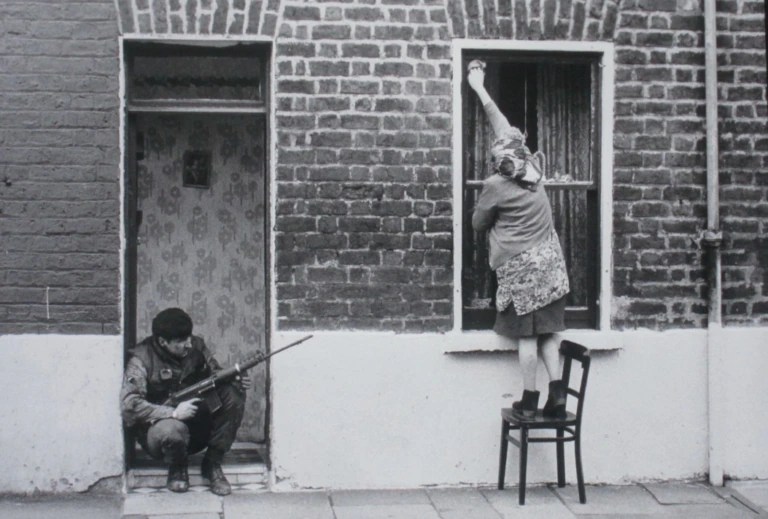
On arrival, security guards employ a swift but thorough search of all visitors. Although the legacy of IRA activity has made this a familiar practice in the UK, particularly London, in New York it serves as a reminder of the widespread shift in culture and attitudes since September 2001. Target America: Drug Traffickers, Terrorists and You is a product of this new era in American history. But the overall message is confusing.
As you walk into the exhibition, the sights and sounds of Times Square are immediately replaced by a scene of wreckage and the voices of the vehement anti-drugs campaigner, poet and rock star Henry Rollins, and Karen Tandy, the DEA administrator. Authority and popular culture combine for a just cause.
The introductory display tells a story of carnage, explaining the remains of a drug addict's car, the family photographs and the broken toys of the innocent mother and child victims and drug paraphernalia strewn around.
The story is simple and shocking - drugs wreck lives. From his monitor, Rollins decries the dangers of apathy and calls for action to combat the problems that drugs can cause in his broadcast for a drug-free America.
On an accompanying plasma screen, Tandy presents a news-desk style introduction to the exhibition: 'Imagine a world without drugs… where teens are not fooled into taking death pills disguised as harmless fun… where children play in their neighbourhoods without fear of drug violence… where we didn't have to spend millions a year - and put our officers' lives on the line arresting traffickers… and where we didn't have to experience the agony of loved ones suffering from tragic addiction.'
From the outset, the link between drugs and violence in an international context is established. This is not just about the war on drugs, but the war on terror. The journey is one from the individual and personal choices to one of international crime, mass destruction, with worldwide impact.
To continue through the exhibition you pass the museum shop and between two installations that form a gateway to the rest of the show. On one side is a full-size replica of a South American cocaine-producing lab, complete with sounds, guns and dirty utensils.
Opposite is a similar installation of a heroin-processing lab in Afghanistan; the setting has stronger military overtones, and the guns are more prominent. It was unclear as to whether these tableaux were reconstructions from archive sources or stereotypical representations.
The accompanying text is interesting and informative, clearly explaining the origins of a range of drugs: the core plant-based ingredients, from the processes, the geography of production through to consumption. All of this is illustrated by DEA archive images.
Target America moves on to the world of drug trafficking, money laundering, narco-terrorism, and after 'pausing to pay tribute to September 11th', the opium and heroin connections in Afghanistan, the inevitable al-Qaida connection, and the impact on the world.
Many of the displays feature informative text, fascinating archive images and cased replica objects representing various methods for drug concealment, and drugs and weapons used in trading. In general, these displays are interesting but dubious-looking props undermine the integrity of the text.
For example, the use of cheap replicas to explain how gold is used in money laundering is more akin to a mail order catalogue than evidence of serious criminal activity.
A gallery of the ruthless, the rich and the violent includes Gilberto Rodriguez Orejuela and the Cali Cartel; Pablo Escobar and the Medellin cartel; and the leader of the Shining Path. These are all key to the didactic narrative - that drugs and terrorism are intrinsically linked.
Some displays are more convincing than others; in particular the inclusion of a set of hats mounted high above the faces and stories of the internationally acknowledged ringleaders in the history of narco-terrorism is unconvincing.
The display includes a Stetson, baseball cap and a furry trapper's hat, which are accompanied by the text 'it is not possible to tell from the hat that a person wears if he or she is part of the legitimate government or a terrorist'.
The theme - 'you never know who is standing next to you/living next to you/ staying in the room next door' - is continued in the displays upstairs, which move away from international terrorism to the impact of drugs on American society.
There is no let up as you ride the escalator. Hanging down like some macabre bunting are images of 'lost talents': Jim Morrison, Judy Garland, imbued with a sense of tragedy and the pointless waste of drugs - reiterating Tandy's dogma that drugs wreck lives.
This does not prepare you for the hard-hitting Children and Drugs display. With horrific archive images, testimonials and narratives including an image of a toddler rescued from a methamphetamine lab somewhere in the US, whom we learn was found covered in battery acid, surrounded by drug paraphernalia and tested positive for the drug, the message is clear.
Installation-style display is employed again, also with limited success.
The Crack Den, complete with plastic gun, peeling wallpaper, soiled nappies and child's crib, seems pointless, as does the Meth Motel Lab, which lights up at the press of a button, and is filled with the indefinable sound of a presumed verbal exchange and the continuing - do you know what is happening next door? - message. This is followed by more examples of 'lost talent' presenting the rich and famous alongside everyday personal tragedies.
Here there is a marked shift in the subject and tone of the displays away from the culture of fear, insecurity, shock and scare-mongering towards information. Drugs and the Body addresses the science of drugs and how they affect the body.
Interactive displays more like those found in the Science Museum replace the hackneyed theatrics of the installation pieces. Breaking the Cycle presents educational and didactic information about how to 'kick the habit' and offers, through a series of talking-head testimonials, a positive message - that there is a future after addiction.
Ending with a Discovery Corner in which you can find out more about the work of the DEA and, should you wish, get involved or even join up, the upstairs displays comprise a public information exhibition.
This is underpinned by the War on Drugs, rather than the uneasy claim to present 'both a global and historical overview of the deadly connections between the illegal drug trade and terrorism'.
Any discussion of this show could be endless and highly charged. But if we consider the show as the product of a museum then many questions are posed.
Museums and exhibitions are about truths and balance and one cannot help but feel this is a rather one-sided exhibition that is more allied to propaganda than the presentation of a balanced and informative view of its subject: a jingoist take on an international issue, with fault lying 'elsewhere' at one extreme, and with the individual at the other extreme.
It incorporates shock tactics and instils insecurity, combined with a lethal cocktail of potential paranoia and guilt.
However, many museum exhibition conventions are present. The material is clearly organised in themed sections, each with an introductory panel, captioned images and labelled artefacts. The text is clearly written and extremely interesting.
But George Bush's obsession with a war on terror seems to have subverted what could have been a more palatable presentation on the downfalls of drug taking and the drug trade.
Target America is in parts interesting, informative and a potentially positive experience, but placing Thomas de Quincey, Jim Morrison and Osama bin Laden all in one exhibition is frankly a stretch too far. mj
Annabelle Campbell is the assistant curator of the Geffrye Museum and a lecturer in design history and curating at Kingston University.
www.deamuseum.org/website/index.html
Target America is at the New Detroit Science Center until 2 October 2005
Although 'illegal drugs from ecstasy to crack are back in Times Square' we are assured that this time 'they are safely under glass'. The travelling exhibition Target America: Drug Traffickers, Terrorists and You, organised by the US government's Drug Enforcement Administration (DEA), has been touring America for the past two years.
New York is probably the most contentious venue to date.
The exhibition was at One Times Square, an area that until relatively recently was synonymous with drug dealing, drug-taking and crime. That was before ex-mayor Giuliani's zero-tolerance programmes removed the problem from public sight in the city.
On arrival, security guards employ a swift but thorough search of all visitors. Although the legacy of IRA activity has made this a familiar practice in the UK, particularly London, in New York it serves as a reminder of the widespread shift in culture and attitudes since September 2001. Target America: Drug Traffickers, Terrorists and You is a product of this new era in American history. But the overall message is confusing.
As you walk into the exhibition, the sights and sounds of Times Square are immediately replaced by a scene of wreckage and the voices of the vehement anti-drugs campaigner, poet and rock star Henry Rollins, and Karen Tandy, the DEA administrator. Authority and popular culture combine for a just cause.
The introductory display tells a story of carnage, explaining the remains of a drug addict's car, the family photographs and the broken toys of the innocent mother and child victims and drug paraphernalia strewn around.
The story is simple and shocking - drugs wreck lives. From his monitor, Rollins decries the dangers of apathy and calls for action to combat the problems that drugs can cause in his broadcast for a drug-free America.
On an accompanying plasma screen, Tandy presents a news-desk style introduction to the exhibition: 'Imagine a world without drugs… where teens are not fooled into taking death pills disguised as harmless fun… where children play in their neighbourhoods without fear of drug violence… where we didn't have to spend millions a year - and put our officers' lives on the line arresting traffickers… and where we didn't have to experience the agony of loved ones suffering from tragic addiction.'
From the outset, the link between drugs and violence in an international context is established. This is not just about the war on drugs, but the war on terror. The journey is one from the individual and personal choices to one of international crime, mass destruction, with worldwide impact.
To continue through the exhibition you pass the museum shop and between two installations that form a gateway to the rest of the show. On one side is a full-size replica of a South American cocaine-producing lab, complete with sounds, guns and dirty utensils.
Opposite is a similar installation of a heroin-processing lab in Afghanistan; the setting has stronger military overtones, and the guns are more prominent. It was unclear as to whether these tableaux were reconstructions from archive sources or stereotypical representations.
The accompanying text is interesting and informative, clearly explaining the origins of a range of drugs: the core plant-based ingredients, from the processes, the geography of production through to consumption. All of this is illustrated by DEA archive images.
Target America moves on to the world of drug trafficking, money laundering, narco-terrorism, and after 'pausing to pay tribute to September 11th', the opium and heroin connections in Afghanistan, the inevitable al-Qaida connection, and the impact on the world.
Many of the displays feature informative text, fascinating archive images and cased replica objects representing various methods for drug concealment, and drugs and weapons used in trading. In general, these displays are interesting but dubious-looking props undermine the integrity of the text.
For example, the use of cheap replicas to explain how gold is used in money laundering is more akin to a mail order catalogue than evidence of serious criminal activity.
A gallery of the ruthless, the rich and the violent includes Gilberto Rodriguez Orejuela and the Cali Cartel; Pablo Escobar and the Medellin cartel; and the leader of the Shining Path. These are all key to the didactic narrative - that drugs and terrorism are intrinsically linked.
Some displays are more convincing than others; in particular the inclusion of a set of hats mounted high above the faces and stories of the internationally acknowledged ringleaders in the history of narco-terrorism is unconvincing.
The display includes a Stetson, baseball cap and a furry trapper's hat, which are accompanied by the text 'it is not possible to tell from the hat that a person wears if he or she is part of the legitimate government or a terrorist'.
The theme - 'you never know who is standing next to you/living next to you/ staying in the room next door' - is continued in the displays upstairs, which move away from international terrorism to the impact of drugs on American society.
There is no let up as you ride the escalator. Hanging down like some macabre bunting are images of 'lost talents': Jim Morrison, Judy Garland, imbued with a sense of tragedy and the pointless waste of drugs - reiterating Tandy's dogma that drugs wreck lives.
This does not prepare you for the hard-hitting Children and Drugs display. With horrific archive images, testimonials and narratives including an image of a toddler rescued from a methamphetamine lab somewhere in the US, whom we learn was found covered in battery acid, surrounded by drug paraphernalia and tested positive for the drug, the message is clear.
Installation-style display is employed again, also with limited success.
The Crack Den, complete with plastic gun, peeling wallpaper, soiled nappies and child's crib, seems pointless, as does the Meth Motel Lab, which lights up at the press of a button, and is filled with the indefinable sound of a presumed verbal exchange and the continuing - do you know what is happening next door? - message. This is followed by more examples of 'lost talent' presenting the rich and famous alongside everyday personal tragedies.
Here there is a marked shift in the subject and tone of the displays away from the culture of fear, insecurity, shock and scare-mongering towards information. Drugs and the Body addresses the science of drugs and how they affect the body.
Interactive displays more like those found in the Science Museum replace the hackneyed theatrics of the installation pieces. Breaking the Cycle presents educational and didactic information about how to 'kick the habit' and offers, through a series of talking-head testimonials, a positive message - that there is a future after addiction.
Ending with a Discovery Corner in which you can find out more about the work of the DEA and, should you wish, get involved or even join up, the upstairs displays comprise a public information exhibition.
This is underpinned by the War on Drugs, rather than the uneasy claim to present 'both a global and historical overview of the deadly connections between the illegal drug trade and terrorism'.
Any discussion of this show could be endless and highly charged. But if we consider the show as the product of a museum then many questions are posed.
Museums and exhibitions are about truths and balance and one cannot help but feel this is a rather one-sided exhibition that is more allied to propaganda than the presentation of a balanced and informative view of its subject: a jingoist take on an international issue, with fault lying 'elsewhere' at one extreme, and with the individual at the other extreme.
It incorporates shock tactics and instils insecurity, combined with a lethal cocktail of potential paranoia and guilt.
However, many museum exhibition conventions are present. The material is clearly organised in themed sections, each with an introductory panel, captioned images and labelled artefacts. The text is clearly written and extremely interesting.
But George Bush's obsession with a war on terror seems to have subverted what could have been a more palatable presentation on the downfalls of drug taking and the drug trade.
Target America is in parts interesting, informative and a potentially positive experience, but placing Thomas de Quincey, Jim Morrison and Osama bin Laden all in one exhibition is frankly a stretch too far. mj
Annabelle Campbell is the assistant curator of the Geffrye Museum and a lecturer in design history and curating at Kingston University.
www.deamuseum.org/website/index.html
Target America is at the New Detroit Science Center until 2 October 2005