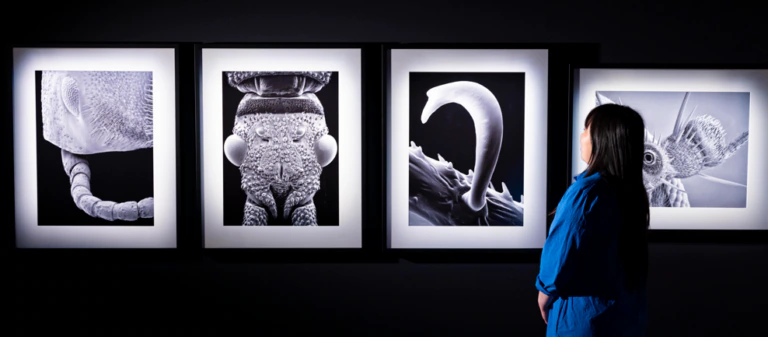
In April, a small exhibition called Wireless World: Marconi and the Making of Radio opens at the Museum of the History of Science in Oxford.
It will include items relating to the life of Guglielmo Marconi and the birth of radio transmission, including the microphone used by Australian diva Dame Nellie Melba in the first BBC broadcast and recordings of the distress signals from the sinking of the Titanic.
The exhibition is unlikely to be a blockbuster, but the fact that it's on at all is no small wonder, because until recently these iconic items were in peril. They were part of the Marconi collection, owned by the company but at the point of being sold off piecemeal in the late 1990s as the business hit a sticky patch.
The sale was withdrawn under pressure from various preservation societies and other interested parties. The collection languished until 2004, when the Marconi Corporation arranged its transfer to Oxford.
Funding for the exhibition was made available by the Wireless Preservation Trust, though the museum paid the costs of packing, transport and accommodation, such as the installation of new racking. Objects went to the Museum of the History of Science; documents to Oxford's Bodleian Library.
'I have certainly seen company museums that are well run, with the material being appreciated and having the advantage of specialist knowledge,' says Jim Bennett, the director of the Museum of the History of Science.
'In Marconi's case there was no doubt that museum care was a better option for the collection - physically its situation was not tenable in the long term, and the collection is of great historical significance and international importance.
'The museum can give scholars access for research and public access through exhibitions and gallery display. And the collection's future - as a whole, in a public institution - is secure.'
Corporate museums take many forms, but even in companies that value their corporate heritage, collections can suffer insecurity, neglect and worse. They often exist largely for their PR benefit, with little or no public access and minimal curation.
The situation becomes critical when companies go into receivership, merge or are taken over, or when whole industries deregulate. Their collections, to put it crudely, are up for grabs.
'Companies are under pressure from shareholders to maximise the value of their assets, and it can be a struggle to maintain the balance,' says David Beck, the director of communications at Marconi.
'We felt very strongly that we weren't the appropriate owners of a collection of such national significance. The collection has now been made available to the wider public for the first time, and it's been brought to life by enthusiastic people. At Oxford it has permanent housing, care and promotion in a city with a huge tourist footfall, so we are very happy with the outcome.'
Many corporate collections also have relevance to a particular area and contribute to the social and economic history of local communities. But small independent, county or local authority museums don't always have the space or resources to take them on. And good intentions can backfire.
When Clarks Shoes took over Kendal-based K Shoes, it transferred its small collection to Clarks's headquarters in Somerset, but was accused in the local press in Cumbria of stealing the collection away from the local area.
'We thought we were doing the responsible thing at the time, because frankly the collection was not well cared for,' says John Keery, a spokesman for Clarks.
Lack of funds can also scotch rescue attempts. In 2002, staff at the Potteries Museum and Art Gallery in Stoke-on-Trent got wind that Royal Doulton was planning to dispose of its historic Minton ceramics collection. Appeals to the company to treat the collection as an integral whole were ignored, and the sale went ahead, most pieces being sold to private collectors for record prices.
The Potteries Museum managed to buy about 40 items with the help of the Heritage Lottery Fund, but the break-up of the collection was a tragic loss for the museum and the local area, says Ian Lawley, the head of museums at Stoke City Council. 'The company made it clear they felt no responsibility to the local area whatsoever.'
Lawley says the irony is that Royal Doulton has since been acquired by Wedgwood, a company that set up a trust to safeguard its collections from such a fate. 'It engendered a lot of ill-will and a further irony is that Royal Doulton actually made less money from the sale once the buyers' premiums and such like were subtracted than they would have if they had sold it to the museum.'
Museum and heritage consultant Diana Lay is the former curator at the Bass Museum of Brewing, now the Coors Visitor Centre, in Burton-upon-Trent. She points out that the catch-22 for corporate collections is that while they are not always a high priority when it comes to resources, they are a company asset and therefore could be sold.
'It's a recurring item on any company agenda - what shall we do with the museum?' Lay says. 'Shall we develop it or close it? Shall we put it into a trust? Shall we donate the collection to a public museum?
'It's not easy for companies, because even if the museum is run to high professional standards, an application for accreditation will be rejected as the collection is deemed to be a company asset and not held for the public benefit or safeguarded against disposal.'
But it's not all bad news. More and more companies now have a corporate and social responsibility policy to protect their heritage. Others, such as Wedgwood and Royal Mail, have also transferred their collections to trust status so that they cannot be asset-stripped.
Telecommunications giant BT is probably the outstanding example of a deregulated industry dealing responsibly with its corporate heritage. The company has spent £6m dispersing its collections from the BT Museum in London, which closed in 1997.
It set up Connected Earth, a partnership involving nine museums and a website, and endowed a permanent curatorial post at the National Museums of Scotland in Edinburgh, where the bulk of the material went.
Alison Taubman, the principal curator of communications at the National Museums of Scotland, says it's an arrangement that benefits both BT and the museum.
'The gallery owns material relating to companies other than BT, but BT's name is prominent. From the museum's point of view, communications now has a much bigger profile, whereas before it was a tiny proportion of a much bigger science and technology section. And visitor figures have soared, which is good news for the museum and for BT.'
BT launched a heritage policy in August 2004, making it unusual among large UK companies. The document sets out its commitments to safeguarding the company heritage, disposing of it ethically and increasing public access.
The heritage document also provides a conduit to offer new items in an industry where technological developments become part of the company's heritage so quickly. 'We already have a prototype of the new Voice Over Internet Protocol,' says Taubman.
What does BT get from continued involvement? Not financial returns, admits David Hay, the head of heritage and corporate memory at BT, but as part of an extensive corporate responsibility programme it helps reflect well on the company and encourages customers to choose BT.
'We haven't just walked away from it; we accept an ongoing responsibility,' Hay says. 'The collection is physically dispersed but brought together again on the Connected Earth website. We wanted it interpreted in meaningful context, and here the value of volunteer groups cannot be underestimated.
'The partner museums regularly meet together, and we are working on a joint catalogue, for example. The result is that every year more people have greater access to more of BT's collection than during the whole life of the old BT Museum.'
Deborah Mulhearn is a freelance journalist
Clarks Shoe Museum
Clarks Shoe Museum in Street, Somerset, illustrates the delights and drawbacks of being a corporate collection in a family-run business. The Quaker Clark brothers started the firm in the Somerset town in 1825 and the museum is housed on the rambling Clarks HQ site in the town centre.
It's an old-fashioned museum with static displays of classic shoes such as the desert boot. But there are longstanding plans to develop it into a 'modern museum experience'.
Three million people visit the Clarks shopping village a year: getting only one per cent of these into the museum will mean a significant income boost.
But Harriet Hall, the great-great-grand-daughter of company founder James Clark, is concerned that it will lose its whimsical appeal. Hall spent a happy summer sorting out the family archives in the late 1960s.
'The archivist had died and nobody really knew what he did or what was in there, and I was asked to go through the material,' Hall says. 'I found bits of family history like a moth-eaten slipper embroidered by my great-great-aunt, and an umbrella belonging to the social reformer John Bright, who was a relative.
'I like the idea that people come shopping and just pop in for half an hour, rather than setting aside a day for culture or having education thrust at you, which many people don't want.
'Certainly the museum needs updating, but there's a danger of cutting culture off from everyday life. I think it's counter-productive to have too much input.'
Coors Visitor Centre and the Museum of Brewing
It's all in a name - or is it? When American brewing company Coors bought the Burton-upon-Trent-based firm Bass in 2001, it had to relinquish the Bass name. The popular Bass Museum was renamed the Coors Visitor Centre in January 2005, though its contents and structure remained largely the same.
Although the word 'museum' is now secondary to the name, Peter Orgill, the new director of the centre, says that neither the quality of the museum experience or the commitment to the company heritage has been compromised by the change.
'The renaming was more about getting the Coors name in the public eye,' Orgill says. 'Coors is a very old family brewing firm dating from the late 1800s, but it's not yet well known in the UK, and particularly in the Burton area, where people naturally remember Bass.'
Visitors will find little changed, Orgill says, because the Coors ethos is to retain its mu-seum feel and strong community links. 'People wouldn't dream they were visiting an American company,' says Orgill. 'It is very much the story of British brewing and the Burton connections. It's run to high professional standards and has immense intangible value to Coors.'
Orgill points out that the visitor centre has just won its fourth Sandford Heritage Award for heritage education - its first as Coors. 'There has been more emphasis placed on the hospitality and conferencing side of things,' says Orgill, 'but this strengthens the attraction because it ensures an income. The visitor centre otherwise wouldn't cover costs because we employ a curator, assistant curator and conservation staff.'
Rover and the British car industry
British-made vintage cars are scattered throughout the globe, but the British Motor Industry Heritage Trust in Gaydon, Warwickshire, is recognised as the leading body in the preservation of British vehicle history.
It was set up in the aftermath of the traumas in the British car manufacturing industry in the 1970s, to provide a comprehensive record of Britain's motoring heritage.
It has the first car made by Rover at Longbridge, and last April, when the company went into administration, the trust was able to purchase the final car off the production line.
'We immediately made contact with the new owners, a Chinese firm who are, luckily, sympathetic to the company's heritage,' says Stephen Laing, the trust's curator.
'We don't know what the firm's future plans are, and we are keeping a close eye on the situation because the site itself has a lot of heritage. The office of the original manufacturer Lord Austin is still there, for example, and there is a small car collection, used for company visitors and PR purposes.
'If it's properly protected under the new ownership, then we'll be satisfied, despite the fact that there will be limited public access, because most of Austin's history, which predates Rover's connection with Longbridge, is here with us already.'
It will include items relating to the life of Guglielmo Marconi and the birth of radio transmission, including the microphone used by Australian diva Dame Nellie Melba in the first BBC broadcast and recordings of the distress signals from the sinking of the Titanic.
The exhibition is unlikely to be a blockbuster, but the fact that it's on at all is no small wonder, because until recently these iconic items were in peril. They were part of the Marconi collection, owned by the company but at the point of being sold off piecemeal in the late 1990s as the business hit a sticky patch.
The sale was withdrawn under pressure from various preservation societies and other interested parties. The collection languished until 2004, when the Marconi Corporation arranged its transfer to Oxford.
Funding for the exhibition was made available by the Wireless Preservation Trust, though the museum paid the costs of packing, transport and accommodation, such as the installation of new racking. Objects went to the Museum of the History of Science; documents to Oxford's Bodleian Library.
'I have certainly seen company museums that are well run, with the material being appreciated and having the advantage of specialist knowledge,' says Jim Bennett, the director of the Museum of the History of Science.
'In Marconi's case there was no doubt that museum care was a better option for the collection - physically its situation was not tenable in the long term, and the collection is of great historical significance and international importance.
'The museum can give scholars access for research and public access through exhibitions and gallery display. And the collection's future - as a whole, in a public institution - is secure.'
Corporate museums take many forms, but even in companies that value their corporate heritage, collections can suffer insecurity, neglect and worse. They often exist largely for their PR benefit, with little or no public access and minimal curation.
The situation becomes critical when companies go into receivership, merge or are taken over, or when whole industries deregulate. Their collections, to put it crudely, are up for grabs.
'Companies are under pressure from shareholders to maximise the value of their assets, and it can be a struggle to maintain the balance,' says David Beck, the director of communications at Marconi.
'We felt very strongly that we weren't the appropriate owners of a collection of such national significance. The collection has now been made available to the wider public for the first time, and it's been brought to life by enthusiastic people. At Oxford it has permanent housing, care and promotion in a city with a huge tourist footfall, so we are very happy with the outcome.'
Many corporate collections also have relevance to a particular area and contribute to the social and economic history of local communities. But small independent, county or local authority museums don't always have the space or resources to take them on. And good intentions can backfire.
When Clarks Shoes took over Kendal-based K Shoes, it transferred its small collection to Clarks's headquarters in Somerset, but was accused in the local press in Cumbria of stealing the collection away from the local area.
'We thought we were doing the responsible thing at the time, because frankly the collection was not well cared for,' says John Keery, a spokesman for Clarks.
Lack of funds can also scotch rescue attempts. In 2002, staff at the Potteries Museum and Art Gallery in Stoke-on-Trent got wind that Royal Doulton was planning to dispose of its historic Minton ceramics collection. Appeals to the company to treat the collection as an integral whole were ignored, and the sale went ahead, most pieces being sold to private collectors for record prices.
The Potteries Museum managed to buy about 40 items with the help of the Heritage Lottery Fund, but the break-up of the collection was a tragic loss for the museum and the local area, says Ian Lawley, the head of museums at Stoke City Council. 'The company made it clear they felt no responsibility to the local area whatsoever.'
Lawley says the irony is that Royal Doulton has since been acquired by Wedgwood, a company that set up a trust to safeguard its collections from such a fate. 'It engendered a lot of ill-will and a further irony is that Royal Doulton actually made less money from the sale once the buyers' premiums and such like were subtracted than they would have if they had sold it to the museum.'
Museum and heritage consultant Diana Lay is the former curator at the Bass Museum of Brewing, now the Coors Visitor Centre, in Burton-upon-Trent. She points out that the catch-22 for corporate collections is that while they are not always a high priority when it comes to resources, they are a company asset and therefore could be sold.
'It's a recurring item on any company agenda - what shall we do with the museum?' Lay says. 'Shall we develop it or close it? Shall we put it into a trust? Shall we donate the collection to a public museum?
'It's not easy for companies, because even if the museum is run to high professional standards, an application for accreditation will be rejected as the collection is deemed to be a company asset and not held for the public benefit or safeguarded against disposal.'
But it's not all bad news. More and more companies now have a corporate and social responsibility policy to protect their heritage. Others, such as Wedgwood and Royal Mail, have also transferred their collections to trust status so that they cannot be asset-stripped.
Telecommunications giant BT is probably the outstanding example of a deregulated industry dealing responsibly with its corporate heritage. The company has spent £6m dispersing its collections from the BT Museum in London, which closed in 1997.
It set up Connected Earth, a partnership involving nine museums and a website, and endowed a permanent curatorial post at the National Museums of Scotland in Edinburgh, where the bulk of the material went.
Alison Taubman, the principal curator of communications at the National Museums of Scotland, says it's an arrangement that benefits both BT and the museum.
'The gallery owns material relating to companies other than BT, but BT's name is prominent. From the museum's point of view, communications now has a much bigger profile, whereas before it was a tiny proportion of a much bigger science and technology section. And visitor figures have soared, which is good news for the museum and for BT.'
BT launched a heritage policy in August 2004, making it unusual among large UK companies. The document sets out its commitments to safeguarding the company heritage, disposing of it ethically and increasing public access.
The heritage document also provides a conduit to offer new items in an industry where technological developments become part of the company's heritage so quickly. 'We already have a prototype of the new Voice Over Internet Protocol,' says Taubman.
What does BT get from continued involvement? Not financial returns, admits David Hay, the head of heritage and corporate memory at BT, but as part of an extensive corporate responsibility programme it helps reflect well on the company and encourages customers to choose BT.
'We haven't just walked away from it; we accept an ongoing responsibility,' Hay says. 'The collection is physically dispersed but brought together again on the Connected Earth website. We wanted it interpreted in meaningful context, and here the value of volunteer groups cannot be underestimated.
'The partner museums regularly meet together, and we are working on a joint catalogue, for example. The result is that every year more people have greater access to more of BT's collection than during the whole life of the old BT Museum.'
Deborah Mulhearn is a freelance journalist
Clarks Shoe Museum
Clarks Shoe Museum in Street, Somerset, illustrates the delights and drawbacks of being a corporate collection in a family-run business. The Quaker Clark brothers started the firm in the Somerset town in 1825 and the museum is housed on the rambling Clarks HQ site in the town centre.
It's an old-fashioned museum with static displays of classic shoes such as the desert boot. But there are longstanding plans to develop it into a 'modern museum experience'.
Three million people visit the Clarks shopping village a year: getting only one per cent of these into the museum will mean a significant income boost.
But Harriet Hall, the great-great-grand-daughter of company founder James Clark, is concerned that it will lose its whimsical appeal. Hall spent a happy summer sorting out the family archives in the late 1960s.
'The archivist had died and nobody really knew what he did or what was in there, and I was asked to go through the material,' Hall says. 'I found bits of family history like a moth-eaten slipper embroidered by my great-great-aunt, and an umbrella belonging to the social reformer John Bright, who was a relative.
'I like the idea that people come shopping and just pop in for half an hour, rather than setting aside a day for culture or having education thrust at you, which many people don't want.
'Certainly the museum needs updating, but there's a danger of cutting culture off from everyday life. I think it's counter-productive to have too much input.'
Coors Visitor Centre and the Museum of Brewing
It's all in a name - or is it? When American brewing company Coors bought the Burton-upon-Trent-based firm Bass in 2001, it had to relinquish the Bass name. The popular Bass Museum was renamed the Coors Visitor Centre in January 2005, though its contents and structure remained largely the same.
Although the word 'museum' is now secondary to the name, Peter Orgill, the new director of the centre, says that neither the quality of the museum experience or the commitment to the company heritage has been compromised by the change.
'The renaming was more about getting the Coors name in the public eye,' Orgill says. 'Coors is a very old family brewing firm dating from the late 1800s, but it's not yet well known in the UK, and particularly in the Burton area, where people naturally remember Bass.'
Visitors will find little changed, Orgill says, because the Coors ethos is to retain its mu-seum feel and strong community links. 'People wouldn't dream they were visiting an American company,' says Orgill. 'It is very much the story of British brewing and the Burton connections. It's run to high professional standards and has immense intangible value to Coors.'
Orgill points out that the visitor centre has just won its fourth Sandford Heritage Award for heritage education - its first as Coors. 'There has been more emphasis placed on the hospitality and conferencing side of things,' says Orgill, 'but this strengthens the attraction because it ensures an income. The visitor centre otherwise wouldn't cover costs because we employ a curator, assistant curator and conservation staff.'
Rover and the British car industry
British-made vintage cars are scattered throughout the globe, but the British Motor Industry Heritage Trust in Gaydon, Warwickshire, is recognised as the leading body in the preservation of British vehicle history.
It was set up in the aftermath of the traumas in the British car manufacturing industry in the 1970s, to provide a comprehensive record of Britain's motoring heritage.
It has the first car made by Rover at Longbridge, and last April, when the company went into administration, the trust was able to purchase the final car off the production line.
'We immediately made contact with the new owners, a Chinese firm who are, luckily, sympathetic to the company's heritage,' says Stephen Laing, the trust's curator.
'We don't know what the firm's future plans are, and we are keeping a close eye on the situation because the site itself has a lot of heritage. The office of the original manufacturer Lord Austin is still there, for example, and there is a small car collection, used for company visitors and PR purposes.
'If it's properly protected under the new ownership, then we'll be satisfied, despite the fact that there will be limited public access, because most of Austin's history, which predates Rover's connection with Longbridge, is here with us already.'