A dead Serbian warlord, multi-million dollar rewards, undercover cops trained by curators, stolen Nazi loot, international intrigue, a long list of missing works by Da Vinci, Picasso, Gauguin, Titian, Vermeer, Rembrandt and Degas.
Is this the plot of a new Dan Brown novel? Alas, no - it's just a glimpse into the everyday world of art crime.
Here in America the Federal Bureau of Investigation (FBI) has described trafficking in stolen works of art and priceless national treasures as 'a small but ugly criminal specialty'. How small? How ugly? Various statistics put the figure at somewhere between $6bn-$12bn a year internationally. If art crime was a country its GDP would be somewhere between Jamaica and Malawi.
Stolen art is an international commodity. Combine a simple theft with a little knowledge and you can make millions. As Dick Ellis, a former member of Scotland Yard's Art and Antiquities Squad, told the BBC: 'While the banks got better at protecting the money and you were likely to get shot if you committed a bank robbery, for £10,000- £15,000, you could still walk into somebody's house and walk out with a million-pound Monet.'
So what agencies exist to prevent theft and recover artefacts? Interpol has been fighting art crime since 1923 with varying degrees of success.
In Britain there is the Metropolitan Police's Art and Antiques Unit, which was reformed in 1989. At the beginning of this year a task force was set up in New York 'dedicated to investigating and prosecuting antiquities theft and trafficking', with Matthew Bogdanos at its head (Bogdanos being the colonel who led the investigation into the looting of Iraq's Baghdad Museum).
And then there's the FBI's newly formed Art Crime Team. But do the different squads talk to each other? Is there effective international cooperation?
Ellis says police forces do communicate, but their work is made more difficult by the different legal systems they have to deal with. He told the BBC: 'There will be one or two international seminars a year - the cooperation between the forces is very good, but what is lacking the judicial support. Because you're working through different legal systems there is a huge amount of bureaucracy and that slows down the investigation enormously.'
But Lynn Richardson of the FBI's National Art Theft programme, which is based at the bureau's headquarters in Washington DC, is upbeat: 'Now that we've got a team of agents nationwide that knows its stuff and can be deployed at a moment's notice, that's going to make a world of difference in protecting national treasures.'
This sounds like good news until you find out that it's only eight investigators working in major art markets around the country - New York, Los Angeles, Philadelphia, San Francisco, Indianapolis, St Louis and Salt Lake City. They are supported by two assistant US attorneys and several FBI analysts.
The FBI website boasts that the art theft team features 'art-loving agents' who 'know a Monet from a Manet, a Rembrandt from a Rubens'. But like all divisions of the FBI, the team is reticent about providing information. It won't tell you how the agents were trained or by whom and the staff hide behind pseudonyms taken from films. So far I've been able to talk to a 'Katherine Bellew', aka 'Cat Ballou', who went so far as to let me call her 'Denise'. She referred me on to another agent, 'Robert Downey'.
Perhaps it's only natural that the FBI won't reveal too much about its strategy to combat art crime. But in that case what can museums do to prevent it? Is there inertia, a sense that there's little that can be done to combat crime except to bemoan it?
Charles Hill, once a member of the Metropolitan Police and now a private consultant, is credited with the recovery of Vermeer's Lady Writing a Letter with her Maid, stolen in Ireland in 1986; a version of Munch's The Scream taken from Oslo's Munch Museum in 1994; and Titian's Rest on the Flight into Egypt stolen from Longleat, Wiltshire, in 1995.
In a recent interview with the Guardian newspaper he drew attention to the 'moral turpitude in the art world generally… There's a great fluctuating moral tide and people just bob along on it'.
Museums who have been the victims of art theft always tend to express dismay and disbelief at the injustice that's been done to them, but perhaps the thieves who took The Scream in 1994 summed things up perfectly when they left a note saying: 'Thanks for the poor security.'
There are many misconceptions about art crime, including the commonly held belief that rich, maniacal collectors have artefacts stolen to order and then view them salaciously in sealed bank vaults.
Eric Ives, the director of the FBI's major theft division, says: 'The public perceives this myth that the art thief rappels in through the ceiling of a building, they're highly sophisticated, they duck down under the radar system. It's just not like that. When thefts take place from museums or institutions they usually involve someone who works in the institution or is a regular visitor or is very knowledgeable about the institution.
'Obviously, if you steal a famous painting, that's not something you're going to try to sell in an open market for years, so it's going to be secreted in a basement or a safe or in some other location,' Ives continues.
'Art doesn't have title papers with it, as cars or houses do. So it moves from an illegitimate source to a legitimate source fairly easily if the legitimate source doesn't carry out due diligence. And it can move onto the auction market or the legitimate retail market or an antique shop and the ultimate purchaser will have no knowledge of it being stolen.'
American museums do have one thing going for them as far as the law is concerned. Even if you can't catch the thief, there's no statute of limitations on your stolen art if it's recovered. 'In the United States, if a piece of art is stolen it's always stolen, regardless of how long the buyer is in possession of that piece of art or where they purchased it from,' Ives says.
Which is good news for Anthony Amore, the director of security at the Isabella Stewart Gardner Museum in Boston. In 1990, thieves stole 12 paintings worth an estimated $300m from the museum, including three Rembrandts, a Vermeer and a Manet.
It is the biggest unsolved art theft in history. Amore says the creation of the FBI squad shows that they are serious about recovering stolen art and investigating art fraud, looting and trafficking.
'Not only has the bureau dedicated important resources to this mission, it has also done important work in raising awareness about the prevalence of this sort of crime through its creation of both a Top Ten Art Crimes List and the National Stolen Art File,' he says.
'The seriousness of art crime is receiving unprecedented attention thanks to them. This can only help in their efforts to recover the art stolen from our museum.'
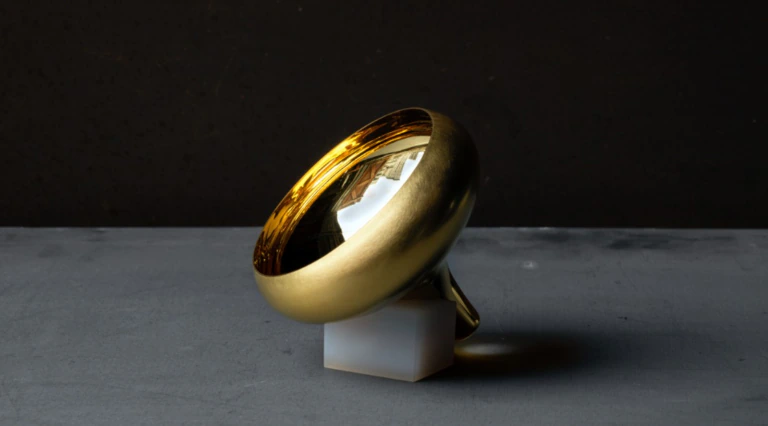
The FBI's current top ten list boasts a handful of recoveries including the Rembrandt and Renoirs that were stolen from Sweden's National Museum and found in 2005 and the Cellini Salt Cellar taken from the Kunsthistorisches Museum in Vienna and recovered earlier this year.
The FBI doesn't take direct credit for the recoveries, but modestly acknowledges its involvement. After the Swedish works were found, Special Agent JP Weis said the FBI simply 'played a part in the recovery of these beloved national treasures'.
So will the new squad make any difference? At first glance, it's only a database, eight agents spread across the country, and a nice shiny badge. But it is backed up by a formidable law enforcement agency with offices and staff around the globe. The recovered works are good news, but with about 10,000 items on the list that are still missing, and unsolved cases going back to 1969, it has its work cut out. mj
Jamie Lewis is a freelance journalist based in the US
Is this the plot of a new Dan Brown novel? Alas, no - it's just a glimpse into the everyday world of art crime.
Here in America the Federal Bureau of Investigation (FBI) has described trafficking in stolen works of art and priceless national treasures as 'a small but ugly criminal specialty'. How small? How ugly? Various statistics put the figure at somewhere between $6bn-$12bn a year internationally. If art crime was a country its GDP would be somewhere between Jamaica and Malawi.
Stolen art is an international commodity. Combine a simple theft with a little knowledge and you can make millions. As Dick Ellis, a former member of Scotland Yard's Art and Antiquities Squad, told the BBC: 'While the banks got better at protecting the money and you were likely to get shot if you committed a bank robbery, for £10,000- £15,000, you could still walk into somebody's house and walk out with a million-pound Monet.'
So what agencies exist to prevent theft and recover artefacts? Interpol has been fighting art crime since 1923 with varying degrees of success.
In Britain there is the Metropolitan Police's Art and Antiques Unit, which was reformed in 1989. At the beginning of this year a task force was set up in New York 'dedicated to investigating and prosecuting antiquities theft and trafficking', with Matthew Bogdanos at its head (Bogdanos being the colonel who led the investigation into the looting of Iraq's Baghdad Museum).
And then there's the FBI's newly formed Art Crime Team. But do the different squads talk to each other? Is there effective international cooperation?
Ellis says police forces do communicate, but their work is made more difficult by the different legal systems they have to deal with. He told the BBC: 'There will be one or two international seminars a year - the cooperation between the forces is very good, but what is lacking the judicial support. Because you're working through different legal systems there is a huge amount of bureaucracy and that slows down the investigation enormously.'
But Lynn Richardson of the FBI's National Art Theft programme, which is based at the bureau's headquarters in Washington DC, is upbeat: 'Now that we've got a team of agents nationwide that knows its stuff and can be deployed at a moment's notice, that's going to make a world of difference in protecting national treasures.'
This sounds like good news until you find out that it's only eight investigators working in major art markets around the country - New York, Los Angeles, Philadelphia, San Francisco, Indianapolis, St Louis and Salt Lake City. They are supported by two assistant US attorneys and several FBI analysts.
The FBI website boasts that the art theft team features 'art-loving agents' who 'know a Monet from a Manet, a Rembrandt from a Rubens'. But like all divisions of the FBI, the team is reticent about providing information. It won't tell you how the agents were trained or by whom and the staff hide behind pseudonyms taken from films. So far I've been able to talk to a 'Katherine Bellew', aka 'Cat Ballou', who went so far as to let me call her 'Denise'. She referred me on to another agent, 'Robert Downey'.
Perhaps it's only natural that the FBI won't reveal too much about its strategy to combat art crime. But in that case what can museums do to prevent it? Is there inertia, a sense that there's little that can be done to combat crime except to bemoan it?
Charles Hill, once a member of the Metropolitan Police and now a private consultant, is credited with the recovery of Vermeer's Lady Writing a Letter with her Maid, stolen in Ireland in 1986; a version of Munch's The Scream taken from Oslo's Munch Museum in 1994; and Titian's Rest on the Flight into Egypt stolen from Longleat, Wiltshire, in 1995.
In a recent interview with the Guardian newspaper he drew attention to the 'moral turpitude in the art world generally… There's a great fluctuating moral tide and people just bob along on it'.
Museums who have been the victims of art theft always tend to express dismay and disbelief at the injustice that's been done to them, but perhaps the thieves who took The Scream in 1994 summed things up perfectly when they left a note saying: 'Thanks for the poor security.'
There are many misconceptions about art crime, including the commonly held belief that rich, maniacal collectors have artefacts stolen to order and then view them salaciously in sealed bank vaults.
Eric Ives, the director of the FBI's major theft division, says: 'The public perceives this myth that the art thief rappels in through the ceiling of a building, they're highly sophisticated, they duck down under the radar system. It's just not like that. When thefts take place from museums or institutions they usually involve someone who works in the institution or is a regular visitor or is very knowledgeable about the institution.
'Obviously, if you steal a famous painting, that's not something you're going to try to sell in an open market for years, so it's going to be secreted in a basement or a safe or in some other location,' Ives continues.
'Art doesn't have title papers with it, as cars or houses do. So it moves from an illegitimate source to a legitimate source fairly easily if the legitimate source doesn't carry out due diligence. And it can move onto the auction market or the legitimate retail market or an antique shop and the ultimate purchaser will have no knowledge of it being stolen.'
American museums do have one thing going for them as far as the law is concerned. Even if you can't catch the thief, there's no statute of limitations on your stolen art if it's recovered. 'In the United States, if a piece of art is stolen it's always stolen, regardless of how long the buyer is in possession of that piece of art or where they purchased it from,' Ives says.
Which is good news for Anthony Amore, the director of security at the Isabella Stewart Gardner Museum in Boston. In 1990, thieves stole 12 paintings worth an estimated $300m from the museum, including three Rembrandts, a Vermeer and a Manet.
It is the biggest unsolved art theft in history. Amore says the creation of the FBI squad shows that they are serious about recovering stolen art and investigating art fraud, looting and trafficking.
'Not only has the bureau dedicated important resources to this mission, it has also done important work in raising awareness about the prevalence of this sort of crime through its creation of both a Top Ten Art Crimes List and the National Stolen Art File,' he says.
'The seriousness of art crime is receiving unprecedented attention thanks to them. This can only help in their efforts to recover the art stolen from our museum.'
The FBI's current top ten list boasts a handful of recoveries including the Rembrandt and Renoirs that were stolen from Sweden's National Museum and found in 2005 and the Cellini Salt Cellar taken from the Kunsthistorisches Museum in Vienna and recovered earlier this year.
The FBI doesn't take direct credit for the recoveries, but modestly acknowledges its involvement. After the Swedish works were found, Special Agent JP Weis said the FBI simply 'played a part in the recovery of these beloved national treasures'.
So will the new squad make any difference? At first glance, it's only a database, eight agents spread across the country, and a nice shiny badge. But it is backed up by a formidable law enforcement agency with offices and staff around the globe. The recovered works are good news, but with about 10,000 items on the list that are still missing, and unsolved cases going back to 1969, it has its work cut out. mj
Jamie Lewis is a freelance journalist based in the US