To compare the redevelopment of the Kelvingrove Art Gallery and Museum in Glasgow with the creation of the new home for the Scottish Parliament in Edinburgh is like comparing apples and pears.
The parliament was ten times over budget, more than three years late and is beloved of nobody. By contrast, the £28m refurbishment of the Glasgow museum came in on time, on budget, and when it opened last month it was difficult, if not impossible, to find anyone with a bad word to say about it.
Mark O'Neill, the head of arts and museums in Glasgow, says he expected '10-15 per cent curmudgeon' from people who had known and loved the museum and were not happy with the changes. But he says, so far, the 'curmudgeon rate' is only running at 1-2 per cent of visitors.
There were extensive trials of the new displays. Council staff, community groups, teachers (the hardest group to please, according to O'Neill) and blind and visually impaired groups were invited in. The consensus seems to be unanimous approval.
O'Neill puts this success down to the overall philosophy of the museum service: 'We started with the principle of access and everything flowed from that.' Which makes it sound easy, but, in fact, the plan to modernise the museum has been a long time coming: they started talking about the changes more than ten years ago.
The focus was to be on the objects and the stories they could tell. A call was made to all staff and more than 200 stories flooded in. For more than two years, public consultation and working groups sifted the stories down to a more manageable 100 and then it was a question of how to group them into themes.
O'Neill says they tried 'all sorts of clever structures', but, in the end, a group of 30 staff looked at the stories, asked what went together and found that there were 'obvious common-sense subjects'.
It's not surprising that O'Neill took the story-based approach. He seems to have an anecdote for every gallery, every key object and every stage of the redevelopment process. He is fond of telling
the story about the last day before the museum closed for refurbishment in 2003.
More than 13,000 visitors turned up to say a fond farewell to the museum. A visitor approached him and asked if he was Mark O'Neill. On receiving the affirmative, he was told in no uncertain terms: 'Don't fuck it up.'
So has he made a mess of it? Well there are 6,000 sq metres of display space (35 per cent more than before) and 8,000 objects now on show, nearly double the original number (it is refreshing to go to a museum redevelopment and see more, not less, objects on display).
For the first time, there is a temporary exhibition space, new education spaces, a lecture room, discovery centres dotted throughout the new galleries, and updated visitor facilities.
Of course, first impressions count and all the reviews mention the change in light in the central hall. Giving the stone the equivalent of a chemical peel has transformed the atmosphere (if you want to compare the before-and-after, a tiny section of the upper balcony has been preserved in the original smog grey).
By the time it closed, Kelvingrove was dank, dark and divided - after the stone facelift and the removal of some internal panels, it is now an open, light and luminous space. The blond stonework reflects light that is bounced onto the new displays.
And the displays deserve the attention. West off the central hall, a Spitfire from a Scottish battalion dive-bombs an animal parade. On the other side, grimacing heads dangle from the ceiling like a scary and oversized mobile. These showstoppers include some of the public's favourites objects in an effective and theatrical display. And the advantage is that it can all be viewed again from above - on the balcony, visitors are at eyeball level with the gurning heads and can spot the cramped quarters where the Spitfire pilot would have sat.
One of the key changes in the display is that some of the art treasures have been moved downstairs to mingle with the object displays.
Before closure, 80 per cent of visitors never made it upstairs, which was a shame because that was where the stars of the art collection resided. Now new lifts have removed the physical impediment to the upper galleries and staff hope that mixing the art and objects will mean that more people are drawn upstairs to explore. Clever moves borrowed from retail experience, such as putting the popular bits at the back, could also entice visitors into the furthest reaches of the museum.
Placing objects in with the art is a policy that works beautifully in the Mackintosh gallery - the swooping, swirling symmetry and intense colours of the designs are juxtaposed with butterflies and a peacock from the collection.
This fusion of objects that normally wouldn't be seen dead (or alive) together is at its best in the Conflict and Consequence gallery. A section on armoury and nature compares an armadillo's natural defences with the overlapping panels in a suit of armour.
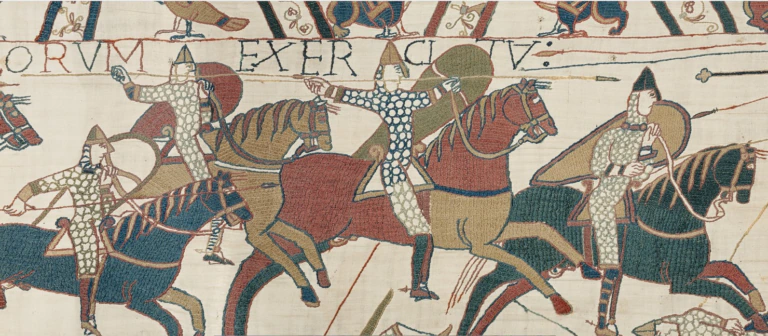
In another display, weapons are held in positions of cut-and-thrust by wire figures that echo the lines of an artist's quick-fire sketch and are works of art in themselves. Beautiful, frightening and imaginative are not words normally associated with displays of armoury and weaponry. But this is not purely an aesthetic display - the savagery of war is there too and a section on the 'souvenirs of war' explains how some of the objects have ended up in the collection.
Probably one of the most controversial aspects of the redisplay will be the rehang of the art collection. It is a low hang by anyone's measure and the thinking behind it is that it makes people linger longer by the artworks.
This seems to work and there is definitely an immediacy and intimacy about the hang that brings the work closer. The long, gallery-length views are not sacrificed and channels of space have been kept clear to show key works to good effect, as is the case with the sober A Highland Funeral by James Guthrie.
O'Neill is aware that the height of the hang will be contentious, but dismisses critics: 'People who resent it think it's undignified - as if paintings have a consciousness.'
There are some things that don't work - the illustrated floor sections (sand, sea and stone) that divide the stories in the Cultural Survival gallery are garish and unfathomable, as are the close-ups of paint textures on the floor of the Scottish Art gallery.
But these are minor quibbles and O'Neill is the first to admit that the museum service had to do some things on a shoestring. He says the British Galleries at London's Victoria and Albert Museum, which he admires, cost £3,000 per sq metre, while at Kelvingrove they had to settle for a third of that amount.
The next big thing for the museum service is the second phase of the museum resource centre. 'When we decided we wanted to modernise Kelvingrove, we thought: "Oh Jesus there's loads of stuff in the basement - what do we do with it,"' says O'Neill.
So the resource centre was created partly to house the decanted collection. Phase two, which will open in 2008, will more than double the size of the resource centre and enable it to house a further 800,000 items.
There will be new study rooms; space for workshops; and a library and archive block. Visitor research has shown that members of the public felt they were unable to ask for specific objects because they didn't know what was in the collection. A new database with more user-friendly descriptions and searches should help to solve this problem. Again, the emphasis will be on access: 'People should be able to come in with nothing more than idle curiosity,' says O'Neill.
Another good reason for the extension is the plan to redevelop the Museum of Transport. Objects from the museum will be decanted to the resource centre. The Zaha Hadid-designed museum will open in spring 2009 and will be rechristened the Riverside Museum.
The project is driven by the city council's desire to regenerate the area and O'Neill is confident that it will work. The same process that was used in Kelvingrove will apply. There will be one single display space of 6,000 sq metres and early plans include using the huge walls for spectacular 30-metre high shows of the launching of a ship, for example.
As if this wasn't enough to be getting on with, work needs doing at the Burrell Collection. The roof needs a £4m fix and the plan is to redisplay the whole collection over the next two to four years - O'Neill says it is now the main part of the service that is 'seriously out of date'. There will be an evaluation next year to map out a way forward for the project.
Oh and don't forget the Charles Rennie Mackintosh tearooms. The Ingram Street Tearooms, which were designed by Mackintosh, were rescued by the city council in the 1970s and the painstaking work of photographing each panel is now taking place. There will be a feasibility study next year to assess how it can best be restored to public view.
Although the scale of the work done and yet to be done is daunting, there must be many envious eyes on Glasgow. A world-class collection, a fiercely loyal public and the good luck to have a
supportive political administration are enough to make any museum professional dribble.
But let's not forget that it was just a few months ago that the museum service faced closing some of its venues on Mondays and only the intervention of a rich benefactor avoided this.
As for the public, the locals don't just visit the museums, they feel they own them. O'Neill is all too aware of this:
'We can't take that for granted - they have high expectations. The idea that we could say: "Let's be radical because we find it interesting," wouldn't work.'
Project data
Cost: £28m
Main funders: Heritage Lottery Fund £12.8m, Wolfson Foundation, Gannochy Trust, Weston Family, Monument Trust, Royal Bank of Scotland, Hugh Fraser Foundation, Robertson Trust, Weir Group, BAA Glasgow, PF Charitable Trust, International Music and Art Foundation, JP Morgan Chase Foundation, Binks Trust, NS Macfarlane Charitable Trust
Architect: Building Design Partnership
Exhibition design: Event Communications
AV/ICT software: Spiral Communications
AV/ICT hardware: Integrated Circles
Graphic design: Event Communications
Lighting design: BDP Lighting
Main contractor: HBG Construction
Mounts: Tony Jones, Plowden & Smith, Gems, Scott Associates, Scenic Route
The parliament was ten times over budget, more than three years late and is beloved of nobody. By contrast, the £28m refurbishment of the Glasgow museum came in on time, on budget, and when it opened last month it was difficult, if not impossible, to find anyone with a bad word to say about it.
Mark O'Neill, the head of arts and museums in Glasgow, says he expected '10-15 per cent curmudgeon' from people who had known and loved the museum and were not happy with the changes. But he says, so far, the 'curmudgeon rate' is only running at 1-2 per cent of visitors.
There were extensive trials of the new displays. Council staff, community groups, teachers (the hardest group to please, according to O'Neill) and blind and visually impaired groups were invited in. The consensus seems to be unanimous approval.
O'Neill puts this success down to the overall philosophy of the museum service: 'We started with the principle of access and everything flowed from that.' Which makes it sound easy, but, in fact, the plan to modernise the museum has been a long time coming: they started talking about the changes more than ten years ago.
The focus was to be on the objects and the stories they could tell. A call was made to all staff and more than 200 stories flooded in. For more than two years, public consultation and working groups sifted the stories down to a more manageable 100 and then it was a question of how to group them into themes.
O'Neill says they tried 'all sorts of clever structures', but, in the end, a group of 30 staff looked at the stories, asked what went together and found that there were 'obvious common-sense subjects'.
It's not surprising that O'Neill took the story-based approach. He seems to have an anecdote for every gallery, every key object and every stage of the redevelopment process. He is fond of telling
the story about the last day before the museum closed for refurbishment in 2003.
More than 13,000 visitors turned up to say a fond farewell to the museum. A visitor approached him and asked if he was Mark O'Neill. On receiving the affirmative, he was told in no uncertain terms: 'Don't fuck it up.'
So has he made a mess of it? Well there are 6,000 sq metres of display space (35 per cent more than before) and 8,000 objects now on show, nearly double the original number (it is refreshing to go to a museum redevelopment and see more, not less, objects on display).
For the first time, there is a temporary exhibition space, new education spaces, a lecture room, discovery centres dotted throughout the new galleries, and updated visitor facilities.
Of course, first impressions count and all the reviews mention the change in light in the central hall. Giving the stone the equivalent of a chemical peel has transformed the atmosphere (if you want to compare the before-and-after, a tiny section of the upper balcony has been preserved in the original smog grey).
By the time it closed, Kelvingrove was dank, dark and divided - after the stone facelift and the removal of some internal panels, it is now an open, light and luminous space. The blond stonework reflects light that is bounced onto the new displays.
And the displays deserve the attention. West off the central hall, a Spitfire from a Scottish battalion dive-bombs an animal parade. On the other side, grimacing heads dangle from the ceiling like a scary and oversized mobile. These showstoppers include some of the public's favourites objects in an effective and theatrical display. And the advantage is that it can all be viewed again from above - on the balcony, visitors are at eyeball level with the gurning heads and can spot the cramped quarters where the Spitfire pilot would have sat.
One of the key changes in the display is that some of the art treasures have been moved downstairs to mingle with the object displays.
Before closure, 80 per cent of visitors never made it upstairs, which was a shame because that was where the stars of the art collection resided. Now new lifts have removed the physical impediment to the upper galleries and staff hope that mixing the art and objects will mean that more people are drawn upstairs to explore. Clever moves borrowed from retail experience, such as putting the popular bits at the back, could also entice visitors into the furthest reaches of the museum.
Placing objects in with the art is a policy that works beautifully in the Mackintosh gallery - the swooping, swirling symmetry and intense colours of the designs are juxtaposed with butterflies and a peacock from the collection.
This fusion of objects that normally wouldn't be seen dead (or alive) together is at its best in the Conflict and Consequence gallery. A section on armoury and nature compares an armadillo's natural defences with the overlapping panels in a suit of armour.
In another display, weapons are held in positions of cut-and-thrust by wire figures that echo the lines of an artist's quick-fire sketch and are works of art in themselves. Beautiful, frightening and imaginative are not words normally associated with displays of armoury and weaponry. But this is not purely an aesthetic display - the savagery of war is there too and a section on the 'souvenirs of war' explains how some of the objects have ended up in the collection.
Probably one of the most controversial aspects of the redisplay will be the rehang of the art collection. It is a low hang by anyone's measure and the thinking behind it is that it makes people linger longer by the artworks.
This seems to work and there is definitely an immediacy and intimacy about the hang that brings the work closer. The long, gallery-length views are not sacrificed and channels of space have been kept clear to show key works to good effect, as is the case with the sober A Highland Funeral by James Guthrie.
O'Neill is aware that the height of the hang will be contentious, but dismisses critics: 'People who resent it think it's undignified - as if paintings have a consciousness.'
There are some things that don't work - the illustrated floor sections (sand, sea and stone) that divide the stories in the Cultural Survival gallery are garish and unfathomable, as are the close-ups of paint textures on the floor of the Scottish Art gallery.
But these are minor quibbles and O'Neill is the first to admit that the museum service had to do some things on a shoestring. He says the British Galleries at London's Victoria and Albert Museum, which he admires, cost £3,000 per sq metre, while at Kelvingrove they had to settle for a third of that amount.
The next big thing for the museum service is the second phase of the museum resource centre. 'When we decided we wanted to modernise Kelvingrove, we thought: "Oh Jesus there's loads of stuff in the basement - what do we do with it,"' says O'Neill.
So the resource centre was created partly to house the decanted collection. Phase two, which will open in 2008, will more than double the size of the resource centre and enable it to house a further 800,000 items.
There will be new study rooms; space for workshops; and a library and archive block. Visitor research has shown that members of the public felt they were unable to ask for specific objects because they didn't know what was in the collection. A new database with more user-friendly descriptions and searches should help to solve this problem. Again, the emphasis will be on access: 'People should be able to come in with nothing more than idle curiosity,' says O'Neill.
Another good reason for the extension is the plan to redevelop the Museum of Transport. Objects from the museum will be decanted to the resource centre. The Zaha Hadid-designed museum will open in spring 2009 and will be rechristened the Riverside Museum.
The project is driven by the city council's desire to regenerate the area and O'Neill is confident that it will work. The same process that was used in Kelvingrove will apply. There will be one single display space of 6,000 sq metres and early plans include using the huge walls for spectacular 30-metre high shows of the launching of a ship, for example.
As if this wasn't enough to be getting on with, work needs doing at the Burrell Collection. The roof needs a £4m fix and the plan is to redisplay the whole collection over the next two to four years - O'Neill says it is now the main part of the service that is 'seriously out of date'. There will be an evaluation next year to map out a way forward for the project.
Oh and don't forget the Charles Rennie Mackintosh tearooms. The Ingram Street Tearooms, which were designed by Mackintosh, were rescued by the city council in the 1970s and the painstaking work of photographing each panel is now taking place. There will be a feasibility study next year to assess how it can best be restored to public view.
Although the scale of the work done and yet to be done is daunting, there must be many envious eyes on Glasgow. A world-class collection, a fiercely loyal public and the good luck to have a
supportive political administration are enough to make any museum professional dribble.
But let's not forget that it was just a few months ago that the museum service faced closing some of its venues on Mondays and only the intervention of a rich benefactor avoided this.
As for the public, the locals don't just visit the museums, they feel they own them. O'Neill is all too aware of this:
'We can't take that for granted - they have high expectations. The idea that we could say: "Let's be radical because we find it interesting," wouldn't work.'
Project data
Cost: £28m
Main funders: Heritage Lottery Fund £12.8m, Wolfson Foundation, Gannochy Trust, Weston Family, Monument Trust, Royal Bank of Scotland, Hugh Fraser Foundation, Robertson Trust, Weir Group, BAA Glasgow, PF Charitable Trust, International Music and Art Foundation, JP Morgan Chase Foundation, Binks Trust, NS Macfarlane Charitable Trust
Architect: Building Design Partnership
Exhibition design: Event Communications
AV/ICT software: Spiral Communications
AV/ICT hardware: Integrated Circles
Graphic design: Event Communications
Lighting design: BDP Lighting
Main contractor: HBG Construction
Mounts: Tony Jones, Plowden & Smith, Gems, Scott Associates, Scenic Route