When Corinne Miller went to university to study history of art, her father told her: 'Don't think anyone owes you a living doing that.' And she didn't. Miller, who became the head of arts and museums at Wolverhampton in April last year, says: 'I never expected to get this far.'
Her journey has brought her a year into her first directorial role, having first learned the ropes as a lone curator at the Allerdale Museum Service in Cumbria in the late 1970s.
Late last month, after ten years of planning, the £6.7m extension to Wolverhampton Art Gallery opened. It consists of two triangular-shaped galleries and an additional entrance and reception area, lovingly called the back yard. With dark wood doors and panelling, white floors and walls, I saw it naked in its clean-lined attractiveness.
The two-storey development has transformed the original art gallery. It will partly house the pop art collection that Wolverhampton is famous for - it has the largest holding outside of London. The upper floor will provide space for temporary shows of national and international artists' work, and a new collections resource centre.
Given that Miller's predecessors laid the foundations (Nick Dodd devised the extension plan and Kate Brindley helped to secure it), Miller has the more luxurious job of moulding it into shape and most of the praise is likely to come her way. Her role at Wolverhampton is one of the most important of her career, and it will be interesting to see how far she can make her mark.
Miller was keen on the job before it became vacant. She knew former staff and they had spoken highly of the gallery. 'There haven't been any surprises,' she says. And after a long considered pause: 'I've been delighted at what I've found.' But even though there was nothing unexpected, there certainly will be challenges.
Perhaps her biggest challenge has been getting used to a new environment. For the past 20 years Miller was ensconced at Leeds City Art Gallery, latterly as its senior curator. She admits that she had thought she might retire there, and was thinking about the 'endless possibilities around the collection' in Leeds. She says she knew that people thought she wouldn't move on. A 'brave girl' was one comment on Miller's move by a museum professional .
She is honest enough to say the money that comes with being a hub museum played a part in her attraction to Wolverhampton. 'It has opportunities that only large sums of money can bring,' she says. As part of the West Midlands Hub - Wolverhampton gets £656,000 each year. The Pop Art Gallery is also being funded by Renaissance money. And compare 13 educational staff at Wolverhampton to one in Leeds.
'It's been my first opportunity to work with those levels of funding,' Miller says. Hub money has allowed the skilling-up of staff: 'Museums are constantly in a state of flux, which is very exciting, but you need to be skilled to deal with that.' It allows a receptiveness to change and to seek out creative opportunities.
It is also Miller's first taste of being in a position where the buck stops with her. She says it has been difficult getting her head around some of the hub work, but adds: 'It is stimulating and refreshing to put my brain to some other use.'
Politically Miller is likely to have an easier ride at Wolverhampton. Leeds is well known for its prickly politics (Labour is the largest single party, but a Conservative, Liberal Democrat and Green coalition governs) and many have said that the art gallery took a battering in between all the political arguments. There were two failed PFI bids and a lack of council commitment over a long period - although the gallery is finally getting a £1.7m refurbishment.
Wolverhampton could not be more different. Miller says historically it has been a council that has taken calculated risks with areas of cultural policy, such as acquisitions, that have paid off. 'It's very difficult to collect meaningfully in regional galleries. You have to have a very clear idea of what it is you are trying to achieve. They have not been a wealthy gallery, but have invested very wisely.'
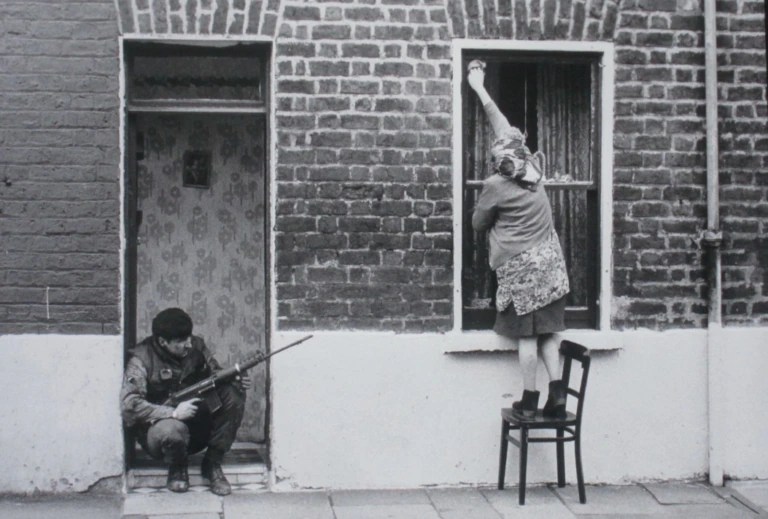
It took a great deal of courage, she says, for councillors to support curators in the acquisition of the pop art collection in the 1970s. Likewise, a decade later and Wolverhampton was collecting art relating to the conflict in Northern Ireland. It is the only such collection in the UK. Miller says the Northern Ireland collection has real relevance and creates a space for reflection on some of the most pressing issues of our day.
Adjoining the gallery are workshop spaces called Makers Dozen, which feature 13 artists' studios. Miller wants to invite a Middle East-based artist to take up an Arts Council England international fellowship to create work in a studio - fitting well with the human conflict theme at Wolverhampton.
International work is an area Miller wants to improve upon. She is especially proud of commissioned work at Leeds, such as US artist Bill Fontana's audio installations around the city. At Wolves, arts council money went towards commissioning the German photographer Claudio Hills and the Korean Choi Jeong-Hwa.
Miller saw pop artist Jeong-Hwa's work at the Venice Biennale in 2005, when the Seoul-based artist was responsible for the South Korean pavilion, unaware of his commission by Wolves. His show at Wolverhampton next month will be his first solo exhibition in the UK.
Of Leeds, she says: 'We had very little money but there were some good ideas and good programming.' As the lead officer for the Contemporary Art Society's Special Collection Scheme, she commissioned contemporary works to fit with the existing collection.
The purchase of the Grayson Perry pot entitled, What Things Say About Us, ('It had some rude words on it, but we even managed to get the Friends to support it.') and the commissioning of Georgina Starr's Big V installation took the collection in new directions, says Miller.
She exudes an excitement about her career and there is no getting away from her delight in art. Her specialist interest is works on paper from the 17th century onwards. Here is a connoisseur, and former colleagues have attested to her excellent knowledge.
That knowledge was nurtured as a Young Friend of the Tate when growing up in London and inspired by her mother who was an amateur artist. She speaks of her parents' cultured German friends who she says left their mark on her. They introduced her to the German magazine Du, which she fell in love with. She would cut out and keep the black-and-white photographs: 'I didn't have pop stars or anything like that on my wardrobe, I had works of art.'
As the head of arts at Wolverhampton, she also has to look for opportunities for community partnerships. The Black Country Arts Partnership, which looks at new models of bringing the arts to other agencies, was already established when she arrived.
The current project sees Miller working with the primary care trust on arts and healthy eating - using paintings to work with schools and other groups - looking at alternative ways of addressing the issues. 'It's a challenging and stimulating thing to add on to my skill base so late on in my career,' she says.
'Really making a name for Wolverhampton in terms of the culture and creativity - I think this is going to be one of my key aspirations,' she states. She also wants to work on the relationship of the three sites under her care.
Bilston Craft Gallery, says Miller, originates some exhibitions but is also a major venue for touring shows: 'We are working hard to originate good exhibitions of contemporary British craft.' And at Bantock House the Victorian collections are currently being redisplayed.
Right now, her focus is on seeing the new spaces at the city centre gallery opened and in operation. Her excitement about the opening is palpable. Miller strikes me as someone who leaves nothing to chance. The few hours I spend with her appear stage-managed. But that's no bad thing.
She is also extremely cautious about her answers. At the more personal questions she puts her hands over her face and thinks hard.
At other times, like when I ask about her challenges at Leeds, she is careful not to lay blame at the door of the council for the lack of investment in the art gallery, preferring, 'I still think it's difficult for local authorities with the drive to provide more for less.'
She is fond of starting a sentence and then stopping herself, saying, 'I don't want to say that', at which point you want her to continue, intrigued at what she might have revealed.
Fundamentally she is wedded to her passion for art and creativity. And she has a clear idea about what galleries should be and what she wants to achieve at Wolverhampton: 'Galleries should be where you happen upon the unexpected. They should not be predictable. My experience is that they can be completely remarkable places.'
Her journey has brought her a year into her first directorial role, having first learned the ropes as a lone curator at the Allerdale Museum Service in Cumbria in the late 1970s.
Late last month, after ten years of planning, the £6.7m extension to Wolverhampton Art Gallery opened. It consists of two triangular-shaped galleries and an additional entrance and reception area, lovingly called the back yard. With dark wood doors and panelling, white floors and walls, I saw it naked in its clean-lined attractiveness.
The two-storey development has transformed the original art gallery. It will partly house the pop art collection that Wolverhampton is famous for - it has the largest holding outside of London. The upper floor will provide space for temporary shows of national and international artists' work, and a new collections resource centre.
Given that Miller's predecessors laid the foundations (Nick Dodd devised the extension plan and Kate Brindley helped to secure it), Miller has the more luxurious job of moulding it into shape and most of the praise is likely to come her way. Her role at Wolverhampton is one of the most important of her career, and it will be interesting to see how far she can make her mark.
Miller was keen on the job before it became vacant. She knew former staff and they had spoken highly of the gallery. 'There haven't been any surprises,' she says. And after a long considered pause: 'I've been delighted at what I've found.' But even though there was nothing unexpected, there certainly will be challenges.
Perhaps her biggest challenge has been getting used to a new environment. For the past 20 years Miller was ensconced at Leeds City Art Gallery, latterly as its senior curator. She admits that she had thought she might retire there, and was thinking about the 'endless possibilities around the collection' in Leeds. She says she knew that people thought she wouldn't move on. A 'brave girl' was one comment on Miller's move by a museum professional .
She is honest enough to say the money that comes with being a hub museum played a part in her attraction to Wolverhampton. 'It has opportunities that only large sums of money can bring,' she says. As part of the West Midlands Hub - Wolverhampton gets £656,000 each year. The Pop Art Gallery is also being funded by Renaissance money. And compare 13 educational staff at Wolverhampton to one in Leeds.
'It's been my first opportunity to work with those levels of funding,' Miller says. Hub money has allowed the skilling-up of staff: 'Museums are constantly in a state of flux, which is very exciting, but you need to be skilled to deal with that.' It allows a receptiveness to change and to seek out creative opportunities.
It is also Miller's first taste of being in a position where the buck stops with her. She says it has been difficult getting her head around some of the hub work, but adds: 'It is stimulating and refreshing to put my brain to some other use.'
Politically Miller is likely to have an easier ride at Wolverhampton. Leeds is well known for its prickly politics (Labour is the largest single party, but a Conservative, Liberal Democrat and Green coalition governs) and many have said that the art gallery took a battering in between all the political arguments. There were two failed PFI bids and a lack of council commitment over a long period - although the gallery is finally getting a £1.7m refurbishment.
Wolverhampton could not be more different. Miller says historically it has been a council that has taken calculated risks with areas of cultural policy, such as acquisitions, that have paid off. 'It's very difficult to collect meaningfully in regional galleries. You have to have a very clear idea of what it is you are trying to achieve. They have not been a wealthy gallery, but have invested very wisely.'
It took a great deal of courage, she says, for councillors to support curators in the acquisition of the pop art collection in the 1970s. Likewise, a decade later and Wolverhampton was collecting art relating to the conflict in Northern Ireland. It is the only such collection in the UK. Miller says the Northern Ireland collection has real relevance and creates a space for reflection on some of the most pressing issues of our day.
Adjoining the gallery are workshop spaces called Makers Dozen, which feature 13 artists' studios. Miller wants to invite a Middle East-based artist to take up an Arts Council England international fellowship to create work in a studio - fitting well with the human conflict theme at Wolverhampton.
International work is an area Miller wants to improve upon. She is especially proud of commissioned work at Leeds, such as US artist Bill Fontana's audio installations around the city. At Wolves, arts council money went towards commissioning the German photographer Claudio Hills and the Korean Choi Jeong-Hwa.
Miller saw pop artist Jeong-Hwa's work at the Venice Biennale in 2005, when the Seoul-based artist was responsible for the South Korean pavilion, unaware of his commission by Wolves. His show at Wolverhampton next month will be his first solo exhibition in the UK.
Of Leeds, she says: 'We had very little money but there were some good ideas and good programming.' As the lead officer for the Contemporary Art Society's Special Collection Scheme, she commissioned contemporary works to fit with the existing collection.
The purchase of the Grayson Perry pot entitled, What Things Say About Us, ('It had some rude words on it, but we even managed to get the Friends to support it.') and the commissioning of Georgina Starr's Big V installation took the collection in new directions, says Miller.
She exudes an excitement about her career and there is no getting away from her delight in art. Her specialist interest is works on paper from the 17th century onwards. Here is a connoisseur, and former colleagues have attested to her excellent knowledge.
That knowledge was nurtured as a Young Friend of the Tate when growing up in London and inspired by her mother who was an amateur artist. She speaks of her parents' cultured German friends who she says left their mark on her. They introduced her to the German magazine Du, which she fell in love with. She would cut out and keep the black-and-white photographs: 'I didn't have pop stars or anything like that on my wardrobe, I had works of art.'
As the head of arts at Wolverhampton, she also has to look for opportunities for community partnerships. The Black Country Arts Partnership, which looks at new models of bringing the arts to other agencies, was already established when she arrived.
The current project sees Miller working with the primary care trust on arts and healthy eating - using paintings to work with schools and other groups - looking at alternative ways of addressing the issues. 'It's a challenging and stimulating thing to add on to my skill base so late on in my career,' she says.
'Really making a name for Wolverhampton in terms of the culture and creativity - I think this is going to be one of my key aspirations,' she states. She also wants to work on the relationship of the three sites under her care.
Bilston Craft Gallery, says Miller, originates some exhibitions but is also a major venue for touring shows: 'We are working hard to originate good exhibitions of contemporary British craft.' And at Bantock House the Victorian collections are currently being redisplayed.
Right now, her focus is on seeing the new spaces at the city centre gallery opened and in operation. Her excitement about the opening is palpable. Miller strikes me as someone who leaves nothing to chance. The few hours I spend with her appear stage-managed. But that's no bad thing.
She is also extremely cautious about her answers. At the more personal questions she puts her hands over her face and thinks hard.
At other times, like when I ask about her challenges at Leeds, she is careful not to lay blame at the door of the council for the lack of investment in the art gallery, preferring, 'I still think it's difficult for local authorities with the drive to provide more for less.'
She is fond of starting a sentence and then stopping herself, saying, 'I don't want to say that', at which point you want her to continue, intrigued at what she might have revealed.
Fundamentally she is wedded to her passion for art and creativity. And she has a clear idea about what galleries should be and what she wants to achieve at Wolverhampton: 'Galleries should be where you happen upon the unexpected. They should not be predictable. My experience is that they can be completely remarkable places.'