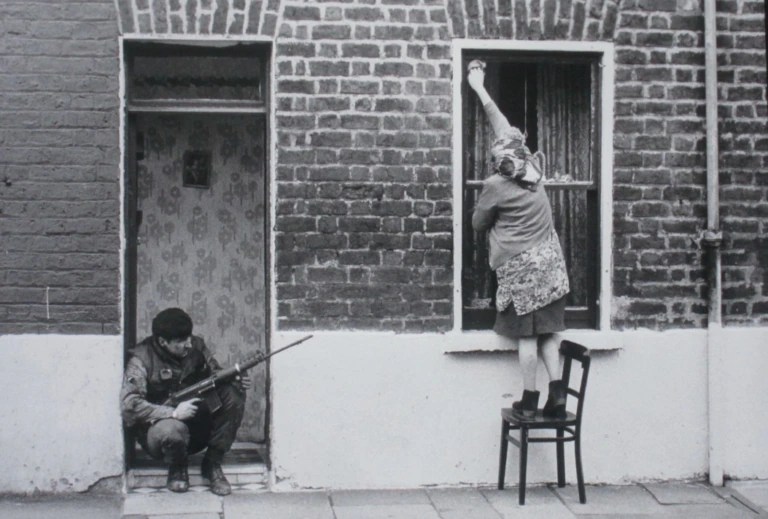
An interesting experiment has been unfolding at New York's Brooklyn Museum. Since March the museum has invited the public to contribute to and curate an exhibition themed around the changing faces of the borough.
More than 380 photographers submitted their work to the museum's website where members of the public could then evaluate the images according to aesthetics, photographic technique, and relevance to the theme.
The top 20 per cent of these photographs are now on display at the museum as part of its exhibition Click! A Crowd-Curated Exhibition, which runs until 10 August.
Use of social software, and blogging in particular, lie at the exhibition's heart: visitors to the museum's website can leave comments with the images, while the museum is posting updates and fielding questions about each step of the process on its blog. Between March and July, some 3,344 members of the public made over 400,000 evaluations and left more than 3,000 comments on the site.
These sort of numbers are a marketer's dream, but as Shelley Bernstein, the museum's manager of information systems and the exhibition's organiser, says, the blog is not just about marketing: "The blog increases awareness. There are many people who will consistently read it that might never go to the website. In addition the blog is about community and being open with the museum's visitors."
Blogging has existed in one form or another since the mid-1990s, starting out as a series of stand-alone online diaries and evolving into the responsive network of commentators and communities that it has become today.
What exactly a blog is, or should be, depends on who you ask, but the online encyclopedia Wikipedia defines it as "a website, usually maintained by an individual, with regular entries of commentary, descriptions of events, or other material such as graphics or video.
The ability for readers to leave comments in an interactive format is an important part of many blogs". Search engine Technorati currently tracks more than 112 million blogs, and claims that 175,000 new blogs appear on the internet every day.
For museums that have traditionally had a top-down relationship with their audience, blogging is a very different way of doing things. The thought of members of the public posting negative comments about their organisation has prevented some from embracing the interactive aspect of blogging.
National Museums Liverpool's (NML) blog was set up to give staff a voice and as a bulletin board for information that didn't have a natural home elsewhere. It features posts by a number of staff members on subjects ranging from an excavation project in Egypt to a painting competition, but the blog does not yet allow visitors to comment on the posts.
Karen Miller, web strategy coordinator at NML, says that the museum is already in the process of changing this: "Initially, there were concerns that it may be used by external individuals as a means of commenting negatively on NML, especially with regard to the Museum of Liverpool rebuild.
"But now that the blog has been running for a while we have decided to allow moderated comments on a trial basis with a view to it becoming permanent."
Miller says the museum changed its mind when it became clear that it was being talked about on other blogs anyway and needed to become part of those conversations.
Jim Richardson, lead consultant at museum marketing company Sumo and a blogger himself, agrees that the pros outweigh the cons, as a well-maintained blog can add 10 per cent more visitors to a museum website, as well as help to move the site nearer the top of internet search engine rankings. "I think a venue needs to be open to negative feedback," he says. "This can spark debate and encourage ongoing improvement."
Manchester Museum found this when its Egypt blog received a huge number of comments, many of them negative, about the museum's decision earlier this year to cover some of the mummies on display in its galleries.
Karen Exell, the museum's curator for Egypt and the Sudan, who has been writing about the issue on the blog, says the response was excellent and helped open the discussion out to an international audience. She says the comments will feed into the museum's ongoing consultation on the display of human remains.
But Tom Flynn, a London-based writer who blogs about the art world, questions whether museums should be blogging at all. "What gives the concept of blogging its value, if it has any at all, is the fact it allows people to speak without fear or favour," he says.
"If you are working for an organisation you don't want to be endangering your position [by speaking your mind]. That doesn't strike me as being in the original spirit of blogging."
The focus on the individual's point of view can benefit organisations, says Kevin Anderson, head of blogging and interaction at the Guardian. "People don't engage with institutions," he says. "They engage with other people." And he warns: "Dry, press-release-style posts are diametrically opposed to blogging.
The benefit is in putting out a human face and being less institutional. The biggest challenge is not that you will be overwhelmed with negative comments, but that you will feel lonely."
One way of avoiding this is to encourage employees to make comments, says John Stack, editor of Tate Online, although he thinks that a lack of comments is not necessarily a measure of whether a blog is good or bad.
Tate is currently using a blog to invite ideas about the future of Tate Modern's extension, and Stack emphasises the importance of consistently engaging with the blog's users. But he readily admits that everything on Tate's site is quasi-marketing, designed to engage both with a broad audience that can't make it to the gallery and with those who can.
As yet, Tate has not researched a link between blogging and footfall, but a recent survey found that 70 per cent of gallery visitors looked at the website before making their journey.
Bernstein from the Brooklyn Museum thinks that paying too much attention to statistics misses the point. "It's more important that we are connecting to the audience, and doing so in a way that is natural to blogging," she says.
"For instance, we fully syndicate our blog so readers don't have to come to our site - we may lose stats that way, but it's more visitor-friendly and considered good community in the blogging world."
Bernstein's museum is, by general consent, ahead of the game. But Tom Flynn believes that blogging is taken more seriously in the US as a whole, and cites the impact of New York journalist Lee Rosenbaum's CultureGrrl blog as being symptomatic of a more mature attitude towards blogging on the other side of the Atlantic:
"With all respect to her journalistic credentials, which are considerable, her high profile is also partly attributable to the seriousness with which bloggers like her are treated in the US. In the UK, it's still widely sneered at as a waste of time. It's anything but, at least for some of us."
Patrick Steel is the website editor at the Museums Association
More than 380 photographers submitted their work to the museum's website where members of the public could then evaluate the images according to aesthetics, photographic technique, and relevance to the theme.
The top 20 per cent of these photographs are now on display at the museum as part of its exhibition Click! A Crowd-Curated Exhibition, which runs until 10 August.
Use of social software, and blogging in particular, lie at the exhibition's heart: visitors to the museum's website can leave comments with the images, while the museum is posting updates and fielding questions about each step of the process on its blog. Between March and July, some 3,344 members of the public made over 400,000 evaluations and left more than 3,000 comments on the site.
These sort of numbers are a marketer's dream, but as Shelley Bernstein, the museum's manager of information systems and the exhibition's organiser, says, the blog is not just about marketing: "The blog increases awareness. There are many people who will consistently read it that might never go to the website. In addition the blog is about community and being open with the museum's visitors."
Blogging has existed in one form or another since the mid-1990s, starting out as a series of stand-alone online diaries and evolving into the responsive network of commentators and communities that it has become today.
What exactly a blog is, or should be, depends on who you ask, but the online encyclopedia Wikipedia defines it as "a website, usually maintained by an individual, with regular entries of commentary, descriptions of events, or other material such as graphics or video.
The ability for readers to leave comments in an interactive format is an important part of many blogs". Search engine Technorati currently tracks more than 112 million blogs, and claims that 175,000 new blogs appear on the internet every day.
For museums that have traditionally had a top-down relationship with their audience, blogging is a very different way of doing things. The thought of members of the public posting negative comments about their organisation has prevented some from embracing the interactive aspect of blogging.
National Museums Liverpool's (NML) blog was set up to give staff a voice and as a bulletin board for information that didn't have a natural home elsewhere. It features posts by a number of staff members on subjects ranging from an excavation project in Egypt to a painting competition, but the blog does not yet allow visitors to comment on the posts.
Karen Miller, web strategy coordinator at NML, says that the museum is already in the process of changing this: "Initially, there were concerns that it may be used by external individuals as a means of commenting negatively on NML, especially with regard to the Museum of Liverpool rebuild.
"But now that the blog has been running for a while we have decided to allow moderated comments on a trial basis with a view to it becoming permanent."
Miller says the museum changed its mind when it became clear that it was being talked about on other blogs anyway and needed to become part of those conversations.
Jim Richardson, lead consultant at museum marketing company Sumo and a blogger himself, agrees that the pros outweigh the cons, as a well-maintained blog can add 10 per cent more visitors to a museum website, as well as help to move the site nearer the top of internet search engine rankings. "I think a venue needs to be open to negative feedback," he says. "This can spark debate and encourage ongoing improvement."
Manchester Museum found this when its Egypt blog received a huge number of comments, many of them negative, about the museum's decision earlier this year to cover some of the mummies on display in its galleries.
Karen Exell, the museum's curator for Egypt and the Sudan, who has been writing about the issue on the blog, says the response was excellent and helped open the discussion out to an international audience. She says the comments will feed into the museum's ongoing consultation on the display of human remains.
But Tom Flynn, a London-based writer who blogs about the art world, questions whether museums should be blogging at all. "What gives the concept of blogging its value, if it has any at all, is the fact it allows people to speak without fear or favour," he says.
"If you are working for an organisation you don't want to be endangering your position [by speaking your mind]. That doesn't strike me as being in the original spirit of blogging."
The focus on the individual's point of view can benefit organisations, says Kevin Anderson, head of blogging and interaction at the Guardian. "People don't engage with institutions," he says. "They engage with other people." And he warns: "Dry, press-release-style posts are diametrically opposed to blogging.
The benefit is in putting out a human face and being less institutional. The biggest challenge is not that you will be overwhelmed with negative comments, but that you will feel lonely."
One way of avoiding this is to encourage employees to make comments, says John Stack, editor of Tate Online, although he thinks that a lack of comments is not necessarily a measure of whether a blog is good or bad.
Tate is currently using a blog to invite ideas about the future of Tate Modern's extension, and Stack emphasises the importance of consistently engaging with the blog's users. But he readily admits that everything on Tate's site is quasi-marketing, designed to engage both with a broad audience that can't make it to the gallery and with those who can.
As yet, Tate has not researched a link between blogging and footfall, but a recent survey found that 70 per cent of gallery visitors looked at the website before making their journey.
Bernstein from the Brooklyn Museum thinks that paying too much attention to statistics misses the point. "It's more important that we are connecting to the audience, and doing so in a way that is natural to blogging," she says.
"For instance, we fully syndicate our blog so readers don't have to come to our site - we may lose stats that way, but it's more visitor-friendly and considered good community in the blogging world."
Bernstein's museum is, by general consent, ahead of the game. But Tom Flynn believes that blogging is taken more seriously in the US as a whole, and cites the impact of New York journalist Lee Rosenbaum's CultureGrrl blog as being symptomatic of a more mature attitude towards blogging on the other side of the Atlantic:
"With all respect to her journalistic credentials, which are considerable, her high profile is also partly attributable to the seriousness with which bloggers like her are treated in the US. In the UK, it's still widely sneered at as a waste of time. It's anything but, at least for some of us."
Patrick Steel is the website editor at the Museums Association
Six of the best
Brooklyn Museum
The museum's official blog
www.brooklynmuseum.org/community/blogosphere/bloggers/
Fresh and New(er)
A discussion of issues around digital media and its use in museums. Primarily written by Seb Chan at Sydney's Powerhouse Museum
www.powerhousemuseum.com/dmsblog/
Looting matters
Discussion of the ethics surrounding the collecting of antiquities
lootingmatters.blogspot.com/
Artknows
Art and the art market
tom-flynn.blogspot.com/
CultureGrrl
New York-based cultural commentary
www.artsjournal.com/culturegrrl/
Brooklyn Museum
The museum's official blog
www.brooklynmuseum.org/community/blogosphere/bloggers/
Fresh and New(er)
A discussion of issues around digital media and its use in museums. Primarily written by Seb Chan at Sydney's Powerhouse Museum
www.powerhousemuseum.com/dmsblog/
Looting matters
Discussion of the ethics surrounding the collecting of antiquities
lootingmatters.blogspot.com/
Artknows
Art and the art market
tom-flynn.blogspot.com/
CultureGrrl
New York-based cultural commentary
www.artsjournal.com/culturegrrl/