Museums often ask communities to respond to collections. Black Beyond Data (BBD) reverses this. Beginning with relationships rather than archives, the project asks what ethical practice looks like when descendant communities help shape the questions, not just the answers.
Five years on from the Black British Museum/Museum X takeover edition of Museums Journal, the sector is increasingly being asked to do more than diversify narratives. We are being asked to rethink how knowledge is created, who holds authority, and what new forms of practice become possible when communities are invited into the process itself.
Black Beyond Data: Working with Descendant Communities sits within this emerging landscape of experimental practice, less concerned with delivering a model and more interested in creating the conditions in which new models might emerge.
Conversations about care, equity, representation and community participation have become more visible across the museum sector. Yet visibility alone does not necessarily translate into structural change. While many institutions have diversified programmes and collections narratives, questions remain about who shapes knowledge, who holds authority, and how museums work with communities whose histories are represented within collections.
The BBD project, a collaboration between Royal Museums Greenwich (RMG), Black Beyond Data and Museum X, has emerged from these questions. Rather than presenting a finished model of best practice, the project is intentionally experimental. It seeks to explore what might become possible when descendant communities, curators and researchers work together to develop ethical approaches to collections shaped by histories of enslavement, empire and colonialism.
Importantly, the project did not begin with the archive. One of the first decisions we made was not to begin with the collection.
Advertisement
The first workshop opened with grounding, reflection and collective preparation led by African-centred psychologist Malcolm Phillips. Museum X's film To Whom Does This Belong? was screened as a methodological invitation. It raises questions about ownership, authority, memory and responsibility. It asks what it means to encounter archives connected to difficult histories. BBD puts people first. Care comes first. Relationships come first. Trust comes first.
This decision reflects a wider principle underpinning the project: ethical frameworks cannot simply be written into existence. They emerge through practice. Through relationships. Through conversations.
For Alexander White, co-founder of BBD and based at the University of Cambridge, the project offers an opportunity to rethink how institutions engage with knowledge and authority.
"Too often, data, collections and archives are treated as neutral repositories of information. Black Beyond Data starts from a different premise: that communities hold knowledge systems, memories and ways of knowing that are equally valuable. The question is not how communities can contribute to institutional knowledge, but how institutions can learn to work differently with communities."
This distinction matters. The project does not simply ask how museums can be more inclusive. It asks how authority itself is negotiated. Who decides what counts as knowledge? Whose interpretation becomes visible? How do organisations respond when lived experience challenges established narratives?
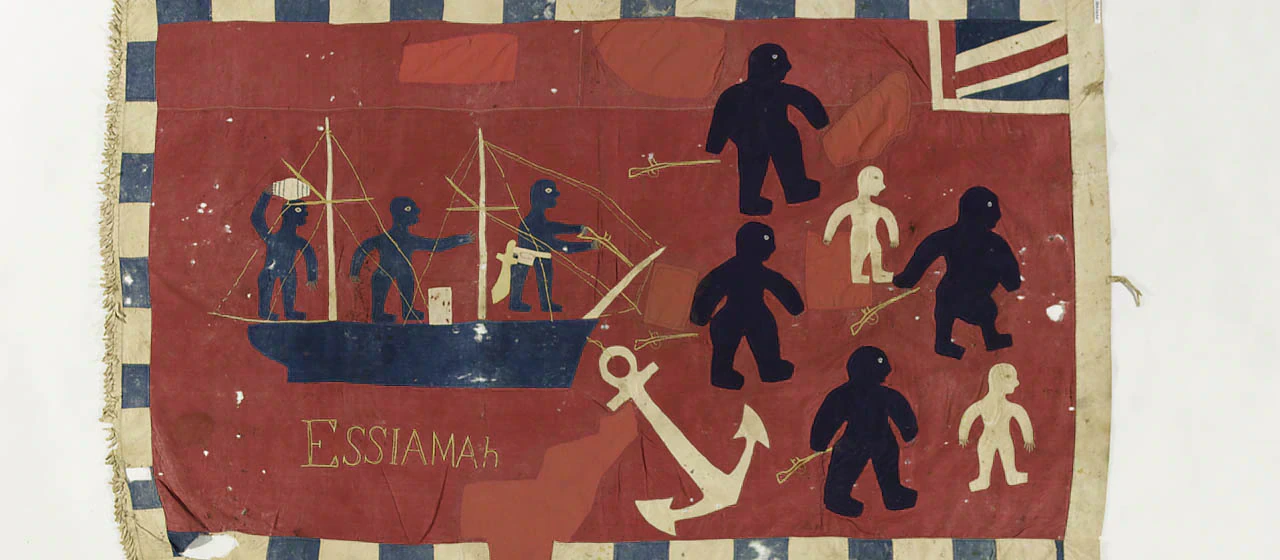
At RMG, the project focuses on the Michael Graham-Stewart Slavery Collection, which comprises a significant archive connected to histories of transatlantic slavery and maritime empire. The BBD project asks how such archives can be encountered differently.
Advertisement
For Museum X, the work is not just about archives. It is also about the collecting that shapes them.
Collections connected to slavery and empire prompt questions about responsibility and stewardship. What responsibilities do museums inherit with collections? How do institutions work ethically with material assembled through earlier collecting practices? What role can descendant communities play in shaping access, language, interpretation and future use?
Rather than approaching these questions through a fixed institutional position, BBD creates space for care and dialogue. The aim is not to arrive at simple answers but to explore how ethical frameworks might emerge through shared practice.
For archivist Joanne Anthony, this means recognising that archives are not passive spaces. "Archives are often presented as places of authority and certainty. In reality, they are full of gaps, silences and absences. Working alongside descendant communities reminds us that records alone can never tell the whole story. People bring knowledge, memory and lived experience that help us understand both what is present and what is missing."
Rather than positioning archivists as gatekeepers of knowledge, the archive becomes a place of dialogue rather than a destination.
Emotional labour
The impact of collections around enslavement and colonial violence is often considered in relation to visitors, but less attention is given to the emotional demands placed upon practitioners.
Advertisement
Participants in a project navigating difficult histories may have personal reflections and questions of responsibility. Emotions surface unexpectedly. Moments of discomfort arise. Difficult conversations emerge. This is evidence that something meaningful is taking place.
Emotional labour cannot be treated as a secondary consideration. Institutions must support practitioners who are engaging with difficult material and holding these conversations.
For Museum X, care is not an add-on. It is part of the infrastructure of meaningful collaboration. This includes creating space for reflection, uncertainty and vulnerability, while recognising that no single individual – participant, curator, archivist or facilitator – carries responsibility for the work alone.
Victoria Lane, curator of art at RMG and a key partner in developing BBD, sees this as part of a wider institutional challenge.
“Perhaps ethical frameworks are not documents that museums write, but relationships that museums learn to sustain”
"Museums are increasingly aware of the need to work collaboratively, but collaboration requires more than consultation. It requires time, trust and a willingness to be changed by the process. Projects like Black Beyond Data are important because they allow us to test new ways of working and to learn alongside communities rather than assuming we already know the answers."
This willingness to learn is perhaps the project's most significant contribution.
Willingness to learn
Too often, ethical frameworks are developed after decisions have been made. Museums are under pressure to demonstrate impact, deliver engagement targets and produce measurable outcomes, so there is temptation to present certainty.
BBD takes a different approach, acknowledging that ethical frameworks for working with descendant communities are still emerging. It recognises that many institutions are asking similar questions but often lack the space, resources or confidence to experiment publicly.
What emerges from BBD may not be a definitive framework. It may not produce a model that can be applied across the sector. But it may offer something more valuable: evidence that ethical practice is not something venues can write into existence. It must be built through relationships, through listening, discomfort, care and through a willingness to reconsider how authority is held and shared.
The challenge is whether museums are willing to create the conditions for communities to influence how those conversations begin. BBD is one attempt to do that. Not by starting with the archive. But by starting with people. The work is ongoing, and so too are the questions.
Rather than present a finished framework, BBD has created space to test, reflect and learn collectively. The ethical framework continues to emerge through practice, relationships and dialogue. This conversation will continue at the Black Beyond Data Symposium: Working with Descendant Communities, taking place at Royal Museums Greenwich (Lecture Theatre) on the 20 November 2026.
Bringing together descendant community researchers, museum practitioners, researchers, archivists, curators, artists, academics, the symposium will share learning from the project and launch Museum X's emerging Ethical Framework for Working with Descendant Communities.
Through conversation, film, participant reflections and collaborative discussion, it will explore how museums can move beyond consultation towards long-term relationships grounded in care, shared authority and community knowledge.
Whether or not the framework is ever complete is perhaps beside the point. Its value lies in remaining open to challenge, learning and change.
If the museum sector is serious about building more ethical futures, this work cannot be undertaken by individual organisations. It requires collective practice.
Perhaps ethical frameworks are not documents that museums write, but relationships that museums learn to sustain.
Sandra Shakespeare is the founder of Museum X. For further information about the symposium or Museum X's work, please contact: info@themuseumx.com