The landscape for exhibitions is evolving and today's audiences are driven by the proposition, not the poster. New research has found that museums need to meet people where they are and make the experience worth the effort
The British Museum’s plans for a major temporary exhibition next year centred on the Bayeux Tapestry loan have generated a lot of excitement across the sector.
Groundbreaking though the loan is, in some ways the pitch of the exhibition itself, as a national “moment”, seems rather quaint– a hark back to the 1970s heyday of the blockbuster, when “Tutmania” broke out and 1.6 million visitors flocked to see the museum’s Treasures of Tutankhamun.
That’s not to say that shows in the 2020s don’t pull in the crowds. But anyone involved in exhibition planning will tell you that the only predictable thing about visitor behaviour these days is just how unpredictable it is.
The old methods of calculating whether or not a temporary exhibition will resonate with the public no longer seem to work, and even the biggest names can no longer rely on a show being a sure-fire hit.
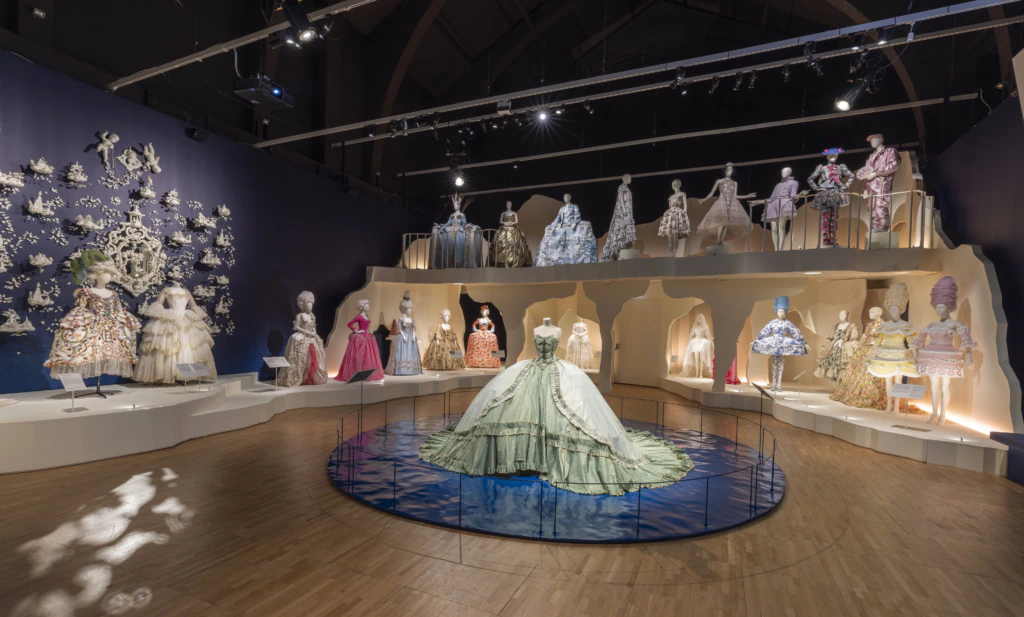
Marie Antoinette Style opened at the Victoria and Albert Museum in September (c) Victoria and Albert Museum, London
Exploring key trends
Several initiatives are currently exploring how the sector can adapt to this brave new world. The Museums and Galleries Network for Exhibition Touring (Magnet), a network of 12 museums and galleries that have pooled resources to share their collections with national audiences, was established in 2020 with the aim of creating a more sustainable, collaborative model for high-quality touring exhibitions adaptable to local communities.
Advertisement
Three exhibitions developed by Magnet opened over the summer and are currently on tour, including Gender Stories, which debuted at Bristol Museum & Art Gallery, before moving on to Brighton Museum & Art Gallery and then the Walker Art Gallery, Liverpool.
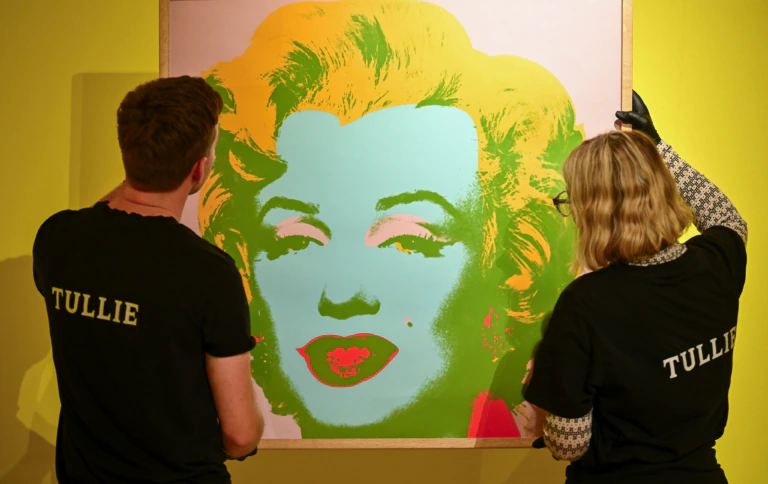
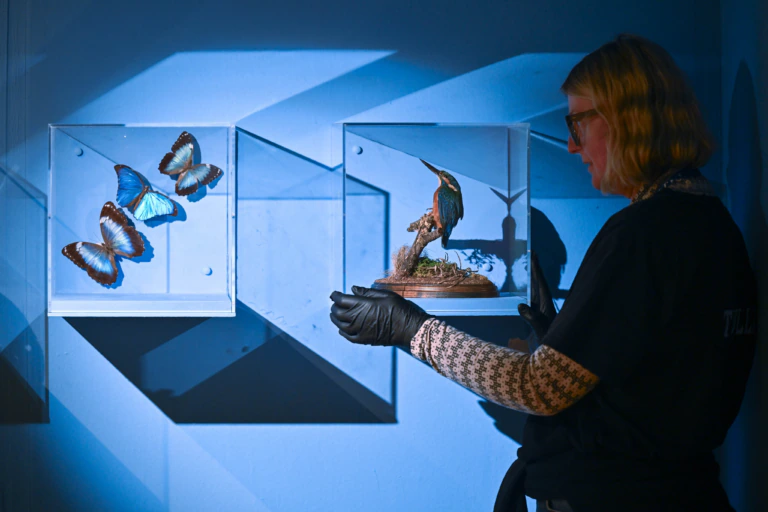
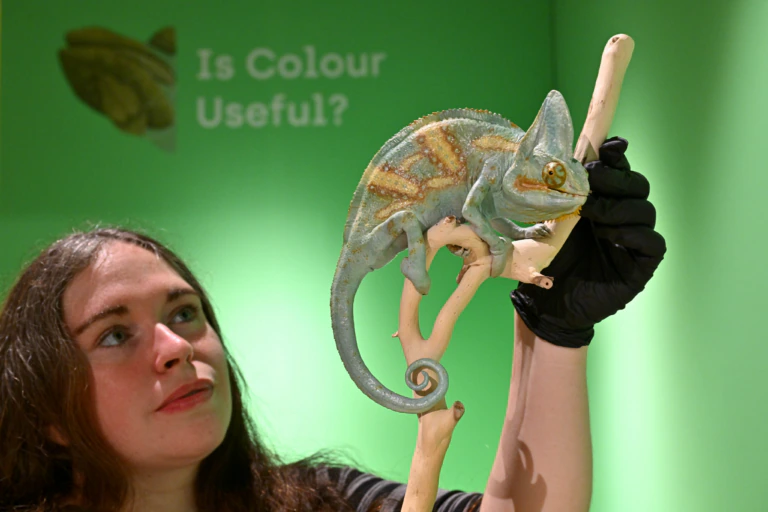
Colour: Explore a World of Wonder opened at Sheffield’s Millennium Gallery in June, then transferred to Tullie, in Carlisle, in September. It ends there on 25 January, when it will head to Gosport Museum & Art Gallery in Hampshire, Exeter’s Royal Albert Memorial Museum and Bristol Museum & Art Gallery.
Colour: Explore a World of Wonder is currently on show at Tullie in CarlisleCourtesy of Tullie
Human Natures opened on 27 September at Derby Museum and Art Gallery, from where it will move on to Manchester Museum, Great North Museum: Hancock and London’s Horniman Museum and Gardens, before finishing its run at Norwich Castle Museum and Art Gallery.
Meanwhile, one of Magnet’s partners, The Exhibitions Group, is working on a research project to assess key changes and trends in temporary and touring exhibitions, with the results due to be published next year.
The arts strategy consultancy MHM (formerly known as Morris Hargreaves MacIntyre) has been working with a consortium of 10 London institutions to explore temporary exhibition trends in the capital, including audiences, life-cycle strategies, and value and pricing elasticity.
The report follows similar research, Unpacking Exhibitions, in 2013, which aimed to help London museums model successful temporary exhibitions, and has been widely used since.
“In the past couple of years, people have been coming to us and saying: ‘Remember that work you did that helped us to predict things? It’s not working anymore – things have changed,’” says MHM director Debbie Spence.
Six trends in London’s temporary exhibitions market
Niche to mainstream London’s paid exhibition market has grown by 3.75 million visitors since 2013 to reach 15.1 million visitors in the last five years – equivalent to a third of the number of adults in England.
Browsing to booking In 2013, 58% booked ahead. Today it is 74%. Timed entry is now read as a sign of quality, though overcrowding remains a risk.
Funnel to constellation 35% of audiences discovered their last exhibition through social media, rising to 46% among 16 to 24-year-olds. Decision-making now happens in “constellations of influences”, rather than funnels.
Recognition to relevance 82% say the exhibition itself, not the venue, was the primary reason for visiting. Brand prestige alone is no longer enough.
Price to purpose The average adult ticket has nearly doubled since 2010, to between £20 and £29. Audiences will pay if it feels purposeful – but associated day-out costs have doubled too.
Rated to related Nearly half of under-35s rely on TikTok or Instagram for exhibition discovery. Popularity must be engineered, as well as earned.
The new research was a major undertaking, examining the data from almost 300 temporary exhibitions staged between 2018 and 2024, in addition to a national survey of more than 4,000 people. MHM also hosted discussion and focus groups to understand how different types of visitors engaged with temporary exhibitions.
“We looked at understanding trends and shifts, as well as desires, behaviours and motivations, starting very broadly,” says Spence.
Advertisement
The evidence backed up what many institutions have noticed – in London, but also more generally: that audience behaviour has changed significantly.
“The world has moved on dramatically since 2013,” says Spence. “The pandemic, cost of living, people’s behaviours, immersive experiences – they weren’t a thing in 2013 – and social media algorithms. It’s transformed a whole landscape, and not just for temporary exhibitions, but in how people interact and make decisions.”
Several key trends began to emerge from the new data. “One is that brand prestige alone isn’t filling galleries,” says Spence. “Audiences are much more driven now by algorithms and social proof, and the content of the exhibition itself.”
Visitors are becoming more intentional and less incidental. This is driven by several factors; the cost of living means people plan days out more carefully, while the move to remote working means fewer visitors drop by in passing. Covid also affected spontaneity, with people now more comfortable with advance booking and timed tickets.
“Brand prestige alone isn’t filling galleries”
Debbie Spence
One of the biggest changes in London is audience demographics, according to Spence. The city’s paid exhibition market has grown by 3.75 million visits since 2013 to reach 15.1 million visits annually. Audiences are younger, more diverse and more values-led – and many are museum newcomers.
“About 30% of paid exhibition-goers had never attended before the pandemic. So they haven’t got a set of behaviours or established habits or expectations around a paid exhibition. Exhibitions aren’t seen as this occasional treat, but more part of the same ecosystem as gigs, West End shows or nightlife.”
Ticket prices having more than doubled since 2013 does not seem to have put people off – but it has made them more discerning.
“They’re much more value sensitive rather than price sensitive,” says Spence. “It’s ‘what’s the value of this and what is it going to give us?’, ‘will it give us something to talk about at dinner?’ and ‘will it help me demonstrate my understanding of an artist or a topic?’.”
Driven by social media
Where people once perused newspaper listings, social media is now the key driver for visitors. “If it doesn’t arrive through an algorithm, it’s hard to get into people’s consciousness now,” says Spence. “TikTok, Instagram, WhatsApp and peer cues are the real drivers of attendance.”
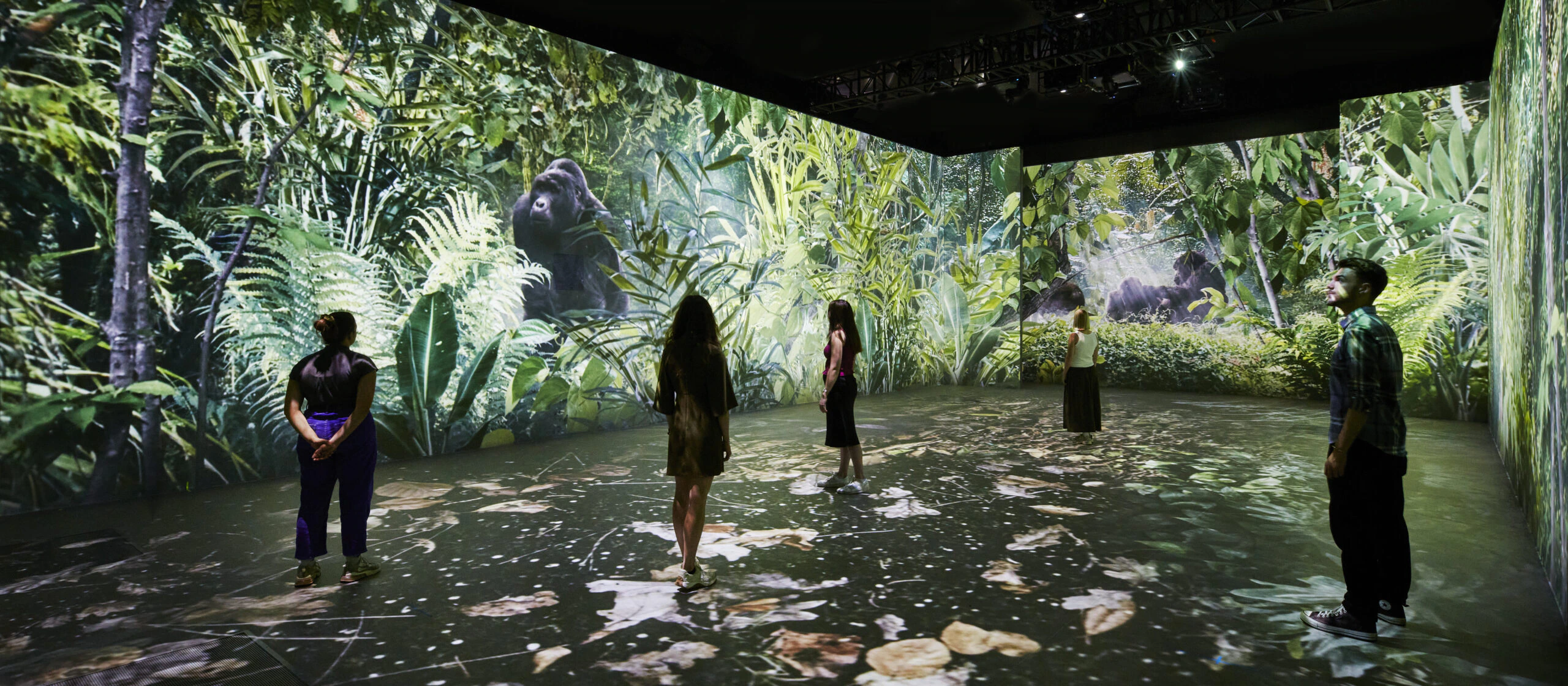
Immersive exhibitions have also become ubiquitous and have transformed visitor expectations – but this doesn’t mean that every show should go down that route, says Spence.
“One of the warnings we put in there is not to make everything immersive, because it’s not one size fits all. Not everyone wants an immersive experience. It’s really thinking about the purpose, the story and the context.”
What does all of this mean for the sector? Spence is clear that rather than temporary exhibitions being in decline, they are evolving. “The audience has grown but so has supply, and the windows of opportunity have shrunk,” she says.
“What emerges is a call to think less about ‘the exhibition’ and more about the exhibition ‘ecosystem’ – how shows fit into people’s social lives, their sense of cultural value and their appetite for experiences that feel alive.”
The Bayeux Tapestry exhibition will undoubtedly be a massive hit, but the days of the blockbuster may be waning.
“The blockbuster still has a role, but it is no longer the sole model,” says Spence. “Success now depends on designing programmes that speak to multiple motivations.”
Gladiators at the Royal Armouries, Leeds
Having not planned a temporary exhibition in-house for nearly a decade, the Royal Armouries decided to take a tactical approach to getting back in the ring.
The Leeds-based museum hired in Gladiators, a touring exhibition developed by the Italian company Contemporanea Progetti and curated by Rossella Rea, the former director of the Colosseum in Rome.
Costing £6.50 for an adult ticket, the show, which closed on 2 November, aimed to wow visitors with clever digital displays and the chance to see rare gladiator helmets and body armour found at Pompeii.
Gladiators is being followed by a hired-in exhibition on Genghis Khan in 2026, and a special exhibition developed in-house the following year.
Florence Symington (pictured), the Royal Armouries’ director of brand and audiences, says: “We’ve chosen to call these ‘special’, rather than ‘temporary’, exhibitions because they are a chance to really impress. They help us demonstrate our relevance and that we are here for the people we serve.”
Looking to the future, the museum thinks a mix of in-house and touring exhibitions is the right model. Hiring in shows takes pressure off the curatorial department and enables the museum to address gaps in its collection– for example, armour from the Roman period.
“We’re relearning what it means to do special exhibitions,” adds Matthew Wood, the exhibition and displays manager at the armouries. “The aim is to drive repeat visits and make a modest income from ticket sales, so this is a great chance to test out what people want.”
"This work is the result of a true team effort at MHM. Special thanks go to Helen Rackstraw, Medwen Roberts, Guy Turton, Elinor James and Andrew McIntyre for leading the work with bravery and brilliance, and to the wider team of researchers and analysts at MHM whose rigour and dedication made it possible.
"Just as importantly, we’ve loved convening this consortium of London’s leading museums and galleries. Thank you to the British Museum, the National Gallery, V&A, Tate, the Royal Academy, the National Portrait Gallery, Imperial War Museums, the Design Museum, the Serpentine And ALVA. In a sector already challenged by competition and fragmentation, collaboration is the only way forward.
"This work has shown what’s possible when we pool evidence and share ideas, and why we need to keep working together to transform audience connection now and in future."
Debbie Spence is the director of MHM
Share article
Comment (1)
This is an extremely interesting article but after I downloaded the MHM white paper I came to realised that it only looked at London-based exhibitions. Are there any equivalent pieces of research that look more broadly at exhibitions around the UK, or more rural exhibitions?
All things to all people | How communities are reshaping heritage practice
Museums often ask communities to respond to collections. The Black Beyond Data project asks what ethical practice looks like when descendant communities put forward the questions, rather than just the answers
Hanging by a thread | How restitution is bringing lost Indigenous practices back to life
Many traditional skills struggled to survive colonial disruption, but communities are showing how the return of ancestral objects can spark cultural renewal
A long time coming | Black British heritage moves centre stage
The UK has few standalone spaces dedicated to Black history, but this could all change in the coming decade, with several important museum developments gathering pace
Advertisement
Join the Museums Association today to read this article
Over 11,000 museum professionals have already become members. Join to gain access to exclusive articles, free entry to museums and access to our members events.




This is an extremely interesting article but after I downloaded the MHM white paper I came to realised that it only looked at London-based exhibitions. Are there any equivalent pieces of research that look more broadly at exhibitions around the UK, or more rural exhibitions?