Earlier this year, a national museum in London posted an advert seeking a kitchen porter to work across several of its cafes and restaurants. The pay? A paltry £10 per hour – a wage that can legally be paid only to people between the ages of 18 and 20, and is rate that is far below the Living Wage Foundation’s (LWF) recommended minimum pay of £13.85 per hour in London.
The kitchen porter role is just one example from many across the UK museum sector, where low pay has been endemic for such a long time that it’s hard to single out any one institution for poor practice.
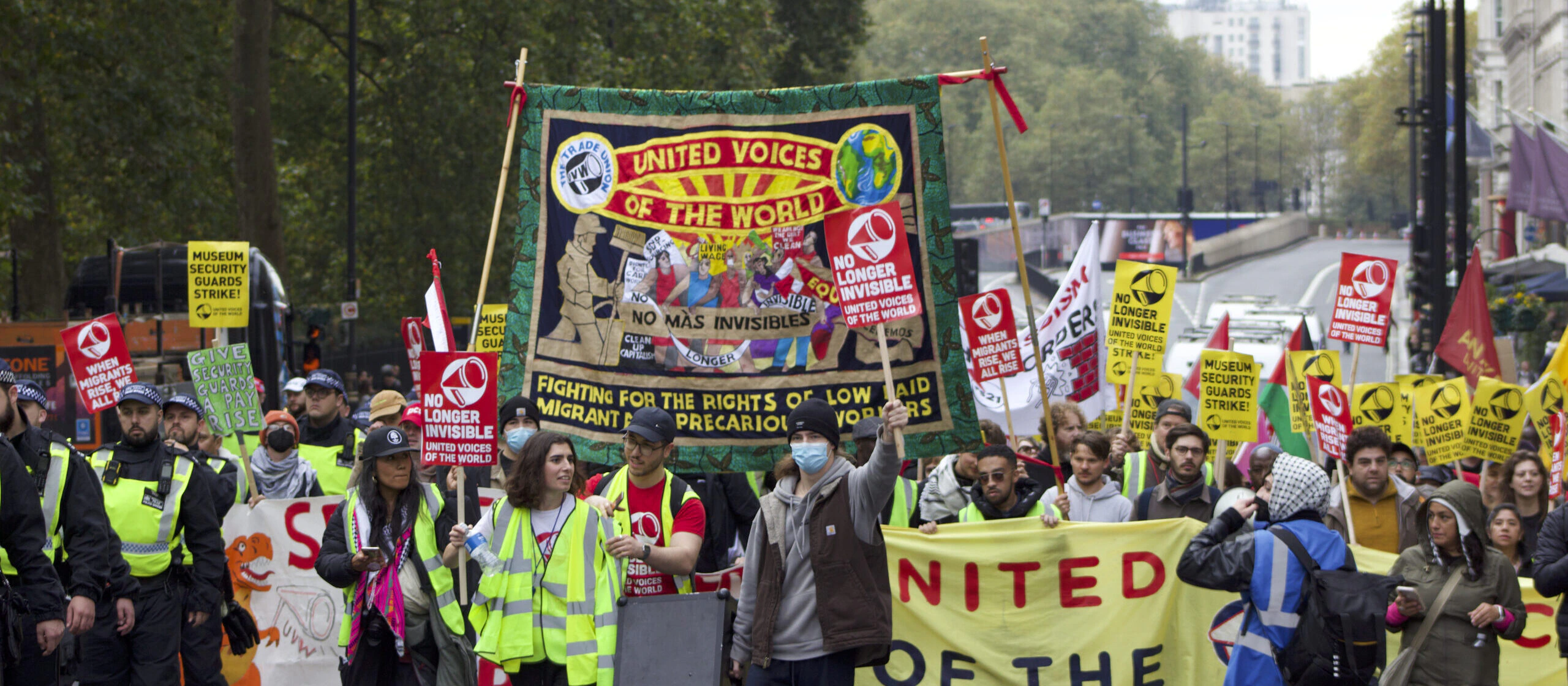
But there have been signs of change recently. Earlier this year, security guards at the Science Museum, Natural History Museum and Victoria and Albert Museum secured historic pay rises of between 13% and 23% after taking prolonged strike action, adding as much as £8,000 each annually to their salaries.
The security guards, who are employed by the outsourced private-security firm Wilson James, had seen their wages stagnate for several years, despite the company posting significant profits.
And although the firm agreed to pay the real Living Wage in 2024, it failed to backdate or implement the change immediately. The costly dispute exemplifies the disruption and reputational damage a poor pay policy can cause.
This winter, the Museums Association (MA) will publish its annual inflationary review and update to its salary recommendations for the sector. Pay rates vary according to roles and seniority, but the MA urges employers to work with trade unions and staff to develop progressive working policies, and recommends that all workers, regardless of their contract type or hours of work, should be paid at least the real Living Wage.
Advertisement
This is not the government’s national minimum wage – it’s a recommendation set by the LWF and independently calculated every year based on what people need to live. The current rates are £12.60 across the UK and the aforementioned £13.85 in London.
Fair pay
Although many of the sector’s pay milestones, such as the security guards’ victory, have been driven by workers themselves, an increasing number of institutions are committing to fair pay and employment practices at organisational level.
According to the LWF, more than 100 museums and galleries across the UK have signed up to be accredited Living Wage employers – a figure likely to be higher due to some museums being counted under umbrella organisations such as councils.
This is positive, but with more than 1,600 museums in the UK, there are many institutions missing from that list, including some major names (see table below).
Data from the Office of National Statistics reveals that 16.2% of people working across libraries, archives, museums and other cultural activities – one in six – were paid below the Living Wage in 2024. This is the highest incidence of low pay in culture-related industries, and above the 15.7% rate for the creative and cultural sector as a whole.
Advertisement
The LWF’s figures correspond with previous research by the MA and other sector bodies, which consistently shows that pay in museums and heritage has failed to keep pace with inflation, and lags significantly behind market rates in comparator sectors.
This will have a detrimental impact on attracting people to the sector, as well as on retention and wellbeing. More than that, it’s a moral failure of the sector, which already struggles with poor representation of workers from minority ethnic or disadvantaged backgrounds.
How the Living Wage pays off for employers
87%
of employers say paying the Living Wage improved their reputation
66%
say it helped them differentiate from others in their industry
62%
62% say it improved the recruitment of employees
The Living Wage Foundation has found that Black workers are about 1.25 times more likely to be paid below the real Living Wage than white staff, with Black women particularly likely to be on low pay.
With many museums under severe financial pressure and struggling to keep the doors open, it’s fair to ask how can they afford salary rises. But the LWF argues that there is a strong business case for paying staff well.
In addition to a workforce that is more productive and motivated, “paying a real Living Wage helps employers to differentiate themselves in competitive markets, retain existing staff and attract new staff”, says the foundation.
Advertisement
In a survey, it found that more than half of employers said paying a real Living Wage had improved the quality of applications for jobs, while more than a third reported that it had helped the organisation secure contracts and funding.

Katherine McAlpine, director of London’s Brunel Museum, says paying the Living Wage has brought significant advantages to both the museum and its junior staff. Speaking at October’s MA conference in Cardiff, McAlpine said: “The benefits have been great relationships between staff and management. We’ve had really high staff retention. We are a tiny team with lots of entry-level roles, but people have really wanted to stay because they feel valued.”
She adds: “Another important [way to advocate for the Living Wage] is putting pressure on funders to demand good pay practices. Some already do, and you can’t get that funding unless you’re a Living Wage employer, and I think that’s a great argument for your board, trustees and HR.”

Katherine Chapman, the executive director of the LWF, urges other museums to make the same choice. “Museum staff play a crucial role in bringing culture, history and learning to life for millions of visitors every year – this includes front-of-house teams, cafe workers, cleaners and many others whose work is essential to the visitor experience,” she says.
“Paying the real Living Wage is the best way to recognise that contribution and ensure staff are not left struggling on low pay. By committing to fair pay, museums can lead the way in building a cultural sector that is inclusive, resilient and fit for the future.”
National museums and the Living Wage
| Institution | Living Wage accredited? | Lowest salary paid on 1st July 2025 |
| Imperial War Museums | Yes | At least the Real Living Wage. |
| National Portrait Gallery | Yes | £13.15 |
| Tate | Yes | £13.85 |
| National Museums Liverpool | Yes | At least the Real Living Wage. |
| Wallace Collection | Yes | Did not respond. |
| Natural History Museum | No | “As a public body the museum cannot sign up [for LWF Accreditation], but we make every effort to match the published London Living Wage rate.” |
| V&A | No | “The V&A has paid the London Living Wage for many years and is considering accreditation. All our main contractors pay their staff at least the National Living Wage.” |
| National Gallery | Yes | “The National Gallery is proud to be an Accredited Living Wage employer, and we are fully committed to this initiative.” |
| British Museum | No | Did not respond. |
| Science Museum Group | No | “While the Science Museum Group is not accredited as a Living Wage employer, each year we strive to bring pay rates for employees in line with London Living Wage and Real Living Wage. A small number of individuals not directly employed by SMG are paid the National Living Wage of £12.21. The majority of these individuals receive an increase in pay after successfully completing probation periods.” |
| Museum of the Home | Yes | Did not respond. |
| Horniman Museum & Gardens | Yes | “Our hourly rate for staff earning London Living Wage is in line with the current rate and is effective from 1 November through our payroll annually.” |
| Royal Armouries | No | Did not respond. |
| Royal Museums Greenwich | No | No in-house staff were paid below £13.15. Information not held for outsourced workers. |
| Sir John Soane’s Museum | No | Did not respond. |