Creative freedom | How art galleries are supporting rehabilitation in prisons
In what is challenging but rewarding work, several galleries are operating inside penal institutions to provide ways for prisoners to experience and understand art
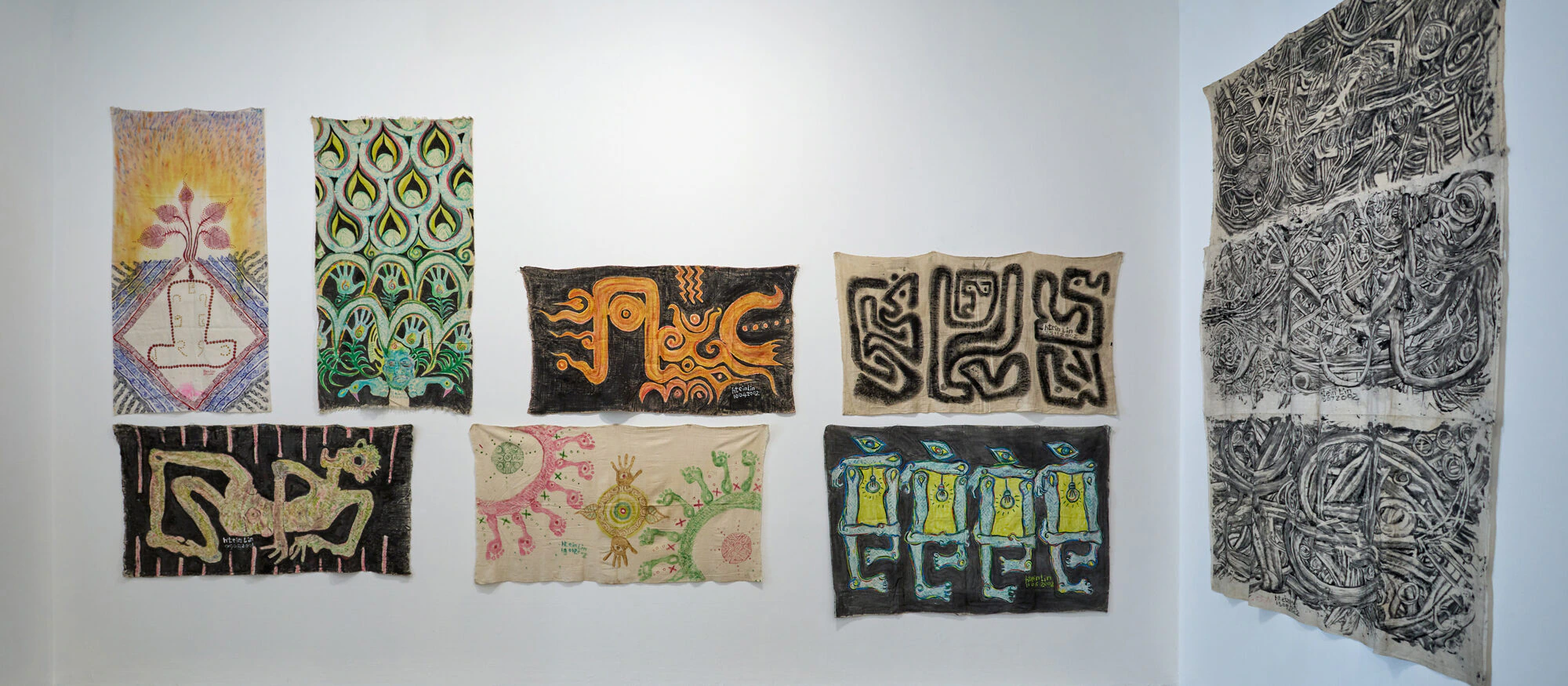
Artworks made by former political prisoner Htein Lin on display in Escape (March-June 2025) at Ikon, Birmingham
UK prisons face huge challenges, including an ongoing crisis related to the ability of the system to cope with the number of prisoners. The prison population is currently about 88,000, but this is an area of public life that tends not to be a priority for the government, only hitting the headlines when a problem arises.
This lack of visibility is reflected in the fact that the work arts organisations do with prisons tends to go under the radar. It is an extremely complex and difficult area of practice – challenges include the many constraints of prison life, finding people with the commitment and skills to carry out the work and maintaining relationships with prison staff who are often under extreme pressure.
Despite this, several galleries are committed to working with prisoners. Their activities are closely linked with the wider organisational aims, whether that’s related to education, participatory practice or wider concerns about social justice.
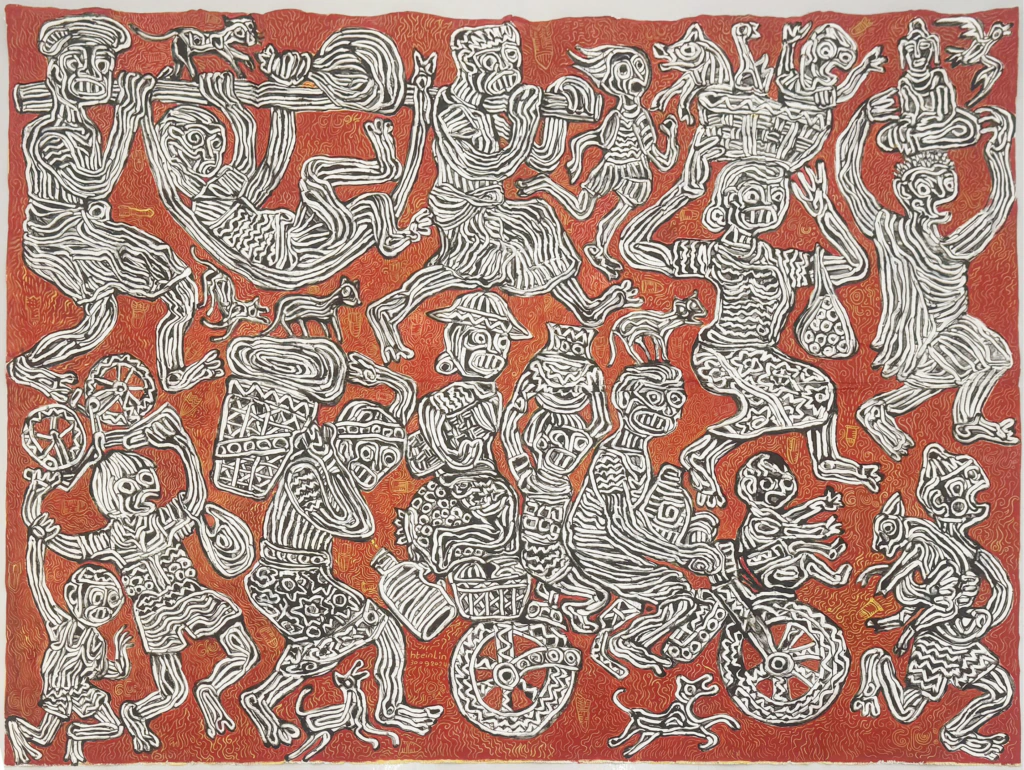
Former political prisoner Htein Lin’s Fiery Hell (2024) portrays the plight of Myanmar’s rural populations caught up in the ongoing civil war
Two galleries that are deeply involved are Ikon in Birmingham and Fact in Liverpool, although there are other examples.
For the past 11 years, Ikon’s work has focused on HMP Grendon, a Category B prison in Buckinghamshire. In some senses, Grendon is an outlier, as it is the only wholly therapeutic prison in Europe.
Advertisement
It offers up to 232 prisoners intensive daily therapy, undertaken on one of its five democratically governed wings. The prison regime comprises daily group therapy, psychodrama and art therapy, conducted by leading therapists and forensic psychologists.
Ikon’s work at Grendon focuses on artist residencies. Its involvement at the prison began in 2014, with Edmund Clark, an artist with a long-standing interest in incarceration and its effects.
During his residency, Clark created work that explored ideas of visibility, representation, trauma and self-image. In 2022, Ikon created a dedicated studio at Grendon for workshops and a programme of exhibitions.
Artist-in-residence
Simon Harris is the current artist-in-residence (see box below), helping members of the prison community produce works that will be showcased at Grendon and Ikon.
Also this year, Ikon hosted an exhibition by Htein Lin, an artist from Myanmar. The show featured paintings made while Lin was a political prisoner from 1998 to 2004.
Advertisement
The works were created on prison uniforms and found textiles, alongside drawings, sculptures and videos. Lin, despite being under house arrest at the time, also made artworks in collaboration with residents of Grendon.
Fact’s involvement with prison began through work with veterans in 2014 in a collaboration with artist Krzysztof Wodiczko. The project, which was presented at the Liverpool Biennial in 2016, involved the artist working with veterans and exploring the broader experiences of war.
Exploring inmates’ perceptions of art
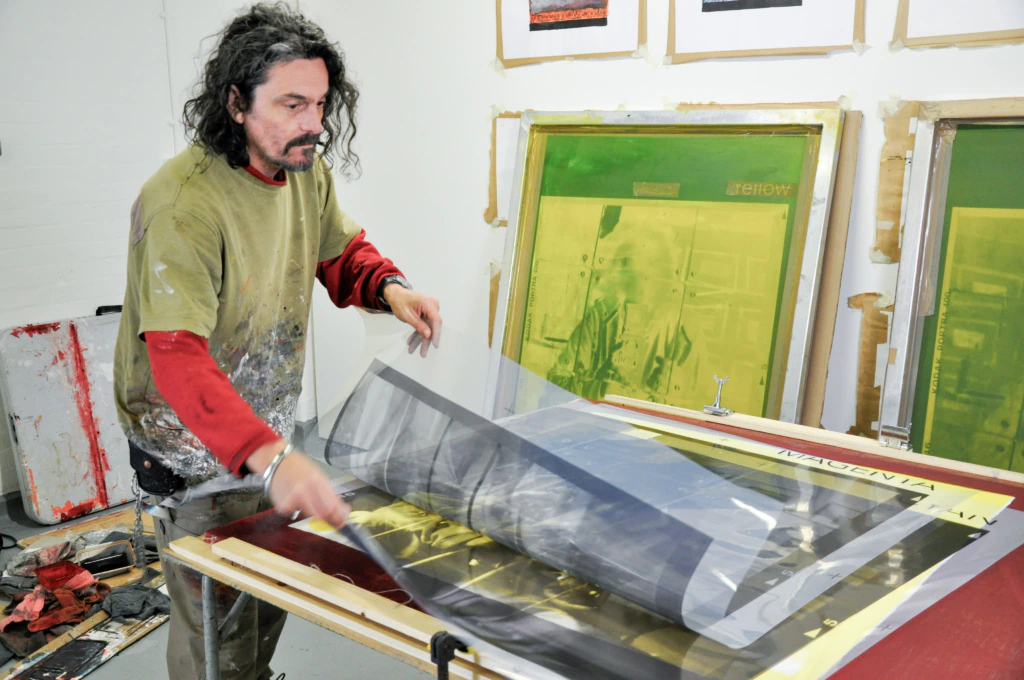
Simon Harris (pictured) is the latest artist-in-residence at HMP Grendon, following James Lomax (2024), Dean Kelland (2019-23) and Edmund Clark (2014-18).
As well as being an artist, Harris is a senior lecturer and course leader for the University of Wolverhampton’s BA in fine art.
Harris has worked closely with prisoners at HMP Grendon to understand how they feel about prison life. One area he has been exploring is the prisoners’ perceptions of what an artist is.
“What’s been interesting is challenging that notion of what artists are,” he says. “To be an artist, what do you have to do? Do you have to paint?”
“Part of it has been about the basics of enjoying painting and printmaking, giving the men access to it and helping them realise that a lot of that technical ability comes from practice.
“I conceived the residency as a kind of art school, in terms of the use of space and the sharing of ideas. I have had lots of conversations with the men around some of the initial ideas that I was having.
“I was very keen that, although I had a rough idea of what I wanted to do, I didn’t want to drive it too far, because I wanted it to emerge through conversations with the men and being in the space, and kind of responding to those conversations.”
The results of Harris’s work will be displayed at Grendon and Ikon.
Waiting Next Year ‘Til Another Year, an exhibition featuring Harris’ work and that of other artists working in prisons, is on at Ikon until 16 November
Through this collaboration, Fact began working with Emma Murray, a professor who specialises in criminal justice and military veterans, who later joined the organisation as a criminologist in residence. Murray highlighted that many people in UK prisons are veterans, and academics have been investigating the connections between military service and imprisonment.
Fact’s artistic programme has continued to focus on systems and how they shape people’s lives, including the justice system. The first commission within this context was with artists David Blandy and Larry Achiampong, followed by works from Katie Davies and Mark Storor.
Fact’s Resolution project stemmed from this work. The multi-year initiative invited artists, imprisoned people and their families, prison staff, policymakers and criminology researchers to work together as project participants.
Advertisement
Since 2019, Fact’s learning team has worked with artists Melanie Crean, Katrina Palmer, Ain Bailey and Amartey Golding in prisons across Liverpool, Rochdale, and York.
Golding’s solo exhibition at Fact this year (23 May-10 August) marked the conclusion of the Resolution project. The British artist’s practice explores themes of masculinity, nationhood, violence and vulnerability.
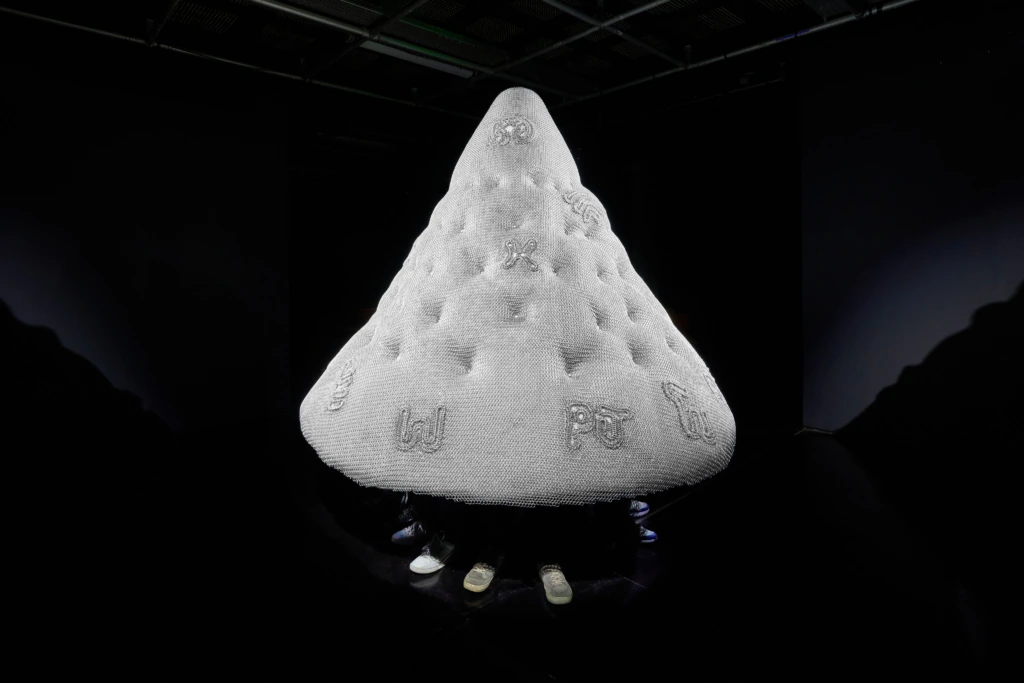
Since 2023, Golding has worked with groups of imprisoned men at HMP Altcourse in Fazakerley to make a suit of armour, creating the latest piece in his ongoing Chainmail series.
Amartey Golding’s Chainmail 4: Silent Knight (2025), which was shown at Fact Liverpool from 23 May until 10 August. The work was created with imprisoned men at HMP Altcourse
Why work with prisoners?
But why do Ikon and Fact work with prisoners and how does this relate to their wider organisational aims?
James Latunji-Cockbill, the producer of Ikon’s Art in Prisons programme, says: “We’re an educational charity, and with the educational programmes we have run, there has been a long history of projects that look outwards, to the communities around Birmingham and beyond.
Our youth programme and the prison programme are, essentially, both really big off-site commissioning projects, and very education focused.”
Ikon’s long-standing youth programme is funded by the Freelands Foundation. Many of the activities take place on Slow Boat, a converted narrow boat that traverses the region’s canal network and stops in places such as Walsall, Stourbridge, Coventry, Wolverhampton and Smethwick.
Fact also links its work with prisoners to its broader organisational aims. Learning manager Lucía Arias says: “Collaboration and engagement have always been key parts of the work Fact does. The work within the justice system, while specific in focus, sits under the broader umbrella of participatory arts.”
Arias says Fact helps artists and participants to work together to reflect and explore societal issues from diverse perspectives.
Save the date for Conference 2026
2-5 November 2026, Birmingham
The Museums Association’s annual conference 2026 will take place on 2-5 November 2026 at Birmingham Repertory Theatre/Library of Birmingham.
More information and booking details will be available in due course.
One outcome is that the works created enable stories and voices to reach a wider audience, beyond the communities they originate from. But Arias says for Fact, acting as a platform that allows people to express their lived experiences is also important.
“The programme supports artists and participants to develop long-term collaborations and allows the team to build sustained relationships with partners and stakeholders,” he says.
“Through this approach, artists and participants can explore the stories they want to tell, focusing on the dignity and humanity of those with lived experience.
“This collaborative way of working, between artists and experts, has created thoughtful spaces for critical reflection and meaningful exchange, involving people going through the system, academics and those who influence decision-making.”
Funding is key
For organisations working with prisons, long-term funding is crucial, as it allows the galleries to develop lasting relationships with prisoners and prisons.
Ikon’s work programme at Grendon has been funded by the Marie-Louise von Motesiczky Charitable Trust since it started, although the funding is coming to an end and the gallery is looking for a new supporter.
Latunji-Cockbill says that Ikon does not receive any money from the prison service, but its reputation has led to support from other trusts and foundations. The gallery recently started an artist residency at HMP Spring Hill, a men’s open prison that is jointly managed with Grendon, funded by the Rothschild Foundation.
This new partnership has established an art studio within the grounds of the prison. The facility has enabled a professional artist and group of prisoners to explore creative practice through weekly workshops in an art school-inspired setting.
Artist-in-residence Simon Harris at work in HMP Grendon
Ikon also recently gained funding from two charitable trusts for work at HMP Birmingham, according to Latunji-Cockbill. This has led to funding from the health inclusion team at Birmingham City Council.
Prison’s purposes include protecting the public, punishing those who commit crimes and acting as a deterrent. But it also provides opportunities for rehabilitation, which is where the work of art galleries comes in.
And perhaps there is a wider learning from this work – treating people as individuals, and also emphasising the importance of understanding, forgiveness and support, even for those who have committed crimes.
All things to all people | How communities are reshaping heritage practice
Museums often ask communities to respond to collections. The Black Beyond Data project asks what ethical practice looks like when descendant communities put forward the questions, rather than just the answers
Hanging by a thread | How restitution is bringing lost Indigenous practices back to life
Many traditional skills struggled to survive colonial disruption, but communities are showing how the return of ancestral objects can spark cultural renewal
A long time coming | Black British heritage moves centre stage
The UK has few standalone spaces dedicated to Black history, but this could all change in the coming decade, with several important museum developments gathering pace
Advertisement
Join the Museums Association today to read this article
Over 11,000 museum professionals have already become members. Join to gain access to exclusive articles, free entry to museums and access to our members events.