It’s been 10 years since the UK government first announced its plans to sell Blythe House, the former Post Office Savings Bank building that had housed the stored collections of the British Museum (BM), Science Museum Group and Victoria and Albert Museum (V&A) since 1984.
That decision presented a unique opportunity for the three national museums to set out their vision for what museum storage would look like in the future – a chance for them to re-imagine traditional approaches and come up with innovations likely to have an influence across the sector for many years to come.
It also led to one of the biggest decant projects ever undertaken in the UK, with more than two million items photographed, inventoried, hazard-checked and packed for departure – much of it carried out in the depths of the pandemic.
With the opening of the V&A East Storehouse in east London in May, the journey of the collections from the draughty, rambling corridors of the Edwardian-era Blythe House to three new state-of-the-art storage facilities is finally complete.
But the story of how these stored objects might be used, researched and accessed in the 21st century is only just beginning.
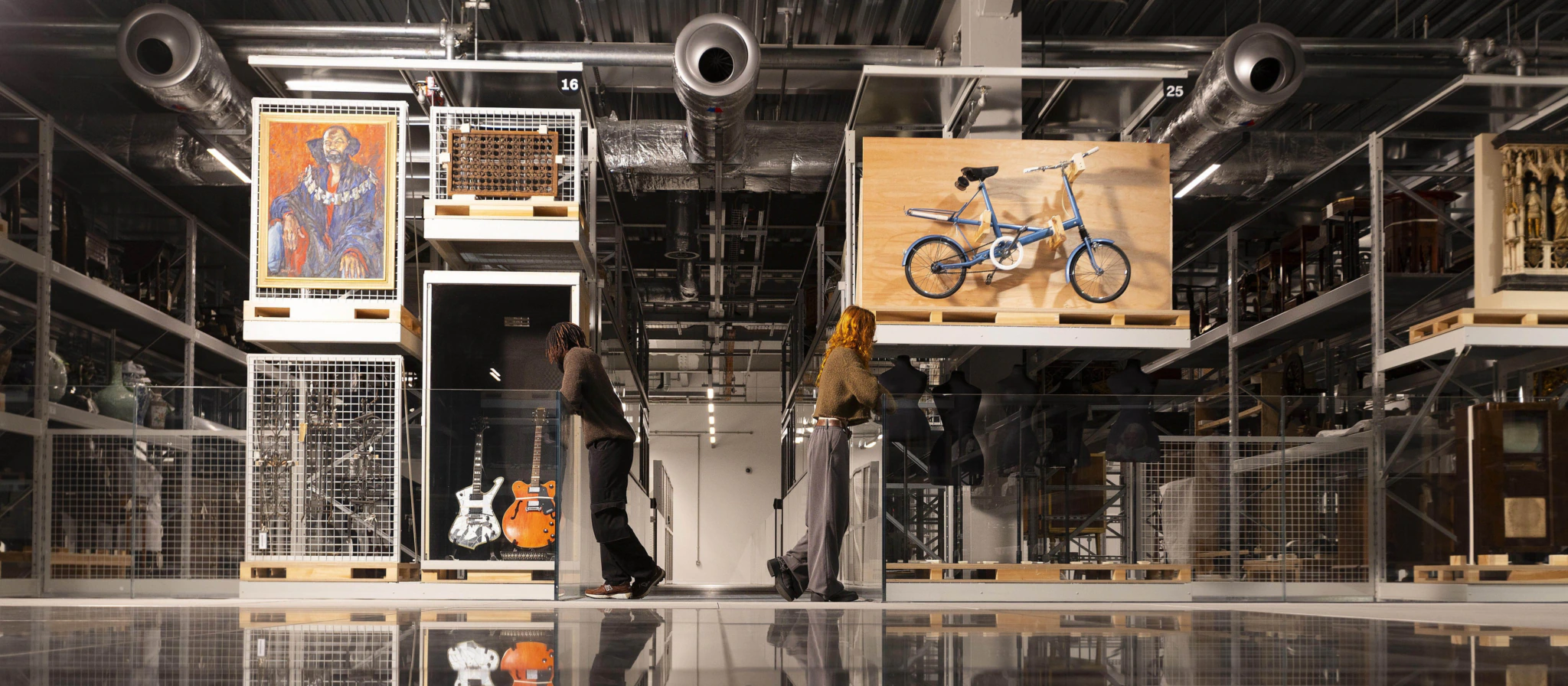
Of the three new centres, the model opted for by the V&A is certainly the most attention-grabbing. The East Storehouse – the first phase of a three-part expansion – has embraced the open storage ethos pioneered by such facilities as the Depot Boijmans Van Beuningen in Rotterdam, which was the first storage building in the world to offer public access to a museum’s entire collection.
Advertisement
The East Storehouse has the same emphasis on radical openness. Although many museum stores do provide some level of public access, the venue was designed with a focus on visitors, and aims to become a new type of attraction in itself.
Self-guided experience
“We’ve tried to move away from carefully moderated, visible storage to something that is a genuinely self-guided experience, based on the back-of-house world of the museum,” said deputy director Tim Reeve, one of the driving forces behind the project, who spoke to Museums Journal at the launch earlier this year.
“So the barriers are low – physically and metaphorically. It’s free to access any day of the year and you don’t need to book, as you do for other storage facilities.”
The aesthetics of the storehouse are very different from a themed and curated museum experience, but also from the utilitarian feel of a more traditional warehouse.
It aims to retain the same mysterious fascination that a back-of-house museum store might hold, while at the same time maintaining a high-spec production value suitable for regular public programming.
Advertisement
“We want it to be the magical, behind-the-scenes world of the museum – and if you intervene with that too much, you break the spell,” said Reeve.
“Everything is displayed as it’s stored and you have that visceral, immediate engagement between visitor and object. But we’ve created some incredible spaces here that are going to be brilliant for performance and events.”
One of the features that has caused a ripple in the museum sector – and something the V&A describes as a world first – is the storehouse’s free Order an Object service, which gives visitors the opportunity to book a one-to-one appointment with any stored object they’d like to see.
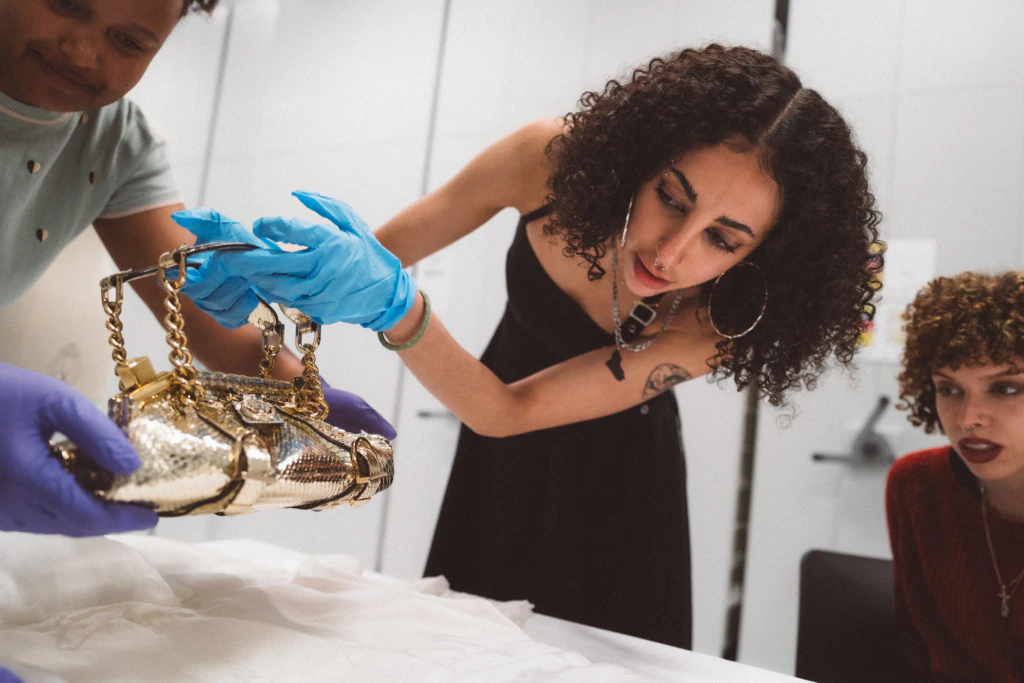
The service has already been used more than 2,000 times for everything from study visits to birthday treats – a Prince Charming costume worn by 1980s pop star Adam Ant is among the most popular orders so far.
Exciting though the East Storehouse is, there are doubts among museum professionals as to how feasible it would be to roll this resource and time-intensive model of storage out across the sector more widely.
Advertisement
Although there is a general trend towards more-open facilities, it might be that the venue is destined to remain a one-of-a-kind attraction.
Innovative storage system
On the face of it, the Science Museum Group opted for a more conventional warehouse model for its vast new facility, the Hawking Building, which opened a year ago in the institution’s existing Science and Innovation Park in Wiltshire.
The innovation lies not in how it looks – like a vast Amazon-style steel-framed shed – but in how it operates.
The facility features an innovative storage system of almost 20 miles of open shelving, offering almost-uninterrupted views from one end of the warehouse to the other, and bringing together collections from all five of the SMG’s museums for the first time.
This enables the museum team to browse and make spontaneous visual connections between objects in a way they’ve never been able to before, with an adjacent exhibition layout space on hand for them to test drive their displays.
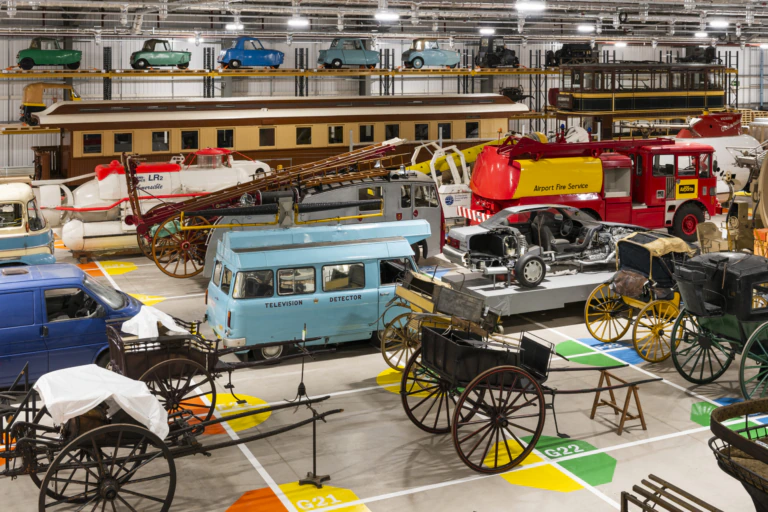
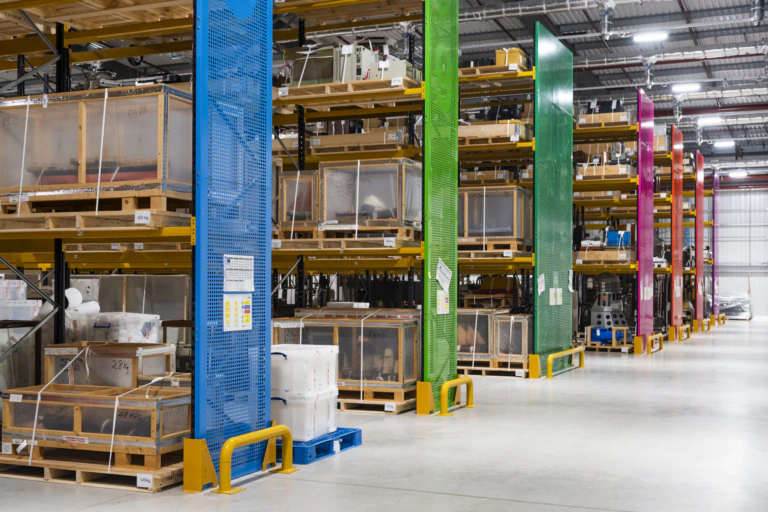
Aesthetically, the warehouse is sparse and practical, but it still inspires gasps of awe from visitors. The collections create their own drama, with larger objects laid out on a grid that employs a striking wayfinding system with strong colours and geometric patterns.
Although a fully open approach wasn’t possible on a site with heavy machinery, public access was still a key consideration.
“We chose to deliver regular guided public tours to offer a behind-the-scenes look at a working collection facility,” says Jack Kirby, the SMG’s associate director of collection services. “This approach balances public access with meeting the needs of caring for and researching a vast and varied collection.”
The building is also the greenest of all the SMG’s sites. A layer of insulation keeps the temperature stable and means the building does not require heating – instead, an air system monitors the humidity and makes adjustments accordingly. The building’s energy is generated from solar panels on the roof.
These kinds of solutions will be vital to ensure collections are safe yet environmentally sustainable – but are they realistic across the sector? “The costs of construction and retrofitting buildings are high and may prompt some museums to carry out reviews of their collections to ensure they are making effective use of storage space,” says Kirby.
Under the radar
The storage facilities developed by the V&A and SMG reflect the very different characters of each institution – and the same is true of the BM’s new storage centre, the Archaeological Research Collection (BM_ARC), which opened in June last year on the University of Reading’s Thames Valley Science Park in Shinfield, Berkshire (the Natural History Museum is also planning to move much of its collection to the same campus in the coming years).
Compared with the media buzz around the East Storehouse and the Hawking Building, the opening of BM_ARC slipped a little under the public’s radar. But it has a much higher profile within the sector itself.
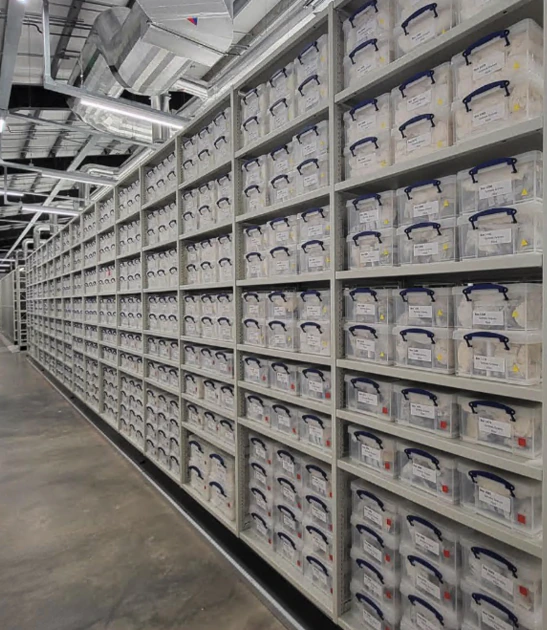
The BM has established a partnership with the university that puts research at the heart of BM_ARC – one current project is examining chocolate residues in ancient South American pottery to track the foodstuff’s cultural importance. The centre was designed to encourage new ways of thinking and allow comparison across the museum’s ancient world collections.
Of the three nationals, the BM has been under the most scrutiny over its approach to repatriation, and the BM_ARC reflects its stance in favour of loans and global partnerships, rather than legal change. The facility was specifically designed to make it easier to lend objects internationally, with a new national and international loan hub based out of the premises.
The directions taken by the three Blythe House alumni reflect very different visions of what a museum store could become in the 21st century.
A storage centre might never outshine a flashy blockbuster exhibition but, with the right approach, it is increasingly clear that it can be a star in its own right.
What’s in store?
The Science Museum Group (SMG), Victoria and Albert Museum (V&A) and the British Museum (BM) have all closed their stores at Blythe House in Kensington, London, and moved to purpose-built facilities that provide far better environments for their collections. The SMG’s facility is in Wiltshire, the V&A has moved to a store in east London and the BM’s new building is in Berkshire.
Hawking Building, Wiltshire
- Cost £65m
- Size 20,000 sq metres
- Architects GWP Architecture (core building), Sam Jacob Studio (interior)
- Collections 300,000-plus objects
V&A East Storehouse, east London
- Cost £62m
- Size 16,000 sq metres
- Architects Diller Scofidio + Renfro, supported by Austin-Smith:Lord
- Collections 250,000 objects, 350,000 books and 1,000 archives
BM_ARC, Berkshire
- Cost £64m
- Size 15,500 sq metres
- Architect John McAslan + Partners
- Collections More than 1.3 million objects