
In May, British Museum director Nicholas Cullinan ruled out any permanent restitution of artefacts under his watch.
Asked whether he would try to change the act of parliament that prevents the museum from deaccessioning, he replied: “I could make lobbying to get the act changed my sole focus but that seems mad – and it may not be the right thing. I’m keenly aware that whatever I do, future generations will debate, so I feel more comfortable with loaning items.”
Cullinan called the Parthenon Marbles as “talismanic objects of this museum”, emphasising that plans are in place for a lending partnership with Greece that would “share knowledge and opportunity, rather than debate ownership”.
That a loan arrangement is being negotiated is no secret, but Cullinan’s unequivocal stance on repatriation and restitution in general hints at a growing reticence towards the issue in both museum and political circles, where it is seen as a divisive culture war flashpoint.
The culture minister Chris Bryant’s recent appointment of commentator Tiffany Jenkins – the author of several books against restitution – as a British Museum trustee was interpreted by some as a sign of the direction being taken behind the scenes.
Meanwhile in April, the influential Conservative thinktank, Policy Exchange, published a document that argued “accepting claims for restitution” is not “always, or even mostly, the most appropriate course of action”.
Advertisement
Principles for Restitution: A Guide to Stewardship argues that claims lose legal weight due to their age and suggests “legal acquisition within 100 years” as a general cut-off point for restitution requests. It also advises that museums should almost never be liable for the costs of repatriating artefacts.
Considering recent cases, it argues that the “case for accepting the claim for restitution of the Benin bronzes is weak” and the “risk they might be damaged or confined to a private collection is too great to justify return”.
The report characterises the debate around restitution as an acrimonious battleground, in which museums and curators are “demonised as the defenders of looted treasure houses” and given the simplistic imperative to “send them back”, according to former Tory MP Tim Loughton, who is quoted in the document.
Collaborative relationships
Although temperatures can rise on social media, many of those working in restitution say that this isn’t what is happening on the ground.
Many UK institutions are now taking a more nuanced and open-minded approach to restitution claims, with handover ceremonies for human remains and cultural artefacts taking place this year at Glasgow’s Hunterian, the University of Aberdeen, the Natural History Museum and National Museums NI.
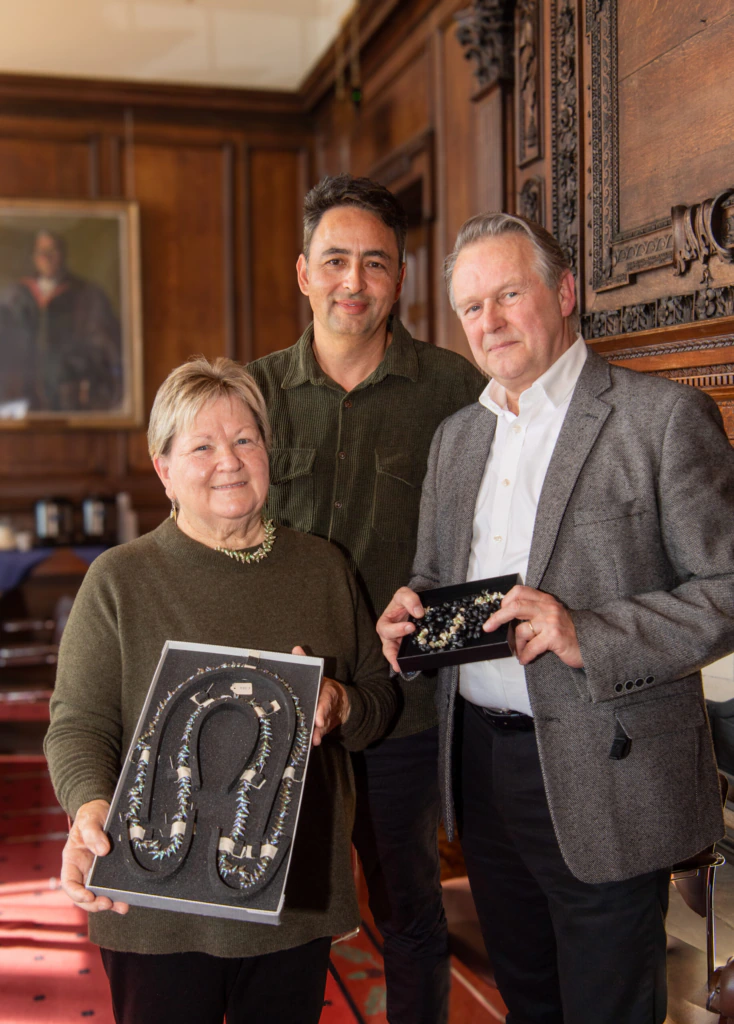
Those involved argue that this process does not represent a loss to the institution but the start of a collaborative relationship with communities of origin that often results in richer interpretation and new items being brought into the collection.
Advertisement
Manchester Museum recently opened a permanent exhibition co-curated by the Warnindilyakwa people, an Aboriginal community to which the museum repatriated 174 cultural heritage objects in 2023. The exhibition includes a display of shell dolls gifted to the museum by the community on condition that they “must come off display once a year to be played with”.
Last year, a policy briefing by advocacy group Routes to Return: Working Towards International Repatriation argued that the restitution of cultural heritage should be seen as a human rights issue, citing the UK government’s commitment to the United Declaration on the Rights of Indigenous Peoples 2007, which says “states shall seek to enable the access and/or repatriation of ceremonial objects and human remains in their possession through fair, transparent and effective mechanisms”.

The briefing said the UK has the chance to become a “world leader in repatriation” and called on the government to create a policy and provide funding to facilitate the return of Indigenous human remains and cultural property from collections.
Amy Shakespeare, a museum and heritage professional and the founder of Routes to Return is critical of the British Museum’s leadership in this area, saying that recent developments at the institution demonstrate its “complete contempt” of the issue.
“The sector has a reputation problem when it comes to repatriation – a reputation influenced by the British Museum’s lack of action,” she says.
Advertisement
“But the British Museum does not represent the whole sector. There are regional, independent and university museums that are open to repatriation – they are where the future of British museum practice lies.”
The policy briefing was welcomed by many in UK museums, says Shakespeare, particularly its call for more funding, training and support. But although Routes to Return has had conversations with the Department for Culture, Media and Sport since the briefing was published, gaining traction in government is another matter.
“The sector has a reputation problem when it comes to repatriation”
“I was hopeful when I saw that Lisa Nandy initially seemed to be in support of repatriation, and it was reported that she was looking for a consistent approach to returns from national museums in September 2024, but since then, it has been very quiet,” she says.
“The political climate and the local election results mean issues such as repatriation are just not on the table – and worse than this, repatriation is seen as divisive and emotive, meaning politicians are even less likely to engage with it.”
‘Not on the table’
Shakespeare recently helped to launch the International Repatriation Network, which aims to create a worldwide community of practice.
Work is also under way on strategies that will collate information about restitution and repatriation policies at cultural institutions around the world, in order to minimise the burden on Native nations looking to submit claims.
So what can be done in the UK to progress returns policies? “There’s still quite a lot of siloed working – people working on specific geographical areas, or within certain institutions,” says Shakespeare. “So much could be gained from more joined-up thinking, sharing of experiences and information, and research.
“Within institutions, there are still issues with bureaucracy, and directors and trustees who don’t understand repatriation creating delays and pushback. These are usually the decision-makers, and they need to be better informed.”
As ever, funding is a barrier. “We shouldn’t expect funding anytime soon,” says Shakespeare. “This is expensive work – for the physical returns especially.”
She believes UK institutions “need to find ways to act on repatriation within their current constraints, and the sector needs to advocate and lobby for the issue to be prioritised”.