As we ease into summer, several UK museums and galleries have recently launched new facilities and initiatives to support their work engaging young people.
Yet, what do these new developments amount to? How are the museums and galleries measuring the success of such approaches and how are they supporting those young people with challenges such as disability or poverty through their learning programmes?
In the broader field of museum learning, Arts Council England has commissioned the Group for Education in Museums to create a series of research case studies exploring how museums are engaging with children and young people out of school.
The research will furnish the Department for Culture, Media & Sport with the information it needs to advocate for museums and their role in enriching the lives of people up to the age of 18.
Meanwhile, the Art Fund and Nesta have invited discussion on the emerging insights and scaling opportunities for Mini Wonders, an early-years research and development programme for museums.
It is in specific examples, however, that we can begin to understand how step-changes in approach can make a positive difference to the lives and learning of young people.
Advertisement
The Young V&A, formerly the Museum of Childhood, is riding high after being named Art Fund Museum of the Year 2024.
Making Egypt (until 2 November) is only the museum’s second exhibition since its relaunch. The approach taken by Helen Charman, the director of the Young V&A and director of learning, national programmes for the Victoria and Albert Museum, and her colleagues is forward looking but firmly rooted in the ideas of theorists such as Fredrich Froebel, Franz Cižek and Maria Montessori and their focus on child-centred education.
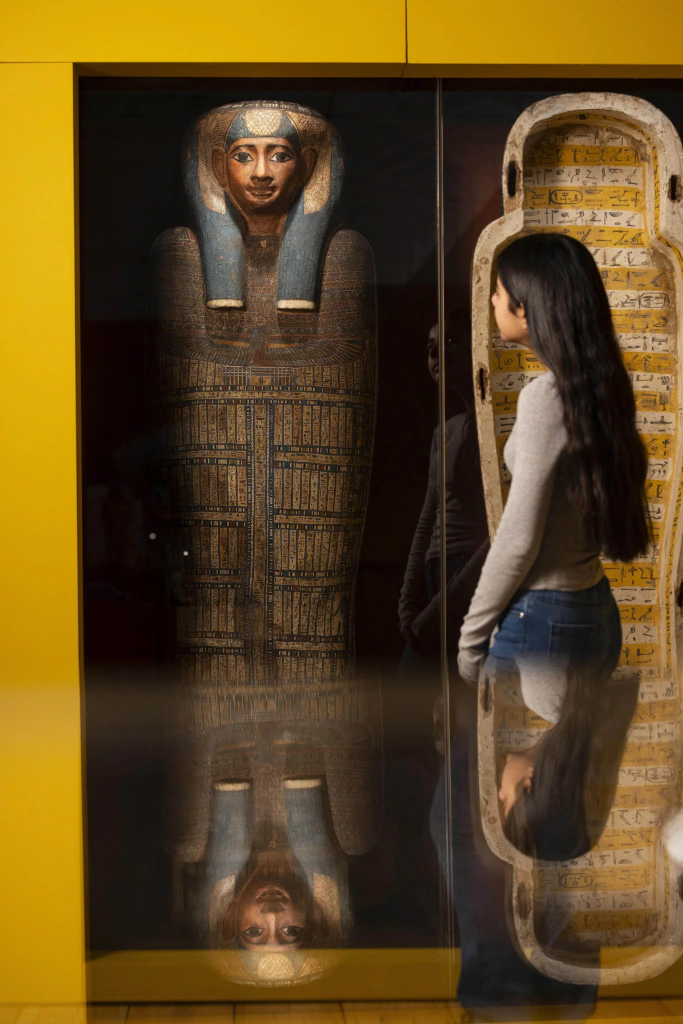
Charman says the voices of young people have been at the centre of the museum making process. The young co-designers asked for the world’s most joyful museum, as well as a space to learn playfully. Rich object-based learning is balanced with hands-on activities in an integrated manner – appropriate for a museum of material culture.
Different kind of engagement
It turns out that young people aren’t seeking digital overload in an exhibition – instead, they want a different kind of engagement, such as material learning that perhaps slows down the pace and bolsters their creative confidence.
Advertisement
Bringing objects and spaces to life in a way that is meaningful for the child is what the Young V&A does best, but it is part of a wider development in the sector.
Commenting on shifts in the sector, Charman says: “This is the first time I’ve seen a really embedded commitment to understanding how young minds engage with material culture and learning in museums, and a start to thinking differently about how we design spaces and interpret them, and the kind of behaviours of young people in museums.”
An associated learning programme is under way, which includes co-creation with young people and artists, with evaluation through observation of learning activity, as well as surveys of families and schools.
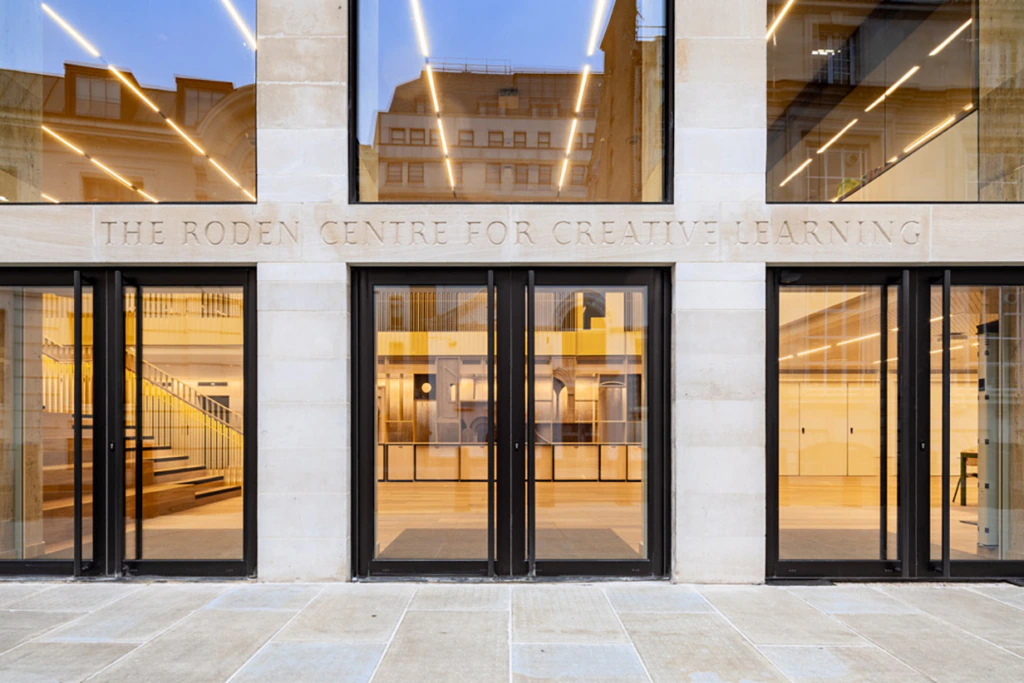
The sort of embedded commitment to young people’s learning that Charman notes is also at the heart of the new Roden Centre for Creative Learning at the National Gallery.
The renovation and design of the London museum’s learning spaces, led by architects at Lawson Ward Studio, is part of the gallery’s NG200 capital project. Spaces have been extensively refurbished to enhance learning experiences for children, families and adults.
The Roden Centre is one of the UK’s largest facilities and features a double-height studio, boxes containing art materials for children, and a sensory learning space. It aims to be inclusive, with materials chosen for their sustainability, warmth and soundproofing.
Advertisement
The design involved extensive collaboration with stakeholders, including children from local schools such as Soho Parish Primary School. It also includes features user-friendly lockers for school groups, as well as a new large window to bring in natural daylight and improve visibility.
Learning is woven into the fabric of these spaces, with lockers painted in pigments used in paintings from the collection. A Fragment Wall in the entrance space includes details of paintings recreated in different woods – a point of inquiry that immediately connects learners to works in the collection and to the different types of wood used to frame them.
“This is the first time I’ve seen a really embedded commitment to understanding how young minds engage with material culture and learning in museums”
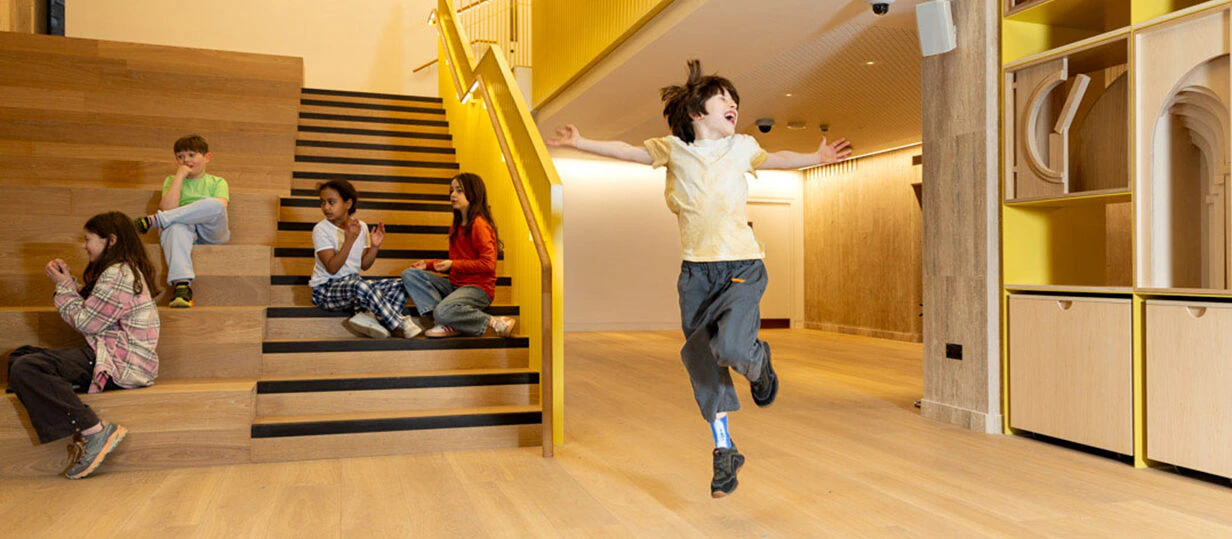
The inclusion of large “theatre steps” as a collective space is an interesting one, driven by young people themselves and how they engaged with the collection and architecture around them. They also asked for quiet cosy nooks.
These are elements of a sustainable space that is monitored to maintain optimal conditions of noise, light and air quality. The conditions are linked to the research of British educationalist Stephen Heppell, who specialises in how learning spaces can work effectively.
The needs of disabled people and those in poverty are of prime consideration for the centre. Institutions such as the Marjorie McClure School, which caters for pupils with a wide range of needs and disabilities, and the Cardinal Hume Centre, which helps people facing poverty and homelessness in Westminster, were crucial to the design process, as part of an aim to ensure a variety of needs could be met.
Collaborative design process
Karen Eslea, the National Gallery’s head of learning, says a new Sensory Learning Space was designed in collaboration with special schools and includes equipment recommended by children and teachers to make the effort of visiting worthwhile.
These include a sound bar – too expensive for individual schools – to allow children with limited movement to engage with sound and movement in new ways.
As an inclusive space, it is important that the practicalities are also catered for through facilities such as a Changing Places toilet. The new centre will enable the National Gallery to engage with an additional 50,000 learners annually, meaning 246,000 people will benefit from its learning programme each year.
The National Gallery wants 32,000 pupils to participate in its schools programme annually (an increase of more than 13,500 on the last academic year) and hopes 26,000 new family visitors will attend its Welcome Space.
The gallery will collect feedback from teachers who attend facilitated sessions and from families who visit the Welcome Space about their experience at the Roden Centre.
It will also collect information about the demographic profile of family visitors, so that it can see if the space allows it to attract a larger and more diverse audience.
Beth Williamson is an art historian, writer and researcher