After more than a decade of endless local authority cuts, there was finally a little light on the horizon for England’s civic museums with the UK Government’s announcement in February of a £20m Museum Renewal Fund for local and regional institutions.
Full details of the funding were yet to be announced as Museums Journal went to press, but the government says the rescue package will “help keep cherished civic museums open and engaging, protect opening hours and jobs, continue serving communities, and tell our national story at a local level”.
Meanwhile, the Scottish Government has launched a review of how the arts and culture sectors are supported in the hope of finding “innovative funding solutions”, along with a new £4m Culture and Heritage Capacity Fund to support resilience in the sector.
The Welsh Government has also increased its financial support for culture and heritage, following damaging cuts last year.
These measures may not solve the UK museum sector’s deep-rooted financial problems, but the funding will certainly provide some relief.
As the multiple challenges of austerity, Brexit, Covid and the cost-of-living crisis have piled up over the past 15 years – and despite the measures civic museums have taken to adapt and build resilience – the sector has been left weakened and less able to absorb any new shocks.
Advertisement
This is at a time when external pressures are worsening. The soaring cost of health and social care has pushed many local authorities close to the brink, swallowing up much of the additional funding provided to councils by the government and leaving little for non-statutory services like culture.
Over the winter, as councils across the UK worked to finalise their budgets for the coming year, there was a raft of bleak warnings about cuts and closures to publicly-funded museums (see box below), with no museum type fully immune from the threat.
At the end of 2024, the Museums Association surveyed its members to gain an understanding of the current state of the sector. The results showed that the past year has seen a significant rise in museums facing funding cuts across the UK.
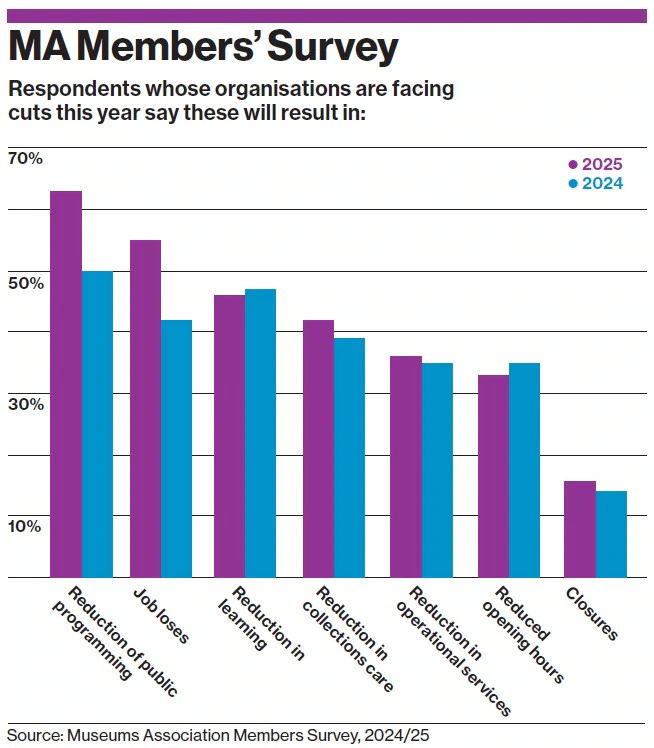
Out of more than 500 respondents, 61% said their museum was planning cuts in services as a result of the cost-of-living crisis or other budget pressures, compared to 52% in 2023 and 51% in 2022.
Of those respondents who said their museum was facing cuts, 16% said this would result in closures. Many other operational activities are also being hit by reduced funding, particularly public programming, staffing, learning and engagement, and collections care.
Cut and dried
Respondents to the survey told how their institutions were being hollowed out due to cuts. A few said that the gaps caused by the loss of core funding were being plugged by external project funding, creating a vicious circle.
Advertisement
Many mentioned recruitment freezes, redundancies and restructures, with decades of knowledge lost as a result and morale at rock bottom. Some described how remaining staff are still expected to maintain the same level of service despite a much-depleted workforce. Others told how planned exhibitions and projects had been put on ice.
One respondent said that their organisation – a well-known city museum – would have closed years ago without its strong volunteer team, but even they had become more difficult to retain due to additional funding cuts.
Another respondent described how their organisation – a major museum trust in a large regional city – had lost most of its specialist curators, all its object conservators and had to scrap its award-winning outreach scheme.
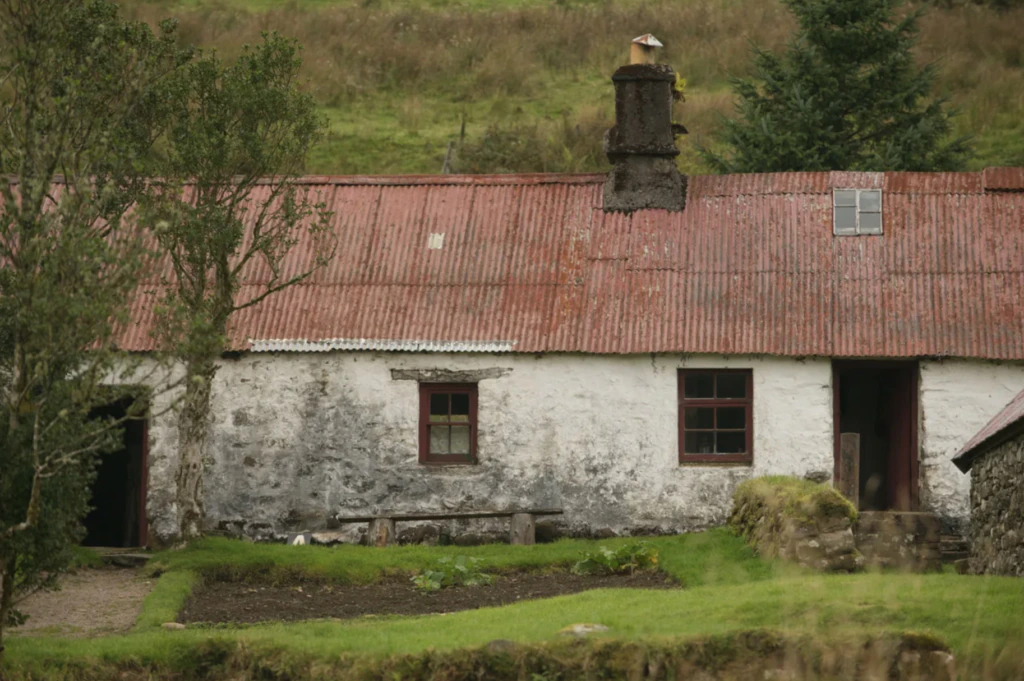
Public access has also been constrained with many respondents reporting reduced opening hours and winter closures, plus the introduction of admission charges.
Several respondents expressed fears that their organisation was no longer able to meet best practice standards due to the funding environment. One respondent feared that the drive to generate revenue was taking priority over curatorial decision-making, while another told how part of their museum’s real estate was being sold to boost reserves.
Advertisement
The emergency funding announcement signals that the UK and devolved governments are finally beginning to listen to the sector.
All have come in for heavy criticism in recent months over their lack of consideration for culture, particularly the UK Government, whose first budget brought fresh uncertainty for struggling organisations due to measures such as a huge hike in National Insurance contributions for employers.
Breathing space
Our members’ survey provides valuable data on the state of the sector, and there are some very worrying resulting headlines in the research. We know there is huge financial pressure on the sector, especially civic museums, but it is deeply concerning that museums of all types and scale are now struggling.
The long tail of Covid and the impact of the cost-of-living crisis are still rippling through the sector and resulting in budget cuts, job losses and potential closures in all four nations of the UK. Museums and museum workers have proved themselves to be resilient time and time again but there is a limit to what can be done without strategic investment at a local and national level.
The £20m Museum Renewal Fund for England is hugely welcome news, and we are delighted that the massive contribution that museums make to civic society has been recognised by the UK Government and grateful on behalf of our members who are facing extreme pressure from every angle at the moment.
We have been advocating alongside other sector bodies for investment in civic museums and this will hopefully provide some breathing space for some institutions while we continue to make the case for strategic investment in the whole sector across the UK.
Sharon Heal is the director of the Museums Association
A new deal
The Museum Renewal Fund comes in direct response to advocacy from museum sector bodies, including the Museums Association, English Civic Museums Network, Art Fund, the National Museum Directors’ Council and the Association of Independent Museums, which have come together to put the plight of civic museums at the centre of their campaigning.
In addition to the emergency fund, which should help ease immediate pressures, they are now seeking a strategic approach to civic sector investment in the longer term in all nations of the UK.
In England, the response from the Department for Culture, Media and Sport (DCMS) has been encouraging, Museums Journal understands.
Jon Finch, the chair of the English Civic Museums Network, says there has been a “positive dialogue” with Arts Council England and the DCMS in recent months.
“It is clear they understand the depth and breadth of the crisis,” he says.
There's still a long way to go, and multiple challenges remaining, but it must be hoped that these positive steps forward herald the beginning of a new deal for civic museums.
Cutting it fine
Auchindrain Township Museum in Argyllshire, Scotland, has closed to visitors due to the loss of funding from Historic Environment Scotland. Local councillors are hoping the museum may be able to reopen under a new operating model.
Llancaiach Fawr, a 16th-century Tudor manor house museum in Caerphilly, Wales, was mothballed before Christmas due to council cuts, with the loss of almost 20 paid and 18 voluntary staff. A private operator is now being sought to run the site.
The Museum of Cannock Chase in Staffordshire, England, is due to close in April due to council cuts.
Scotland’s Alyth Museum, is run by Culture Perth & Kinross, was earmarked for closure due to council funding constraints. The institution is the hub of the Cateran Ecomuseum, the innovative “museum-without-walls” that showcases the region’s heritage across 1,000 sq kilometres.
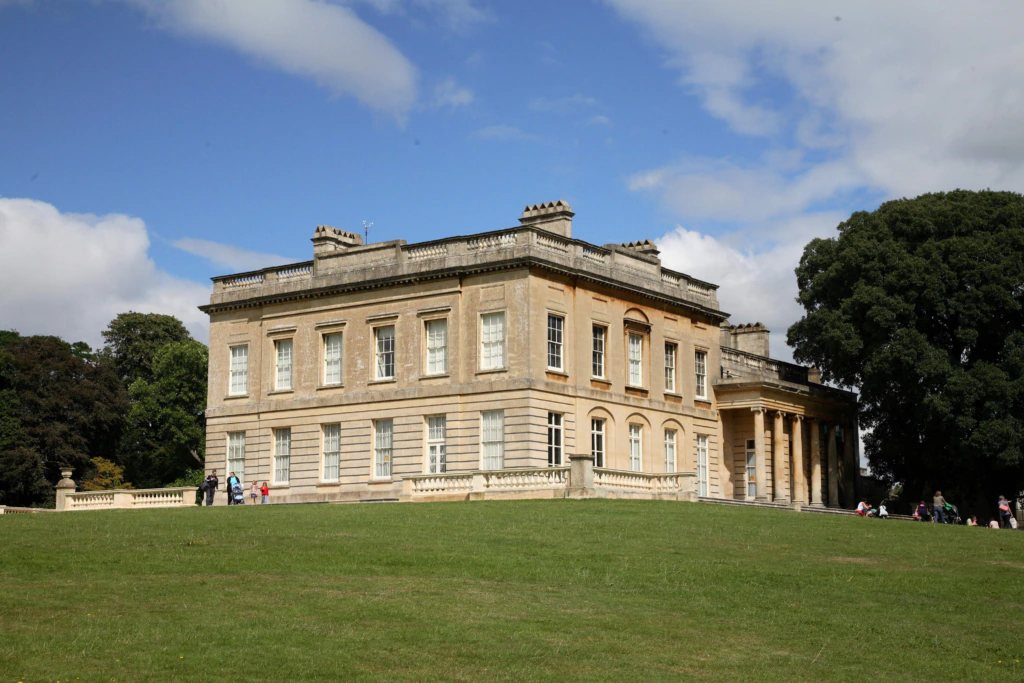
Bristol City Council came perilously close to shutting three museums, Blaise Castle House Museum, Georgian House Museum and Red Lodge Museum, but has given the venues a 12-month stay of execution after significant local opposition. The long-term future of the museums remains in doubt.
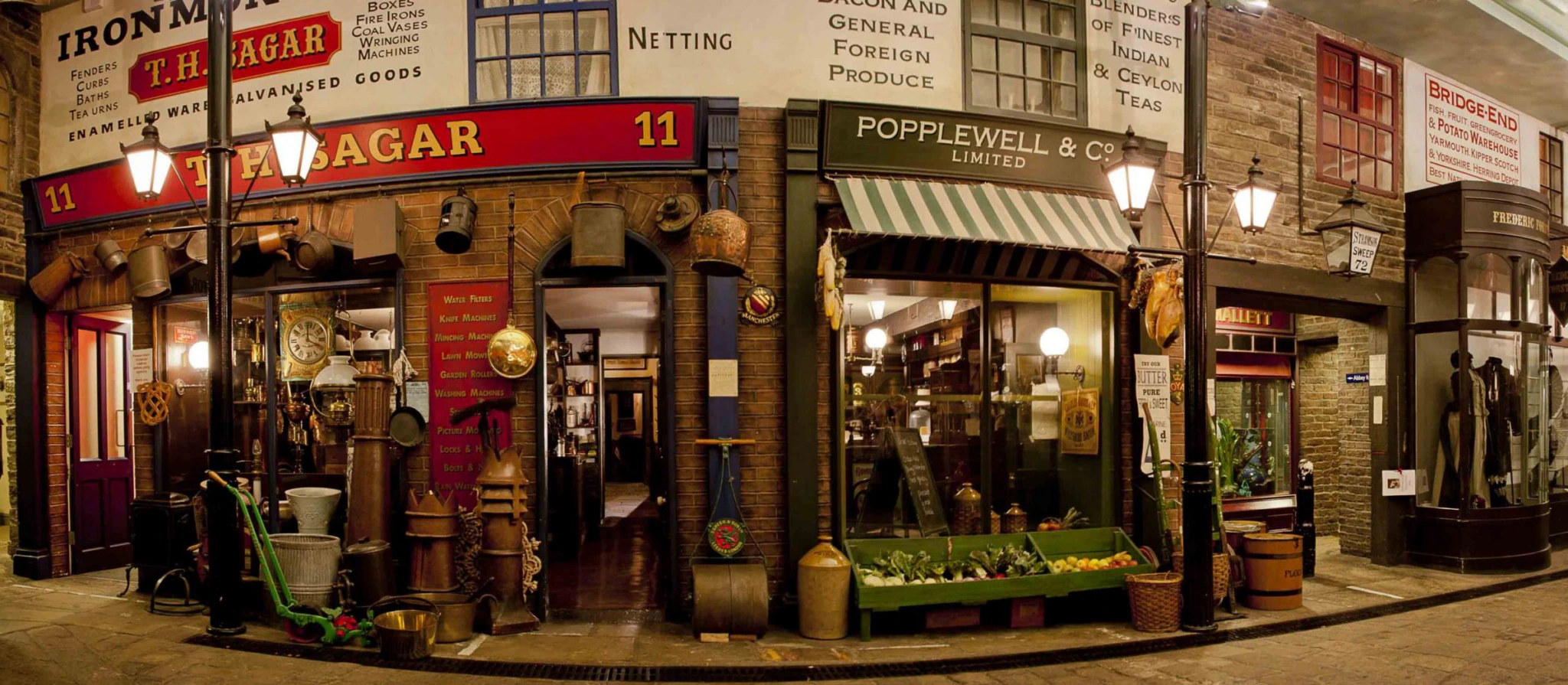
In Leeds, the council-funded Abbey House Museum was threatened with closure but was saved after a local campaign.
Hampshire Cultural Trust is potentially halting its operation of five museums due to a £600,000 reduction in its council funding: Ashcroft Arts Centre, Eastleigh Museum, Curtis Museum, the Andover Museum and the Museum of the Iron Age. It has already ceased to operate Westbury Manor Museum and Bursledon Windmill, both of which are now closed.