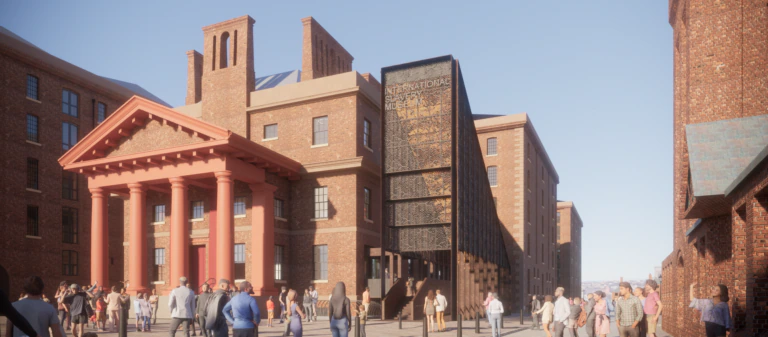
The paradoxes of museum finance are highlighted by the experience of Derby Museums Trust in 2015. In May that year, the trust was granted £9.4m by the Heritage Lottery Fund (HLF) towards a £16.4m redevelopment of Derby Silk Mill. But in December 2015, the council proposed cuts that would have amounted to a reduction to its annual contribution to the museum service of more than 80% over four years. Had these proposals gone ahead, says executive director Tony Butler, “it would have been game over”.
Derby is one of the organisations featured in the long-awaited Mendoza Review of the English museum sector, which was published in November by the Department for Digital, Culture, Media & Sport (DCMS). The priorities identified by the review, which was led by former banker Neil Mendoza, and the series of recommendations it makes, have been broadly welcomed.
But many in the sector are disappointed that it skates over important concerns such as business rates, and there is a widespread feeling that the report underplays the challenges faced by local authority-funded museums.
The report describes “adapting to today’s funding environment” as “the most important challenge facing museums today”. It identifies 16 sources of public funding received by museums, including from Whitehall departments, arm’s-length bodies, local authorities, lottery money and tax reliefs. Eleven of these are quantified, with five excluded because of a lack of reliable hard data, or because they were inconsistently offered.
The review found that the total funding from these 11 streams in 2016-17 was £839m, compared with £829m in 2007-08. But while the report describes overall museum funding as “broadly flat” over the past decade (at an average of £844m), it acknowledges that between 2007-08 and 2016-17, there had been a fall in real terms
of 13%, or £109m.
Regions to be fearful
The figures also make clear the disparity between national and regional museums. While funding from the DCMS, awarded mainly to national museums, has remained almost flat (falling by 1% – or 15% in real terms), local authority museum funding has declined by 22% (31% in real terms).
The report says that the idea of a sector in crisis was reflected in submissions from organisations including Arts Council England (ACE), the Museums Association (MA) and the Association of Independent Museums (AIM). The document says the issue is “of great interest”, but ultimately reached a more optimistic conclusion. “Overall, the team found a sector that is facing its challenges creatively, continuing to care for collections and welcome visitors all over the country,” it says.
This attitude is criticised in several responses. The National Museum Directors’ Council (NMDC) says that the review “underplays the degree of crisis and sustainability risks faced by local authority-funded museums – the most pressing issue facing the whole sector”.
“We remain deeply concerned about the implications of an ongoing lack of public investment in regional museums’ buildings, collections and expertise,” says the NMDC. “The issue of ‘hollowing out’ of services remains as, in order to keep the doors open, many museums are forced to cut curatorial and collections expertise.
“The NMDC would urge stronger messaging from central government on the need for local authorities to adequately invest in museums, whether they are directly managed by the council or are independent trusts.”
Derby Museums Trust’s Tony Butler says that while the museum sector is flourishing in many ways, there are underlying structural problems. Derby’s visitor numbers have increased by about 20% over the past three years, and Butler has anecdotal evidence that it is a similar story for many other museum services.
But he says: “On the surface, it looks like we’re doing really well, but there’s a fundamental weakness about our future finance.”
Derby Museums Trust was a department of Derby City Council until 2012, when it became an independent charitable trust. Butler says that moving outside the council has brought more commercial freedom, fosters an entrepreneurial culture and gives the service more control over its finances.
But this has taken place alongside large cuts to the museums service’s funding. Although planned cuts have been scaled down, the council’s contribution in 2018-19 is still set to be more than 40% lower in cash terms than in 2013-14.
“For any business to take that kind of drop in income from its main funder is a huge challenge to withstand,” says Butler. “The review didn’t really give any suggestions as to how that sharp reduction in local authority funding can be replaced.”
He says across the museum sector, commercial activity and fundraising have mitigated some of these losses, but most of the budget balancing has been achieved through cost savings.
“It’s got to the point where organisations have cut their cloth accordingly, but we’re looking at further reductions,” adds Butler.
Spend it wisely
Given this funding environment, one of the report’s key concerns is to encourage the most effective use of what money is still available. It identifies an increase in HLF museum funding in England, from an average of £56m a year between 2007-08 and 2011-12, to £126m a year between 2012-13 and 2016-17.
The review suggests that lottery money could be used to underpin long-term sustainability. Among the proposals it recommends for this funding are “high-quality back-of-house projects” and “capital projects that will improve the long-term sustainability of the museum”.
The Mendoza Review also asks the HLF to interpret its remit for “additionality” – adding to rather than replacing central government funding – “in the contemporary context, where museums need to use investment to tackle buildings conservation and maintenance backlogs, attract and maintain new audiences, and generate new funding streams”.
But in its response to the review, the HLF stresses that there are limits to this approach, saying: “We [also] recognise the report’s emphasis on infrastructure, although these issues could never be solved by National Lottery funding alone.”
Andrew Lovett, the director of the Black Country Living Museum (BCLM), thinks many institutions should consider charging for entry. “Other forms of income generation are always going to be pretty marginal,” he says.
The BCLM, which receives no revenue support from the council, generates £3m a year from admission charges. Lovett acknowledges that this is easier for large open-air venues such as his. The museum has also received lots of public money for capital projects, most recently £9.8m from the HLF for its £21.7m BCLM: Forging
Ahead project.
Lovett also welcomes the report’s call for developing new skills in the sector, such as those needed for partnerships and commercial operations. “Changing skills and approaches can be just as potent as funding,” he says.
Partnership working
The review emphasises the importance of museums working in partnership – both with other museums to maximise efficiency, and with other types of organisation, to help align their work with wider priorities.
It highlights the work of the Cornwall Museums Partnership (CMP), an independent charity with the equivalent of about five full-time staff that supports museums in Cornwall and the Isles of Scilly by promoting collaborative projects and programmes.
The partnership, which includes museum directors on its board, is funded mainly by ACE, the HLF and Cornwall Council, and earns income through training and consultancy.
CMP’s chief executive Emmie Kell says the organisation helps museums to bring in significant additional investment, and also supports their work raising the profile of museums with local stakeholders and decision-makers. Kell sits on the board of the Cornwall and Isles of Scilly Local Enterprise Partnership, which helps her understand and communicate its priorities to the region’s museums.
It also enables skill sharing between museums that were previously isolated (according to the review, the county has the full-time equivalent of just five professional curators across more than 70 museums). CMP helps Cornwall’s museums make the most of these resources (see box, left) by running a collections network and helping to fund a collections coordinator.
Kell says that a need to focus on day-to-day operations leaves little time for long-term concerns such as advocacy, fundraising and creating a training development plan.
“When smaller organisations are really challenged in terms of the amount of resource and people time that they have, they find it almost impossible to do the strategic stuff,” says Kell. “We provide a bit of that strategic glue.”
Cornwall’s museums have not faced the dramatic cuts suffered in other regions, because council museum funding has always been low (it has no local authority-run museum service). “In some ways, we are already in the place where other regions might get to,” says Kell.
She adds that because Cornwall is an independent-minded place, the partnership avoided a top-down approach, aiming for a model “that enabled that independence and distinctiveness to still thrive, yet also support museums to work collaboratively with one another, and get the benefits of that collaboration”.
Kell says the set-up works particularly well in a large rural region with a lot of independent museums, but believes elements could be adapted and applied in other areas. “Our experience is: understand the make-up and culture of your own region and create a model that delivers to that,” she says.
Strategic approach
The Mendoza Review suggests that partnerships between national and regional museums could be approached more strategically. It says: “The review team recognises the excellent work already taking place, but would like it to be more strategic, to ensure audiences and museums outside London get what they need from the nationals.”
It recommends creating a “partnership framework”, to be in place by September. This would be built by the national museums, working through the NMDC, and the DCMS, ACE and the HLF.
A separate strategic review of DCMS-sponsored museums, which accompanies the Mendoza Review, expands on this issue, saying it had received suggestions that national museums’ partnership work could be “better coordinated and joined up”.
A particular concern is variations in loaning procedures, which “a substantial number of local authority and independent museums reported finding disproportionate and off-putting.”
The recommendation for a partnership framework was received positively. Suzie Tucker, the head of strategy and communications at the NMDC, says: “We are pleased that the review recognises that there is loads of really good partnership work going on, although we appreciate that it could be more strategic.”
A Tate spokeswoman says the organisation “supports the creation of a partnership framework and believes the power of partnership can be transformative”.
Another recommendation for DCMS-sponsored museums is a Shared Solutions project, which would involve co-operation and sharing among the institutions on areas including storage, commercial operations, back-office functions and funding.
The strategic review also says that the DCMS, in consultation with the museums it sponsors and the Treasury, will “consider how best to provide and/or lever further capital funding” for critical maintenance and repairs, although there was no indication of where this money might come from.
Glaring omissions
There are some issues that the report dodges, including business rates. Neil Mendoza acknowledges that many museums have concerns about the methods used to calculate rates, and how shops and cafes are considered, but does not make any specific recommendations.
One organisation disappointed by this is AIM. Tamalie Newbery, who left her role as its executive director last month, says many museums have unfairly high valuations for business rates, meaning that the issue has “the potential to significantly undermine the sustainability of both large and small museums”.
She says AIM has met the arts, heritage and tourism under-secretary John Glen to discuss the issue, saying “we are working with the DCMS and other colleagues to try to secure a fair basis for business rates for all museums that are affected”.
The report also fails to address access for disabled people in any detail. The chief executives of charities Vocaleyes and Stagetext published a response to the review saying they were “dismayed that the needs of disabled visitors appear to be missing from the report”.
In reply, Neil Mendoza admits that the issue “should not have been omitted” and assures the pair that it would be considered during the implementation phase.
Overall, the Mendoza Review identifies nine priorities and makes 27 recommendations for the government and its arms-length bodies, divided into six key areas. The review also makes suggestions for local authorities and museums, while acknowledging that it has “no specific powers to affect change here”.
The DCMS, ACE and the HLF will now work together to develop a Museums Action Plan to deliver on the report’s recommendations and priorities by September.
But it seems unlikely that this will definitively answer questions about the sustainability of many local museums. “The report reviews the sector as it is,” says Tony Butler. “But I think the bigger problem is coming down the line.”
The museum has received support from CMP in several areas, including collections management. This came from a curator employed at Wheal Martyn, another museum in the county, who, through funding from CMP, also carries out collections audits and mentoring at other institutions.
“We had a backlog with our collection and she was able to help us review what had been happening before at the museum, identify what steps we needed to take, and point is in the right direction,” says McTavish.
CMP also offers support to museums through events such as sharing and learning days, as well as on a more informal basis.
“Across the board, it’s astonishing that this support is there at a professional level,” says McTavish.
But it lacks two things: a big idea and the resources to implement it. People who work in museums in England have been waiting a long time for the government to respond to the huge changes that have hit the sector and the downward spiral of local funding.
It is more than 16 years since the publication of Renaissance in the Regions offered a strategic and structural solution to the problems identified in the sector and made the ask for the resources and capacity to implement it. It is worth looking back at this seminal report to see what has changed and how much remains to be done.
A truly far-sighted review could have set out a wide-reaching vision and then sought funding from across government to implement it.
The Museums Taskforce, which was convened by the MA, will meet again this month and make recommendations on collections and relevance. The MA is committed to supporting the sector and this year will embark on research looking at the future of collections. The sector faces challenges as well as opportunities over the coming months and we will continue to make the case for museums to local and national politicians across the UK.
Sharon Heal is the director of the MA
• A clearer museums role for the DCMS
• National responsibilities for national museums
• A stronger development function for ACE with museums
• A more effective use of National Lottery funding for
museums
• The closer involvement of Historic England
• Growing and diversifying audiences
• Dynamic collections curation and management
• Contributing to placemaking and local priorities
• Delivering cultural education
• Developing leaders with appropriate skills
• Diversifying the workforce
• Digital capacity and innovation
• Working internationally
Derby is one of the organisations featured in the long-awaited Mendoza Review of the English museum sector, which was published in November by the Department for Digital, Culture, Media & Sport (DCMS). The priorities identified by the review, which was led by former banker Neil Mendoza, and the series of recommendations it makes, have been broadly welcomed.
But many in the sector are disappointed that it skates over important concerns such as business rates, and there is a widespread feeling that the report underplays the challenges faced by local authority-funded museums.
The report describes “adapting to today’s funding environment” as “the most important challenge facing museums today”. It identifies 16 sources of public funding received by museums, including from Whitehall departments, arm’s-length bodies, local authorities, lottery money and tax reliefs. Eleven of these are quantified, with five excluded because of a lack of reliable hard data, or because they were inconsistently offered.
The review found that the total funding from these 11 streams in 2016-17 was £839m, compared with £829m in 2007-08. But while the report describes overall museum funding as “broadly flat” over the past decade (at an average of £844m), it acknowledges that between 2007-08 and 2016-17, there had been a fall in real terms
of 13%, or £109m.
Regions to be fearful
The figures also make clear the disparity between national and regional museums. While funding from the DCMS, awarded mainly to national museums, has remained almost flat (falling by 1% – or 15% in real terms), local authority museum funding has declined by 22% (31% in real terms).
The report says that the idea of a sector in crisis was reflected in submissions from organisations including Arts Council England (ACE), the Museums Association (MA) and the Association of Independent Museums (AIM). The document says the issue is “of great interest”, but ultimately reached a more optimistic conclusion. “Overall, the team found a sector that is facing its challenges creatively, continuing to care for collections and welcome visitors all over the country,” it says.
This attitude is criticised in several responses. The National Museum Directors’ Council (NMDC) says that the review “underplays the degree of crisis and sustainability risks faced by local authority-funded museums – the most pressing issue facing the whole sector”.
“We remain deeply concerned about the implications of an ongoing lack of public investment in regional museums’ buildings, collections and expertise,” says the NMDC. “The issue of ‘hollowing out’ of services remains as, in order to keep the doors open, many museums are forced to cut curatorial and collections expertise.
“The NMDC would urge stronger messaging from central government on the need for local authorities to adequately invest in museums, whether they are directly managed by the council or are independent trusts.”
Derby Museums Trust’s Tony Butler says that while the museum sector is flourishing in many ways, there are underlying structural problems. Derby’s visitor numbers have increased by about 20% over the past three years, and Butler has anecdotal evidence that it is a similar story for many other museum services.
But he says: “On the surface, it looks like we’re doing really well, but there’s a fundamental weakness about our future finance.”
Derby Museums Trust was a department of Derby City Council until 2012, when it became an independent charitable trust. Butler says that moving outside the council has brought more commercial freedom, fosters an entrepreneurial culture and gives the service more control over its finances.
But this has taken place alongside large cuts to the museums service’s funding. Although planned cuts have been scaled down, the council’s contribution in 2018-19 is still set to be more than 40% lower in cash terms than in 2013-14.
“For any business to take that kind of drop in income from its main funder is a huge challenge to withstand,” says Butler. “The review didn’t really give any suggestions as to how that sharp reduction in local authority funding can be replaced.”
He says across the museum sector, commercial activity and fundraising have mitigated some of these losses, but most of the budget balancing has been achieved through cost savings.
“It’s got to the point where organisations have cut their cloth accordingly, but we’re looking at further reductions,” adds Butler.
Spend it wisely
Given this funding environment, one of the report’s key concerns is to encourage the most effective use of what money is still available. It identifies an increase in HLF museum funding in England, from an average of £56m a year between 2007-08 and 2011-12, to £126m a year between 2012-13 and 2016-17.
The review suggests that lottery money could be used to underpin long-term sustainability. Among the proposals it recommends for this funding are “high-quality back-of-house projects” and “capital projects that will improve the long-term sustainability of the museum”.
The Mendoza Review also asks the HLF to interpret its remit for “additionality” – adding to rather than replacing central government funding – “in the contemporary context, where museums need to use investment to tackle buildings conservation and maintenance backlogs, attract and maintain new audiences, and generate new funding streams”.
But in its response to the review, the HLF stresses that there are limits to this approach, saying: “We [also] recognise the report’s emphasis on infrastructure, although these issues could never be solved by National Lottery funding alone.”
Andrew Lovett, the director of the Black Country Living Museum (BCLM), thinks many institutions should consider charging for entry. “Other forms of income generation are always going to be pretty marginal,” he says.
The BCLM, which receives no revenue support from the council, generates £3m a year from admission charges. Lovett acknowledges that this is easier for large open-air venues such as his. The museum has also received lots of public money for capital projects, most recently £9.8m from the HLF for its £21.7m BCLM: Forging
Ahead project.
Lovett also welcomes the report’s call for developing new skills in the sector, such as those needed for partnerships and commercial operations. “Changing skills and approaches can be just as potent as funding,” he says.
Partnership working
The review emphasises the importance of museums working in partnership – both with other museums to maximise efficiency, and with other types of organisation, to help align their work with wider priorities.
It highlights the work of the Cornwall Museums Partnership (CMP), an independent charity with the equivalent of about five full-time staff that supports museums in Cornwall and the Isles of Scilly by promoting collaborative projects and programmes.
The partnership, which includes museum directors on its board, is funded mainly by ACE, the HLF and Cornwall Council, and earns income through training and consultancy.
CMP’s chief executive Emmie Kell says the organisation helps museums to bring in significant additional investment, and also supports their work raising the profile of museums with local stakeholders and decision-makers. Kell sits on the board of the Cornwall and Isles of Scilly Local Enterprise Partnership, which helps her understand and communicate its priorities to the region’s museums.
It also enables skill sharing between museums that were previously isolated (according to the review, the county has the full-time equivalent of just five professional curators across more than 70 museums). CMP helps Cornwall’s museums make the most of these resources (see box, left) by running a collections network and helping to fund a collections coordinator.
Kell says that a need to focus on day-to-day operations leaves little time for long-term concerns such as advocacy, fundraising and creating a training development plan.
“When smaller organisations are really challenged in terms of the amount of resource and people time that they have, they find it almost impossible to do the strategic stuff,” says Kell. “We provide a bit of that strategic glue.”
Cornwall’s museums have not faced the dramatic cuts suffered in other regions, because council museum funding has always been low (it has no local authority-run museum service). “In some ways, we are already in the place where other regions might get to,” says Kell.
She adds that because Cornwall is an independent-minded place, the partnership avoided a top-down approach, aiming for a model “that enabled that independence and distinctiveness to still thrive, yet also support museums to work collaboratively with one another, and get the benefits of that collaboration”.
Kell says the set-up works particularly well in a large rural region with a lot of independent museums, but believes elements could be adapted and applied in other areas. “Our experience is: understand the make-up and culture of your own region and create a model that delivers to that,” she says.
Strategic approach
The Mendoza Review suggests that partnerships between national and regional museums could be approached more strategically. It says: “The review team recognises the excellent work already taking place, but would like it to be more strategic, to ensure audiences and museums outside London get what they need from the nationals.”
It recommends creating a “partnership framework”, to be in place by September. This would be built by the national museums, working through the NMDC, and the DCMS, ACE and the HLF.
A separate strategic review of DCMS-sponsored museums, which accompanies the Mendoza Review, expands on this issue, saying it had received suggestions that national museums’ partnership work could be “better coordinated and joined up”.
A particular concern is variations in loaning procedures, which “a substantial number of local authority and independent museums reported finding disproportionate and off-putting.”
The recommendation for a partnership framework was received positively. Suzie Tucker, the head of strategy and communications at the NMDC, says: “We are pleased that the review recognises that there is loads of really good partnership work going on, although we appreciate that it could be more strategic.”
A Tate spokeswoman says the organisation “supports the creation of a partnership framework and believes the power of partnership can be transformative”.
Another recommendation for DCMS-sponsored museums is a Shared Solutions project, which would involve co-operation and sharing among the institutions on areas including storage, commercial operations, back-office functions and funding.
The strategic review also says that the DCMS, in consultation with the museums it sponsors and the Treasury, will “consider how best to provide and/or lever further capital funding” for critical maintenance and repairs, although there was no indication of where this money might come from.
Glaring omissions
There are some issues that the report dodges, including business rates. Neil Mendoza acknowledges that many museums have concerns about the methods used to calculate rates, and how shops and cafes are considered, but does not make any specific recommendations.
One organisation disappointed by this is AIM. Tamalie Newbery, who left her role as its executive director last month, says many museums have unfairly high valuations for business rates, meaning that the issue has “the potential to significantly undermine the sustainability of both large and small museums”.
She says AIM has met the arts, heritage and tourism under-secretary John Glen to discuss the issue, saying “we are working with the DCMS and other colleagues to try to secure a fair basis for business rates for all museums that are affected”.
The report also fails to address access for disabled people in any detail. The chief executives of charities Vocaleyes and Stagetext published a response to the review saying they were “dismayed that the needs of disabled visitors appear to be missing from the report”.
In reply, Neil Mendoza admits that the issue “should not have been omitted” and assures the pair that it would be considered during the implementation phase.
Overall, the Mendoza Review identifies nine priorities and makes 27 recommendations for the government and its arms-length bodies, divided into six key areas. The review also makes suggestions for local authorities and museums, while acknowledging that it has “no specific powers to affect change here”.
The DCMS, ACE and the HLF will now work together to develop a Museums Action Plan to deliver on the report’s recommendations and priorities by September.
But it seems unlikely that this will definitively answer questions about the sustainability of many local museums. “The report reviews the sector as it is,” says Tony Butler. “But I think the bigger problem is coming down the line.”
Collections support for smaller museums
Annette McTavish, the director of Helston Museum, which has two members of staff, says the Cornwall Museums Partnership (CMP) provides “the benefits of working in a larger organisation while working in a smaller organisation”.The museum has received support from CMP in several areas, including collections management. This came from a curator employed at Wheal Martyn, another museum in the county, who, through funding from CMP, also carries out collections audits and mentoring at other institutions.
“We had a backlog with our collection and she was able to help us review what had been happening before at the museum, identify what steps we needed to take, and point is in the right direction,” says McTavish.
CMP also offers support to museums through events such as sharing and learning days, as well as on a more informal basis.
“Across the board, it’s astonishing that this support is there at a professional level,” says McTavish.
We need a new renaissance
The Museums Association (MA) welcomes the Mendoza Review, in particular the emphasis on a joined-up, strategic approach to museums from government and funding bodies.But it lacks two things: a big idea and the resources to implement it. People who work in museums in England have been waiting a long time for the government to respond to the huge changes that have hit the sector and the downward spiral of local funding.
It is more than 16 years since the publication of Renaissance in the Regions offered a strategic and structural solution to the problems identified in the sector and made the ask for the resources and capacity to implement it. It is worth looking back at this seminal report to see what has changed and how much remains to be done.
A truly far-sighted review could have set out a wide-reaching vision and then sought funding from across government to implement it.
The Museums Taskforce, which was convened by the MA, will meet again this month and make recommendations on collections and relevance. The MA is committed to supporting the sector and this year will embark on research looking at the future of collections. The sector faces challenges as well as opportunities over the coming months and we will continue to make the case for museums to local and national politicians across the UK.
Sharon Heal is the director of the MA
Mendoza Review’s recommendations
• A joined-up approach from the government and its arm’s-length bodies• A clearer museums role for the DCMS
• National responsibilities for national museums
• A stronger development function for ACE with museums
• A more effective use of National Lottery funding for
museums
• The closer involvement of Historic England
Mendoza Review’s nine priorities
• Adapting to today’s funding environment• Growing and diversifying audiences
• Dynamic collections curation and management
• Contributing to placemaking and local priorities
• Delivering cultural education
• Developing leaders with appropriate skills
• Diversifying the workforce
• Digital capacity and innovation
• Working internationally