Council spending on museums and galleries fell 7% between 2003 and 2014, according to an independent report commissioned by Arts Council England (ACE) on the challenges facing local authority museums, published last month.
Although this is less than the 10% reported reduction in expenditure on broader culture and related services over the same period, the report predicts that “going forward, non-statutory services will come under increased pressure, as local authorities make further budget reductions that cannot be balanced with efficiency savings”.
According to Local Government Association statistics, this funding gap will increase by £2.1bn every year until 2019-20, leading to non-statutory services being cut to balance the budget.
Local authority funded museums are cutting their cloth accordingly, with some modelling cuts of up to 40% in anticipation of a difficult settlement in the spending review this month.
“The funding crisis is not just a rough patch, it is the new reality,” says Alistair Brown, the Museums Association’s policy officer.
For England’s 397 local authority museums, 30% of all Accredited museums, the conclusions are clear: adapt or die (see box).
New income streams
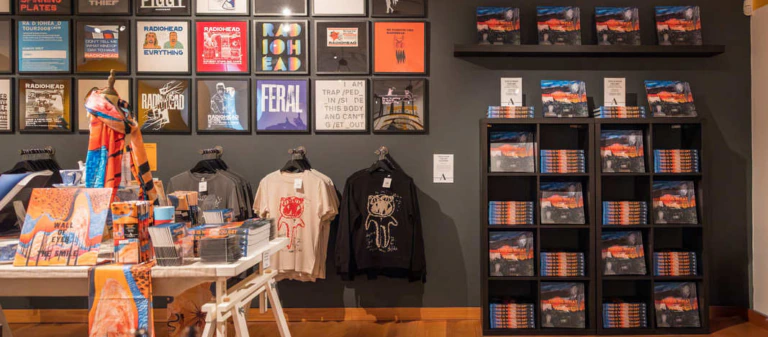
Many council funded museums are already diversifying their income streams. Norfolk Museums Service, for example, has refocused over the past year with a revamped retail offer, hiring out venues for weddings and civil ceremonies, selling design and conservation services, and even running ghost tours.
There are also several national schemes designed to help museums cope with the changing landscape, such as Transformers, a programme for mid-career professionals run by the MA and funded by ACE.
But there are limits to entrepreneurialism. John Orna-Ornstein, ACE’s director of museums, says there is a perfect storm in the Midlands and the north of England.
These regions have big civic museums with large collections, housed in historic buildings that are expensive to maintain for local authorities hit by cuts to public funding, and are in locations where philanthropy is hard to attract.
Leeds is a case in point. There is plenty of innovation, says John Roles, the head
of Leeds Museums and Galleries, but the amount raised from activities such
as retail, weddings and ghost tours, as a percentage of the total cost of running the service, is relatively low.
He adds that “£20,000 from a sponsor is great but it is a drop in the ocean against a gross budget of £7m”.
Local authority funding pays for the buildings, collections and staff – and it is this core funding that is under threat, says Roles.
Admission charges
Many free local authority museums are considering admission charges, Roles says, as it can bring in more revenue. But in the long term, the reality is that some paid professionals in large civic museums may well have to be replaced by volunteers.
Orna-Ornstein is sympathetic to this.
“It takes more than three years to turn around funding models so we have to buy some time for local authority museums,” he says. “They are a vital part of our infrastructure so we must do what we can to preserve them.”
The only way to address the issue, he adds, is for ACE, the Heritage Lottery Fund, the government and all the sector bodies to work together on a plan. He does not call it
a national strategy, but when asked, says ACE “would be open to that conversation”.
Report’s headline conclusions
Although this is less than the 10% reported reduction in expenditure on broader culture and related services over the same period, the report predicts that “going forward, non-statutory services will come under increased pressure, as local authorities make further budget reductions that cannot be balanced with efficiency savings”.
According to Local Government Association statistics, this funding gap will increase by £2.1bn every year until 2019-20, leading to non-statutory services being cut to balance the budget.
Local authority funded museums are cutting their cloth accordingly, with some modelling cuts of up to 40% in anticipation of a difficult settlement in the spending review this month.
“The funding crisis is not just a rough patch, it is the new reality,” says Alistair Brown, the Museums Association’s policy officer.
For England’s 397 local authority museums, 30% of all Accredited museums, the conclusions are clear: adapt or die (see box).
New income streams
Many council funded museums are already diversifying their income streams. Norfolk Museums Service, for example, has refocused over the past year with a revamped retail offer, hiring out venues for weddings and civil ceremonies, selling design and conservation services, and even running ghost tours.
There are also several national schemes designed to help museums cope with the changing landscape, such as Transformers, a programme for mid-career professionals run by the MA and funded by ACE.
But there are limits to entrepreneurialism. John Orna-Ornstein, ACE’s director of museums, says there is a perfect storm in the Midlands and the north of England.
These regions have big civic museums with large collections, housed in historic buildings that are expensive to maintain for local authorities hit by cuts to public funding, and are in locations where philanthropy is hard to attract.
Leeds is a case in point. There is plenty of innovation, says John Roles, the head
of Leeds Museums and Galleries, but the amount raised from activities such
as retail, weddings and ghost tours, as a percentage of the total cost of running the service, is relatively low.
He adds that “£20,000 from a sponsor is great but it is a drop in the ocean against a gross budget of £7m”.
Local authority funding pays for the buildings, collections and staff – and it is this core funding that is under threat, says Roles.
Admission charges
Many free local authority museums are considering admission charges, Roles says, as it can bring in more revenue. But in the long term, the reality is that some paid professionals in large civic museums may well have to be replaced by volunteers.
Orna-Ornstein is sympathetic to this.
“It takes more than three years to turn around funding models so we have to buy some time for local authority museums,” he says. “They are a vital part of our infrastructure so we must do what we can to preserve them.”
The only way to address the issue, he adds, is for ACE, the Heritage Lottery Fund, the government and all the sector bodies to work together on a plan. He does not call it
a national strategy, but when asked, says ACE “would be open to that conversation”.
Report’s headline conclusions
- There is no one-size-fits-all response to the changing funding environment.
- Developing an entrepreneurial culture will be vital to future resilience.
- It is important to focus on selecting the right business model and strategy.
- Effective, pro-active leadership is vital.
- Advocacy must be effective from a national to a local level.
- Skills remain a barrier to change.