The Welsh government announced in April that it would be spending £2.7m to widen access to museums, libraries and archives.
Some of the money is going towards delivering recommendations by Baroness Kay Andrews in her 2014 report, Culture and Poverty (see box below), including £235,000 for programmes to increase engagement with culture in disadvantaged communities and £79,000 to enhance the Sharing Treasure programme of partnership working between local and national museums.
This is in addition to the £20m announced last year for arts in education, funded by the Welsh government and Arts Council Wales. David Anderson, the director of Amgueddfa Cymru (National Museum Wales), says that this shows “a clear direction of travel”.
Sharon Heal, the director of the Museums Association, says Wales has “led the way in exploring how museums might contribute to broadening access to, and participation in, culture in ways that will reduce the impact of poverty”.
Heal draws attention to Wales’s museum strategy, which includes a commitment to working with communities. Scotland and Northern Ireland also have museum strategies, but England does not.
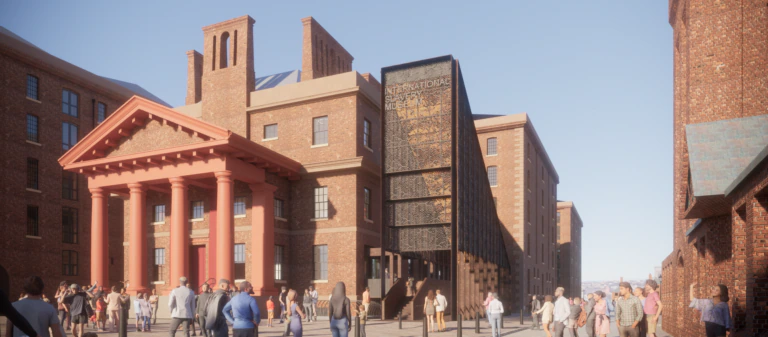
Many museums in England are working to improve social justice, says David Fleming, a founder of the Social Justice Alliance for Museums and the director of National Museums Liverpool, but in the absence of a national policy they are doing it in a vacuum.
Arts Council England (ACE) has various initiatives aimed at social inclusion, including its £25m Creative People and Places fund, which targets investment in areas with low engagement, and In Harmony, a fund for children living in deprived areas, using high free-school meals eligibility rates to focus the project funding.
But Fleming says there is no strategy for museums behind the initiatives, which “risk putting a sticking plaster over lots of small wounds”.
It is up to ministers to set cultural policies and for the Department for Culture, Media and Sport and ACE to create a strategy, he adds. In Scotland, despite many museums working to improve social justice, there isn’t a national initiative backed by funding equivalent to the Welsh one that connects museums with disadvantaged communities.
But a Scottish government spokesman says that it encourages museum organisations, through Museums Galleries Scotland, to make their collections as accessible as possible.
In Northern Ireland, the Department for Culture, Arts and Leisure (Dcal) funded a £300,000 social inclusion programme in 2013-14, allowing National Museums Northern Ireland (NMNI) to go into schools and communities to target those least likely to visit a museum.
The funding was not continued beyond 2014 but Paddy Gilmore, the director of learning and partnership at NMNI, says the organisation has embedded the activities into its ongoing programme and paid for them out of its core budget.
In 2014-15, this included activity in areas of multiple deprivation, and NMNI’s community engagement staff working with 68 community partners across the country.
Communities are at the forefront of Northern Ireland’s approach, although much of the museum strategy, published in 2011, has been superseded by a government plan to move Dcal’s functions to the Department for Communities in 2016, and the recent Local Government Act, which made community planning a key plank of local authority funding.
“The changes send out a strong message about [the importance of] communities,” says Gilmore.
Hopefully this will highlight the approach NMNI is taking to social inclusion.
Some of the money is going towards delivering recommendations by Baroness Kay Andrews in her 2014 report, Culture and Poverty (see box below), including £235,000 for programmes to increase engagement with culture in disadvantaged communities and £79,000 to enhance the Sharing Treasure programme of partnership working between local and national museums.
This is in addition to the £20m announced last year for arts in education, funded by the Welsh government and Arts Council Wales. David Anderson, the director of Amgueddfa Cymru (National Museum Wales), says that this shows “a clear direction of travel”.
Sharon Heal, the director of the Museums Association, says Wales has “led the way in exploring how museums might contribute to broadening access to, and participation in, culture in ways that will reduce the impact of poverty”.
Heal draws attention to Wales’s museum strategy, which includes a commitment to working with communities. Scotland and Northern Ireland also have museum strategies, but England does not.
Many museums in England are working to improve social justice, says David Fleming, a founder of the Social Justice Alliance for Museums and the director of National Museums Liverpool, but in the absence of a national policy they are doing it in a vacuum.
Arts Council England (ACE) has various initiatives aimed at social inclusion, including its £25m Creative People and Places fund, which targets investment in areas with low engagement, and In Harmony, a fund for children living in deprived areas, using high free-school meals eligibility rates to focus the project funding.
But Fleming says there is no strategy for museums behind the initiatives, which “risk putting a sticking plaster over lots of small wounds”.
It is up to ministers to set cultural policies and for the Department for Culture, Media and Sport and ACE to create a strategy, he adds. In Scotland, despite many museums working to improve social justice, there isn’t a national initiative backed by funding equivalent to the Welsh one that connects museums with disadvantaged communities.
But a Scottish government spokesman says that it encourages museum organisations, through Museums Galleries Scotland, to make their collections as accessible as possible.
In Northern Ireland, the Department for Culture, Arts and Leisure (Dcal) funded a £300,000 social inclusion programme in 2013-14, allowing National Museums Northern Ireland (NMNI) to go into schools and communities to target those least likely to visit a museum.
The funding was not continued beyond 2014 but Paddy Gilmore, the director of learning and partnership at NMNI, says the organisation has embedded the activities into its ongoing programme and paid for them out of its core budget.
In 2014-15, this included activity in areas of multiple deprivation, and NMNI’s community engagement staff working with 68 community partners across the country.
Communities are at the forefront of Northern Ireland’s approach, although much of the museum strategy, published in 2011, has been superseded by a government plan to move Dcal’s functions to the Department for Communities in 2016, and the recent Local Government Act, which made community planning a key plank of local authority funding.
“The changes send out a strong message about [the importance of] communities,” says Gilmore.
Hopefully this will highlight the approach NMNI is taking to social inclusion.
Kay Andrews’ recommendations for Wales
- Continue support for public libraries to transform into community cultural hubs and examine scope to extend this approach to other sectors, such as local museums.
- Challenge the cultural sector, through strategic direction and funding, to expand efforts to place institutions at the heart of communities and widen access.
- Establish a “task and finish” group to identify solutions to transport barriers in visiting cultural sites and events by people in disadvantaged areas.
- Investigate ways to more effectively embed culture in out-of-school learning programmes and strategies. lEstablish a strategic cultural and social inclusion board to connect cultural policy across government.
- Cultural organisations should embed approaches that make them more community-friendly and child-friendly.
A Museum Practice one-day seminar on community participation is being held in Cardiff on 16 June.