Beryl Cook: Pride and Joy, the long-trailed exhibition in the Chapel at The Box, Plymouth’s museum, art gallery and archives, is worth the wait.
More than 30 years ago I volunteered at York Art Gallery where Helen Grundy organised a hugely popular Cook summer show, so I feel as though my career began with her artwork.
I remember her being referred to as a “housewife” and now read in the exhibition catalogue that she also self-deprecatingly described herself in the same way.
Cook’s painting has been hugely popular following a first solo show at the then Plymouth Arts Centre in the mid-70s and its associated feature in the Sunday Times Magazine. But the art cognoscenti didn’t take her seriously then and have only recently caught up with celebrating her art.
Cook’s paintings were quickly taken up commercially and reproduced particularly well on tea towels and cards. This was how most of us who grew up in the 1970s and 1980s saw her paintings. Maybe it was the “grubby world” of the mass reproduction that so offended the critics at the time.
Flooding on the train line between Exeter and Plymouth meant l missed the opening night, so instead I benefited from a Saturday visit with the crowds – babies attached to young mothers; elderly women clutching the arms of their middle-aged daughters; friends on a day out at The Box, all chatting, pointing and sharing stories.
Advertisement
A large part of the joy of my visit was experiencing this communal gathering where everyone seemed fully alive, uninhibited and happy to share memories about the locations and people depicted in the paintings.
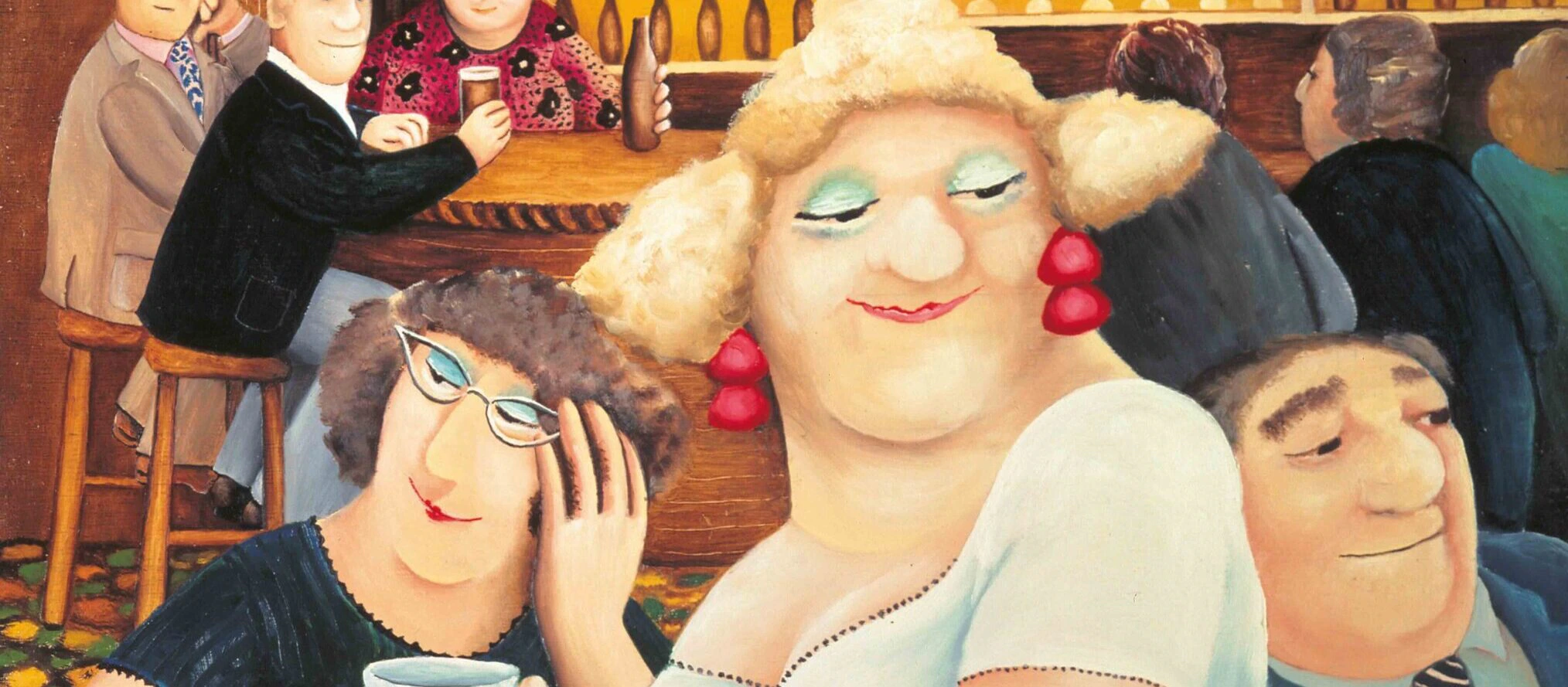
Cook (1926-2008) ran a guest house near the Hoe in Plymouth and enjoyed welcoming visitors to the city she adored. Her paintings capture groups of people enjoying themselves and it is these groups of larger-than-life voluptuous characters, usually women, that are the most successful.
The bosom of society
Borrowing from many private and public collections, this exhibition is the first major survey of her work. Pride and Joy reassesses Cook’s work – her subjects such as drag queens, working class women and LGBTQ+ nightlife were often maligned by certain sections of British society at the time she painted them and usually absent from the established art galleries.
Cook had made Plymouth her home in the 1960s. She wasn’t at all voluptuous, unlike the characters in her paintings, and in the interview available to listen to in the exhibition describes herself as “very inhibited”.
She would have liked to have been the person getting up to dance or join in with the karaoke at the bars and clubs near where she lived. Instead, she channels their joy and confidence through her paintings, celebrating communal leisure activities such as lawn bowls and bingo.
Advertisement
She even painted herself into the pictures so she can act-out this confidence on the canvas.
The Hen Party II, with its homemade hat of balloon breasts sitting centre-of-attention in the joyous, revelling crowd of women made me nostalgic for a recent past of “making-your-own” and going out to socialise without the intervention that we have today of capitalism’s cheap ready-made outfits.
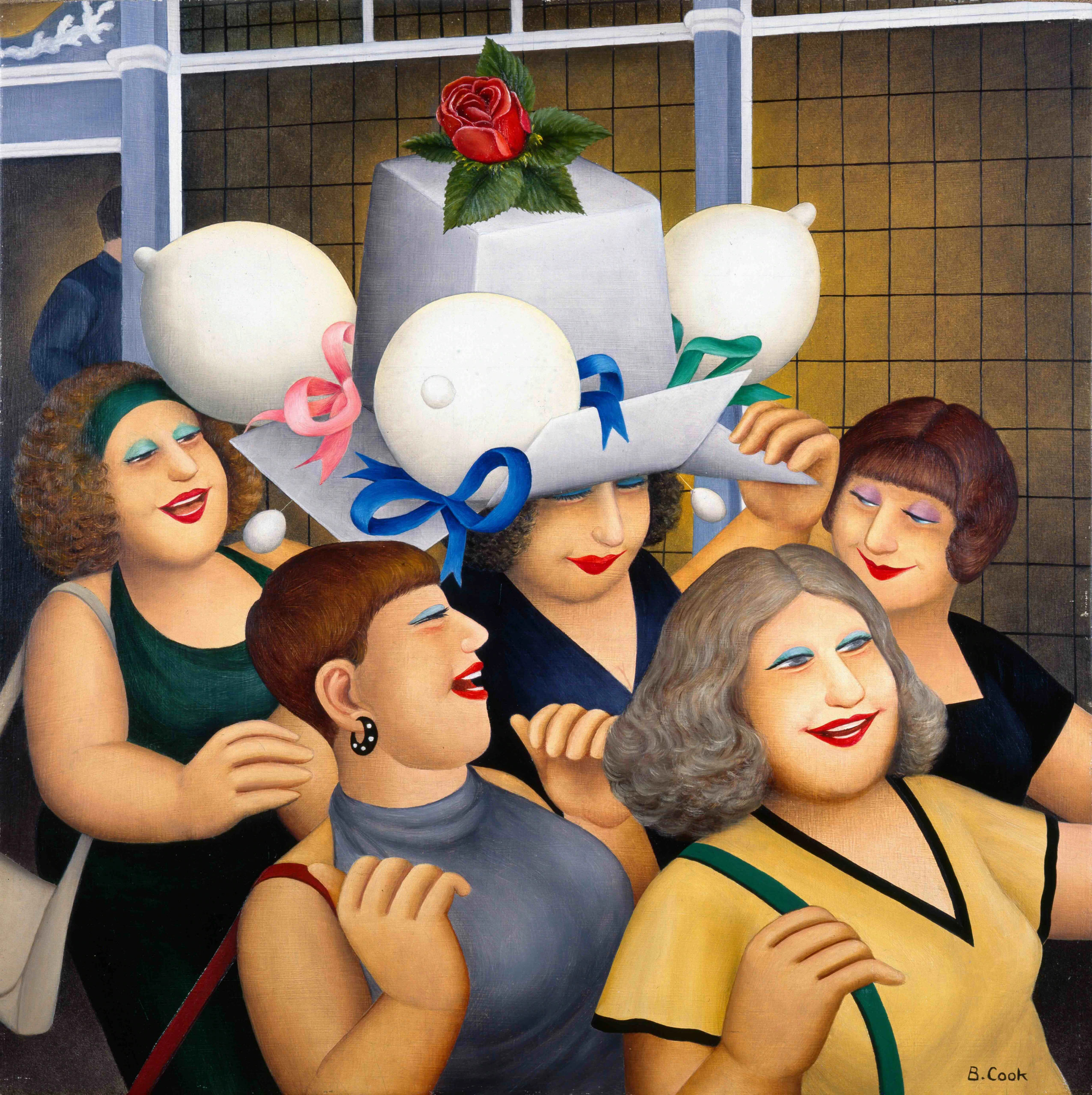
Seeing all these women out enjoying themselves, the ash trays spilling over, the noise almost audible, reminded me of my mum and aunty in Liverpool and of me heading to the clubs in town with my mates. From what I overheard, many of the other visitors also saw their own life reflected in her paintings.
Cue the classics
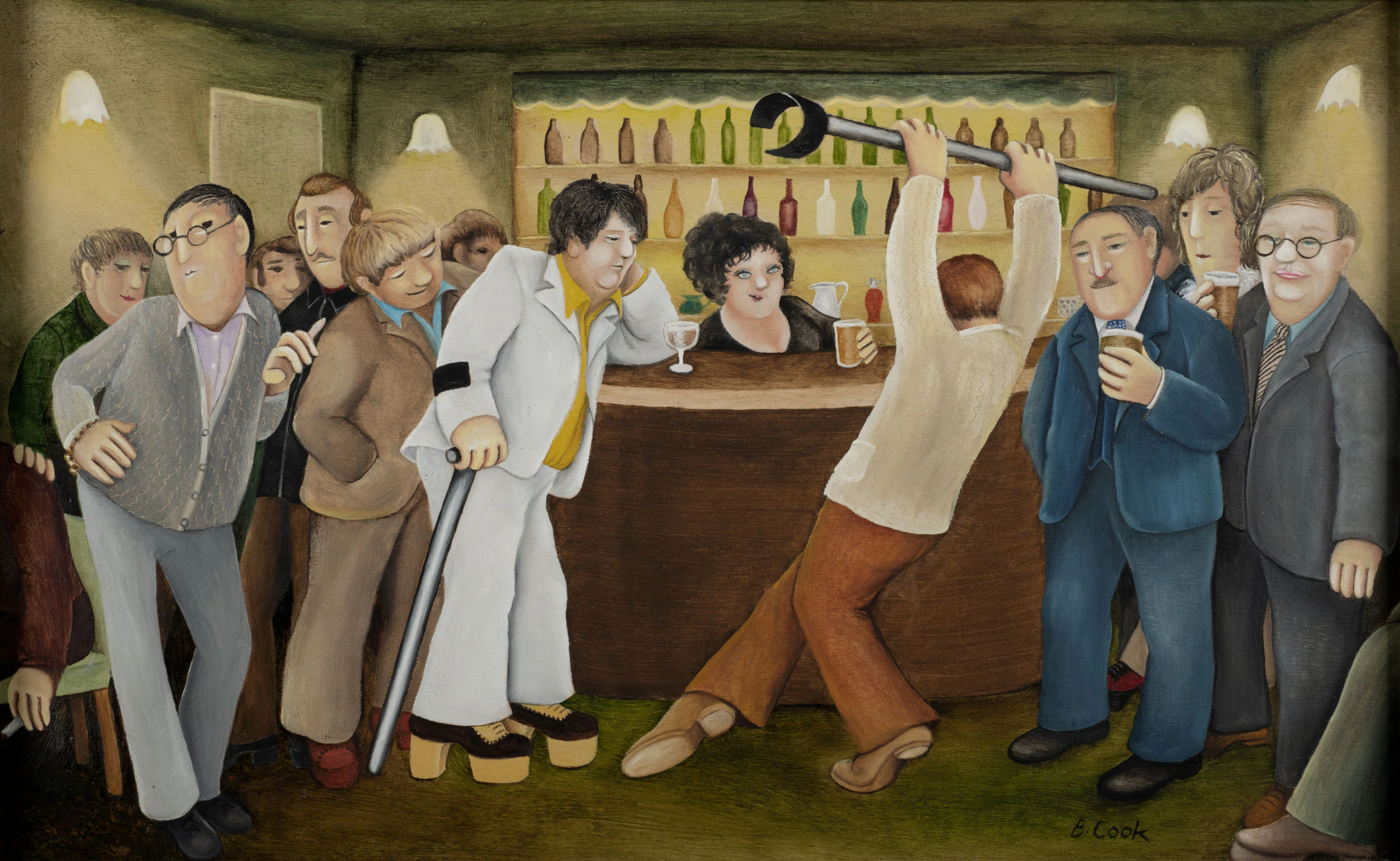
As well as painting the clubs and pubs of her home city for 40 years, Cook painted other scenes in places she visited, including Glasgow in the mid-90s. There, the subject of the paintings included snooker halls where the snooker cues in Bar Billiards remind me of Uccello’s perspectival lances in The Battle of San Romano, an early Italian Renaissance work that hangs in the National Gallery, London.
Advertisement
This reference isn’t as far-fetched as it may seem once you study her sketches and plans displayed in cases nearby. She spent time planning and squaring-up on card before beginning the final painting, which is a process inherited from Renaissance studios.
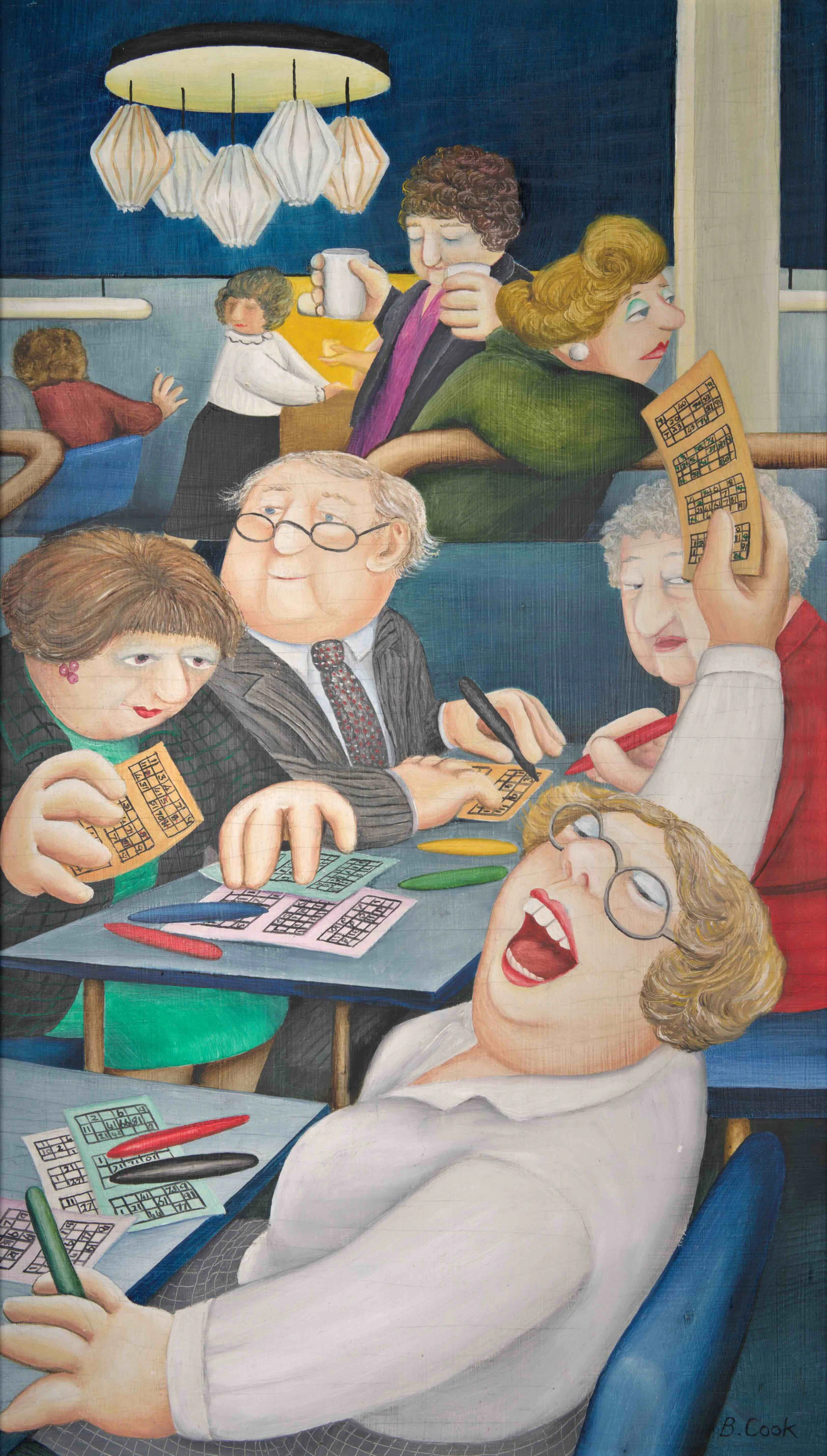
Cook’s visual references included popular postcards and magazine cuttings (which she carefully archived), and she wrote in her letters about admiring work by 20th-century British painters Stanley Spencer and Edward Burra. As Terah Walkup, curator at The Box, says in a quote on the exhibition website: “She understood herself within art history.”
Focus on: Archival research
This exhibition is the most extensive presentation of Beryl Cook’s work, not only because it is the largest, but because it is rooted in original research drawn from Cook’s archive.
The opportunity to consult her correspondence, photographs, press and ephemera resulted in new knowledge and information about her paintings and process, a reframing of her place within contemporary art and an intimate understanding of Cook’s view of her own work as revealed to her closest friends.
Hundreds of fan letters from around the world, written over decades, describe the significant impact she had in terms of representation and visibility. Women thanked her for painting curvy, older women having the time of their lives. LGBTQ+ fans wrote letters of appreciation as early as 1979 for her depictions of queer nightlife and joy.
There are stacks of letters from publishers, writers, journalists, and friends – including art historian and critic Edward Lucie-Smith and photographer Barbara Ker-Seymer – that reveal her art world network. For most, she kept a drafted reply. It was enjoyable to read through thousands of archived items.
Cook’s positive impact continues, with more than 32,000 visitors to Pride and Joy in the first six weeks – about half from the UK and others travelling from Europe and America. Her work still brings joy to so many. This exhibition shows that Cook’s work is worthy of serious assessment and is enjoying a long-overdue reappraisal.
Terah Walkup is the curator of art at The Box
The section devoted to her inspiration is revealing as it demonstrates, through some gorgeous loans, her direct inspirations and references – such as Polish painter Tamara de Lempicka and Italian painter and sculptor Amadeo Modigliani – as well as historical artists with whom she shared an affinity, such as the Flemish Renaissance painter Pieter Bruegel the Elder and Flemish Baroque master painter Peter Paul Rubens.
Setting the tone
The overall bright and colourful exhibition design is created by picking out the orange tones in her works for the wall colours which creates a warm and vibrant space. However, some of the text panels and paintings were hung a bit too close together for my liking, and there is a potential visibility access issue because the lighting reflects off the shiny, framed interpretation panels.
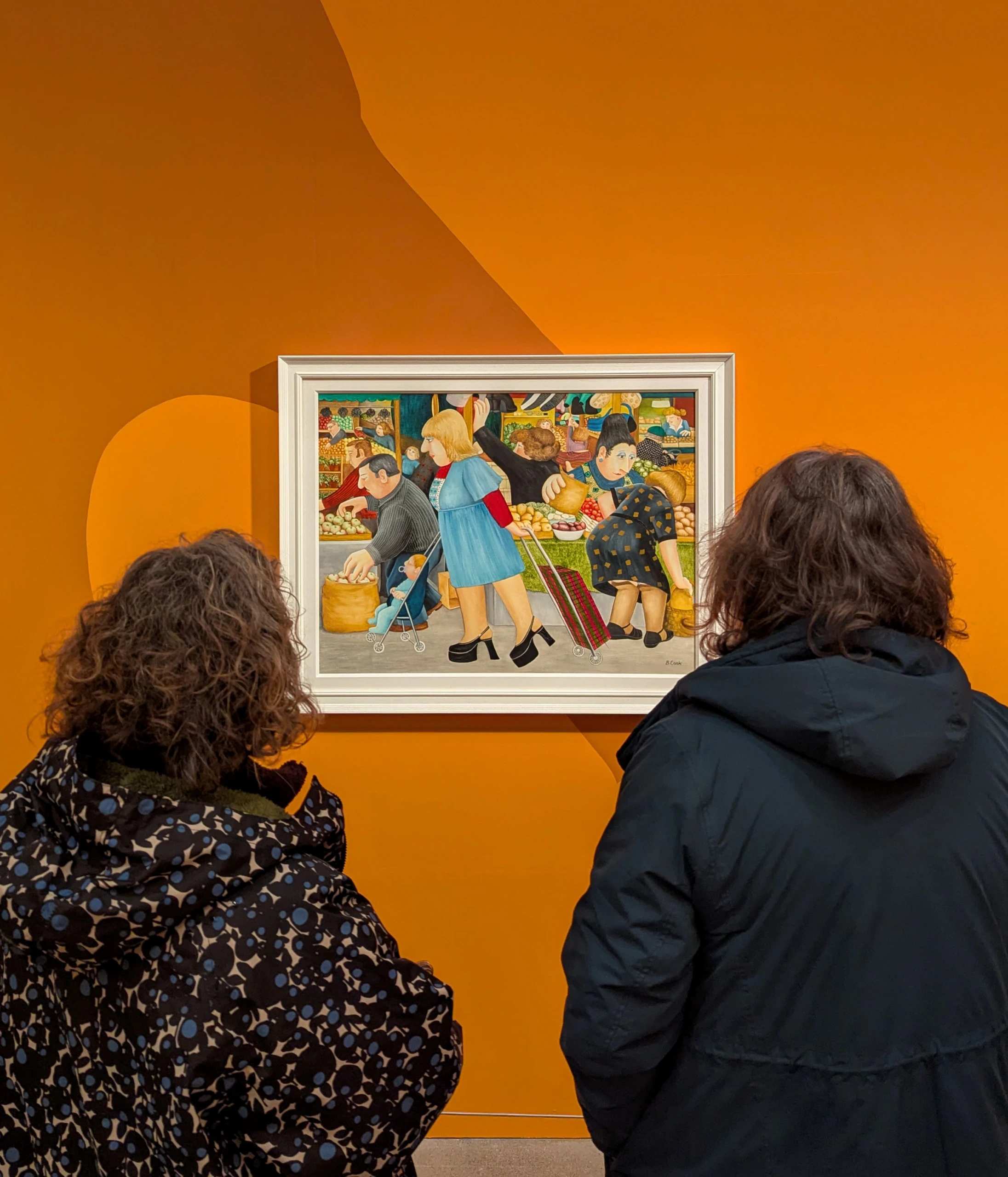
I enjoyed a coffee and cake in the busy cafe where, after being so utterly absorbed in Cook’s world, I imagined I saw her characters and paintings come alive before me as there was so much chat and cheer going on.
In my notebook, I’ve written that Cook says: “If they [the paintings] cheer people up, that’s it for me.” They continue to work their magic long after her death if my visit is anything to go by.
I wonder, though, how many visitors made it upstairs into the main building, just across the square from the chapel, to the associated archives and video interviews with Cook.
Whoever curated the cases there should be applauded for their intelligent selection of material and decision to highlight some important themes. Women’s issues and menopause, gay rights and children’s drawings produced after visiting her studio, all provide a rich context for the dissemination and reception of her work. These displays provide crucial additional background about the subjects Cook chose to represent.
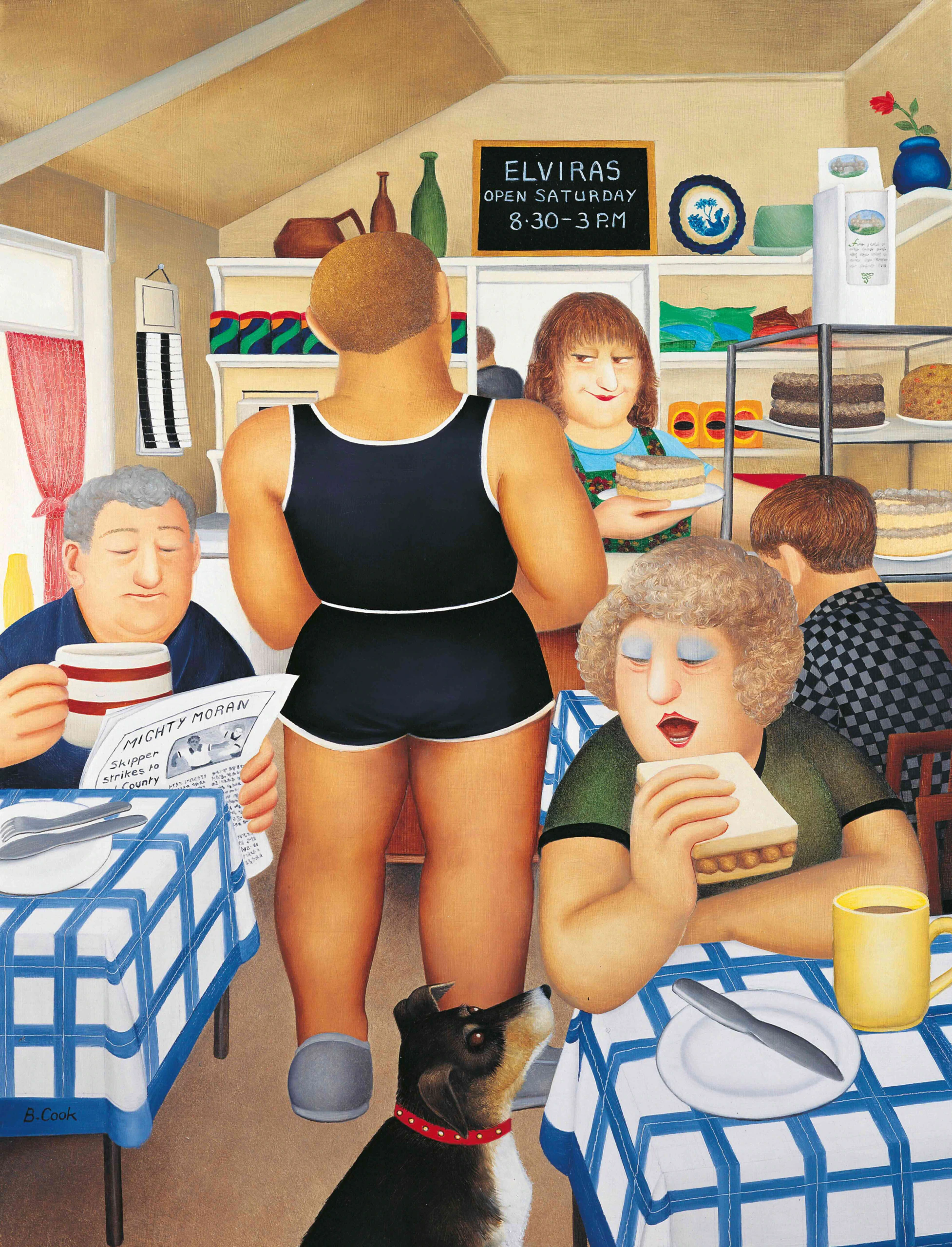
Overall, this carefully curated and thoroughly researched exhibition is a wonderful celebration of an artist who was neglected by the art establishment during her lifetime. The shop was doing a roaring trade in Beryl Cook merchandise while I was there. I left happy with a tea towel and the fully illustrated, reasonably priced catalogue.
Lara Goodband is contemporary art curator and programmer at the Royal Albert Memorial Museum & Art Gallery, Exeter City Council. She is curating the exhibition Living Labyrinths: Art & Fungi, which opens on 3 October
Project data
Cost
Undisclosed
Main funder
Arts Council England
Spatial design
Hara Clark
Graphic design
Studio HB
Printing and signage
Atlas Graphics
Painting and decorating
JJ’s Decorating Services
Exhibition build
The Albion Workshop; MER Services
Framing
Peirson & Peirson
Conservation
Alison Smith; Beky Davies; Sue Corfield
Exhibition ends
31 May
Admission
Free