
The UK holds some of the world's most significant natural science collections, but much of the information in them is difficult to access, search or connect.
A new £155.6m initiative launched earlier this year aims to change that. The Distributed System of Scientific Collections (DiSSCo) UK, is seeking to harness the potential of UK natural science collections by creating "one of the world’s largest natural history assets" - an online resource bringing disparate collections held across the country together in a single digital space.
Over the next decade, the DiSSCo programme will work with around 100 museum partners to digitise and link up to half of the 140 million natural history specimens held in UK collections.
The programme is being delivered by the Arts and Humanities Research Council (AHRC) in partnership with London's Natural History Museum, with backing from the UK Research and Investment Fund. It is the UK arm of a wider research infrastructure initiative designed to digitally unify natural science assets across Europe.
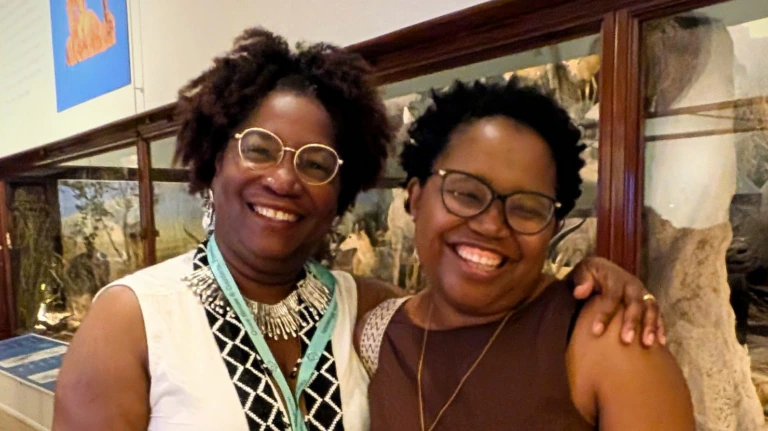
The Natural History Museum recently appointed Sarah Addezio as the programme delivery director for DiSSCo UK. Addezio spoke to Museums Journal about the programme's ambitions and what future success might look like.
Tell us a little more about the DiSSCo UK programme
Sarah Addezio: The UK is home to some of the world's most significant natural science collections. DiSSCo UK is a £155.6m, 10-year programme that will digitise and connect collections from around 100 institutions, making around half of the UK's 140 million-plus specimens digitally accessible.
Advertisement
I'm particularly excited to be working with our first regional hub partners across Scotland, Wales, Northern Ireland and England as we lay the foundations for a truly UK-wide digital research infrastructure.
The programme was established because, despite their global importance, natural science collections remain difficult to access. Valuable information is often held on specimen labels, in catalogues or in local databases that are not easily searchable or connected. Researchers frequently need to visit collections in person to access data.
By digitising and connecting collections, we can unlock centuries of biodiversity information that helps us understand how our natural world has changed over time. This data can support research and decision-making on some of society's biggest challenges, including biodiversity loss, climate change and food security.
DiSSCo UK is about much more than digitisation. It will build digital skills and capacity, increase the visibility and use of collections, and create new opportunities for collaboration, research and impact.
Can you tell us a little about your career and what attracted you to the role of leading the programme?
I've spent my career leading complex programmes across the UK's research, innovation and technology landscape. Most recently at Digital Catapult, I worked on nationally significant initiatives that brought together government, academia and industry to deliver innovation and impact at scale.
Advertisement
What attracted me to DiSSCo UK is both the scale of the opportunity and the importance of the mission. Its collections contain centuries of biodiversity data that can help us understand how our planet is changing.
This is a once-in-a-generation programme that brings together museums, universities and research organisations from across the UK with a shared ambition to transform how collections are accessed and used.
By connecting collections and making millions of specimens digitally accessible, we can unlock new knowledge for researchers, policymakers and the public, while helping museums maximise the value and impact of their collections.
What excites me most is the chance to help build something that will have a legacy. Through DiSSCo UK, we'll create a digital infrastructure that not only supports world-leading research but also strengthens the UK's collections community and ensures these remarkable collections can contribute even more to science and society in the decades ahead.
What are the practical challenges involved in digitising specimens at this scale?
The challenge is partly one of scale and partly one of diversity. Specimens vary enormously in size and type, from the tiniest fairyfly wasp to the biggest animal on Earth, the blue whale, and each may be accompanied by different amounts of label data, often recorded in a range of formats and with varying levels of legibility.
Advertisement
We're dealing with millions of specimens across different organisations, collection types and formats. Creating consistent, discoverable digital records at that scale requires coordinated workflows, shared standards and robust infrastructure.
DiSSCo UK is addressing this by combining mass digitisation with investment in technical infrastructure for storing, publishing and accessing data, alongside innovation in digitisation workflows and technologies. It's not simply about photographing specimens; it's about ensuring that the resulting data can be used reliably and effectively by researchers.
How will you ensure that smaller institutions and those in all parts of the UK are able to participate fully?
Inclusivity has been built into DiSSCo UK from the start. We know that digitisation capacity varies enormously across the sector, so the programme has been designed to make sure smaller collections can benefit alongside larger institutions.
Through our hub-and-node model, organisations with established expertise and infrastructure will support collections in their region, helping them take part in the programme and build their own capabilities over time.
Funding will be delivered in multiple phases over the next decade, allowing us to work with a wide range of collection types, sizes and locations. Our first regional hubs already bring together partners across Scotland, Wales, Northern Ireland and England, helping to ensure this is a genuinely UK-wide effort.
Collaboration sits at the heart of the programme. One of the great strengths of the natural science collections community is its willingness to share knowledge and learn from one another. At the Natural History Museum, we've spent many years developing digitisation expertise and making our collections data openly accessible, while working with partners across the UK and internationally to develop best practice.
DiSSCo UK builds on that spirit of collaboration. It's not simply about digitising specimens; it's about creating a network where institutions of all sizes can share expertise, access training and new technologies, and work together to unlock the full potential of the UK's collections. Ultimately, we want museums and collections right across the UK to feel part of, and benefit from, this national endeavour.
How do you see this national resource benefiting researchers in the future?
Currently, information about specimens is often dispersed across hundreds of institutions, stored in different formats and not always easy to discover or use. DiSSCo UK will create a connected national infrastructure that allows researchers to find and work with collection data at a scale that has never been possible before.
Digitised collections are already helping scientists study biodiversity loss, climate change, crop resilience, invasive species, disease transmission and ecosystem change. As the volume of accessible data increases, researchers will be able to address questions that would previously have been impossible because the evidence was too fragmented or difficult to access.
Making collections data freely available will also improve research efficiency. Researchers will be able to identify relevant specimens, compare collections and access data remotely, reducing the time and cost associated with locating and visiting physical collections.
The economic modelling that informed the programme found that these efficiency gains can be reinvested in further research, while the wider benefits of digitised natural science collections could exceed £2 billion over 30 years, representing a seven to ten times return on investment.
Digitisation also enables entirely new types of research. Bringing together data from collections across the UK will allow scientists to analyse biodiversity change, climate impacts, food security, invasive species and disease emergence over larger geographical scales or timescales.
As the infrastructure grows and becomes increasingly AI-ready, researchers will also be able to use advanced analytical tools to identify patterns and answer questions that would be impossible using isolated collections and analogue records alone.
Is there a public engagement element to the programme?
Absolutely. While the data is aimed primarily at scientific researchers, making specimen data openly available means that students, community scientists, artists and people with personal or cultural connections to collections can engage with them from anywhere.
Digital access won't replace physical collections, but it will allow far more people to explore, discover and use them. It creates opportunities for new educational tools, online resources and community-led research initiatives.
While we have only just started DiSSCo UK, as we progress, we will be taking part in events and global conferences sharing our news. In 2025 the Natural History Museum, London alone broke all previous records with 7.1 million onsite visitors. With a network of 100 UK institutions that have their own public engagement programmes that DiSSCo UK can contribute to, I'm excited to see what opportunities this brings to share digitisation with new audiences.
In the past decade there has been a loss of specialist curators for natural science collections. How will museums that lack specialist knowledge be able to participate?
One of the programme's strengths is that it brings institutions together so that expertise can be shared across the network. DiSSCo UK is also designed to build digital skills, strengthen networks and create sustainable capacity across the sector. The aim is not simply to digitise collections, but to leave behind stronger infrastructure and expertise throughout the UK's collections community.
AI features prominently in the programme. What do you see as its most exciting potential use with natural science collections? And what are the risks and limitations to using it?
AI has enormous potential to accelerate the way we work with collections. Machine learning is already being used for tasks such as automated transcription, image-based identification, quality assurance and extracting information from specimen images.
At the same time, AI is only as effective as the data that underpins it. That's why high-quality digitisation, standards and data management are so important. Museums need to ensure that AI complements expert knowledge rather than replacing it, and that outputs are properly validated and interpreted. This is one reason why creating a trusted national infrastructure is such an important part of the programme.
Can you give some examples of how digitised natural science collections are already being used?
Natural science collections are unique because they allow us to look back in time, sometimes over centuries, to understand how species, ecosystems and our environment have changed. For example, biodiversity records and digitised museum specimens have been used to predict the future spread of invasive plant species across the UK and Europe, helping policymakers identify risks to agriculture, soil health and native biodiversity.
They are also supporting food security. Research using digitised herbarium specimens has highlighted the importance of wild relatives of cereal crops, which contain valuable genetic traits that could help make future crops more resilient to climate change, pests and disease.
By digitising collections and connecting data across institutions, researchers can ask questions that would previously have been impossible to answer. DiSSCo UK is about unlocking that potential at a national scale. By making collections data more accessible and connected, we can turn centuries of scientific knowledge into insights that help address some of society's biggest challenges.
There are calls for the government to give significant natural science collections the same level of protection from export as outstanding cultural artefacts. What are your thoughts on this?
Natural history collections are essential for the science that helps us understand biodiversity, environmental change, the Earth's history, and future prospects for the planet and humanity. There is a real risk that these crucial and irreplaceable resources are being undervalued compared with other museum holdings, despite their importance to science and society.
We would like to see the significance of natural science collections more widely recognised, including consideration of whether important specimens and collections should benefit from protections comparable to those afforded to nationally significant cultural objects. These collections are irreplaceable scientific assets and, once lost, the knowledge they contain cannot easily be replaced.
The Natural History Museum believes that natural history objects should be included in the UK's export licensing regime and continues to engage with government on this issue. We would welcome greater recognition of their significance, including consideration of protections comparable to those available for nationally important cultural objects.
Such measures could help ensure nationally significant collections remain accessible for UK research and public benefit.
What DiSSCo UK demonstrates is the immense scientific value of natural science collections. These collections provide a unique record of life on Earth and environmental change spanning 4.5 billion years, and they underpin research across biodiversity, climate science, food security, health and the geosciences.
The programme describes the UK's natural science collections as a national research infrastructure. In what ways might it change how natural science collections are viewed and used?
Museums and collections have always been individually important, but DiSSCo UK recognises that their greatest potential comes when they are connected. By treating the UK's natural science collections as a national research infrastructure, we're creating a shared resource that supports science across institutional boundaries and enables researchers to work across collections at an unprecedented scale.
The programme shifts the focus from hundreds of separate collections to a collectively managed, nationally significant asset that can accelerate scientific discovery, support innovation and provide the evidence needed to answer some of our biggest environmental questions. Ultimately, success will be when researchers can access and use the UK's collections as a single connected resource, regardless of where specimens are physically held.
The programme will run for a decade. What will success look like to you in 10 years' time?
For me, success in 10 years' time won't simply be measured by how many specimens we've digitised. It will be measured by what becomes possible because we've done it.
I want researchers to be able to seamlessly discover and use data from collections across the UK, unlocking new insights about the natural world and helping address challenges such as biodiversity loss, climate change and food security.
I also want DiSSCo UK to have created more than a digital archive. Our ambition is to build a lasting research infrastructure that enables new technologies, including AI, to unlock value from collections in ways we can't yet imagine.
Most of all, I'd like to look back and see that we've transformed the visibility and impact of the UK's natural science collections, strengthening the organisations that care for them and turning an extraordinary but often hidden national asset into a connected resource that benefits science and society for generations to come.
DiSSCo UK is not only about preserving the past. It's about creating the evidence base we need for the future. The programme brings together collections, digital innovation, AI and partnership working at a national scale.
By unlocking data from these collections, we're creating new opportunities for discovery and enabling future generations of researchers to tackle challenges that are only just emerging today.