Pressure: The D-Day Decision (until 11 April 2027) is a new display on HMS Belfast that takes visitors on a journey through the chronology of the major military operation that took place on 6 June 1944 and ultimately triggered the beginning of the end of world war two.
Through objects and documents from the Imperial War Museum (IWM) and Met Office archives, and in partnership with StudioCanal, the production company behind new war drama Pressure, the display explores how a range of disparate conditions had to be in perfect alignment to ensure the long-awaited amphibian invasion of Nazi-occupied France was successful.
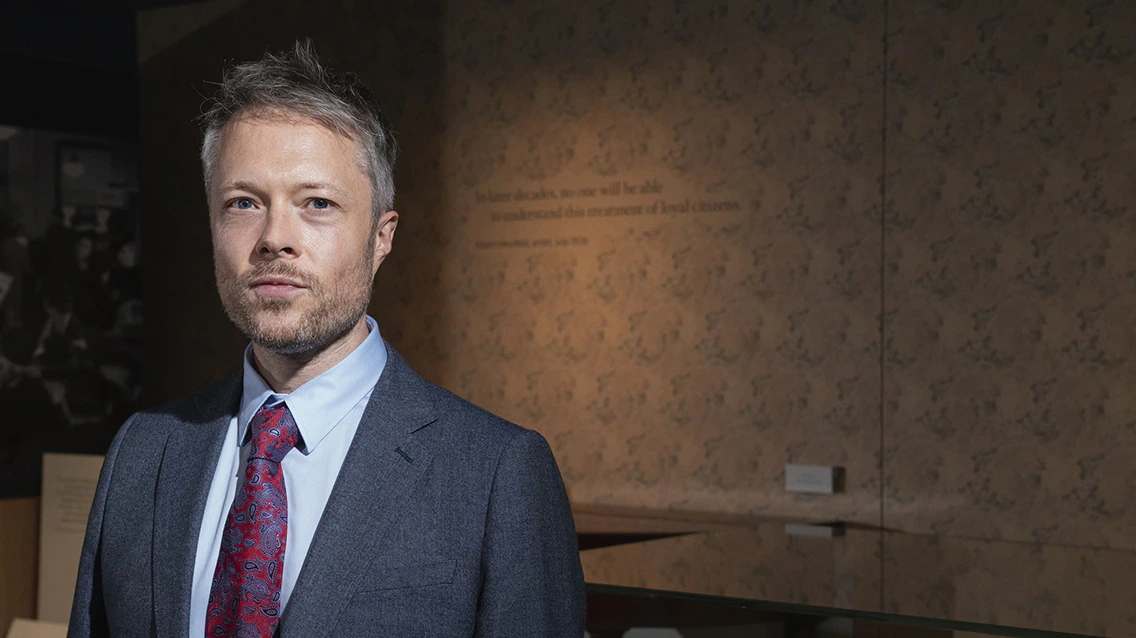
Museums Journal caught up with James Bulgin, the head of public history at IWM, to hear more about the new exhibition and HMS Belfast's role in Operation Overlord, the military’s codename for the D-day operations.
How is the new display hinged on the cinematic release of the 2026 war drama Pressure?
The display aims to provide historical context for the film [which will be released in UK cinemas on 11 September]. Rather than a chronological history of D-day in its entirety, we have sought to focus on the specific aspect of the weather and the 72 hours prior to invasion, which is also the focal point of the film.
We want to highlight to visitors how important conditions such as wind speed, tides and cloud cover were to give the invasion the best chances of success – and whether it even went ahead at all.
Advertisement
That has also given us the opportunity to encourage visitors to think about the incredible complexity of the operation and the real-world realities in which all of those who participated were operating. IWM has a wealth of deeply fascinating D-day related items so homing in on a specific theme made the process of shortlisting for the display ever so slightly easier
How do you tell the story of D-day?
The display tells the story of the decision-making process in the hours before the invasion through the individuals that were at the heart of it. It uses objects – such as Group Captain James Stagg’s personal diary – to reveal some of the inner turmoil they were experiencing, and the factors they were considering.
Alongside this, it displays items that indicate why these issues mattered so much for those on the ground. For example, a pair of binoculars used on a landing craft indicate why visibility was a critical dimension of the climactic conditions that Stagg and the forecasters were trying to anticipate.
This insight into the nexus of the senior command is paired with personal accounts such as contemporaneous letters and postwar testimonies of those who were at the front edge of the invasion, and on the receiving end of the real-life consequences of their decisions.
Are there immersive or interactive aspects?
The display space features screens where visitors can select from three videos, created especially for this display. One features oral testimony from figures, including Stagg, alongside IWM archive footage.
Advertisement
The second utilises some of the most powerful personal letters from IWM’s collection to give visitors an insight into some of the individual stories of those on the frontlines of D-day, and the final video features talking heads from some of the cast and crew members from the film Pressure.
What objects do you have on display?
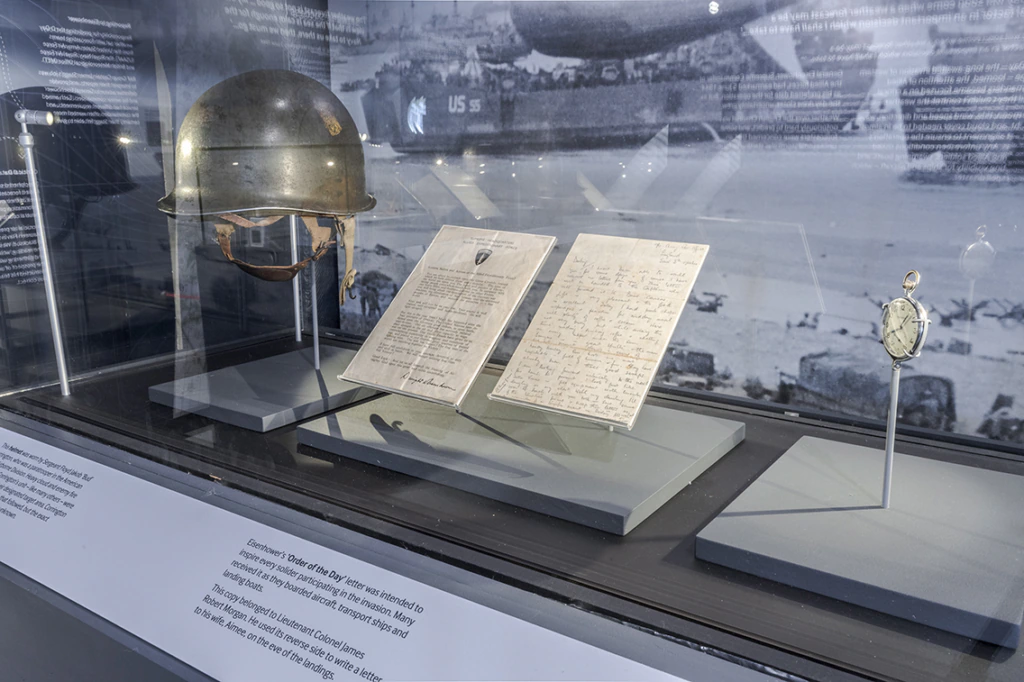
The display is comprised of a small number of never, or very rarely, seen objects and documents. This includes a helmet worn by Sergeant Floyd Jakob “Bud” Corrington, a member of the American 101st Airborne Division (made famous by American war drama Band of Brothers).
Other objects include a pocket watch used to time the naval artillery barrage from a ship off the Normandy coast – a bombardment that HMS Belfast itself took part in.
Also on display is General Sir Bernard Montgomery’s “plan on a page”, which was presented to his top commanders, outlining his vision of the key elements for seizing the beaches, plus a personal letter written on the back of General Dwight Eisenhower’s “Order of the Day”, dated 6 June 1944.
How has the Met Office been involved?
We are extremely grateful to the Met Office National Meteorological Library and Archive for loaning us two fascinating documents for this display.
Advertisement
In its own dedicated showcase is the original so-called “God of War memo” on which Eisenhower scrawled a note to Stagg on the weather report he produced for 19 June (one of the only possible alternative dates for D-day) thanking “the Gods of war that we went when we did”.
This later date would see a once-in-a-generation storm hit the Normandy coastline. The second document is Stagg’s personal diary covering the critical 72-hour period conveyed in the Pressure film. After advising Eisenhower to call off the invasion originally planned for 5 June, Stagg confides on these pages he is “getting rather stunned – it is all a nightmare”.
Printed on the wall is also a Met Office weather chart which is in fact the final chart provided on 5 June 1944 before the decision to proceed with the invasion was made.
What is your favourite aspect of the exhibition?
Unsurprisingly it is the objects – but in particular how the place in which they are displayed here sharpens their relevance.
It can become a bit of a cliché in this field to talk about world-changing events, but in this case it is accurate. In the early days of June 1944, a relatively small number of people sat in a tiny corner of southern England having to make decisions with incomplete information in a rapidly changing environment, that had unfathomably significant consequences.
To be able to read Stagg’s words written in his own hand and at the heart of the moment, powerless to control - and unable to fully comprehend - the tumult unfolding in the atmosphere above him, is a very powerful thing. It is a salutary reminder of the minutiae and human realities that ultimately shapes the course of history.
Was the story of D-day told on HMS Belfast before this?
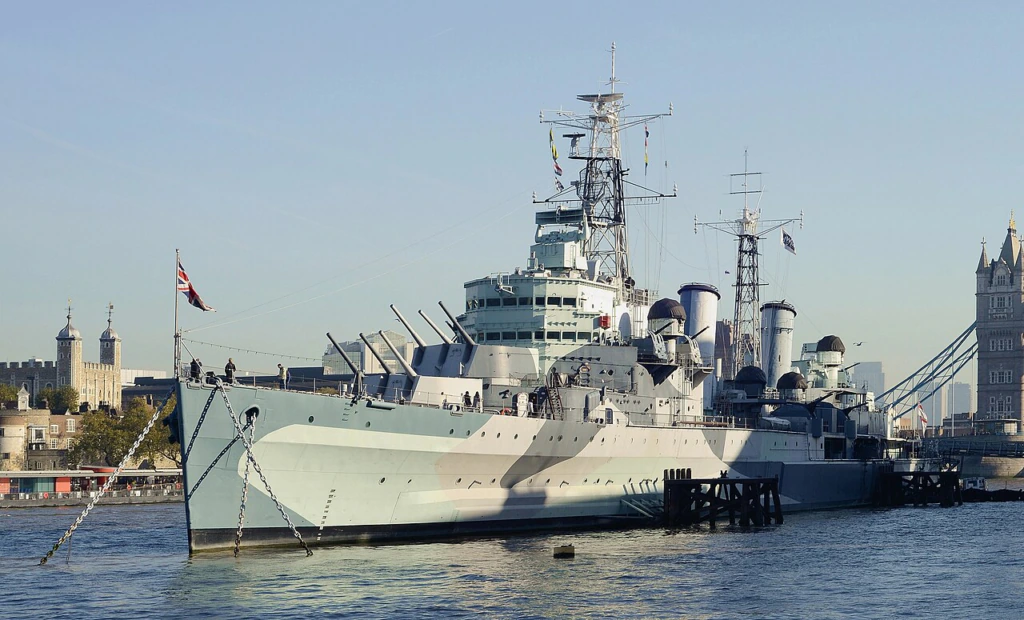
We’ve always sought to present HMS Belfast as a living, breathing museum, telling the story of the ship’s and it’s crews’ full history – as a warship from the second world war through Korea to the cold war – rather than a single moment in time.
The history of Belfast’s role on D-day has always been featured: in the 1980s and 1990s this was done through a dedicated D-day exhibition, but changing visitor needs and interpretation styles meant that by the 2020s we no longer wanted that story to overshadow the ship’s many other operations or adventures.
The D-day story instead became told through other, key areas of the ship such as the gun turrets, sick bay and forward steering position where that history actually happened.
The partnership with the StudioCanal team behind Pressure presented a rare opportunity for us to build on this and utilise an existing space within the ship to create a new display that adds details and new emphasis to the D-day story and Belfast’s role.
Visitors can explore more D-day focused areas of the ship, including the D-day gun turret, which is an immersive recreation into what the 26 crew members crammed inside one of HMS Belfast’s six-inch gun turrets would have heard and felt during the naval bombardment.
A facsimile of the ship’s logbook from D-day can also be viewed in the Compass Platform while the shell room gives you an insight into how the ship was able to fire more than 5,000 shells off the coast of Normandy.