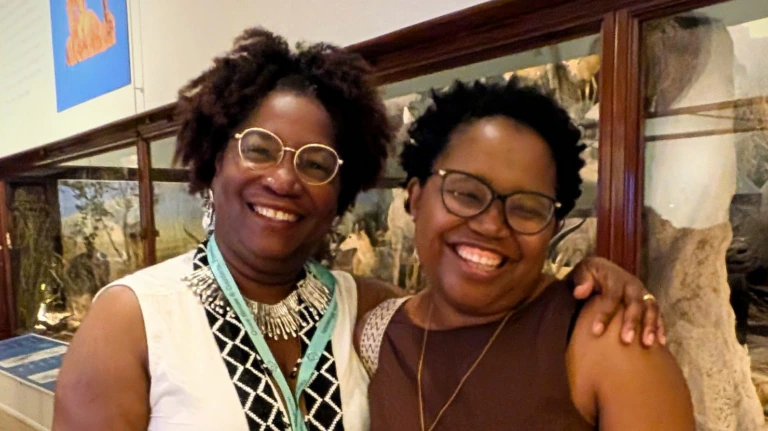
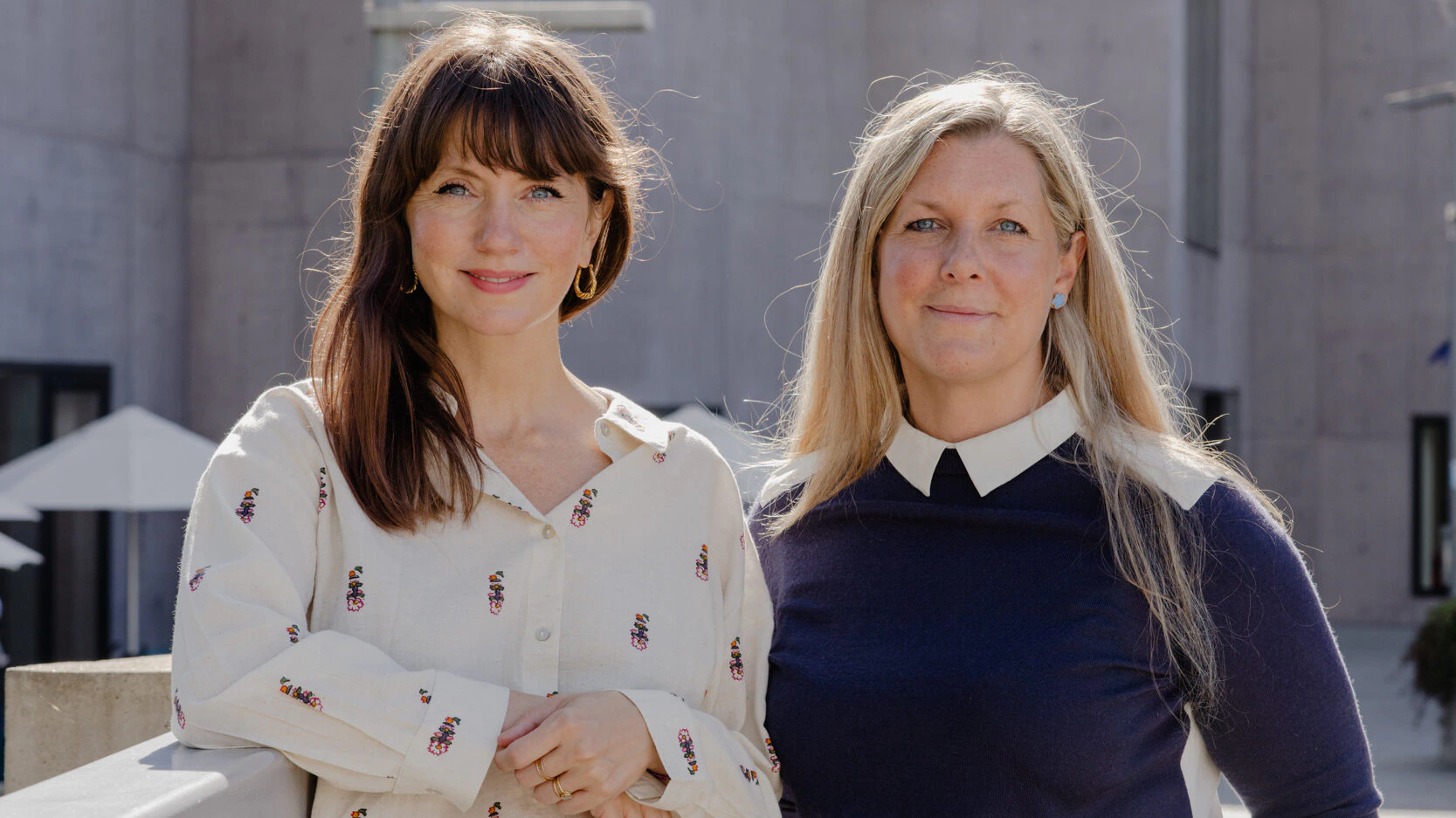
How do you replace a founding director – particularly one who was in post for nearly 17 years? After a long recruitment process, the trustees at the Hepworth Wakefield in West Yorkshire made a bold decision – to appoint two existing senior members of staff as co-directors to share the myriad of responsibilities that leadership brings.
Museums Journal caught up with Olivia Colling and Laura Smith at the opening of Mrinalini Mukherjee: Unbound Forms - Women Sculptors of India and Bangladesh (until 1 November) to discuss their long-term vision for Hepworth Wakefield.
Q: Why did you decide to jointly apply for the director position?
Olivia Colling (OC): I've been at the Hepworth for about 10 years, and Laura's been here for four years, so we knew we could work together. Even though we only met while working here, our lives have kind of weaved around each other – we both grew up in Yorkshire, both studied in Glasgow and we both ended up working at Tate.
After Simon Wallis announced he was leaving for the Royal Academy, we worked with the board of trustees on a new job description. We both felt it was such a huge task for one person to be responsible for everything.
You obviously need someone with an amazing curatorial background, who knows their art inside out. But they also have to be entrepreneurial and an excellent fundraiser. There’s lots of different skills required and we felt that together we really covered the whole job description.
Advertisement
Q: What does shared leadership look like in practice?
Laura Smith (LC): We did a lot of research and spoke to other people who have shared leadership – like the Art House, also in Wakefield, which has been trailing a joint leadership model, as well as people in the corporate sector. It was useful to understand the challenges as well as the benefits. One of the key things that stuck with me from those conversations was the importance of having shared values.
One question we got asked was “how on earth will you ever make a decision?” But the process is better because it’s not just on one person – if one of you comes up with an outlandish idea, the other person has to interrogate that.
OC: We’re quite clear on our lanes. They run in parallel because of our shared values and we can jump into each other’s lane if we need to because we know what we’re doing. We both spend about half our time doing fundraising because we’re always out and about. It’s also about making time to have joined up conversations, particularly about income generation, because we’re not going to be commercially successful if the programme’s not right, and vice versa.
Olivia Colling and Laura Smith at a glance
Olivia Colling and Laura Smith held interim leadership roles at the Hepworth Wakefield following the departure of Simon Wallis for the Royal Academy last September. The board of the Wakefield art gallery and its major funder, Arts Council England, approved the pair’s application to jointly lead the organisation in February – with Colling taking on the specific role of executive director and Smith as artistic director.
Colling started her career in communication roles at Tate, the Design Museum and the Victoria and Albert Museum before moving to West Yorkshire to join the Hepworth in 2015.
Smith has worked for Nottingham Contemporary, Tate and Whitechapel Gallery in curatorial roles. She joined the Hepworth in 2022.
Q: What are your commercial ambitions for the gallery?
LS: We both come from a position of not wanting to reduce and save – we’d much rather be entrepreneurial and find commercial approaches to the programme that allow us to continue to be ambitions.
Advertisement
OC: One thing that Laura’s team has been focusing on is growing the international touring programme. On one hand it’s about sharing some of the costs of international loans, but there is also an income potential in other galleries buying our curatorial expertise
LS: It’s important to get your roots right – you’ve got to matter and be relevant to your local community first and foremost. We’ve grown the collection significantly because we want to bring the best art possible to the people of Wakefield. It also means we’re able to send our exhibitions off on tour, which is income generating and builds our brand but is also better for the environment.
OC: Ultimately, we want to be the very best place in the country to experience modern contemporary art. We work closely with Wakefield Council and the West Yorkshire Combined Authority on their destination management plans, because we are a really significant player in drawing tourists to the region. Our garden, which we added during Covid, is bringing in group visits from places like Japan and the Netherlands.
Q: You introduced admission charges to the gallery after Covid – what impact has that had on audiences?
OC: Our funding from Wakefield Council has been tapering off year-on-year and we were effectively shut for two years during Covid unable to generate any of our own income so we had no choice really. The first exhibition we did when we reopened was Barbara Hepworth: Art and Life (21 May 2021–27 Feb 2022) that filled all 10 galleries, and we said let’s just charge for it and see how it goes. And actually it really wasn’t that big a deal for people.
LS: It hasn’t impacted visitor numbers and I think that’s because we’re not on a passerby route; we’re destination, you have to actively decide to come here. We’re still free for Wakefield residents and under 18s, and they think the place is theirs, which is important.
Advertisement
Q: Following May's local elections, Wakefield now has a Reform-run council – do you have any thoughts on how museums and galleries can advocate for culture in the current climate?
OC: We both believe that democracy is a good thing, and if the people of Wakefield have decided that they want change then it’s our job to engage and try to understand that.
The Hepworth’s mission is to improve people’s lives: we want people to be proud that they come from Wakefield and for us that's connected to Barbara Hepworth and Henry Moore’s stories.
There isn’t a museum in the country that’s just art on walls anymore – there is so much we do for local community, from dementia groups to new parent activities, which are really valued by local people.
I would hope that any councillor would at least want to understand our role because there are so many things that we deliver alongside the massive economic benefits from tourism. I would like them to see us as a beacon of hope.