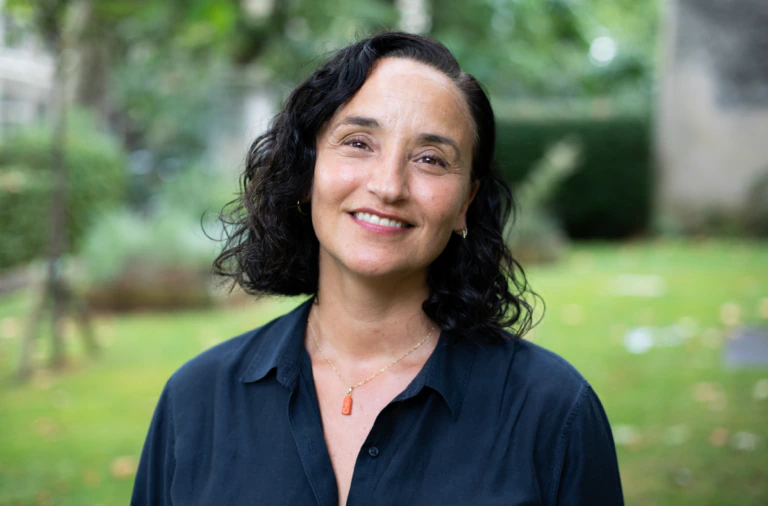
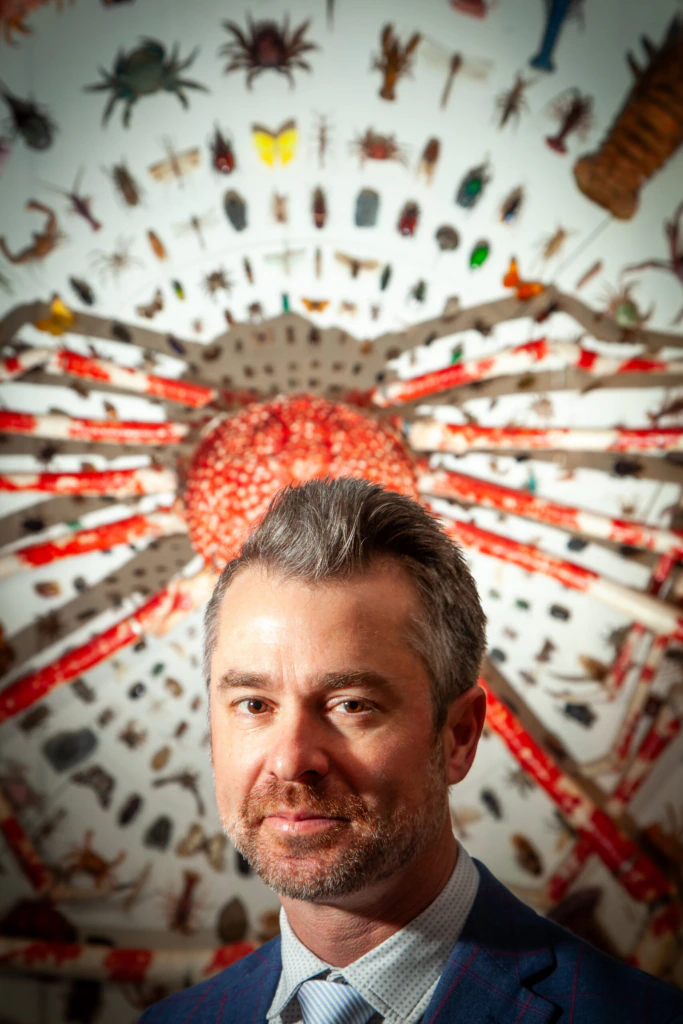
“The point of an organisation like this is beyond the physical of visitor and museum – it is to connect everyone with the natural world around them, because the natural world is a part of our lives,” says Gavin Svenson, who moved from the US last September to become the director of the Oxford University Museum of Natural History (OUMNH).
Having played a central role in a $150m redevelopment at the Cleveland Museum of Natural History in Ohio, Svenson was the natural choice to look after the ongoing redisplay of OUMNH, a project that began in 2021 and Phase 4 of which is due to complete in May this year.
All things great and small
The central aim of the museum’s masterplan has not only been to rejuvenate the collections, but to interpret the complexity of the natural world – all of its intricate symbiotic entanglements, networks and systems – in an accessible and visually appealing way. The redisplay should inspire visitors to want to know more about the world in which we live.
Svenson started his career in academia, having become interested in the natural world at a young age.
Advertisement
“I was 10 years old and watching a science documentary,” Svenson recalls. “Someone with the job title of entomologist came on talking about insects and I was like, ‘whoa, that’s a job? I want to do that’.”
He had grown up in a rural area in New York State, about seven hours’ drive from New York, the largest city in the state.
“I had lots of nature around me and would spend my free time outside looking for frogs and snakes and watching birds,” he says. “But what got me so fascinated with insects is their inexhaustible biodiversity.”
Svenson later started a Bachelor of Science in the Entomology Department at Cornell University in upstate New York.
“I was a student employee at the Cornell University Insect Collection and pulled drawers open of the weirdest, most mind-boggling insects from Australia and New Guinea,” he says. “So, I concocted this hair-brained idea to go on a collecting expedition to New Guinea.”
When a professor at Brigham Young University (BYU) in Utah invited him on an expedition one summer, everything fell into place. He met the professor at the airport in New Guinea before starting a gruelling two-day hike to the research station.
Advertisement
At this point in his career, Svenson was applying for PhD programmes focused on insects’ sensory perception – how they see, feel, taste and perceive the environment. By the end of that trip, he found himself at a fork in the road.
“Instead of asking how an insect perceives the world, I was asking why it perceives the world,” Svenson says. “It opened up this entirely new space for me.”
His doctorate in 2002 gave him the opportunity to study the rockstar of the insect world, praying mantises. What was the appeal for Svenson?
“They look at you when you move, they seem to track you and because of that they give people that feeling that there’s a kind of consciousness there,” he says. “Some of the most popular, amazing insect groups are the ones that are not well represented in collections, and praying mantises were one of those.”
Svenson worked with scientists all over the world to catalogue mantises, which are found across the world in Africa, Asia, Australia, Europe, North and South America. He found that what we thought we’d known about the evolution of these insects up to that point was completely wrong.
“Scientists classified all the ones that look alike to be alike, wherever they originated from,” he says.
Advertisement
“But the genetic information showed something completely different. What it told us was that when early mantises evolved, as the ancient supercontinent of Gondwana split around 200 million years ago, the origin mantis was distributed on each of the newly formed continents at the same time, but they didn’t start to specialise into their strikingly different visual forms until after these lineages were separated.”
This is what is known as “convergent evolution” – the same source insect evolving in the same way on completely different continents, so they look the same even though their genetic information is different. Svenson had contributed to the fundamental understanding of praying mantis systematics.
He had done all this research while holding postdoctoral fellowships at the New York State Museum between 2008 and 2011, and the Museum of southwestern Biology at the University of New Mexico in 2011. Svenson then got the job of curator of invertebrate zoology at the Cleveland Museum of Natural History in 2012, while carrying on his academic studies.
“It was in 2018 that I decided I was going to go into museum administration fully,” he says.
“It was at the same time as we launched Cleveland’s $150m transformation project to redo all exhibits, build a new collections facility and a new wing and renovate most of the rest of the museum. I had ended up feeling guilty about not having the time and capacity to commit to my research. Nonetheless, I mourned it when I had to stop.”
Cleveland’s redevelopment was all-consuming, and Svenson had also been promoted to chief science officer in 2022. This was a bigger role, where he contributed to the overall strategy of the museum, raising money for the project while also overseeing a collection of more than five million specimens, as well as the exhibition design and production process.
“One of the things that we did very early on in the process was decide the learning goals, which served as guiding principles, so that we didn’t go on any weird science tangents,” says Svenson.
He managed the entire exhibition design process, from choosing the perfect specimens to creating the huge number of labels needed.
“It felt like we revised the copy a thousand times, seeing everything again and again and again and again, to finally get to the point where the last iteration was signed off.”
Among the thousands of displays that Svenson oversaw was a case that featured his PhD project – the evolution of the praying mantis fitted into one 48-inch case. Another display told the story of the evolution of birds.
“We had our theropod dinosaurs next to taxidermy flightless birds, flying birds, all the way up to tiny little hummingbirds flying around in quantum space – there’s a clear connection between them all,” he says.
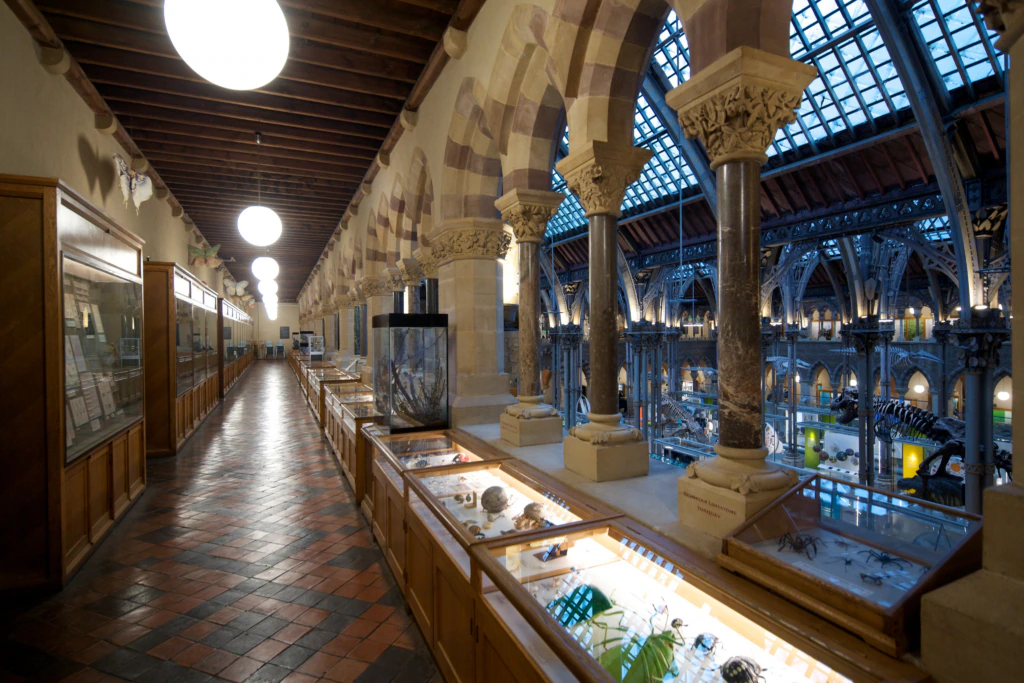
The redisplay at OUMNH is very similar in the way it presents advanced concepts in accessible and visual ways. Entitled Life As We Know It, two-thirds of the museum’s main collection space has now reopened with beautiful displays designed by Easy Tiger Creative.
The last phase will describe the early evolution of the earth, from giant insects in the Carboniferous, through the Jurassic’s dinosaurs, right up to the Pleistocene, when Neanderthals walked side by side with mammoths.
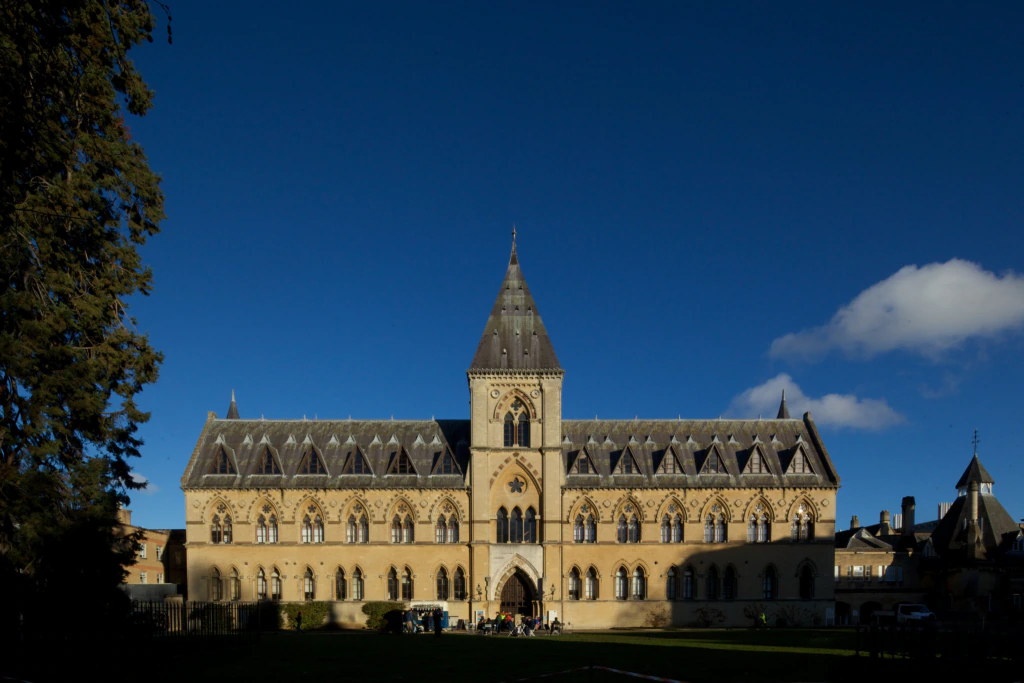
“The people who put this place together wanted to unify science,” says Svenson. OUMNH opened in 1860 – 21 years before London’s Natural History Museum – as the UK’s first public natural history museum.
The museum’s purpose is literally built into its fabric, with its structure built to resemble natural skeletal forms, and many smaller elements utilise different stones to exemplify the qualities of the natural world.
“Nostalgia drives experience for a lot of people,” he says. “Many of our visitors came as a child and now bring their own kids. What’s amazing about this museum is that you can fill it with brand-new stuff, but the building still delivers that nostalgia.”
The big question is, will we see a new case on praying mantis evolution at the Oxford museum? Svenson modestly replies that that is not up to him.
“The previous directors have moved this museum forward again and again and again, and I get to stand on their shoulders and try to move it forward more,” he says.
“Science is for everyone and everyone is part of the natural world. I just want to support and cultivate that.”
Gavin Svenson
An internationally recognised entomologist, Gavin Svenson became director of the Oxford University Museum of Natural History in September 2025.
Svenson has a BS from Cornell University and his PhD from Brigham Young University.
He took postdoctoral research fellowships at the New York State Museum in 2008-2011 and Museum of Southwestern Biology at the University of New Mexico in 2011.
He moved to the Cleveland Museum of Natural History as curator of invertebrate zoology in 2012. In 2022, he was promoted to chief science officer, overseeing a collection of five million specimens and playing a central role in a $150m redevelopment.
Oxford University Museum of Natural History
In 1860, the Oxford University Museum of Natural History (OUMNH) opened as the UK’s first public natural history museum. Today, it is the most-visited non-national UK science museum and the second most-visited university museum globally (around 750,000 visitors a year).
Since 2021, the museum has been redisplaying its collections, which comprise seven million objects, including its world-famous Oxford dodo, the only soft tissue remains of the extinct flightless bird in the world. Easy Tiger Creative has overseen the exhibition design.
Phase three opened in 2024 and phase four, supported with £498,000 from Biffa Award, is due to be finished this year. Three new dinosaurs have been constructed for the redisplay at a cost of about £10,000 per skeleton.
The museum has 50 full-time equivalent staff and 200 volunteers. It was a finalist in the Art Fund Prize for Museum of the Year in 2015.
“The staff are incredible,” Svenson says. “They have a very clear understanding of wanting people to come here and experience this incredible place.”