This year marks four decades since the Merseyside Museums and Galleries Order was presented to Queen Elizabeth II, formally establishing England’s only national museum group outside of London.
The group, which took National Museums Liverpool (NML) as its public-facing name in 2003, is having a busy year celebrating its landmark anniversary, including the opening of a new temporary exhibition, NML at 40, earlier this month.
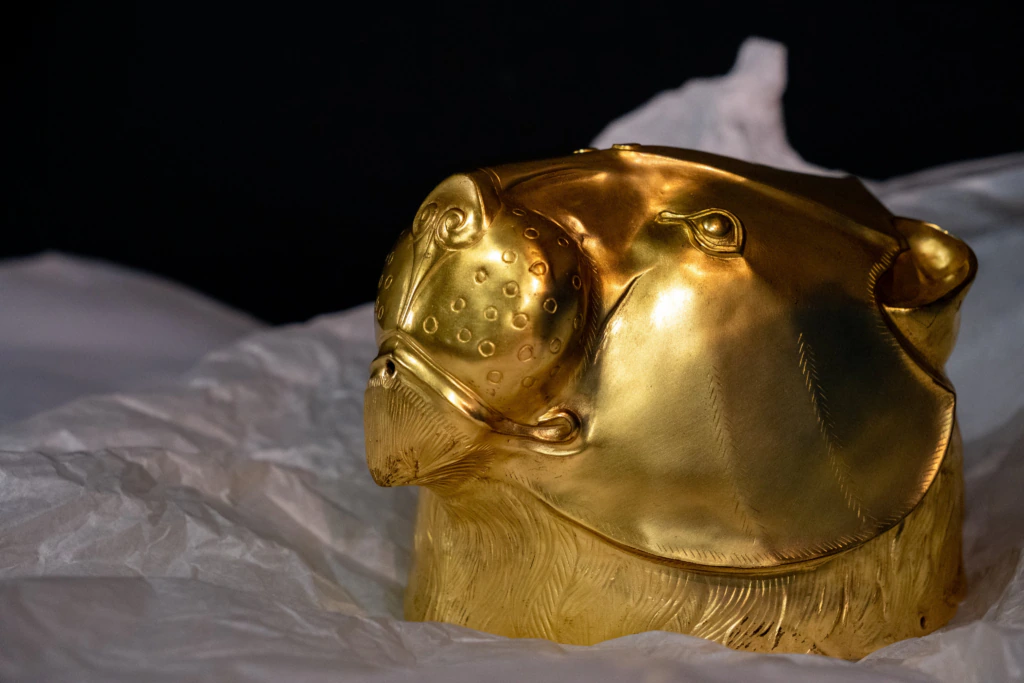
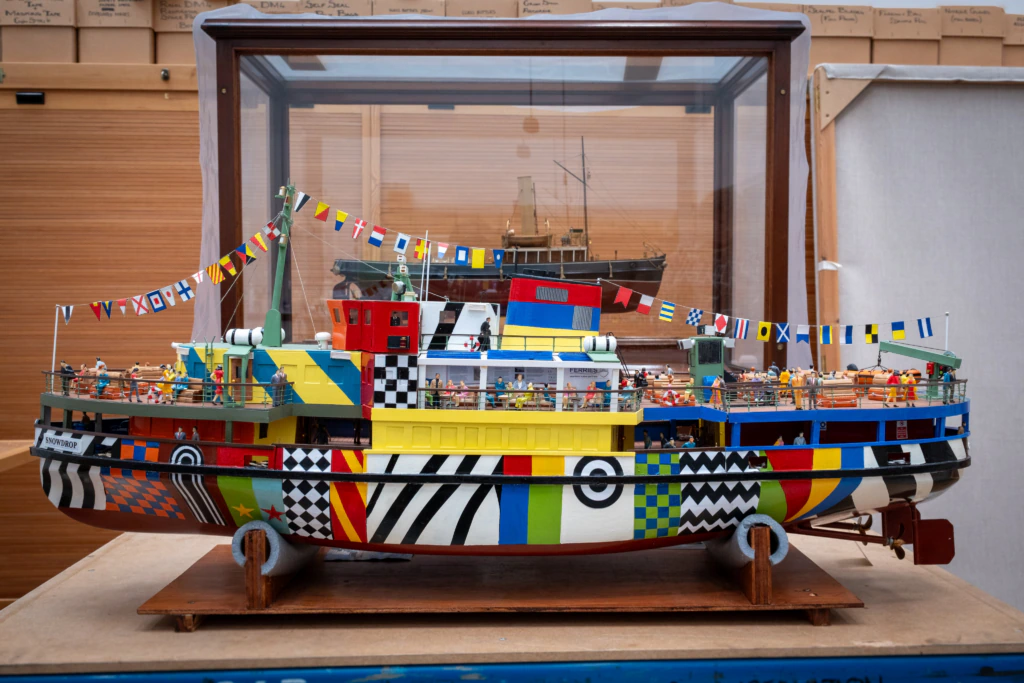
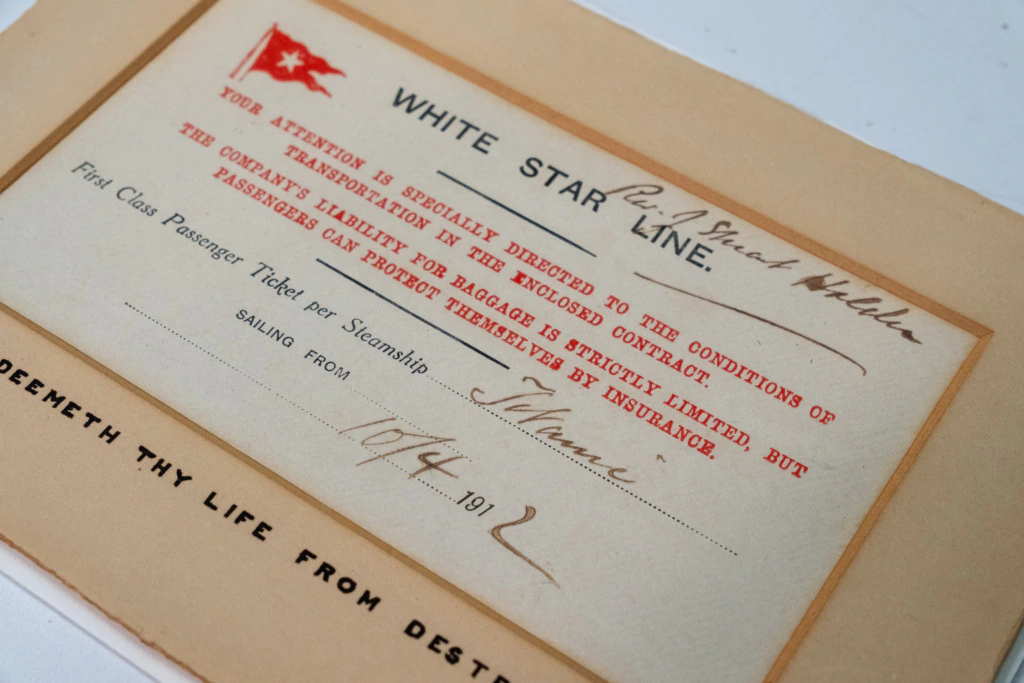
The 40 objects in the exhibition range from rare Titanic artefacts and artistic masterpieces to seemingly innocuous items that have a significant story to tell from Liverpool’s past. A 41st plinth has been left vacant for a People's Choice object, which will be selected via public vote from a shortlist of three nominated artefacts.
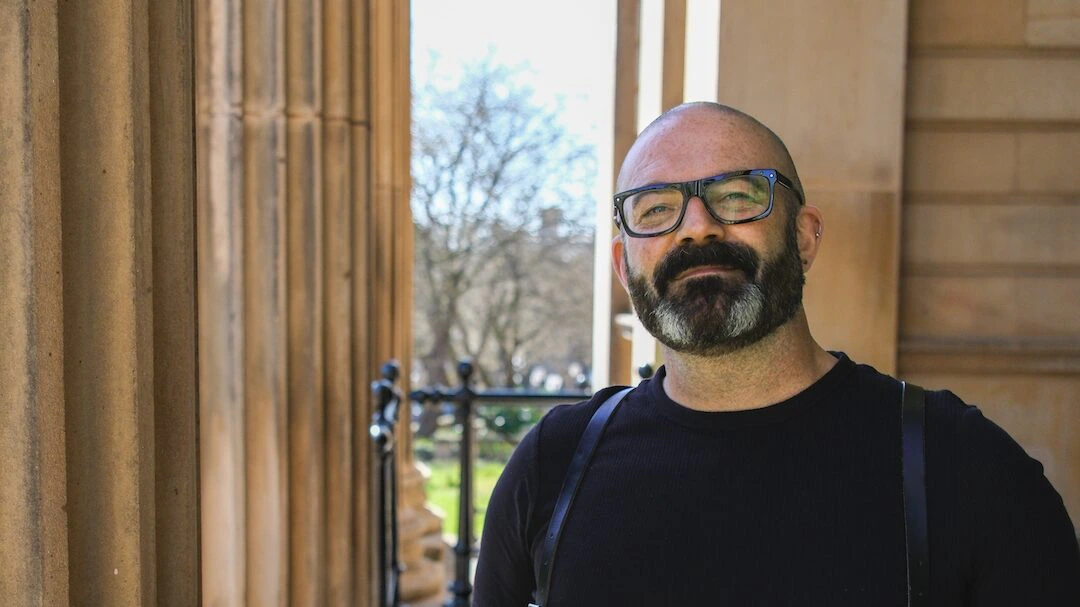
Museums Journal caught up with Joe Brook, the executive director of audiences and media at NML, to hear more about the organisation’s birthday plans, and how things have changed there since 1986.
How did NML come into being 40 years ago?
Joe Brook: Liverpool has long been home to an exceptional group of museums and galleries holding collections of national and international significance. Before 1986, these were council‑run, independent venues spread across the city, including Merseyside Maritime Museum, the Liverpool Museum (now World Museum), the Walker Art Gallery, Sudley House and the Lady Lever Art Gallery.
Advertisement
There is a story that the political turbulence of the time, and tensions between the city and central government, raised fears that Liverpool’s cultural assets might be sold off, prompting decisive action to protect them through granting the group national status.
Whatever the full circumstances, the Merseyside Museums and Galleries Order 1986 was signed by the Queen on 12 February, formally recognising that "collections of such national importance should be placed in the care of an independent body of trustees". This was enacted on 1 April the same year.
The creation of the International Slavery Museum in 1994, followed by the Museum of Liverpool in 2011, expanded the group further, bringing National Museums Liverpool to seven venues working together as a single, remarkable organisation.
What is NML doing to celebrate the anniversary this year?
We have a busy year ahead, beginning with our National Museums Liverpool at 40 exhibition, which showcases the breadth of our collections through 40 objects, alongside the stories of the people behind the scenes and how we work together as an organisation.
We have also been appointed Museum in Residence at No 10 Downing Street this year, where a selection of works from the outstanding Walker Art Gallery collection will be displayed. As part of this project, our Youth Forum will curate a reciprocal loan display from the Government Art Collection, which will be shown at the Walker next year.
Advertisement
Alongside this, we have a vibrant and wide‑ranging events programme planned, from conferences and performances to team celebrations and an 80s fancy‑dress disco!
Thanks to the support of the NML Foundation, we are also proud to be offering free school visits for groups travelling by public transport throughout the coming academic year.
How did you decide what to include in the NML at 40 exhibition?
In true National Museums Liverpool style, we chose to tear up the rule book and do something different. The exhibition is intended as a celebration of our world-class collections, who we are, the work we do, and the people behind the scenes. With more than four million objects in our care, narrowing that down to just 40 was no small task.
We began by asking our curators to create a longlist, selecting objects from their collections with only one criterion: that the object held personal meaning for them. Colleagues who have worked in the organisation for 40 years or more, our chair of the board, Andrea Nixon, our director, Laura Pye, and one of our most supportive patrons were also invited to make their own selections.
We then brought this process into our 600‑strong staff day, where colleagues worked together to refine the remaining longlist to choose their favourite.
Advertisement
The motivations behind each choice were fascinating, vividly demonstrating how objects – through the meanings they hold and the stories they carry – resonate with people in very different ways. The exhibitions team made a final adjustment to the list, ensuring the broadest possible representation of our collections, our people and the stories we tell.
Tell us more about the People’s Choice objects.
As part of the exhibition display, we will be deliberately leaving the 41st plinth empty for opening.
Over the coming months we will be asking our online and physical visitors to vote for their favourite object of three drawn from the original long list. Voting will close on Friday 4 September, with the winning object occupying pride of place for the remaining run of the show.
The first object is a group of three photographs taken in the 19th century aboard the CSS Alabama (Maritime Museum). These images show life aboard a vessel of this time and illustrate Liverpool’s connections to the American Civil War.
The Batman film poster (Museum of Liverpool) captures the city’s frequent appearance in film. In this case, the incredible architecture of our buildings doubling up as Gotham.
The final of the three objects is a Cuban Doll (International Slavery Museum) which was originally gifted to the museum and kept in one of museum’s handling collection.
Recently a freelance curator explained the importance of this object’s significance in relation to the history of transatlantic slavery and its legacies today. Its value is now properly recognised within our collection, and it reminds us of the need for continual reflection within our practice.
If someone from 1986 time-travelled to the present, what are the biggest changes they’d notice at NML?
Beyond the obvious shifts in technology and design, I see two fundamental changes.
The first is a growing commitment to enabling the agency of all voices: to speak uncomfortable truths and to create space for the full breadth of our society, in Liverpool and beyond.
Like many cities in England, Liverpool’s wealth was built in part on transatlantic slavery, and much of our collection was acquired through systems of colonial exploitation. The erasure of these brutal histories is something we are now working hard to confront openly and honestly.
This means revealing stories with integrity, championing co‑production, and placing lived experience front and centre. Museums used to be the preserve of a single, narrow perspective, but as a queer man, I know the power of seeing my own community and history reflected unapologetically, and that is something I deeply value about NML.
The second change is a physical one. The creation of the Museum of Liverpool in 2011 on the city’s historic waterfront sparked a wider process of redevelopment and renewal.
That story continues today through the reimagining of the public realm, the transformation of the International Slavery Museum and the Maritime Museum, and the creation of newly accessible spaces for reflection and the arts within the Canning Dock where slave‑trading vessels were once repaired.
What are some of NML’s proudest achievements over the past four decades?
Since 1986, National Museums Liverpool has achieved an extraordinary amount. The addition of two new venues – the International Slavery Museum in 1994 and the Museum of Liverpool in 2011 – transformed the organisation and directly contributed to welcoming around three million visitors a year on average.
National Museums and Galleries of Merseyside’s Into the Future was a landmark, multi‑sited capital project and one of the largest lottery awards made to a museum at the time, securing £31m in 1998. It delivered a major architectural redevelopment of the former Liverpool Museum (now World Museum), new galleries including an aquarium, improved visitor facilities and collection stores, alongside significant enhancements to the Walker Art Gallery and the Museum of Liverpool Life on the waterfront.
The Terracotta Warriors exhibition in 2018 was another defining moment, generating £78m for the Liverpool City Region economy and driving a record 3.9 million visits to NML in a single year. Our touring programme continues to take our globally significant collections to audiences around the world.
A sustained commitment to meaningful inclusion, reflective practice and truth‑telling has led to the development of our co‑production framework, created in partnership with the University of Leicester. This work now actively shapes our curatorial and interpretive decision‑making.
And, of course, we played a vital role in the Eurovision celebrations in Liverpool – not only hosting key events, but serving as a powerful focal point for art, performance and cultural expression for the Ukrainian community.
How about your plans for the future – where would you like to see NML in 40 years’ time?
In 2029 we will open the reimagined International Slavery Museum, Maritime Museum and Canning Dock – a transformation that will have a profound impact on the city and region, and a global resonance in how the history of transatlantic slavery is understood.
Alongside this, we have an exciting pipeline of exhibitions and new galleries planned over the coming years, supported by international research partnerships that continue to grow in strength and ambition. I know NML doesn’t like to sit on its laurels, so I have no doubt there will be another ambitious project waiting in the wings to follow the work on the Waterfront.
Not that I am biased, but the people of NML are some of the finest museum professionals in the world, and I am confident that their passion, creativity and commitment will ensure the organisation remains robust, relevant and ambitious well into the future. I hope that by 2066 our work to attract diverse audiences through honest, truthful storytelling will have made a lasting difference and helped changed society for the better.
Of course, we are acutely aware of the challenges facing our sector – from funding pressures and climate change to wider economic uncertainty – and we all have a responsibility to respond to these collectively. Even so, I have no doubt that we will continue to reflect, evolve and adapt, remaining a vital presence in the cultural life of Liverpool and far beyond.
How do you think visitor expectations of museums in general have changed since NML began?
That is a big question! My background is in museum design and interpretation, and over the past 25 years I have seen significant shifts in what we consider good practice – from improved accessibility and higher standards of interpretation to the growing importance of art, co‑production and decolonial approaches.
Today’s visitors are highly sophisticated consumers of information; they quickly judge what feels relevant and meaningful. I think this is reflected in a move towards more narrative‑driven museum environments, alongside a renewed emphasis on the physicality of objects and spaces.
I strongly welcome the shift towards museums that reflect lived experience and amplify diverse voices, as well as the commitment to uncovering histories that have been hidden or deliberately forgotten.
At the same time, our sector faces significant challenges, from financial pressures and the climate crisis to increasing global uncertainty. Museums now operate with a far greater focus on business resilience, revenue generation and self‑sufficiency.
This is a good thing, as it is vital that we protect the role museums and galleries play in helping us understand the world around us, offering perspective and clarity as we navigate the challenges of today and the future.