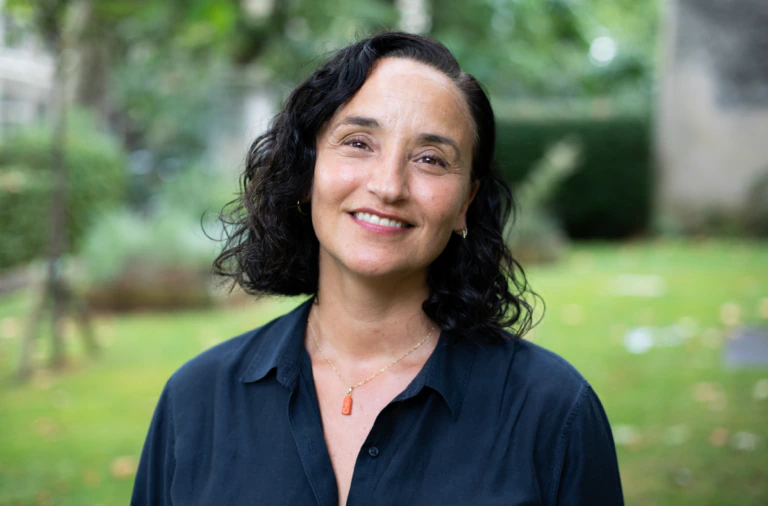
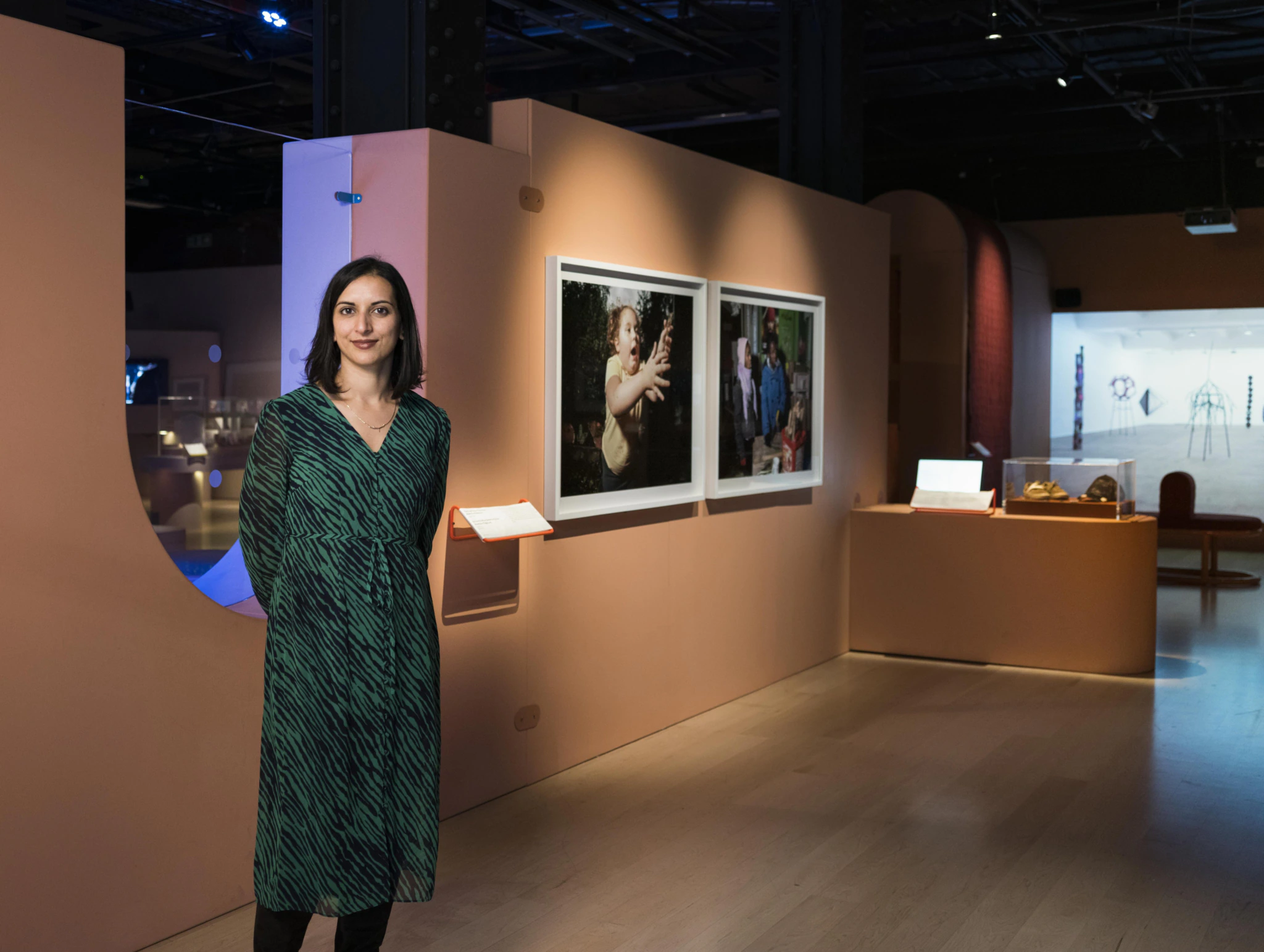
Shamita Sharmacharja is the curator of The Coming of Age, an exhibition at London’s Wellcome Collection that explores ageing through art, science and popular culture.
The exhibition, which opens on 29 March (until 29 November), features more than 120 artworks and objects.
Research and art collaborations in the exhibition show how experiences of age are shaped.
These include the Wellcome Trust-funded, Bradford-based health research project, Age of Wonder – one of the world’s largest studies of adolescence.
The exhibition also features Uncertain Futures (2019-2024), a project led by US artist Suzanne Lacy, with Manchester Art Gallery, that involved 100 women from diverse communities across the city.
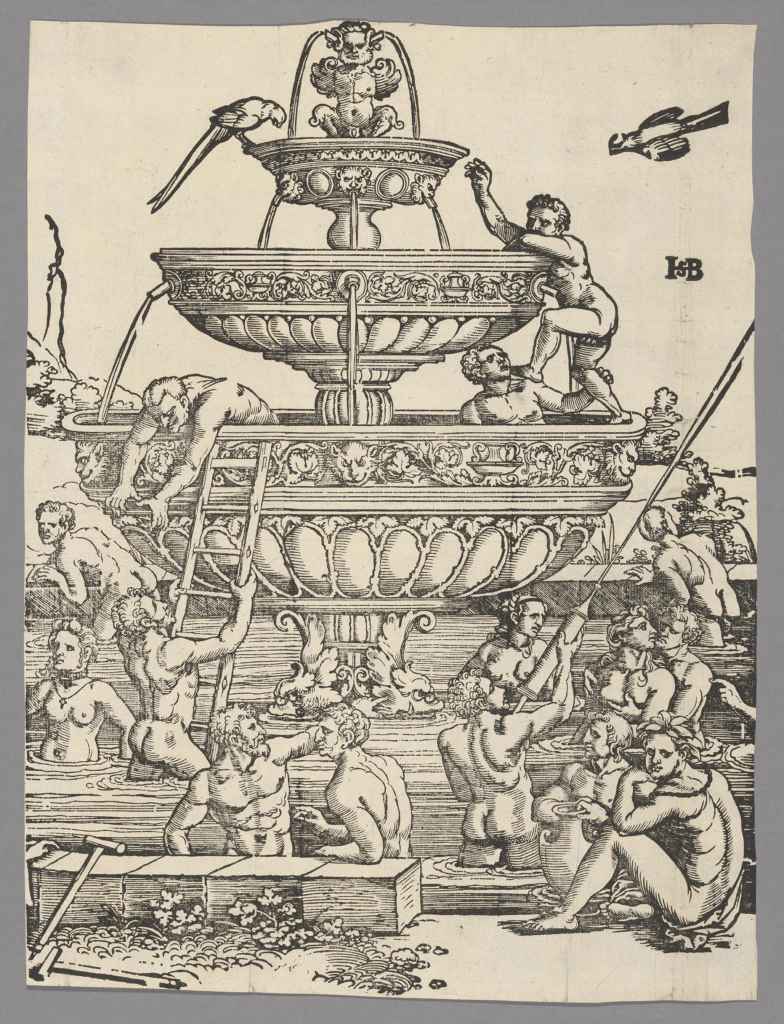
The artworks include Sebald Beham’s medieval woodcut depicting elders rejuvenated by the mythical fountain of youth (1536).
Contemporary works range from Tam Joseph’s UK School Report (1983) to Robert Mapplethorpe’s portrait of artist Louise Bourgeois when she was 70 years old.
Advertisement
Why is ageing an interesting subject for an exhibition at the Wellcome?
At Wellcome Collection, we believe that everyone’s experience of health matters. In our large thematic exhibitions, we explore subjects that are relevant and relatable to people’s lived experience, drawing on multiple disciplines and time periods. We platform under-represented health narratives in dialogue with our historic collections, and invite visitors to reflect on their own lives.
Ageing is such a powerful subject because it is universal. Whether you are eight or 88, you have lived experience of age — we are all, after all, getting older every day.
The exhibition feels particularly timely. Globally, we are living longer than ever before, yet health inequality is also at an all-time high. The show explores ageing through the lens of health equity, asking what needs to change societally for everyone to age better.
The first objects visitors encounter are a pair of exquisite sake cups, gifted to people in Japan on their 100th birthday. They were once made of pure silver, but due to Japan’s rapidly ageing population — where almost 30% of people are over 65 — they are now produced in a silver-nickel alloy.
We are showing one of each type. Together, they symbolise some of the dilemmas facing super-ageing societies in terms of value, commemoration and resource. As reaching 100 becomes increasingly common, how do we value and care for the 100-year life?
Advertisement
What key ideas is the exhibition trying to communicate to visitors?
The exhibition is really trying to open up conversations about how we understand age – socially, culturally and politically – and how those understandings shape our lived experience of ageing.
A key idea is that ageing is not an event that begins in “old age”, but a process that unfolds across our lives. Our environment, access to resources, and the opportunities and barriers we encounter along the way profoundly shape how we age. By foregrounding the idea of life course, we want to explore ageing as something that is happening all the time, to all of us — not a distant stage that only concerns older people.
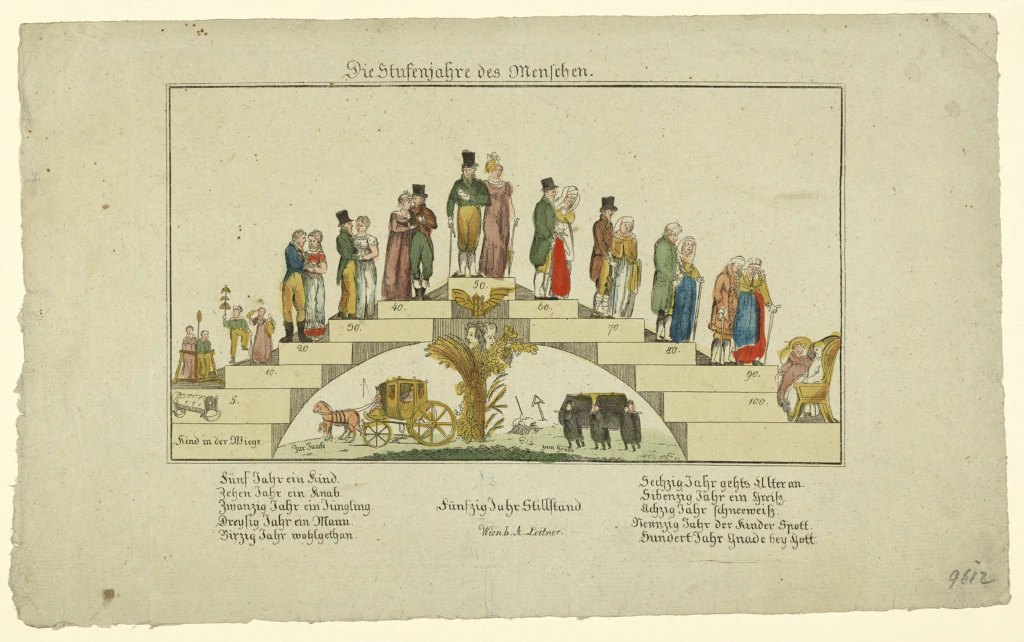
Ideas about successful ageing — centred on productivity, heterosexual marriage and independence — are exemplified by 19th-century prints from our collection that depict the “ages of man” as a stepped diagram, with decline beginning at 50.
Many, if not most, people are excluded from these narratives. By representing queer and feminist perspectives that resist these dominant norms, we challenge the idea of a single, fixed life course.
There is no universal trajectory — only individual experience shaped by the world around us. Finally, we invite visitors to consider what forms of intergenerational care and connection might enable all of us to age better.
We also explore how pervasive ageism is. The exhibition unpicks stereotypes attached to every stage of life: adolescence as a moment when identities are formed and fixed, mid-life as crisis or decline, and older age as inevitable frailty or irrelevance.
Advertisement
By placing these assumptions under scrutiny, we reveal how deeply embedded they are in institutions, popular culture and everyday thinking.
Another central strand critically examines the idea of “ageing well”. This is often framed around individual responsibility — lifestyle choices, staying youthful, remaining economically productive — so that ageing well becomes a moral imperative. We question those norms: what counts as “well”, and who gets to define it?
What research fed into the exhibition?
I’ve been incredibly fortunate to work with a wide range of organisations, researchers and artists in developing the exhibition.
We collaborated with Tower Hamlets–based arts charity Magic Me, which, for over 30 years, has brought different generations together through creative projects.
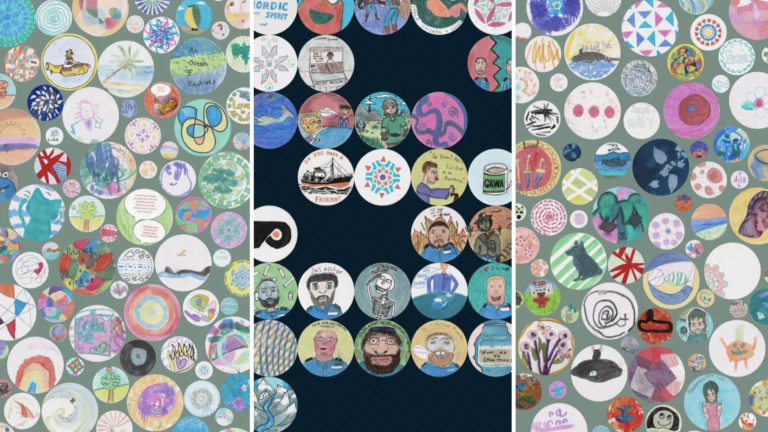
They worked with 9–10-year-old schoolchildren and local older adults to create a piece for the show exploring age and ageism in birthday cards. We also partnered with the Centre for Ageing Better, whose research into inequalities in ageing features in the exhibition.
Alongside this, we consulted experts in the fields of gerontology, geroscience, social science and economics, to name but a few, ensuring the show is grounded in current research.
We’re proud to include work by artists in residence from the Born in Bradford longitudinal health study, which has followed more than 60,000 people over the last 20 years, as well as from Age of Wonder, the world’s largest study of adolescence.
I travelled to Japan to research care and dementia initiatives and meet artists working in that context. Closer to home, I co-curated the exhibition with Wellcome Collection’s fabulous collections curator, Ruth Horry, drawing on her in depth research and knowledge on our collections. Around a third of the show comes from our collections, ranging from a previously unshown medieval woodcut of the fountain of youth to zines acquired just last year.
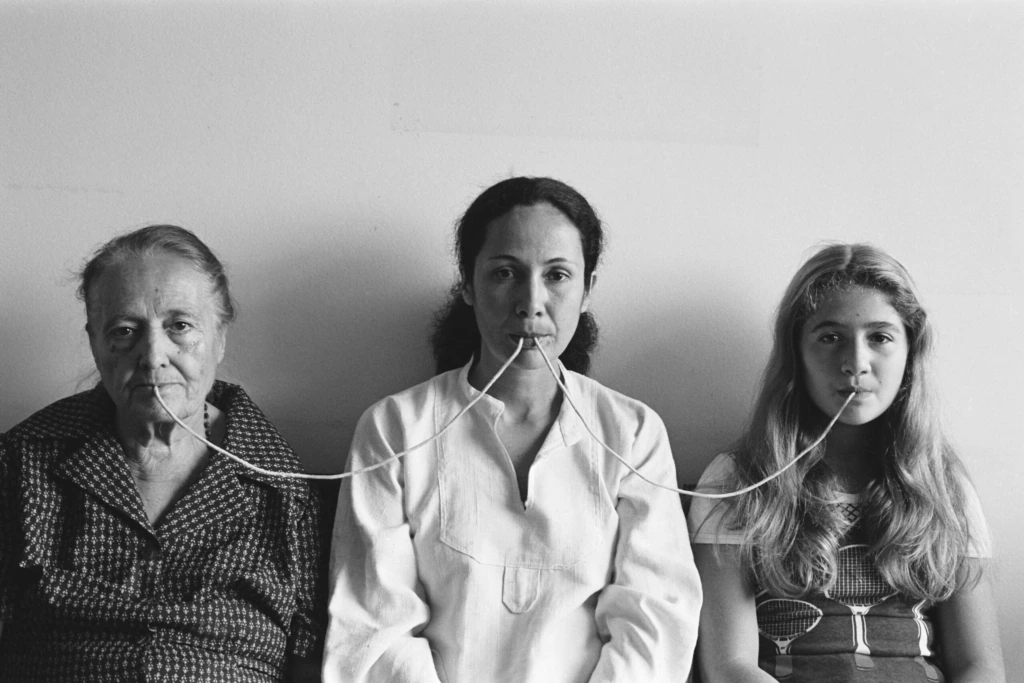
We are also featuring more than 30 contemporary artists, including Flo Brooks, Tam Joseph, Serena Korda, Suzanne Lacy, Anna Maria Maiolino and Rory Pilgrim. Coming from a contemporary art background, collaborating with such a breadth of artists has been one of the real highlights of the process.
How does the accompanying book support the exhibition?
The accompanying book, The Coming of Age: Notes on Getting Older, extends the exhibition’s themes in a more in-depth discursive way. It brings together 11 newly commissioned essays that approach ageing from a range of personal and professional perspectives.
To name a few examples – Tom Shakespeare explores the intersections of ageing and disability, while Travis Alabanza reflects on ageing from a trans perspective.
Sharon Blackie examines archetypes of older women in folklore and myth, and Vicky Spratt considers consumerism and the anti-ageing industry.
Economist Andrew J Scott asks how we might reframe longevity as a blessing rather than a burden in the twenty-first century, and Nobel Prize–winning molecular biologist Venki Ramakrishnan writes about the science of ageing.
The essays complement and expand on ideas that surface in the exhibition. Some of these themes will also be explored through the exhibition’s events programme and on our digital platforms.
What have you most enjoyed about curating the exhibition?
One of the most satisfying aspects of curating at Wellcome Collection is the opportunity to bring multiple perspectives into dialogue and see how ideas resonate across disciplines and time periods. I love placing objects in conversation with one another and watching the ideas bounce off one another in really unexpected ways.
For example, we’ve shown 19th-century “ages of man” prints alongside a 1980s version of The Game of Life board game. Both model what a successful life looks like, defined by heterosexual marriage, job status, owing property — and how it can be measured, often in financial terms.
These sit in productive tension with a contemporary Queer Creative Health zine by Meg-John Barker for QueerCircle and a series of short films by artists working with the Re.Vision Centre for Art and Social Justice in Canada, which foreground experiences of ageing that resist dominant norms.
Rather joyously, Magic Me’s intergenerational birthday card project sits alongside Jenny Joseph’s original notebook in which she composed her famous poem “Warning”. Known by its famous first line “when I am an old woman I shall wear purple”, it is a poem she wrote when she was aged 29, in which she projects and rejoices in the freedom of getting older. Playfully defiant, it is a call to break free from expectations, whatever our age.
In another section, where we deconstruct stereotypes, Serena Korda’s extraordinary ceramic installation Wild Apples reframes menopause as a powerful moment of transformation, by reclaiming the archetype of the hag or crone.
It sits alongside historic material depicting women outside patriarchal norms as witches, crones or “cat ladies”. The synergies between these works and the connections visitors draw, which oftentimes are not things I have thought of, are a few of my favourite things.
There are also artists in the exhibition I’ve long wanted to show, so working with them and their estates has been a real privilege. We’re exhibiting two rare self-portraits Paula Rego made after falling at 81; the rage in the way she depicts her bruised, swollen face is palpable, but is also an act of creative defiance.
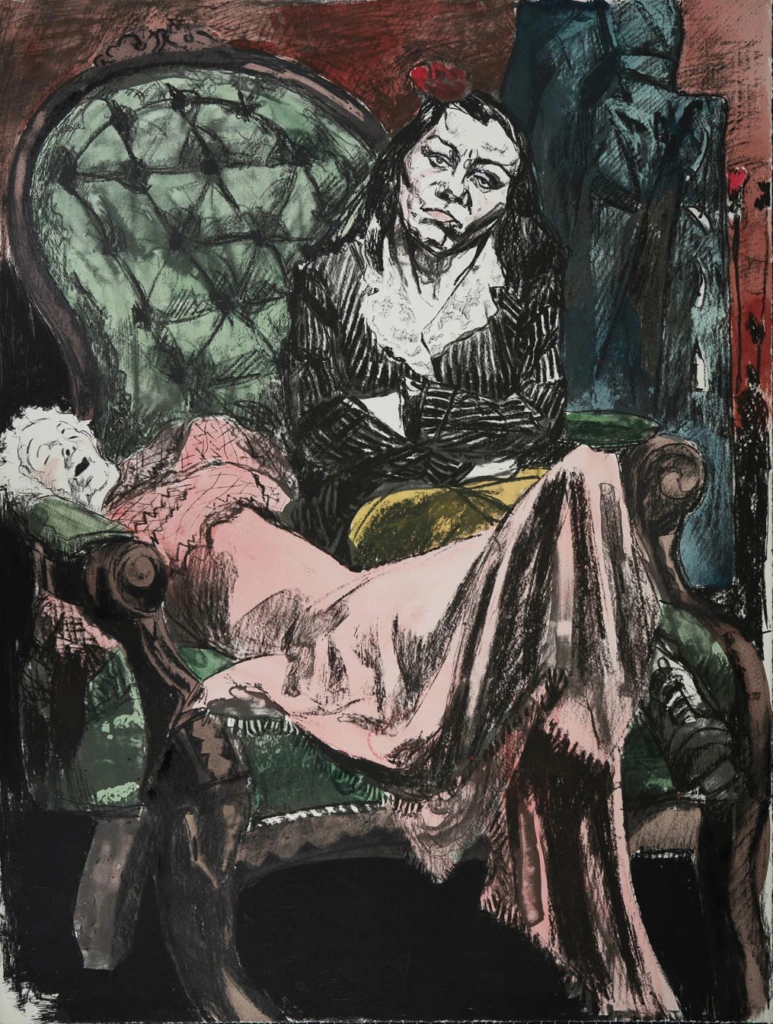
They are shown alongside photographs by Kimiko Nishimoto, who began taking self-portraits in her seventies, using Photoshop to stage herself in surreal scenarios — hanging from a washing line or drifting serenely from a tree. Nishimoto passed away last year at the age of 98. This is the first time this work has been shown in a museum outside Japan.
How have your previous roles fed into your curation of this exhibition?
I’ve been a curator at Wellcome Collection for 14 years, during which time I’ve worked on many exhibitions exploring health and human experience — from child development and play to the legacies of scientific racism and eugenics. That breadth has shaped how I approach this show: by bringing together history, lived experience and contemporary artistic practice.
My background is in contemporary art. I was previously a curator at the Whitechapel Gallery and an assistant curator on the schools programme at Tate Modern, where I developed a strong interest in participatory practice. That experience has deeply informed this exhibition, particularly in the way we’ve worked collaboratively with artists, researchers and communities.
We’re thrilled to be featuring projects such as Manchester Art Gallery’s Uncertain Futures, a five-year participatory action research project led by Suzanne Lacy with 100 women over 50 from across Manchester. Many had spent significant periods as unpaid carers, affecting their financial security and experience of ageing.
Working alongside academic researchers, the group identified barriers to employment and developed practical solutions, resulting in exhibitions, skills workshops and a manifesto that has influenced policy locally and internationally.
Projects such as this reflect a belief that museums can be active places of care — spaces where communities come together, difficult questions are explored and tangible solutions begin to take shape.
Has curating the exhibition made you think about your own life and how you have experienced ageing?
Developing the exhibition has definitely made me more aware of how pervasive ageism is — and how constantly we’re bombarded with messages about how to look, feel and stay young. I’ve found myself paying more attention to the language I use around age, and confronting the messages I’ve internalised. It’s definitely made me more discerning when choosing birthday cards!
Working on the show has given me a broader understanding of my own expectations around ageing, which has made the future feel less daunting. It’s made me realise that every stage of life is complex and messy, but also vibrant and full of possibility. I hope that visitors to the exhibition find their own connections too.