What attracted you to your role at Norfolk Museums?
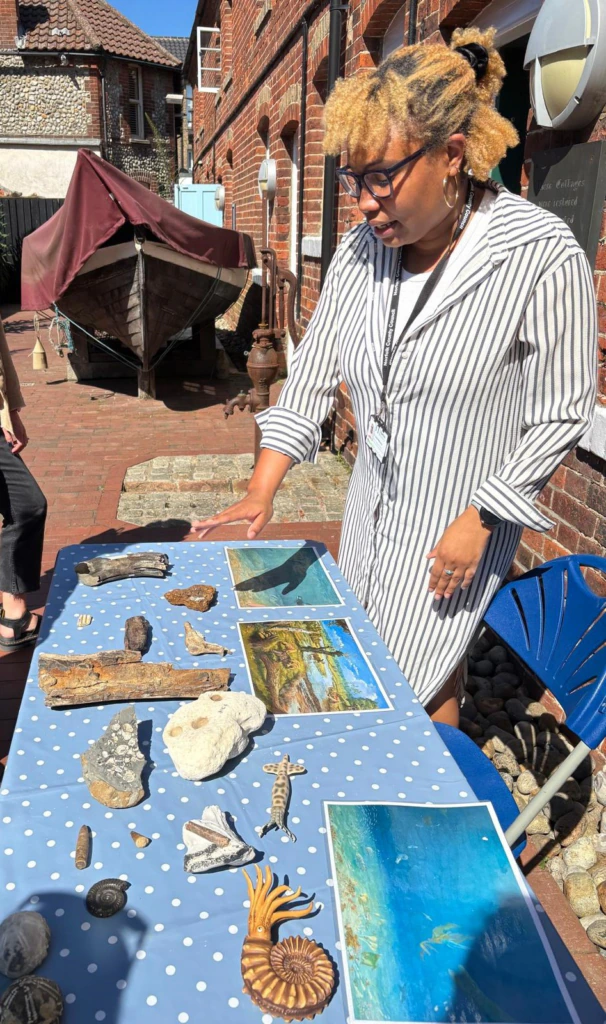
It’s the variety and that it ticks everything I’m passionate about. In part, it involves looking after the scientifically and historically important natural history and geology collections for Norfolk Museums.
I also engage with the communities most affected by coastal erosion to improve our understanding of climate change. As a researcher who uses museum collections to look at the impacts of climate change on seaweeds, mussels and oysters, I’ve always felt strongly about the coastline and how climate change affects it.
I am also passionate about science communication and engaging the public around climate change and natural history collections.
How can museums help address climate change?
People trust the information they get in a museum. We must respect that trust and reflect it in how we talk about the world. Museums are very good at telling stories that utilise many platforms and ideas to explore complex issues. They have the potential to capture the heart and imagination, so are ideal places to explore issues about climate change in inclusive ways.
Advertisement
We shouldn’t shy away from difficult conversations. That’s where museums excel, as we can have those conversations in a safe environment, through our programming, exhibitions and displays.
Another way of helping to address climate change is by offering access to our collections to researchers from all disciplines.
What role does research play in your work?
My research uses museum collections to look at the long-term impacts of ocean warming and acidification on how marine organisms build their shells and skeletons. This has led to my deep understanding of climate change, and also how to communicate to different stakeholders.
How did you become involved in the sector?
It was during my PhD, which looked at climate change’s impact on calcified seaweeds, using the Natural History Museum in London’s collections. It was my first time behind the scenes of a museum – and I realised that they are vibrant institutions where a lot of activity takes place. I knew it was where I wanted to be – whether researching collections or telling stories to the public.