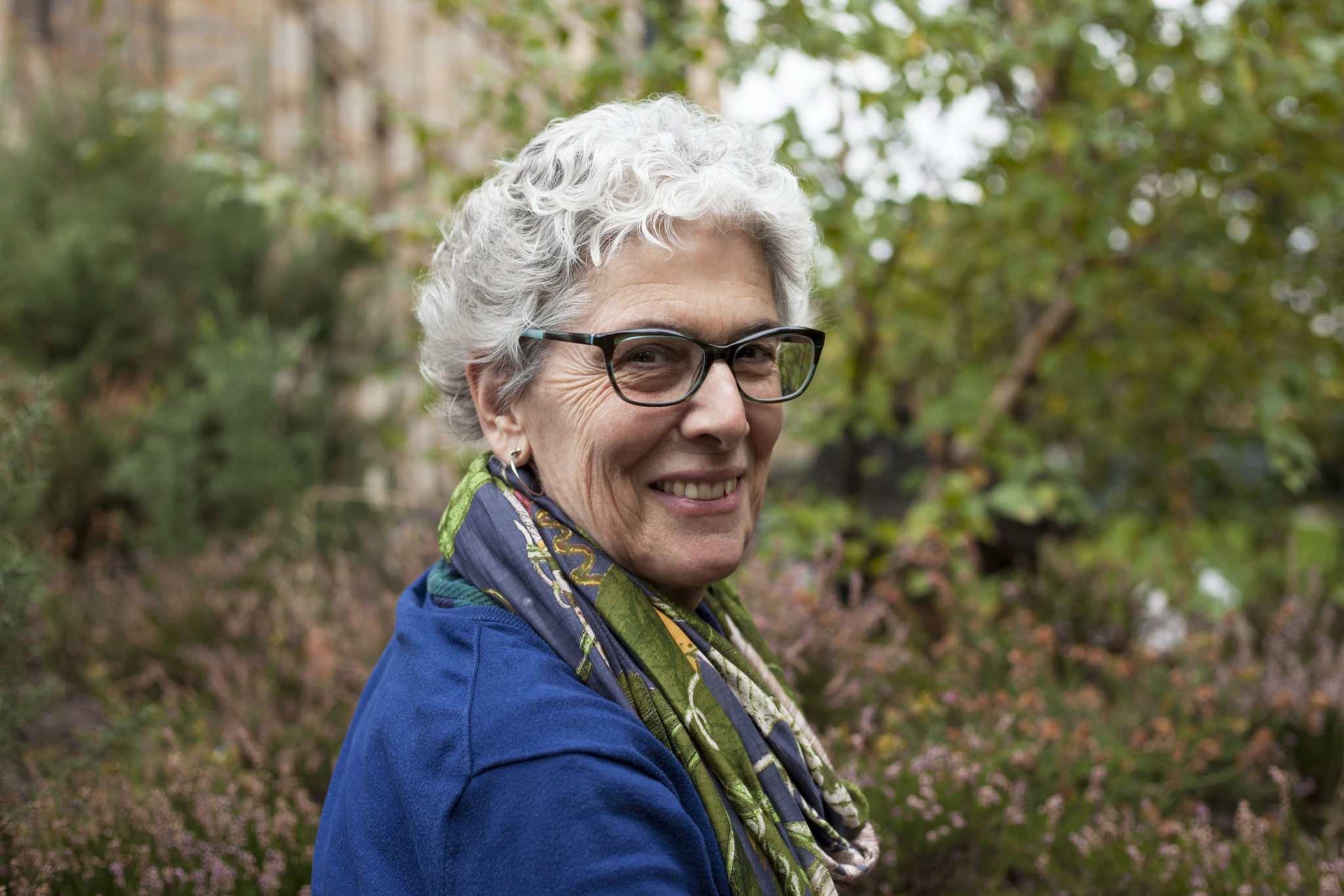
A year on from the appointment of Jessica Bradford as director of collections, the Natural History Museum (NHM) has announced it has recruited Sandra Knapp to another new role – director of research.
American-born Knapp is widely considered the leading authority on the nightshade family and, alongside her long career at the museum, has made significant contributions to biodiversity research, conservation and public engagement with science.
Museums Journal spoke to Knapp about plants, research and the climate emergency.
Tell us about your appointment as director of research and how it fits within the NHM’s wider work and environmental priorities.
It seems a truism, but without the knowledge created by the research we do, we cannot have a future where both people and planet thrive.
Research on the natural world is a central part of the museum’s mission and feeds through to all our public facing offer. My priorities as I take up this new role will be to support and enhance our research capability and to ensure that it in turn supports and enhances the museum’s mission to create advocates for the planet.
Advertisement
Our staff are all experts in one way or another, and another priority will be to ensure that this expertise is passed on to the next generation of scientists through our graduate school and scheme hosting early career fellows.
The potential and importance of collections-based research has never been greater and we now have the technological tools to help us use them to the max – from digitisation to make collections globally available to new methods in imaging and genomic sequencing.
Collections also hold information that will help with restoration of habitats, both locally and globally. Understanding the natural world begins with these objects, but research in taxonomy and systematics gives them life and meaning.
How will the forthcoming collections move impact research at NHM?
The exciting new building being constructed at Thames Valley Science Park (TVSP) to hold about a third of our collections is a real opportunity for us – with new facilities and new collections storage our research will expand in new ways.
In the short term, however, moving more than 38 million objects in total (including 28 million to Thames Valley) means different collections will be unavailable for variable periods of time both for our own researchers and for our visitors and colleagues.
Advertisement
This will require creativity and innovation – research may pivot to the digital, or to use of other collections in other institutions.
Already our researchers are coming up with innovative ways to cope with the challenge, and my job will be to help with these solutions.
You started at the museum in 1992 – tell us more about your career?
My passion for plants was sparked while studying for a Bachelor of Arts degree at Pomona College, a small liberal arts university in Claremont, California, where I took a field botany course that went to the mountains or desert every week to explore plant diversity.
I went on to do a PhD at Cornell University, initially thinking I wanted to work in the deserts of the American Southwest, but once I had experienced the tropical rainforests, there was no turning back.
I took a year out of my PhD studies to collect plants for the Missouri Botanical Garden in Panama – a real dream! After completing my PhD I worked for the Missouri Botanical Garden as a field collector in Amazonian Peru, where I had the opportunity to visit places that had not been botanically surveyed since the mid-19th century.
Advertisement
After working in Peru, I was awarded a NATO postdoc and came to the NHM to work with the botanist Chris Humphries. I did return to the US to live in Mississippi for several years, but when a position came up at the museum in London again, I came back with alacrity!
Your specialism is in plants, specifically taxonomy of the nightshade family, Solanaceae – what is it about botany that you love and think more people should be aware of?
Plants are the basis for all of life – without them we would have no air to breathe, no food to eat, no forests to enjoy. I thought I wanted to study languages when I first went to university, but once I experienced the world of botany I was hooked.
My fascination with the nightshade family has a similar trajectory – I wasn’t sure about them at the outset of my doctoral work, but going to Costa Rica and finding species of nightshades without scientific names in the dark forest understory set me going on what has been a lifelong quest.
I study the plant genus Solanum, whose members include potatoes, tomatoes and aubergines, plus a host of “minor” crops that are economically and nutritionally important in Africa, Asia and the Americas.
Plants are so important for our everyday lives, but their own lives are also so complex and interesting on their own. It often seems that plants are static, but nothing could be further from the truth.
Do you have a favourite item or collection at the NHM?
That’s a bit like asking which of your children do you love the most!
I love a tomato collection by Archibald Menzies in the Galapagos (labelled “Sandwich Isles”) in the early 19th century, and the plants that I collected in the mountains of Peru with my Peruvian colleagues.
But the thing I would rescue from the burning building is the painting on vellum of Magnolia grandiflora (the southern magnolia) by Georg Dionysius Ehret – it is a thing of luminescent beauty.
It always amazes me to think he walked every day from Chelsea to study the flower for the first time in Britain in a garden in Fulham. It reminds me that every new thing, even if well known to others, is a revelation – and there are always surprises around the corner.