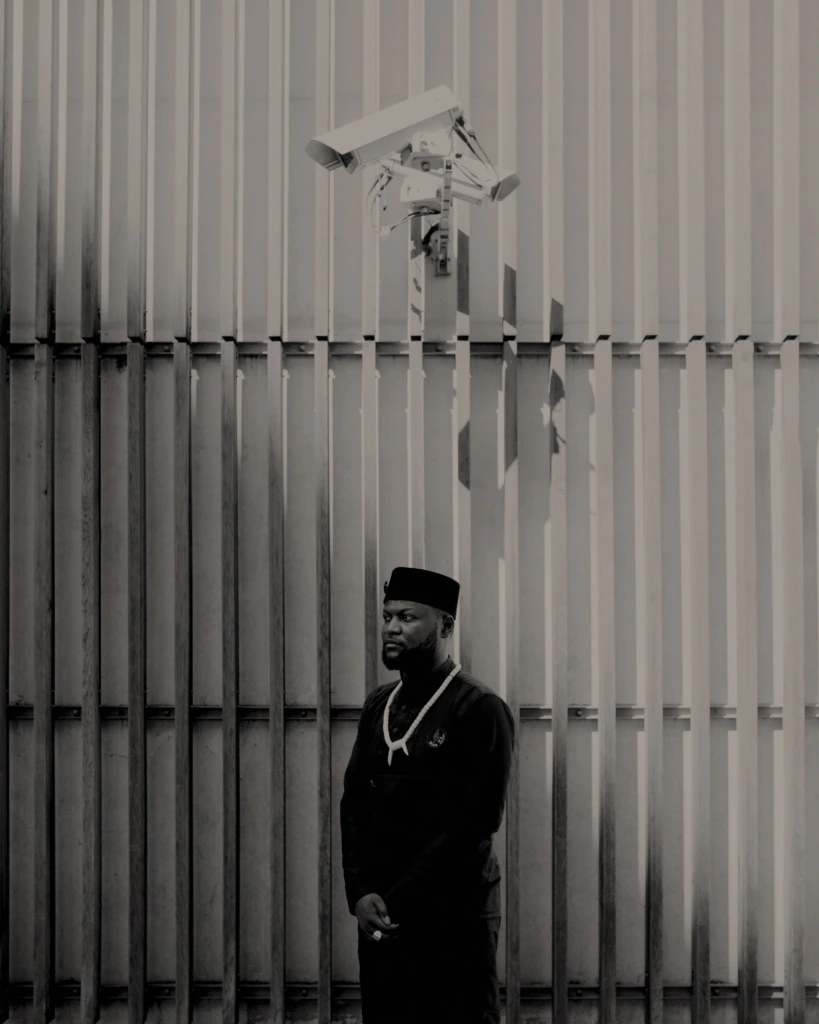
One time, on 10 September 2020, Mwazulu Diyabanza almost made it out. At the Wereldmuseum site near Nijmegen, once named the Afrika Museum, in Berg en Dal, a small Dutch village in a wooded area, he picked up a funerary object that was on display and walked out.
“I was already outside in the car,” he says with a wry smile. “We were already moving. But the problem for us was that the security guard saw what was happening and managed to shut the gates before we reached the exit.”
Four months later the Congolese-born restitution activist and four fellow protestors were in court in nearby Arnhem. They could hardly say they hadn’t done it. They had recorded the whole thing and put it on Facebook.
“We came to recuperate what is rightfully ours,” Diyabanza said in the live video of the action. “They have pillaged, humiliated, stolen.”
Diyabanza was fined €250 (£216) and given a two-month suspended prison sentence, including two years’ probation. The two women who filmed him and two men who helped him take the object out were each fined €100 and handed down one-month suspended sentences and two years’ probation.
Advertisement
All were banned from the museum for three years, though Diyabanza was allowed to have meetings with the directors of the museum to discuss the issues he was concerned about.
The judge recognised that “there was no intention of theft in my approach”, Diyabanza told Artnet News following the verdict. “This is what should logically lead to an acquittal. But [given the political pressures they are under], they [nevertheless go through] the legal acrobatics to condemn me.”
The Africa Museum announced that it “understands the motives of the activists, but disapproves of the way in which they made their statement”.
Fortunately for Diyabanza, he was not seeking their approval. This is what he does. Since 2020 he has been into museums in France, Belgium, the Netherlands, Portugal and Germany with the same modus operandi.
He, along with fellow activists in a pan-African, transnational movement called Yanka Nku (Unity, Dignity and Courage), enter museums in Europe where there are African artefacts that have been improperly acquired, picks them up and then walks out with them.
Or at least as far as he can get before he is apprehended by security. In fact, Berg en Dal has been the furthest he has ever got.
Advertisement
He calls it active diplomacy. “That means to act without waiting for authorisation or permission from those we believe to be in the wrong,” he tells me. “And in the cases of the exhibitions those who are in the wrong are the thieves and those in receipt of stolen goods. We don’t have to ask for permission.”
We are sitting in a cafe opposite the Chateau Rouge metro, not far from Sacré Cœur in the heart of a bustling Black Paris. Tall, bearded with raffish good looks, Diyabanza, who came to France in 1997 when he was 17, is also a small businessman.
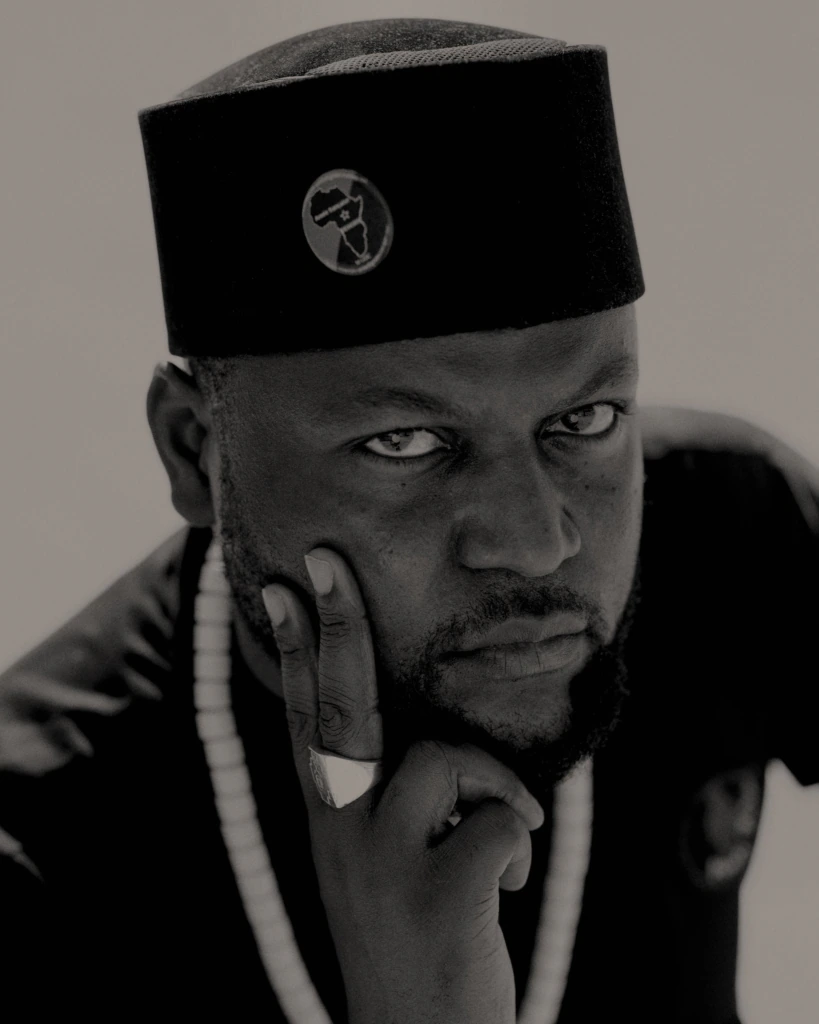
Next door is his small store selling hair care products and phone accessories – nearby is his hair salon. Often seen in a beret, cocked to one side, military style, and a dashiki trouser combo in bold colours, he cuts an occasionally distracted but nonetheless rather regal figure.
Political roots
A descendant of Ntumba Mvemba, one of the royal families that founded the Kingdom of Kongo in 1390, he is the great-grandson of the governor of Mpangu, second-in-line to the throne and a leader of one of the 12 provinces of the Kingdom of Kongo.
With a revolutionary for a father and a mother who raised him on stories of Patrice Lumumba, the politician who led Congo
to liberation only to be murdered by the Belgians with CIA collusion, he was always politically active. But as he settled in France, the focus of Diyabanza’s pan-Africanist politics shifted to issues relating to colonial legacies in the metropole.
Advertisement
“Initially, we were in the anti-racist movement and the movements against the military presence of France in Africa and the French-backed currency in francophone Africa,” he says.
“As a movement, we set out a manifesto for Pan-African engagement and one of the key elements of that was reparations. But there is a stage in that process that precedes reparations, which is restitution. You have to return what has been stolen.”
In 2020, as the issues of systemic and institutional racism burst onto the streets and the global political stage following the police murder of George Floyd in Minneapolis in the US, Diyabanza, with the active support of his colleagues in Yanka Nku, started their campaign of “active diplomacy”.
Diyabanza insists the restitution campaign was not inspired by Black Lives Matter even if it did complement it. While the relationship between the two may not have been causal, it was certainly contextual.
Less than a month after Floyd was murdered, Diyabanza and his fellow activists went into Paris’s Musée du Quai Branly – Jacques Chirac, which contains exhibits formerly displayed at the National Museum of African and Oceanic Arts, and is home to roughly 70,000 artefacts from sub-Saharan Africa.
They picked up a 19th-century funeral post that belonged to the Bari people of Chad, shouting: “We’re taking it home.” And were promptly arrested.
Diyabanza went to prison for three days (“I’ve been to prison several times,” he shrugs, “It’s no big deal.”) and was fined €1,000 for “attempted theft”.
A month later he was arrested in Marseille, after trying to take an ivory spear out of the Museum of African, Oceanian and Native American Art, but did not face prosecution.
To describe these acts as criminal is literally true and only partially relevant. For they are political acts clearly and explicitly curated to highlight bigger, more pervasive and sinister crime in which so many museums are implicated.
Diyabanza is not shoplifting. His actions are a clear and calculated act of civil disobedience, executed for maximum political impact without engaging in violence or damaging property. Apart from a slight tussle at Berg en Dal, he says the actions have resulted in no physical altercation and, he says, nothing in the museums has been broken.
Man of direct action
“We choose the artefact beforehand,” Diyabanza explains. “It has to be something accessible that we can actually take because we don’t want to break things. We use peaceful and legitimate force.”
He’s not even sneaking out of the building with the artefact under his arm. The aim, in a sense, is to get caught.
It is hardly surprising that the Wereldmuseum did not approve of Diyabanza’s actions. How could it?
But just as the Colston statue in Bristol only came down after decades of legal lobbying had proved unsuccessful, so direct action of this nature can at times force a crisis and sense of urgency in a way that other efforts cannot.
In the words of the 19th-century US philosopher Henry David Thoreau: “In an unjust society the only place for a just man is prison.”