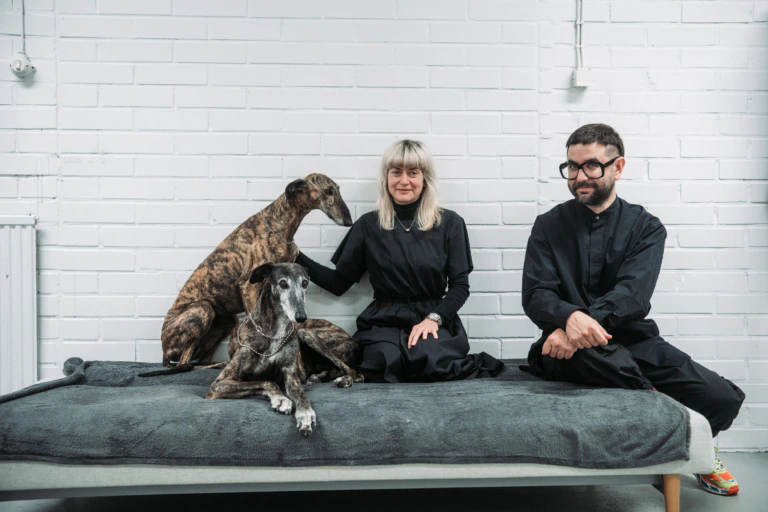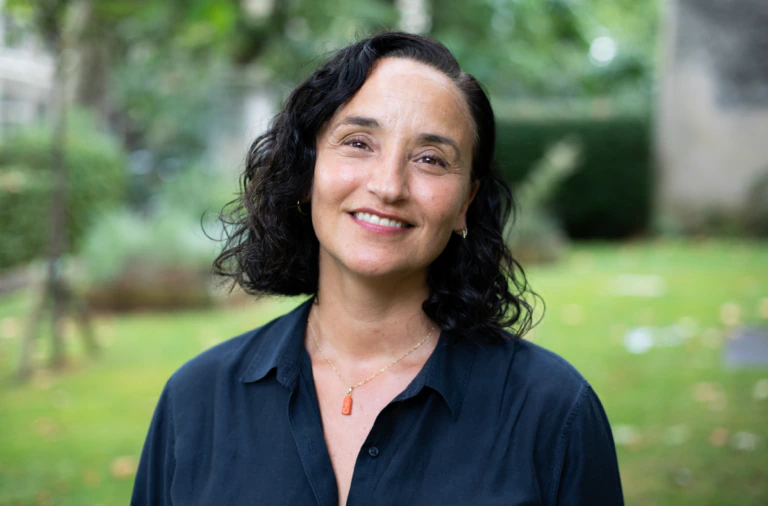
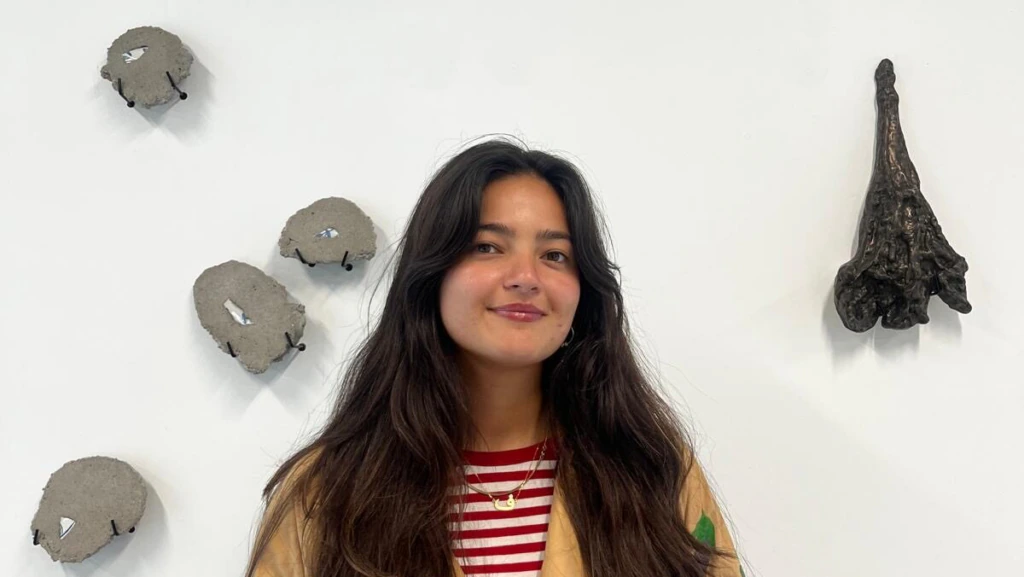
Farah Dailami, assistant curator at the Hepworth Wakefield, was one of the curators of Ronald Moody: Sculpting Life. This exhibition at Hepworth Wakefield won both awards in the Association for Art History's 2025 Curatorial Prizes for exhibitions and for curatorial writing/publications.
This is the first time that the two prizes were awarded to curators for the same project. Dailami curated the show alongside artist and archivist Ego Ahaiwe Sowinski, and Eleanor Clayton, the head of collection and exhibitions at Hepworth Wakefield.
The AAH curatorial prizes are selected by a panel of sector professionals, including Tate director Maria Balshaw, artist Pio Abad, Art Fund chair Sandy Nairne and Luke Syson, the director of the Fitzwilliam Museum in Cambridge.
The selectors rewarded the Moody project for its presentation of the Jamaican-born artist’s work, and how it served as an important corrective within art history that rightly placed him alongside other great 20th-century sculptors in Europe and the US.
Can you tell us about the research that went into the Ronald Moody exhibition?
Farah Dailami: The exhibition co-curator and Ronald Moody specialist Ego Ahaiwe Sowinski had been already working on the research for the Moody book for many years during her doctoral research with Tate and the Ronald Moody Trust. Eleanor Clayton, the head of collection and exhibitions at the Hepworth Wakefield, began to research Moody after that gallery acquired three of his sculptures in 2021.
Advertisement
What was your approach to the installation?
Ego Ahaiwe Sowinski has described wanting to “move beyond the dominant, accepted narrative that grounds Moody as forgotten, invisible and marginalised”.
The exhibition approach focused on his art practice and artistic exploration by bringing together a range of his work from large-scale figurative wood sculptures from the 1930s through to postwar experimentation with concrete and resin casting, as well as his poetry and editorial work.
The exhibition aimed to highlight his impact and contribution to the landscape of British art by displaying Moody among his contemporaries. This included Barbara Hepworth and Henry Moore, as well as artists he exhibited alongside such as Eileen Agar and his friend Jacob Epstein.
There was a whole room dedicated to the group known as the Caribbean Artists Movement of which Moody was a founding member. This included work by Althea McNish, Aubrey Williams and Paul Dash.
A further important aspect in the exhibition was showing the relevance and importance of Moody’s work to British sculpture and artists working today. To highlight this, artist Kedisha Coakley was commissioned to create a sculpture installation inspired by Moody’s 1949 radio broadcast, which was displayed alongside his work.
Advertisement
How did the accompanying publication support the exhibition?
As the first ever monograph of the artist, the publication enhanced the exhibition by deepening intellectual engagement with Moody’s work, for example publishing his previously unpublished writing and poetry.
Research for the publication and for the exhibition went hand in hand. The information, records and photographs uncovered during visits to the Ronald Moody Trust’s archives and Tate Archive served as contextual information or illustration for the publication but culminated in creating detailed archival displays and a comprehensive biographical timeline of the artist, as well as informing the thematic sections of the exhibition.
The publication and exhibition drew on research from Cynthia Moody’s archive [Ronald Moody was Cynthia's uncle], which ultimately led to the Hepworth Wakefield to acquire a large gift of 18 Moody sculptures and Cynthia's entire archive. Supported by the Ronald Moody Trust and Art Fund, the Hepworth Wakefield has recruited Coakley as a collection assistant to digitise this archive and to help the gallery become a centre for study on Moody.
How was the exhibition received by the public?
More than 31,680 visitors attended the exhibition, which ran from 21 June until 3 November 2024. It was popular among staff and visitors, and the Hepworth Wakefield received lots of positive feedback.
This major retrospective of Moody’s life and work, which brought together artworks from major public collections in the UK, was a triumph and has helped to re-establish Moody’s place within the story of 20th-century art history.