Open Eye Gallery, one of the UK's first dedicated photography galleries, is opening a new exhibition, Firehawks, exploring the subject of firesetting.
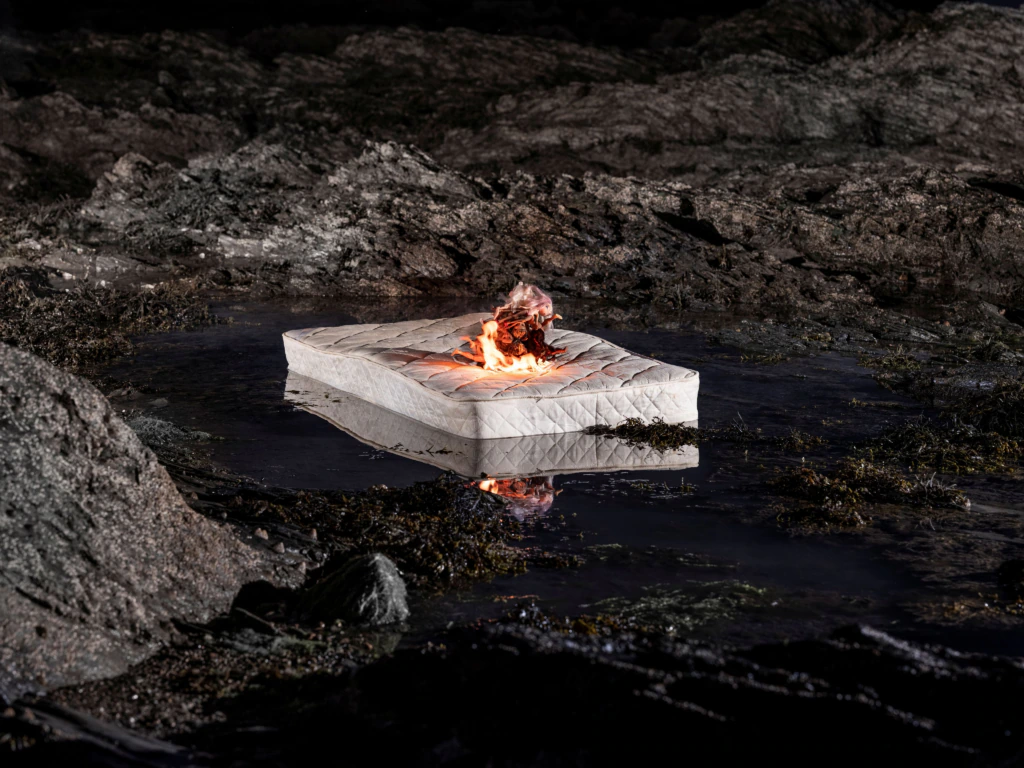
Photographs by the Liverpool-based photographer Stephen King raise awareness about firesetting, a potentially dangerous behaviour often exhibited by children, and reflect his own experiences of the behaviour.
Made in collaboration with local fire services, psychologists and experts, Firehawks is representative of the Liverpool gallery’s emphasis on collaboration and social practice.
Museums Journal spoke to Elizabeth Wewiora, the Open Eye Gallery’s head of social practice, about the importance of her role and how it guides the organisation’s programming.
How did Firehawks come about?
We worked with the photographer Stephen King on a previous project called Culture Shifts in 2016, which was one of the gallery’s first pushes to start working in a more socially engaged way.
Advertisement
He approached us in 2021 with the Firehawks concept and explained that he was at a time in his life when memories from his childhood were resurfacing, including his previous relationship with and history of firesetting.
He felt passionate about revisiting that history and wanted to make initial imagery about his experiences. It was always with a view to then broadening that out to more collective and collaborative stories, which is often how he works.
We started to think about how we could work with other people collectively and collaboratively to explore other stories about firesetting.
Can you describe the project?
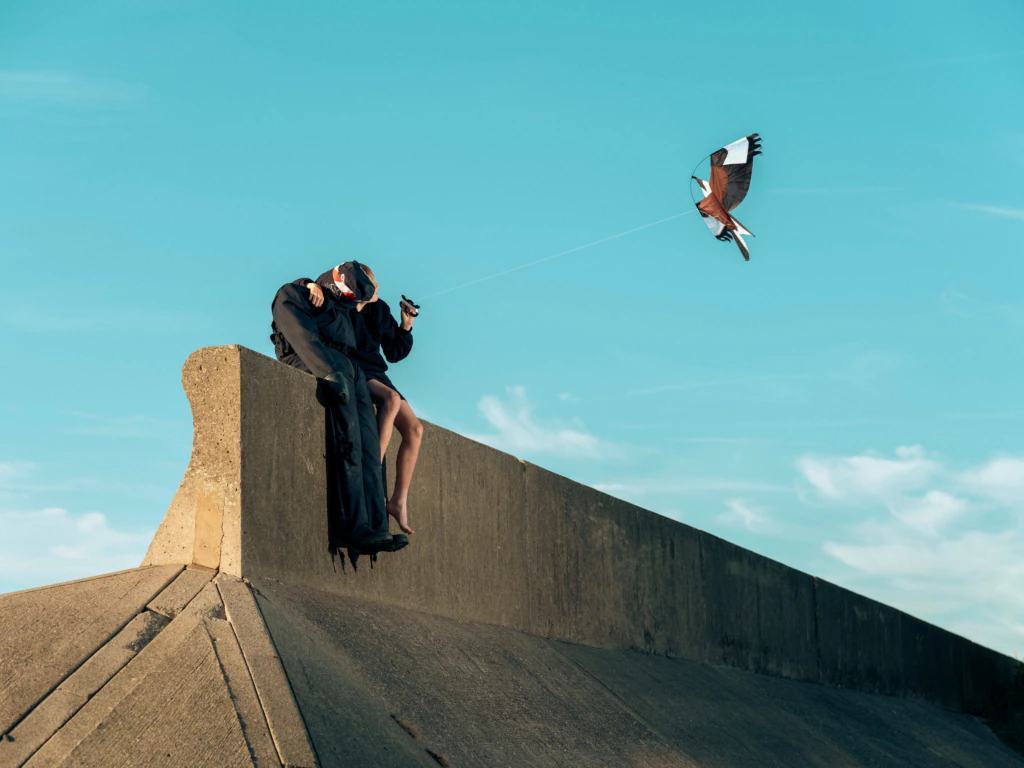
The gallery is split up into two spaces for the exhibition, one of which introduces the concept of the firehawk, an Australian bird that positions and sets fires in a strategic way, and the other looks at the actual therapeutic processes used by mental health and fire services to help young people understand the thought processes behind setting fires.
Advertisement
Stephen started the exhibition looking at firesetting from his own experience, but he was aware that he was not an expert on the subject matter, which is a sensitive and difficult one.
He reached out to Joanna Foster from fabtic, an organisation which specifically focuses on supporting children who set fires, as well as the Northumberland and Merseyside Fire and Rescue Services and psychologists.
He wanted to gain expertise from experts and also develop contacts with young people and adults with experience of firesetting to help him shape the project.
Since 2021, Stephen has worked in partnership with both the London Fire Brigade Firesetting Intervention Scheme and those who have set fires recently to reanimate and retell stories visually, which often the young people find very difficult or cannot put into words.
What is the history of Open Eye Gallery?
It started as an initiative by local photographers who were keen to see more locally northern-rooted documentary photography. Quite a lot of the work we would show was about true, real, working-class lives.
Advertisement
When our current director Sarah Fisher joined in 2015, the gallery had become more used to doing big international shows, but these can remove you from the reality of your locality and the relevance of your local audiences and regional photographers.
If we are a publicly funded photography gallery, we need to be an inclusive space and for Sarah it was important to think about understanding how people use and relate to photography today.
We take pictures on our phones and see imagery on social media every day, so our relationship to photography is changing.
We wanted to show the power of professional photographers within local communities to explore important issues together and really engage with it as a medium, not just something we scroll past every five seconds.
When Sarah joined, she knew that socially engaged approaches would be key to how we worked, and we’ve been able to take a national lead on that.
We set up the Socially Engaged Photography Network in 2019 to develop this practice, and it now has over 500 members and 25 organisational partners.
Everything we programme is co-authored and co-curated in some way and we think the weight of collective voices behind exhibitions leads to developing real momentum behind the issues concerned. That’s the spirit and ethos of Open Eye Gallery.
What does your role as head of social practice entail?
I started as a creative producer in 2016, but as Sarah was thinking more about the importance of social practice to the gallery, my role changed to mirror that. I still deliver commissions and project manage – all the things you’d expect a producer to do – but it’s more of a strategic and learning role.
I think about how, as an organisation, we can collectively encourage more socially driven approaches to our work and more ethical ways to practice.
I also run the Socially Engaged Photography Network and coordinate our MA in Socially Engaged Photography with Salford University.
I think about how we’re pulling both informal and formal learning around social practice across these different contexts.
What is the importance of having a role like yours in an arts institution?
I’d love to see more roles like mine widespread within contemporary galleries and bigger, white cube space institutions, because it’s such an important way of thinking about the way you run an organisation.
Some of the roles like mine can get ring-fenced into learning or engagement departments and only have their say after a show is curated. My role turns that on its head and starts with the social practice model, letting that dictate the way we might programme exhibitions and run projects.
Social practice has to be central to an institution, rather than an add on, because otherwise it will only ever continue to pay a kind of lip service for audiences and participants.
What does the future hold for Open Eye Gallery?
In 2027 we’ll be turning 50, which is a wonderful opportunity to reflect on past programmes, and what has led us to the gallery we are now.
We will also revisit the way we have been sharing our photographic archive and reimagine what an archive can be with new communities.
We also wanted to look to the future, and the next 50 years, so I think it will have quite a future-facing, positive angle to it. I can’t announce too much yet but it’s really exciting.
Firehawks opens on 26 September and runs until 16 November 2025