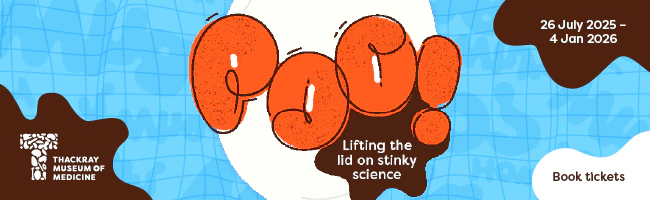
Pegged as a family-friendly exhibition exploring the science behind going to the loo, POO! opens at the Thackray Museum of Medicine in Leeds on 26 July and runs until 4 January 2026.
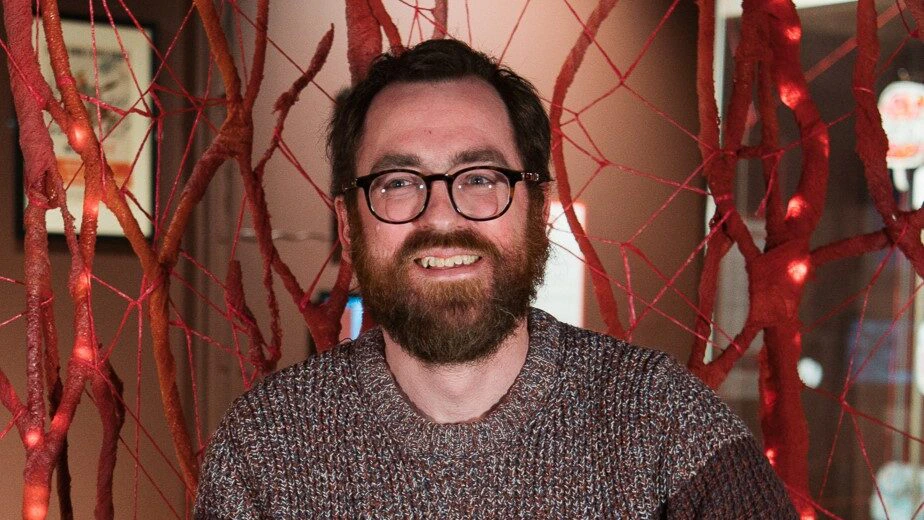
Ahead of its opening, Museums Journal flushed out curator Jack (or should that be John?) Gann to get to the bottom of the museum's child-focused approach to developing the show.
How did the exhibition come about?
Jack Gann: We run two temporary exhibitions a year, and recent audience research – into who they are and what they want from us – has really crystallised the position that the one that opens in the summer should be family-led and child focused.
We wanted to do something that was fun and silly for kids to enjoy but also linked to a topical area of public health.
Advertisement
Then a report came out that found that childhood constipation has gone up 60% in the past decade, partly because of food poverty but also because children don't feel comfortable talking about this kind of stuff.
So of all the possible things we were talking about doing for a kids summer exhibition, we knew it had to be something about poo.
How did you work with children to develop the content?
Our normal approach to developing an exhibition is to set some research questions and go from there. But this was supposed to be for kids so we had to find out what they wanted to know.
We ran a series of workshops with Harehills Primary School to get pupils talking about poo, and the questions they had became our research questions.
We included fun activities to make the workshops engaging – for example, we had the children reinterpret the Bristol Stool Chart by making a lot of plasticine poos and talking about how they would describe the different types in their own words.
Advertisement
We realised this was great content that we could use in the exhibition, so we’ve turned their work into a more colourfully descriptive version of the stool chart. They came up with some amazing similes – everyone thought the sloppy poo was like Dubai chocolate.
And that was great because while there are some things I can write to be on a kid’s level, there are also cultural reference points like that which I haven’t necessarily heard of.
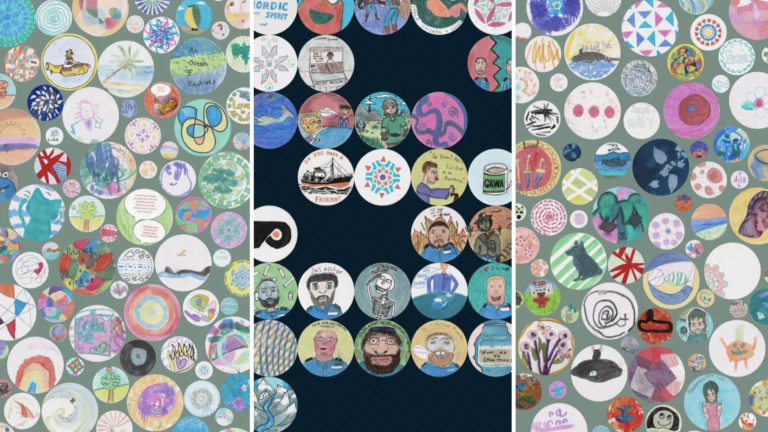
We also knew we wanted little cartoon characters to guide people around the exhibition, but we didn’t want to get an adult designer to come up with something. So we’ve been running drop-in activities in the museum to design what we call ‘poodles’ and several will make an appearance in the final exhibition.
How have you used your collection to tell the story of poo?
The history of medicine is dominated by just trying to get bad things out of your body, including things to make you throw up and things to make you go to the toilet – like Bile Beans, a laxative that was massively popular in Leeds and Yorkshire in the early 20th-century.
There were lots of obvious connections with the collection, but in a way that was a bit too easy.
Advertisement
The kids we worked with made some slightly more left-field connections. One of my favourite questions they asked was ‘why does poo smell?’ – the answer is essentially that a foul-smelling chemical called skatole is released by bacteria in your gut during digestion.
But skatole is also the chemical component that makes jasmine and orange blossom and lots of other perfume-y smells.
So I thought, as well as having some nasty smells in the exhibition, maybe we can also talk about the mechanics of how something can smell foul in one circumstance and not in another.
Looking through our collection, I found anointing oil that is used at royal coronations, which happens to contain jasmine and orange blossom – which meant we got to use an unexpected object in the exhibition and I got to write a label that asks ‘does the king smell of poo?’.
How did you approach the design of the exhibition?
The exhibition gallery has been crafted to look like a medical lab but we’ve played a little fast and loose in places with how realistic it is.
We’ve displayed some of those more sort of idiosyncratic questions that children asked, like ‘does poo go mouldy?’ on toilet seats – so people will literally lift the lid to find the answers from experts such as microbiologists and historians.
We worked with Manchester firm Instruct Studios who do bright, colourful, child-friendly work that includes lots of “doing” elements, including plenty of things to smell.
Another question the children asked was ‘what did T-rex poo smell like?’. Apparently, very similar to hyena poo, as they also eat a mix of fresh and scavenged meat. It's a bit rotten – not a good smell – but we asked Aroma Prime, who make our smells, to create a ‘T-rex’ poo smell for this exhibition.
What do you think children will be most fascinated by?
I imagine kids will gravitate towards the giant human poo preserved in a resin sphere that will be spotlit in the middle of the exhibition. It’s on loan from the National Poo Museum on the Isle of Wight.
One of the things that I always like about the perceived authority of the museum is that you can put stuff in a glass case and make it seem important.
That’s the type of juxtaposition that I enjoy messing around with, and I think kids will get it as a joke in and of itself but also find the actual poo weird and fascinating.
Finally, how is the museum's new 'choose your own price' ticket policy going?
Really well. Our previous price of £12 has been reframed as a kind of recommended price and we now have a lower cost ticket of £9, no questions asked. People can also choose a pay-it-forward ticket of £16.
As well as supporting more people to come, this model is helping to reframe people’s understanding of who we are as an organisation and the wider work we do.
POO! runs from 26 July 2025 to 4 January 2026 and is free to Museums Association members