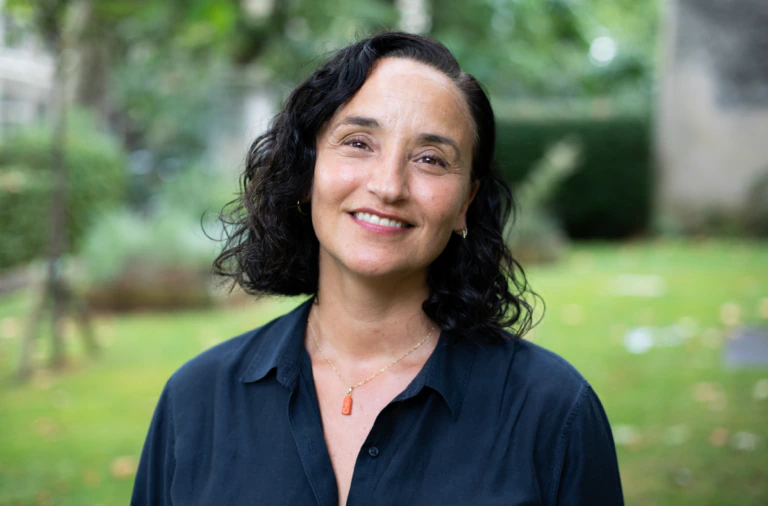
Sigrid Kirk, a New Zealand-born art strategist with an MA in art history, is the co-founder of the Association of Women in the Arts (AWITA).
The organisation is holding on a half-day conference on 7 July that will explore intersectional feminist leadership in the visual arts.
The event brings together artists, curators, strategists and arts leaders to reimagine inclusive, purpose-led leadership in the cultural sector. Build Your Own Artworld 2025 is taking places at the Warburg Institute, London.
In what ways are institutions rethinking leadership and organisational culture post-pandemic?
Sigrid Kirk: The pandemic exposed what kind of leadership could genuinely hold space and who listened, who adapted, who cared. Since then, we’ve seen a quiet but determined shift away from rigid hierarchies and toward care-informed, collaborative models. AWITA’s Hardwiring Change survey – based on responses from over 2,000 women in the art workforce – revealed how stark the imbalance remains: just 8.7% of respondents in large institutions reported women in most senior roles, compared to nearly half in micro-organisations. That discrepancy speaks to the deeper structural issues at play.
At Build Your Own Artworld, we’re not only highlighting leaders like Melanie Pocock who are practising flatter, values-led leadership but we’re asking questions, as Koyo Kouoh in her conference keynote speech for us in 2024 posited what kind of body could the museum be – “reflexive, generative, alive”. Institutions are beginning to see themselves not as fixed monoliths, but as evolving ecosystems. And that’s where the change begins.
Advertisement
What role does emotional literacy have in leadership in the arts?
Emotional literacy is often dismissed as a soft skill, but it’s absolutely strategic. It’s the ability to read a room, navigate complex dynamics, and foster trust across difference. In a field shaped by nuance, narrative and collaboration, emotionally literate leadership is what sustains the networks and relationships that hold the arts ecology together.
We have been working closely with Adele Patrick, founder of Glasgow Women’s Library to integrate the principles of emotional literacy through the lens of relational dynamics into the programme. In an open session, she will examine how our core qualities as individuals can be both a strength and, when unchecked, a source of friction.
This isn’t about softening leadership, it’s about strengthening it. Leaders who understand their own pitfalls and can identify the "allergies" they may trigger in others are better equipped to build inclusive, values-led organisations. It’s feminist leadership in action: reflexive, relational and rooted in care.
This kind of literacy builds trust, enables accountability and sustains the human networks that underpin curatorial practice, public engagement and team dynamics. It’s particularly vital for women, whose leadership has often relied on precisely this labour even when it hasn’t been recognised or rewarded equitably.
Do you feel that equality, diversity and inclusion (EDI) work is under threat in the current climate and, if so, what can be done to overcome this?
Yes, EDI is absolutely under threat from political pushback, financial strain, and sectoral fatigue. There’s a real risk it becomes performative: a tick-box exercise rather than a pathway to structural change. But as AWITA’s Hardwiring Change survey shows, gender bias - not job-specific limitations - is still the primary barrier to career progression for women in the arts, reported by 89% of our respondents.
Advertisement
To move forward, we must reject tokenistic fixes and embed equity deep into the architecture of our institutions: in how we hire, lead, govern, and programme. This includes reckoning honestly with race, class, disability and other intersectional dynamics, not just gender in isolation.
Some organisations are already doing this - embedding equity through co-created action plans, shared leadership structures, community-led programming and inclusive governance pipelines. The result needs to be more than just better representation, but a complete shift in how power is held, shared and made accountable.
At AWITA, we're acting on this too. In autumn, we're launching The Bureau, a new speaker and moderation training programme to support women in taking up public leadership roles with confidence and care. This isn’t about optics but voice, agency and visibility.
If we don’t push the form of our institutions as well as the content, we risk reproducing the very structures we’re trying to dismantle. EDI must be a radical, ongoing act of redistribution, not a passing trend.
What impact is AI having on leadership in the arts sector?
AI is already altering how we work, streamlining administration, supporting research, and generating content, but the real impact is cultural. Feminist leadership asks not just what these tools do, but how they are built, who benefits, and who is left out.
Advertisement
At AWITA, we’re particularly interested in the intersection between AI and emotional labour: how technologies absorb – or indeed erase – tasks traditionally carried out by women.
We need to think about the practical and ethical use of tools like ChatGPT – yes, they can free up time, but that time should then be reinvested in human connection, not simply more output.
During our conference panel, I’m Not Your Assistant, we’ll ask how AI can be used with intention –embedding consent, care and equity into its design and deployment. Because AI doesn’t just shape our workflows, it also shapes our values.