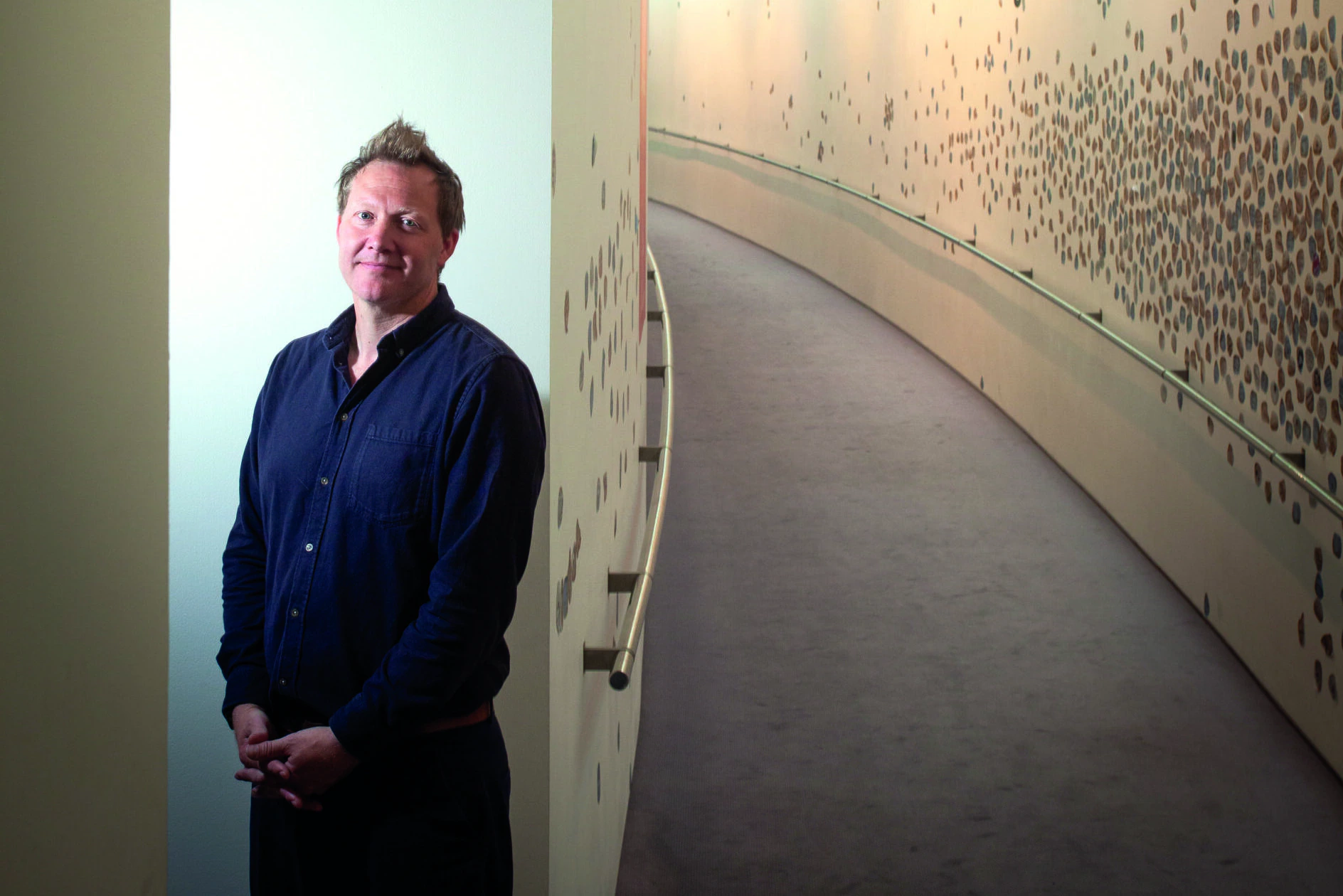
“The main reason I wanted to come here was because the centre was the coolest place in the world when it was created in the 1970s – it genuinely had a mission to break the rules,” says Jago Cooper, who became director of the Sainsbury Centre at the University of East Anglia, Norwich, in 2021.
“It probably has one of the only boards where you could go to them and say, ‘Hey, you know, if you’re being true to the original mission, you should really be quite radical’.”
Opened in 1978 to house the world-class art collection of Robert and Lisa Sainsbury, of the eponymous retail giant, the centre’s prefabricated building was designed by a then little-known modernist architect, Norman Foster, who intended it to be a “regular structure embracing all functions within a single, flexible enclosure”.
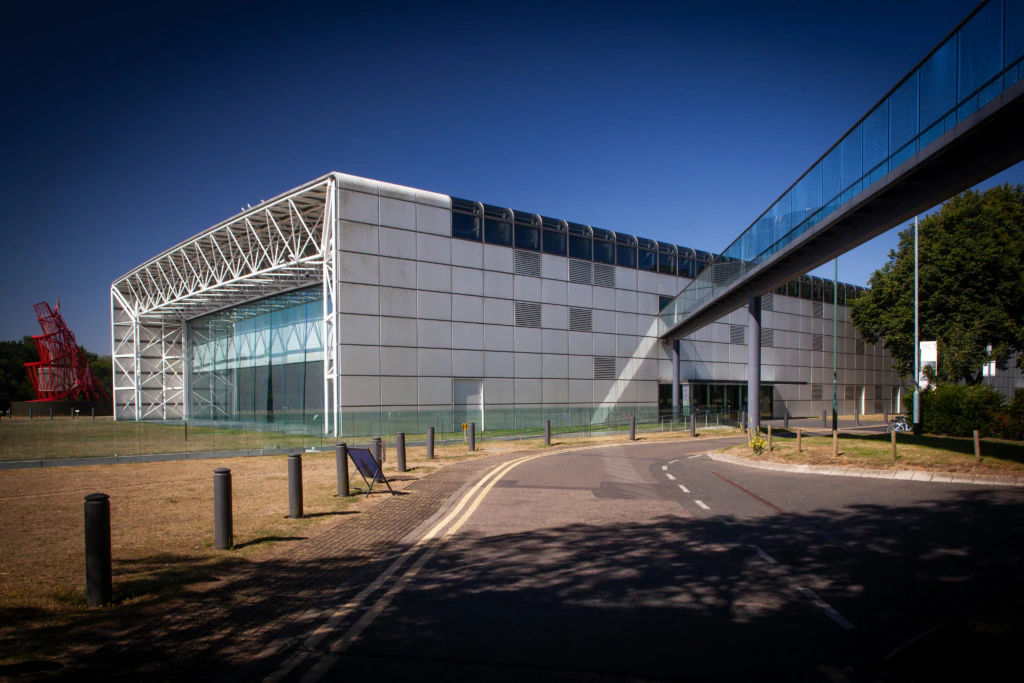
The universal nature of the space has enabled the museum, which sits on the university’s campus, to do things differently from the moment it opened, displaying art from across the world and different time periods without the rigid sense of hierarchy found in more traditional institutions.
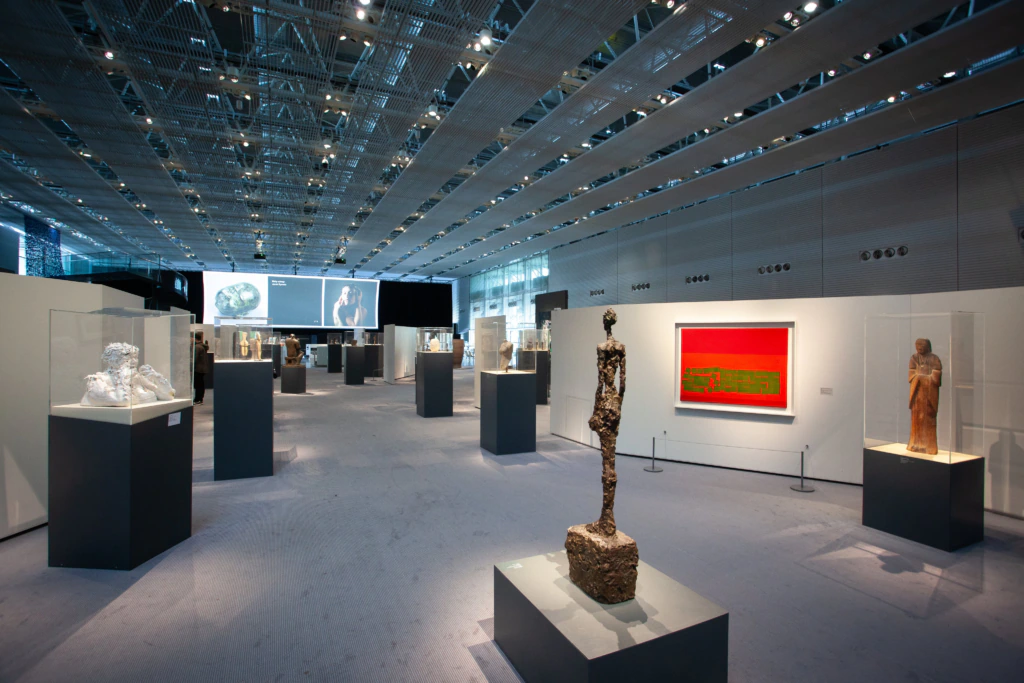
In 2023, Cooper caught the attention of the art world when he relaunched the centre as the first museum globally to recognise art as being alive. The Living Art ethos (see panel) is centred around the question: What would art be doing if it was set free from the glass case?
Advertisement
Living art
Launched at the Sainsbury Centre in 2023, the Living Art ethos holds that “great artists, makers and creators transfer their lifeforce and physically materialise it in their art”.
The Living Art handbook suggests different ways for visitors to relate to and interact with individual pieces in the collection.
Other innovations include SoundEscapes, in which 10 composers were invited to create a new musical piece capturing the essence of a work of art in the collection, which can be listened to via headphones next to each piece.
In May, the centre launched Day Release, a series of short films following well-known artworks as they leave the gallery and travel to meaningful locations from their past. The first film depicts Francis Bacon’s Study for Portrait of P.L. no.2 visiting a gay pub in London once frequented by the artist.
The film project aims to imagine how paintings might react to a “world that has completely transformed since they were born”.
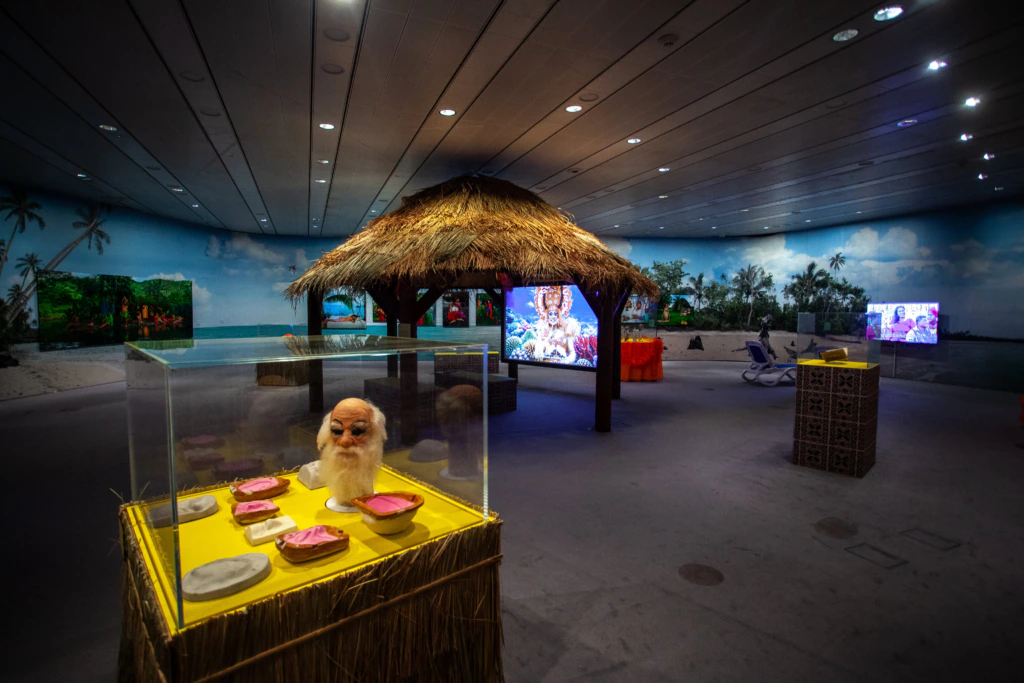
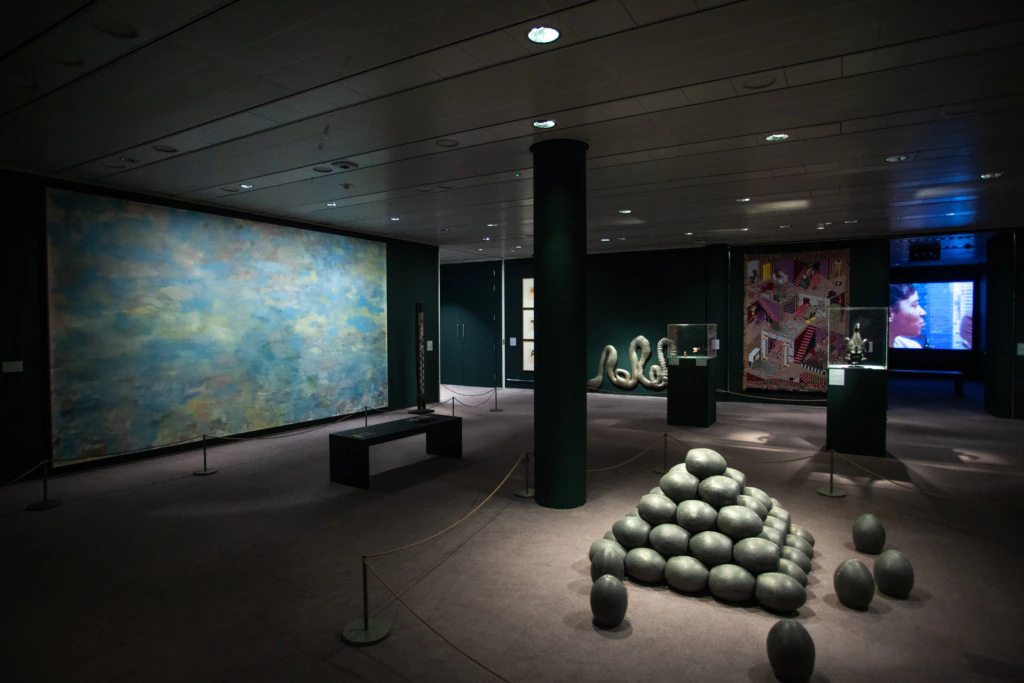
Every six months, the centre runs a series of investigative exhibitions based around a single question. Its current season asks “Can the seas survive us?”, while its autumn programme will explore the question “Can we stop killing each other?”.
Visitors are invited to interact with pieces of art as if they were living entities, forging a deeper relationship with the works by talking to and even touching them. Rather than producing discrete exhibitions, the centre now asks visitors to pay what they can to access the entire gallery.
Every few months the centre asks a single question, such as “why do we take drugs?”, or “can the seas survive us?”. It then explores possible answers via interventions and exhibitions dotted throughout the building and its gardens.
With a background in archaeology – and a successful side-hustle presenting documentaries on the subject for the BBC – Cooper may not have seemed like the obvious choice to run an international art museum. But his mother is an artist and he’s been asking big questions about the subject for a long time.
“I’ve never understood the distinction between what someone says is art and what someone says is archaeology,” he says. “It’s all the materialisation of human culture. It’s just that there are these academic worlds that have been created that parcel up different bits of cultural communication and put them in separate places.
“Increasingly, people realise that the cultural dialogue across time and space is much less rigid or classified or hierarchical than thought before, and those hierarchies have been broken down.”
International perspective
These ideas began to solidify when Cooper was in his twenties, working as an academic on museum development projects in South America, Sri Lanka and the Caribbean in the 1990s (at one point under the guidance of Nick Merriman, the former CEO of English Heritage, who was then at University College London).
Advertisement
“I found there was a big distinction between how British museums understood materialised human culture and how it was done in other parts of the world. There are different systems of knowledge, different ways of doing things. And you get an opportunity to say: ‘Maybe this whole thing shouldn’t work the way it does; maybe you could do something completely different’.”
An epiphany came when he was in Cuba working on a government project to develop new museums in the country’s post-industrial north. Coming back from a fishing trip, a friend asked Cooper an illuminating question about his work: “Why is this relevant to me – what can you tell me that is actually going to make my life better?”
Cooper says: “I began thinking: what is the point in doing academia or museums if people don’t get what they want out of those experiences? It made me realise you need a problem-orientated approach, in which you’re answering the questions people want an answer to.
“The old question used to be: How does the world work? But that’s not the question people want now. What they want is ‘How are we going to deal with climate change? How are we going to stop people killing each other? What is truth? How can I find love in my life?’ If everything starts with a question that people want answered, then it changes the way you do things. It makes what you’re doing useful in society.”
“If everything starts with a question that people want answered, then it changes the way you do things”
While these thoughts were percolating, Cooper spent 10 years as curator of the Americas at the British Museum – a place not exactly renowned for its lack of hierarchy or embrace of fast-paced change. He emphasises that everyone working there was lovely. But did he find it difficult to do the things he wanted?
Advertisement
“When I started there, I asked a friend of mine: ‘What’s the secret to getting the stuff you want done here?’ And he’s like: ‘Here’s the secret – the only way to get stuff done here is to outlive people.’ It was hilarious.”
Luckily, Cooper did find other ways. “What you do is you operate outside of the structures,” he says. “So anything you do externally, you can just do. It’s very easy to do interesting international collaborations and set up projects and build museums in other countries and other fun stuff,” he says. “But the frustration is that you’re not changing the structure of the museum. The old bit – the big bit – does not actually change.”
It was around this time that Cooper started questioning things on a deeper level. “I got very interested in the idea of: Can the museum actually disrupt the very model of why it exists? Can you come up with a different model that liberates how you activate people’s relationships with materialisations of human culture in innovative ways to help explore the big questions? And that is why I got the job here when it came up.”
His radical vision may have won over the Sainsbury Centre’s board, but Cooper was planning a more gradual change when he started out as director four years ago.
“I thought I would take everyone on a slow journey, start going around the edges, gently putting little tea bags into people’s tea. But during the first four months I realised it had to be all or nothing – a fundamental change to the core governance structure of the entire institution.”
What came next sounds like a memorable day at the office. “I called all the staff in at 9.30 on a Monday morning, and out of the blue, with zero warning, gave them two hours on the concept of living art, and what we would change,” says Cooper.
“We’re going to change the model of the museum to one in which we don’t understand the collection as being property where the role of the museum is to preserve, protect and communicate it.
“Instead we’re going to understand our collections as living entities – they’re not humans, but they are non-human beings. They are manifestations of life-force, of culture, and therefore our job is to give them their best lives.
“And once you change that very foundation, everything changes. That was a big moment.”
What must the Sainsbury Centre staff have thought of it all? “I think all museum directors start with a vision,” says Cooper. “And everyone’s a bit ‘oh, that’s an interesting idea – let’s just let him get on with it and eventually it’ll go away’. But then I started to do a few things publicly, and there was no going back. And everyone was like ‘Oh my god, he’s actually serious’.”
Unleashing creativity
Cooper says it didn’t take the team – whom he can’t praise highly enough – long to embrace this new direction. “People were hugely empowered. Once they realised that this change meant that they were going to get unbelievable license to come up with creative, imaginative ways of getting people to explore interesting things through the collection, they started to love it.”
The two years since the museum’s relaunch have been transformative, says Cooper. In purely practical terms, it has grabbed people’s attention. Footfall is up 34%, with increasing first-time visitors, dwell time and secondary spend.
“We get a load of people who come to this museum who’d never normally come because they’re interested in the questions we’re asking,” he says. The work of the centre is attracting international acclaim – the New York Times has covered it, and the museum was one of just two UK institutions nominated for this year’s European Museum of the Year Award (the other, Manchester Museum, was named the eventual winner after this interview took place).
“We were the only people nominated who hadn’t had a big capital project – just pure museological practice and working on existing budgets.”
Cooper’s ambition and enthusiasm may be boundless, but it isn’t all plain sailing. Like every other civic institution, money is a perennial concern for the centre.
“We need a sea-change in the funding model for museums,” he says. “When you haven’t got enough money, everything else becomes harder – you don’t have the bandwidth. It feels like you’re fire-fighting, when what you want is good energy and dynamism and taking on the great challenges in the world with fervour, wit and humour.”
It doesn’t seem as if there is much that could slow Cooper down, however. And in the Sainsbury Centre, with its radical foundations and universal space, he’s finally found the perfect laboratory to test out his big ideas.
“You don’t have to wait for the committee to meet and the minutes to be published,” he says. “This is the size of institution where you can actually do things.”
Jago Cooper
Born in 1977, Cooper grew up in a small village outside Cirencester, in Gloucestershire. His passion for archaeology was ignited by his local museum, which encouraged young visitors to bring in archaeological finds – even if just a “mangy old sheep bone” – to be recorded on its analogue database.
Cooper’s archaeological interests include the pre-Columbian archaeology of the Americas and the historic effects of climate change in Caribbean island societies.
He has written and presented documentaries for Channel 4 and the BBC, including the Lost Kingdoms of South America and the Lost Kingdoms of Central America.
He joined the British Museum’s Department of Africa, Oceania and the Americas in 2012 and was appointed executive director of the Sainsbury Centre at the University of East Anglia in 2021. He is also professor of art and archaeology at the university.