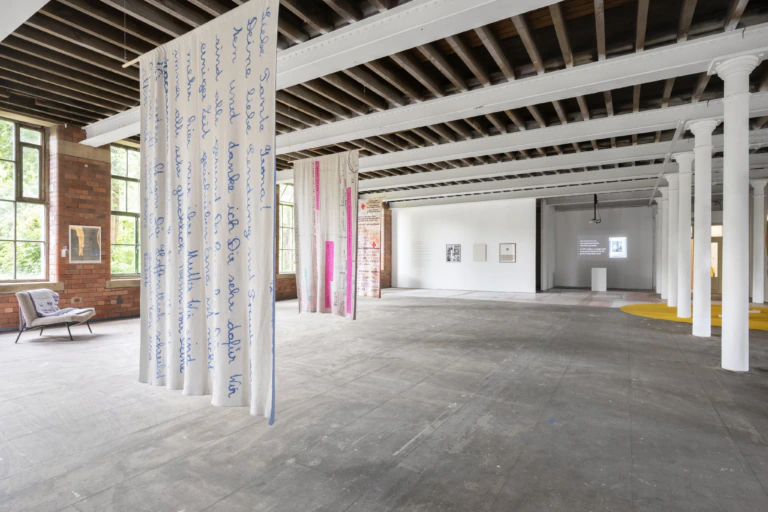
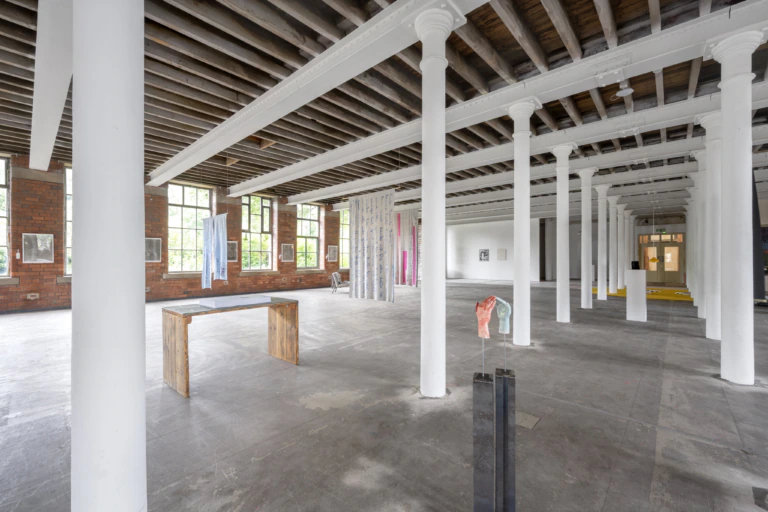
This week the Holocaust Centre North in Huddersfield opens Memorial Gestures, a new group exhibition featuring artist responses to the archive’s material. From 6-28 June at Sunny Bank Mills in West Yorkshire, the exhibition will showcase the work produced over the past three years of creative residencies at the museum, featuring 14 contemporary artists.
Museums Journal sat down with textile artist Laura Nathan, who took part in the Memorial Gestures programme, to hear more about her response to the archive and how her own experiences as a third-generation Holocaust survivor influenced her work.
What did you want to address in your work for Memorial Gestures?
I wanted the opportunity to work within an archive that would help me understand a lot of other families’ stories and experiences. I wanted to learn how other generations learnt about their history.
But I also wanted to learn more about the partition between India and Pakistan in 1947. It was something I hadn't really learnt about growing up, but I learnt that a lot of people who had come over after partition started to work in West Yorkshire alongside Holocaust survivors.
I wanted to understand different migrant and refugee experiences, and how it felt to come together in the same place.
How have you kept their stories at the heart of your practice?
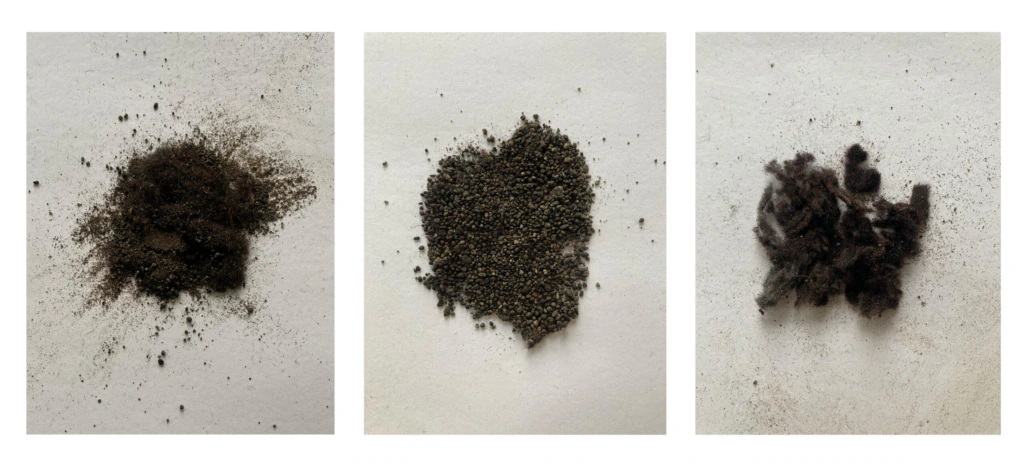
My work focused on listening to survivors but also second and third generation family members talking about their experiences, and how it felt navigating their life once they came to West Yorkshire, specifically how people processed trauma.
Advertisement
I noticed it with my grandparents; we knew they were often triggered by certain things. My grandma would get quite upset if we were fighting, she’d say, “You don’t know how lucky you are to have a family when mine all perished.” There were all these things that used to come out, but it was never a sit down discussion.
I wanted to understand how other people learnt about their family history. I noticed a lot of survivors saying “We kept silent. We just kept working.” There was a need to keep busy, to not sit still, as a way to keep feeling at bay. Because once you stop and think about the things that have happened, it’s quite overwhelming.
A lot of my work is about how hard it is to discuss traumatic experiences when you’ve moved to a new country and you’re trying to adapt to that new culture and environment. A lot of generational anxiety also came through because children and grandchildren recognised there was silence or an unknown ‘thing’ that wasn’t discussed. It felt quite reassuring to know that my feelings were very common.
What did you choose to focus on in your residency?
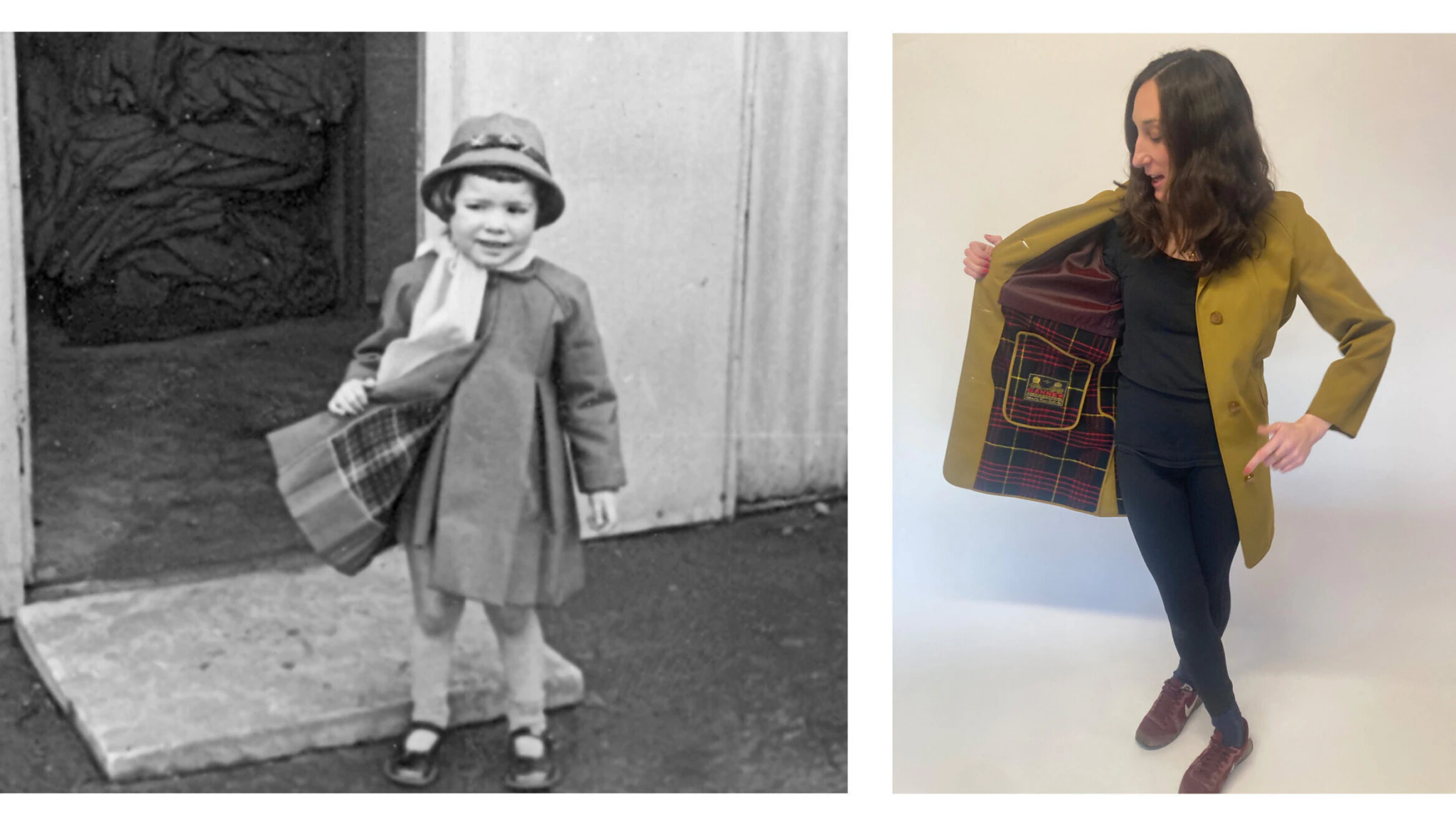
My work is based around the textile industry because in Huddersfield and the broader West Yorkshire area a lot of people came over to work within the textile industry. I focused on Kagan Textiles Ltd in particular as Lithuanian born Holocaust survivor Joseph Kagan established Kagan Textiles Ltd and invented Gannex fabric in 1951.
Advertisement
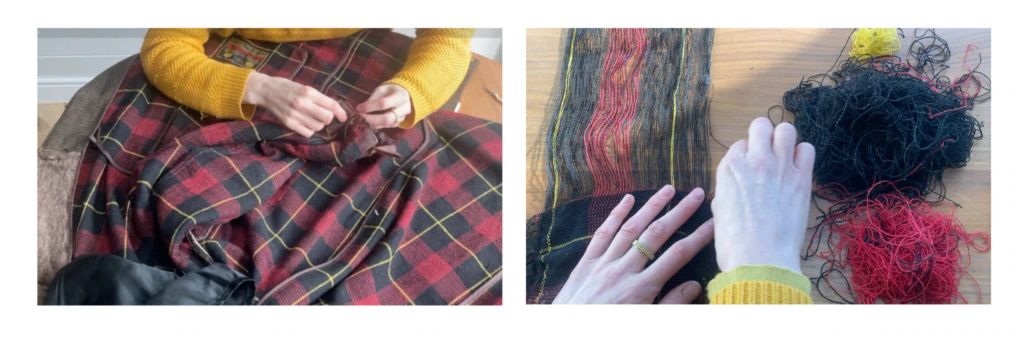
I found a really old Gannex coat created by Kagan textiles Ltd. I unpicked the whole coat while listening to the testimonies of survivors and their families who were connected through the textiles industry. It’s quite performance based – this obsessive picking and need to keep going deeper. To listen to people’s stories while reflecting on my own need to keep busy and keep feeling at bay, focussing on the anxieties I feel.
But once I’d unpicked it and was understanding more about people’s experiences, I re-wove a section of the threads. These threads were all damaged and broken, but it was really important to knot some of them together and teach myself how to re-weave them.
I created a rewoven piece of fabric that kept breaking and is really delicate. I felt like that was a commentary on how, when you’re migrating and you’ve been displaced, you start to rebuild your life, acknowledging the scars and knots and damage, but keep going.
I’ve been able to work directly with Heritage Quay’s The White Line - Here, There, Then, Now oral history project, and Holocaust Centre North to include audio of people from their archives, using people’s stories to create a soundscape, but also using the sounds of the mills and hand looms. But again, using different generational responses, so you can hear from survivors children and grandchildren reflecting on this need to keep busy.
Hopefully, people will walk through the exhibition and experience the process I’ve had throughout the residency of unpicking, learning, processing and rebuilding.
What have you learnt about yourself and your own connection to the Holocaust through this process of creation?
I’ve learnt to understand why my grandparents didn’t sit down and tell me about the horrific things they witnessed. I used to struggle with that. I understand more about the anxiety and trauma – more about myself and my need to keep busy.
Advertisement
But I’ve also learnt technical skills. It’s really helped me as an artist to understand how you adopt different disciplines to fit within a theme. I learnt how to use sound and work with different testimonies which I hadn’t done before. I hadn’t really weaved before either. It’s a real technical development as well as an increased self-awareness.
How do you think this time spent reflecting on this heritage will influence your future work?
I’ve been able to gain understanding and acceptance of my history. I think before I started this residency, I struggled with it a lot. I want to work more going forward in the contemporary – I’ve reflected on my past, but how does it impact me today? How do I relate to contemporary conflict, and what’s happening globally?
What’s the message you’d like visitors to take away with them?
I think it’s more about bringing it back to the individual experience. It humanises and helps people understand how difficult it can be when you come with such a traumatic history to then try and integrate into society. I think it’s really important today.
When we welcome refugees and people seeking sanctuary, and we have children coming into our schools and people coming into our communities, we don’t always acknowledge what they are bringing with them. Their trauma and experiences.
Hopefully, it will help people reflect upon what happened in history, but also how we welcome people today, how we are aware of people’s trauma, and how we can support and welcome people more.