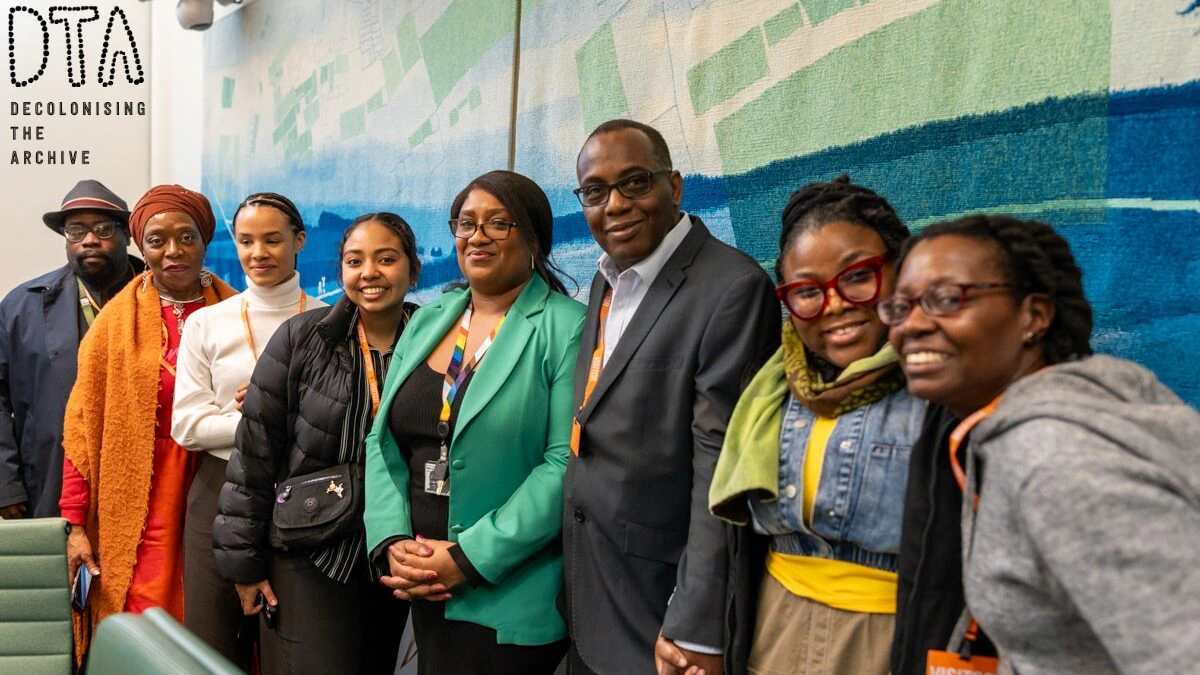
Decolonising the Archive is a Pan-African “living” archive based in the UK that facilitates heritage-based therapeutic interventions for people of African heritage that support collective healing and empowerment.
Its course, Correcting Our Collecting, trains people from the African heritage community in Britain to be community archivists and repository specialists, with a new module launching this year on working with trauma-informed archives/collections and behaviours.
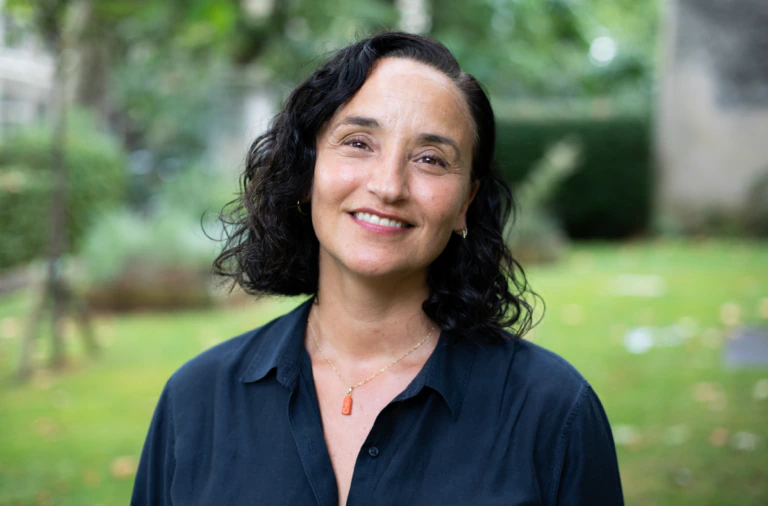
Museums Journal caught up with director Connie Bell to find out more about the organisation's work and how it is shaping a non-western model for archival practice.
Can you tell us more about Decolonising the Archive?
Connie Bell: Decolonising the Archive (DTA) was founded by archive specialist Dr Etienne Joseph and memory worker Connie Bell.
The concept came about from an intergenerational field research initiative we were working on with African heritage groups in Britain and the Caribbean, we realised quickly that there was an unaddressed issue with uprooting and contemporary ways of transferring knowledge when working within western and eurocentric learning models.
Advertisement
We identified that many of the groups we encountered had negative colonial experiences, which encouraged them to disengage with archives and collections even if derived from their cultural roots and historical origins.
Rather than complain we thought what can be done to address this and how can we build a bridge between these lost and severance epistemologies.
How would you describe the Pan-African Archive?
The Pan African Archive is a liberative tool and ecosystem, it is an ever-growing learning and discovery space and archive that celebrates the variety of our identity as a group of people. It is tethered to the origins of our African homeland but lives and expresses our lives in and outside of it and across the globe.
Because of its magnanimity and complicated history, we posit the theory that the Pan African Archive cannot sit in one place or institution; it must be free to live and breathe and have purpose. Its purpose is to provide visibility and futurity for African people and their knowledge systems. It also functions as a vestige for connection and communication.
What are the therapeutic benefits of this type of work?
The very nature of our work is poised as an opportunity for us to participate in self-healing, reflection and negotiation. This in many well being spaces may be considered as necessary for progress. As such our praxis incorporates the idea of progress, practicing progress and living progress as intrinsic to our good health.
Advertisement
What impact does engaging or contributing to the archive have on participants?
Archives, if acquired, handled and introduced correctly, many times offer a cathartic moment that transcends time and space. It's like entering a time machine to resolve an old issue.
Over the past 12 years, as Decolonising the Archive, we have seen both long term and short term impacts, but our rule of thumb is not to measure experience through a western lens. As such we appreciate that an impact may not show itself within the moment of the practice session. We rely on making the content rich so that the participants may have an opportunity to latch on to resonant aspects and carry away with them the tools to be able to reconnect.
What innovations are happening in the wider heritage sector that could help to facilitate your work?
Advanced technologies such as laser scanning and photogrammetry are being employed to create detailed 3D models of heritage sites and artefacts. For instance, CyArk utilizes these methods to digitally preserve significant cultural sites, including Angkor Wat and Pompeii, ensuring their longevity and accessibility for future generations.
Whilst this is exciting I think it is imperative that we monitor the ethical arrangements around these developments and definitely wed it to a decolonial scholarship or way of thinking, or else we will find it will evolve into a new version of colonial capturing of data.
Advertisement
What changes have you seen in the sector since Decolonising the Archive was set up?
Over the last 12 years we have seen an improvement in the adjustments with how museums negotiate with non-traditional museum users and a willingness to expand their ideas around what their audiences may look like and how to provide knowledge sharing and co-production exchanges. Nonetheless, there is still a lot of work to be done to address the displacement of archives and collections for many communities and how these interactions can be shaped.
What needs to change in established archive institutions to ensure that previously marginalised or erased voices are brought to the fore?
This is a bigger conversation than what this article can hold; as such I will address it with a question and statement. Who are the practicing experts on this topic, are any of them or enough of them from these underserved communities you speak of? Museums for too long have practiced tokenism. The shelf-life of tokenism is short lived, therefore if real long term changes are to be made then this short-lived practice must first be abolished.
Where do you think the heritage sector needs to go from here when it comes to decolonisation?
The heritage sector represents the greater school of thought that nourishes it. As such it is almost a foregone conclusion on the fruits it will bear. It is for this reason that Decolonising the Archive has built our Correcting Our Collecting Course and our Museum Restitution Course, to offer an option or alternative for those who really want to see positive changes, solidarity and knowledge sharing.
What do you think are the key issues facing archives and archivists over the next few years?
LOL you mean apart from exhaustion... Well I would say relevance. I gave a speech at the Kensington Archive conference a few months ago, addressing this. If an industry loses its relevance then it dies. It will die not because of lack of government funding but more so because it no longer serves the imagination of the society in which it claims to represent.
What does Decolonising the Archive have coming up next?
We have an exciting new bilateral program being developed from our present archive and community program that looks on the abolitionist and liberator Olive Morris, who died in 1979. This will be shared at our annual Olive Morris Awards Luncheon in October 2025. Our resources page offers a taster of this active research led by our graduates of the Correcting Our Collecting Course.
An introduction taster to our new module on working with trauma-informed archives/collections and behaviours will be shared in a one-off workshop seminar, which is open to the public on 1 August 2025 in London. Email expression of interest to team@decolonisingthearchive.com.