The new V&A East Storehouse will open its doors to the public this weekend, offering visitors the chance to explore its previously stored collections now on display in a purpose-built facility situation in part of the former London 2012 Olympics media centre.
This is just the first stage of the V&A East’s opening. In September, the David Bowie Centre will open at the V&A East Centre and next spring the V&A East Museum will open on the Stratford waterfront.
Housing more than 250,000 objects, 350,000 library books and 1,000 archives, the V&A East Storehouse was designed by Diller Scofidio + Renfro architectural firm and includes an Order an Object service enabling visitors to privately book objects for research or pleasure.
The V&A worked with the V&A East Youth Collective and the local community to inform the project.
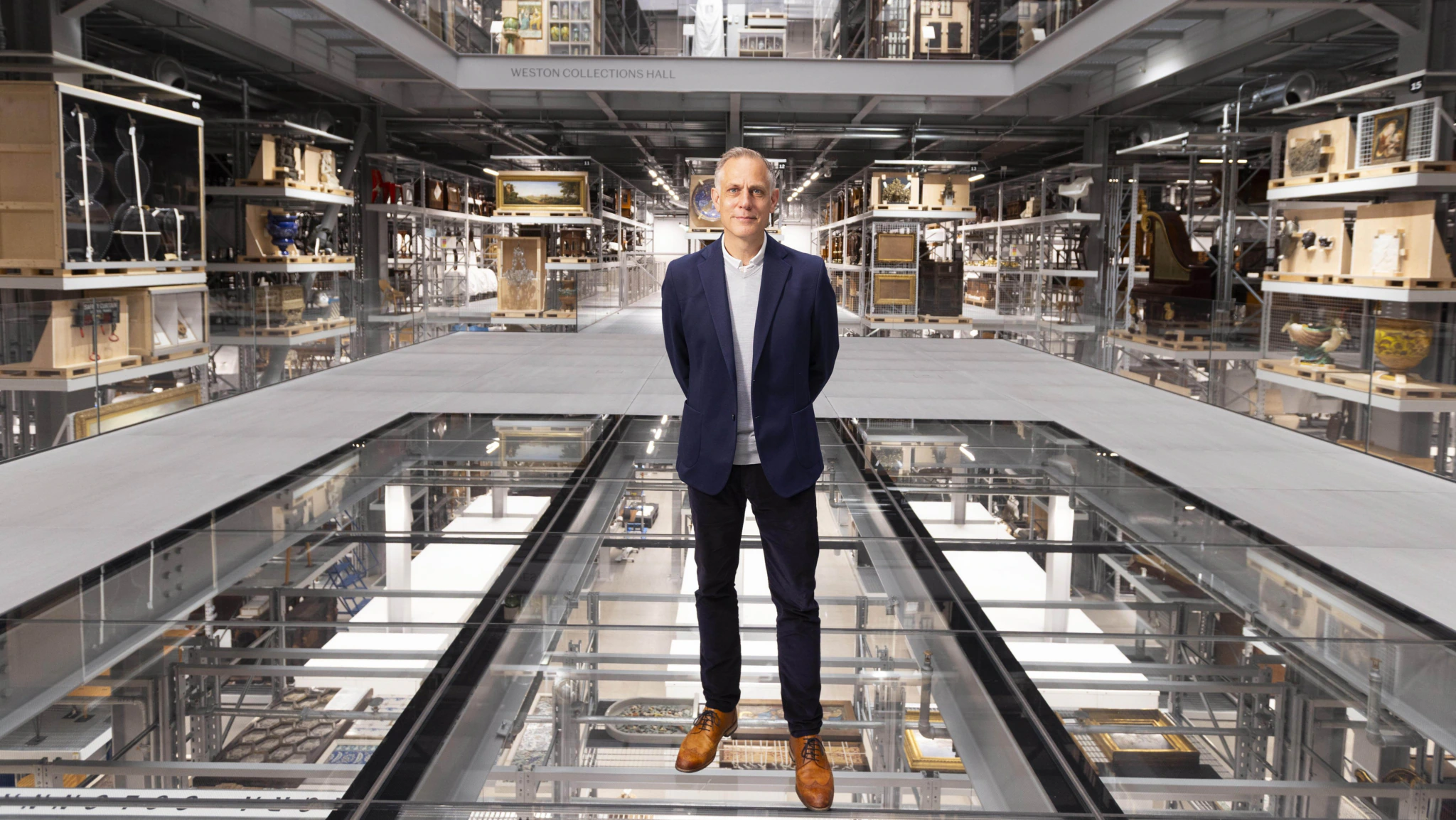
Museums Journal spoke to the V&A East Storehouse’s chief operating officer, Tim Reeve, to hear more about how collection centre will broaden the museum’s cultural reach.
What makes V&A East Storehouse so different?
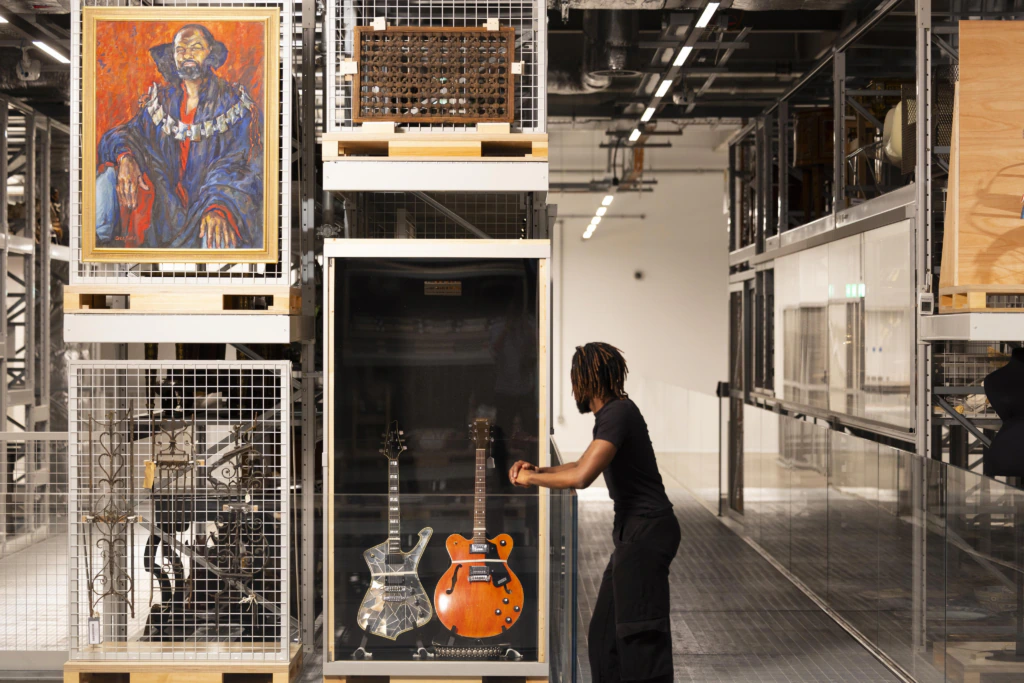
We’ve tried to move away from carefully moderated, visible storage to something that is a genuinely self-guided experience, based on the back-of-house world of the museum. The barriers are low – physically and metaphorically. It’s free to access any day of the year and you don’t need to book as you do for other storage facilities.
Advertisement
Everything is displayed as it’s stored and you have that visceral, immediate engagement between visitor and object. I don’t see that anywhere else in the world.
How will you balance the commitment to access and the conservation needs of the collections?
The most important role of the V&A is to safeguard our collections. One of the ways you do that over the long term is to bring the public closer to their national collections. The more you do that, their understanding of what goes into managing a collection grows, as well as their appreciation of it.
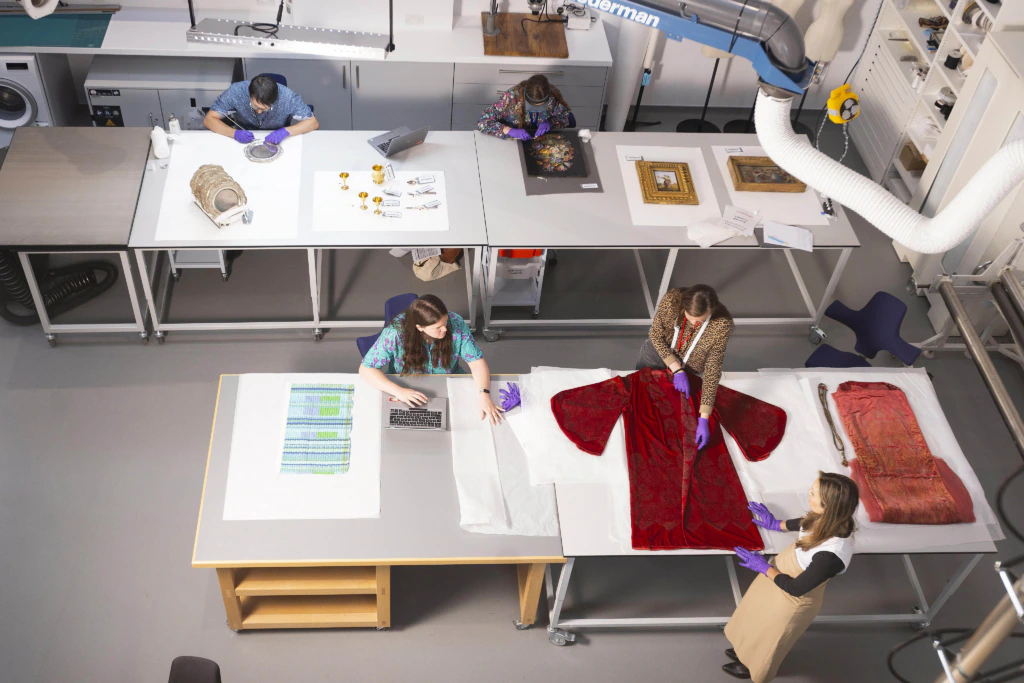
Over the long term, that safeguards collections because you have a much larger constituency who want that cultural heritage to be maintained. And we’ve reviewed our processes and protocols around object handling and fragility to make sure we’re able to provide that access without putting our collections at a greater risk.
What role has the local community placed in shaping the V&A East Storehouse?
We’ve had thousands of interactions with local groups, individuals and schools over the last seven or eight years, so we very much see it as a local resource first and foremost.
Advertisement
But it’s also something we want people to come and visit from the UK and overseas. It’s a deliberate move for us to be in East London because it’s an area that has been historically underserved by major national cultural institutions. It also has an audience that is creative, talented, young, very diverse, and one of the most deprived boroughs in the country.
It’s a great opportunity and challenge for us to bring almost our entire archive here and present it in a very different urban context – and a very different museum typology.
How do you hope the Storehouse will inspire visitors?
We want people who live in and around the four Olympic boroughs to be inspired on their creative journey in a way they maybe never expected from the V&A. That’s the most important objective for us: that it is used by local people and that they discover their creative purpose here at Storehouse.
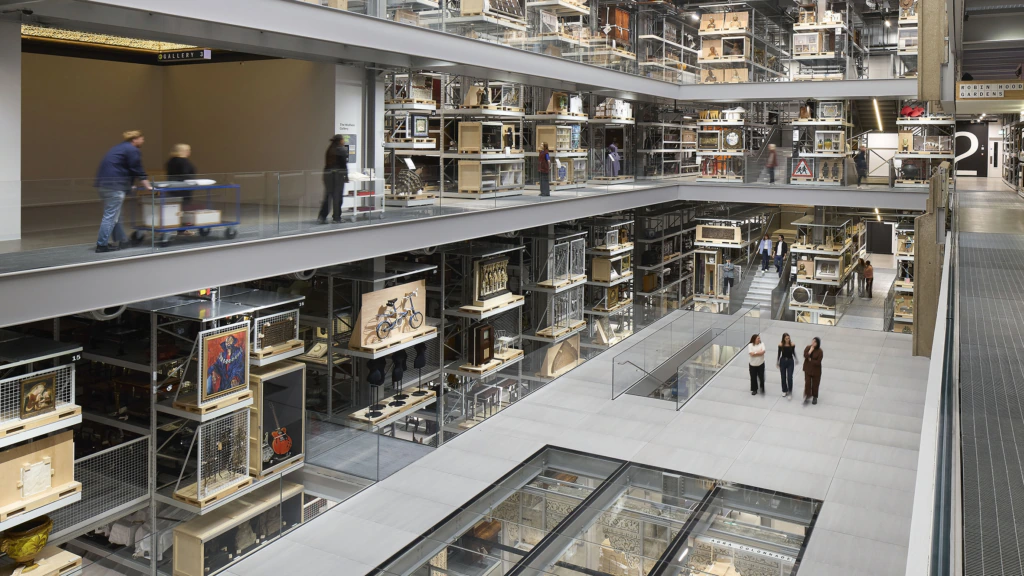
I also hope it will inspire other museum colleagues that it’s okay to go that bit further. We’ve been inspired by things we’ve seen around the UK at the Museum of Making in Derby and the Glasgow Museums Resource Centre’s urban context.
Advertisement
I hope Storehouse will inspire other museums to be a bit more radical and ambitious about how they use their reserve collections in archives.
These are world-class collections – it just happens that we don’t have enough space at South Kensington to display everything. We’re not alone in that; every museum has the same challenge. We’ve got two museum modes: one is permanent galleries and exhibitions, the other is storage. We’ve tried to invent a third one in the middle. I hope it will move away from that binary choice between display or storage.
What role will cultural events play at the Storehouse?
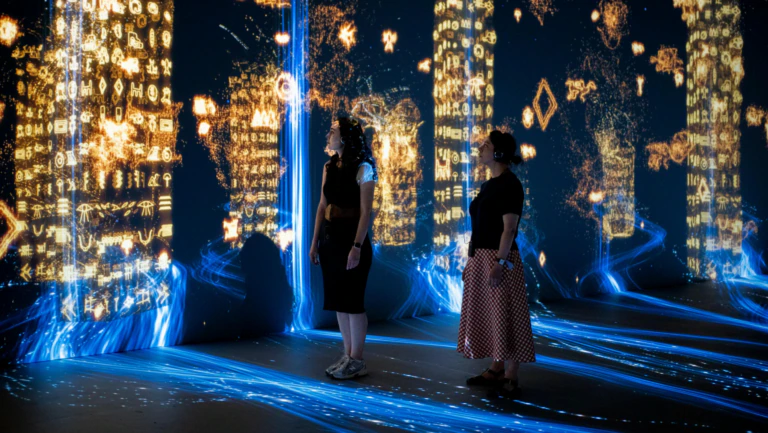
We want the Storehouse to be the magical, behind-the-scenes world of the museum and if you intervene with that too much, you break the spell. But the fact is, we’ve created some incredible spaces here that are going to be brilliant for performance, commissions and events.
We want people to feel like they can come from one month to the next and things will have changed. That’s partly because objects will have gone out on loan or gone into conservation, but the commissions programme is a way of keeping it lively and vibrant.
How do you see your relationship to the V&A’s South Kensington site evolving?
It’s a very strong relationship because, in its most simple components, this is the V&A storage facility that serves all of the V&A sites, as well as the huge loans programme around the UK and overseas.
So the practice that we do here, things that we experiment with here, will be for the benefit of all of the V&A sites and vice versa. It’s a two-way street.
But I think there is probably a bit more freedom for us to experiment here with new ways of engaging with the public, and to see what then works for Young V&A, V&A Dundee, and South Kensington too. There’s a sort of elastic band connecting our sites – sometimes we’ll draw away, and other times ping back together.