The People’s Forest is a two-year project of public engagement activities, installations and exhibitions in which I explore the history, politics and people of Epping Forest, Greater London.
My fascination with the ancient woodland began four years ago when I moved nearby. I was also interested in William Morris’s relationship with the forest when he became involved in the fight for its preservation and commoners’ rights of access.
Also of interest were the objections to the building of the M11 link road in the early 1990s, in which artists played a central role and where local trees became a focus for much of the protests. Indeed, a chestnut tree that was occupied by protestors was temporarily granted legal status as a dwelling when a letter was delivered to it by Royal Mail.
Through sound-recording workshops in the woodland, events held around historic trees and walking activities, I have had unexpected and serendipitous encounters with a range of people who work, walk and live in the forest.
To them, it ranges from being a place of escape from the city and a site of sensory encounters to a place with a fascinating history that has relevance to contemporary life.
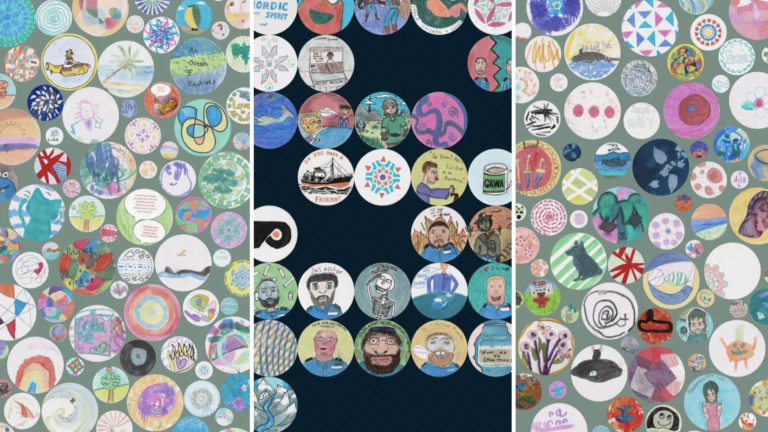
I have made a new artwork in response to my time in the woodland. The People’s Forest: The Fairlop Oak is a monolithic sculpture, on show at the Barbican in London. It comprises a wooden scaffold, which references recent road protests, and sections of a trunk and felled branches I found. On these sit miniature houses created by people who are local to the forest. I have also inscribed a timeline of the politics and protests related to Epping Forest on to a tree ring.
The project continues in March, when I will hold a solo exhibition, titled The People’s Forest, at the William Morris Gallery in nearby Walthamstow.
Gayle Chong Kwan is an artist. The People’s Forest: The Fairlop Oak is at the Barbican, London, until 8 March
My fascination with the ancient woodland began four years ago when I moved nearby. I was also interested in William Morris’s relationship with the forest when he became involved in the fight for its preservation and commoners’ rights of access.
Also of interest were the objections to the building of the M11 link road in the early 1990s, in which artists played a central role and where local trees became a focus for much of the protests. Indeed, a chestnut tree that was occupied by protestors was temporarily granted legal status as a dwelling when a letter was delivered to it by Royal Mail.
Through sound-recording workshops in the woodland, events held around historic trees and walking activities, I have had unexpected and serendipitous encounters with a range of people who work, walk and live in the forest.
To them, it ranges from being a place of escape from the city and a site of sensory encounters to a place with a fascinating history that has relevance to contemporary life.
I have made a new artwork in response to my time in the woodland. The People’s Forest: The Fairlop Oak is a monolithic sculpture, on show at the Barbican in London. It comprises a wooden scaffold, which references recent road protests, and sections of a trunk and felled branches I found. On these sit miniature houses created by people who are local to the forest. I have also inscribed a timeline of the politics and protests related to Epping Forest on to a tree ring.
The project continues in March, when I will hold a solo exhibition, titled The People’s Forest, at the William Morris Gallery in nearby Walthamstow.
Gayle Chong Kwan is an artist. The People’s Forest: The Fairlop Oak is at the Barbican, London, until 8 March