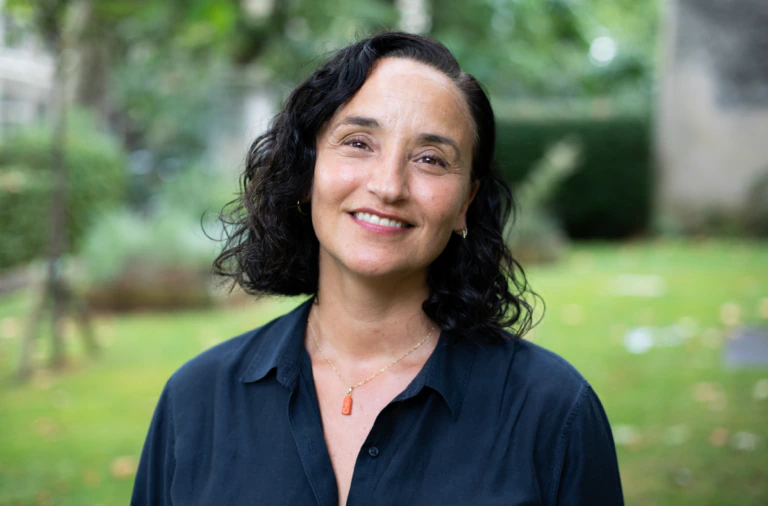
Ina Pruegel is the digital engagement specialist at the University of Cambridge Museums. Cambridge Codebreakers: The Last Secret is an immersive game with clues hidden across four museums in the city, the Fitzwilliam Museum, the Museum of Classical Archaeology, the Sedgwick Museum of Earth Sciences and the Museum of Archaeology and Anthropology. The game runs for two and a half hours from 10.30am on Saturdays throughout January and February.
What’s the game about?
It touches on many subjects that are popular and relevant today – computers, espionage, secrets and codes, data and encryption – which makes it ideal for audiences that we wouldn’t otherwise reach. It’s a team game and involves linguistic skills, mathematics and history. Players must solve clues and decipher messages associated with objects across the city, as well as meet roaming characters. It’s opening up our museums in a powerful new way.
What does the future hold for museums technology-wise?
There needs to be a shift in favour of the user experience. With funding cuts, we can’t afford to build, for example, a virtual reality experience only to find it doesn’t work or discover we weren’t sure what we wanted to do with it. QR barcodes were going to be the next big thing but they never took off. People still say to me, “We just need to develop an app and everything will be fine”, but they cost money and people don’t download them. Museums must focus on what people do and use.
What’s your day-to-day job like?
After 18 months, I’m beginning to find out how institutions across Cambridge operate; it varies according to how they are funded. Some have their own marketing and social media teams so I just point them in the right direction about which platforms or agencies to use, or advise them on whether they need to develop another app or if Livestream would be more useful as it’s cheaper. I’ve introduced a bi-monthly lunch to allow museums the opportunity to talk about new ideas and developments. With bigger projects such as Codebreakers, it’s about how our nine museums can collaborate more effectively with technology companies, artists and the university.
How did you end up doing what you do?
I have always been interested in linking the physical and the digital. It should be about audiences and using different technologies to inform and entertain them. It’s frustrating when people say, “I want a website” and you have to ask, “What’s the story you’re trying to tell?”.
What’s the game about?
It touches on many subjects that are popular and relevant today – computers, espionage, secrets and codes, data and encryption – which makes it ideal for audiences that we wouldn’t otherwise reach. It’s a team game and involves linguistic skills, mathematics and history. Players must solve clues and decipher messages associated with objects across the city, as well as meet roaming characters. It’s opening up our museums in a powerful new way.
What does the future hold for museums technology-wise?
There needs to be a shift in favour of the user experience. With funding cuts, we can’t afford to build, for example, a virtual reality experience only to find it doesn’t work or discover we weren’t sure what we wanted to do with it. QR barcodes were going to be the next big thing but they never took off. People still say to me, “We just need to develop an app and everything will be fine”, but they cost money and people don’t download them. Museums must focus on what people do and use.
What’s your day-to-day job like?
After 18 months, I’m beginning to find out how institutions across Cambridge operate; it varies according to how they are funded. Some have their own marketing and social media teams so I just point them in the right direction about which platforms or agencies to use, or advise them on whether they need to develop another app or if Livestream would be more useful as it’s cheaper. I’ve introduced a bi-monthly lunch to allow museums the opportunity to talk about new ideas and developments. With bigger projects such as Codebreakers, it’s about how our nine museums can collaborate more effectively with technology companies, artists and the university.
How did you end up doing what you do?
I have always been interested in linking the physical and the digital. It should be about audiences and using different technologies to inform and entertain them. It’s frustrating when people say, “I want a website” and you have to ask, “What’s the story you’re trying to tell?”.