In 2015, a grant of £39,000 was given to the Association for Suffolk Museums, together with £5,000 from Suffolk County Council, for a project to involve small groups of people experiencing mental ill-health to make art inspired by museum collections in Suffolk, with the support of an artist.
Titled Creative Heritage in Mind, the project is a collaboration across health, arts and funding bodies.
The courses run are designed to help participants reconnect with their local community and heritage after a period of mental ill health – the whole project aims to encourage participants to develop confidence, independence and resilience.
Museums Journal caught up with Lyn Gash, the museum development manager at Suffolk County Council, who manages the project.
Can you say a bit about Creative Heritage in Mind? Is it just Suffolk based?
Over the past year, Creative Heritage in Mind delivered 12 courses across four Suffolk museums tailored to people living in the community who are managing mental health problems. Although each course focused on different collections, they all explored how different people in the past positioned themselves in society and how they were perceived by others.
The courses were designed to help participants explore their creativity and develop their confidence and resilience while reconnecting with their local community and heritage after a period of mental ill-health.
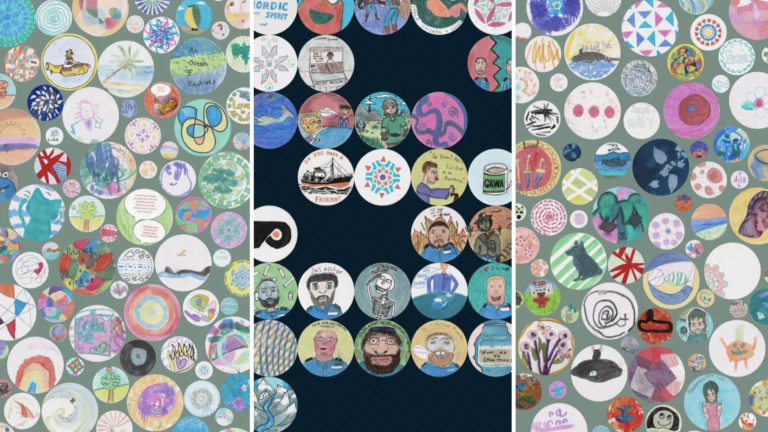
The programme worked with over 60 people. It produced 77 finished pieces of amazing artwork, mounted two public exhibitions, recorded it all in three books and won two local awards. The project has inspired a demand for future activities and forged a valued model of collaborative working with participant involvement at its heart.
What has this project in Suffolk entailed?
What was particularly special about the programme was the partnership work that underpinned it. Norfolk & Suffolk NHS Foundation Trust, LockArts mental health arts charity, the Association for Suffolk Museums, and four local museums – Gainsborough’s House in Sudbury, Ipswich Museum, Moyse’s Hall Museum in Bury St Edmunds and the Museum of East Anglian Life in Stowmarket.
Largely funded by the Heritage Lottery Fund, the programme has relied on each partner’s expertise and resources, pooled together to make the project so successful. Participants have increasingly shaped the way the work has been done and clearly value the experience.
One participant said: "From a personal point of view, I have gained confidence, learned new skills and this has contributed enormously to the point where I am quite stable. To put it simply, the skills I have gained are applicable to every day issues."
The courses were evaluated in a number of ways including the Warwick Edinburgh Mental Wellbeing Scale (WEMWBS) to track changes in participants’ well-being and participants’ journals to support reflective practice.
In-kind support from experienced staff in the Norfolk & Suffolk NHS Foundation Trust ensured the governance and rigour of evaluation. The NHS statistician who analysed the WEMWBS data returned reported: “A statistically significant improvement in mental wellbeing with a large effect size.”
What is the long term impact and way forward for this work?
The strong message from the evaluation was that participants valued the courses and felt they should continue for the benefit of others. The courses also helped museum staff see their collections in new ways as well as build up professional confidence in working with some very vulnerable people.
The project’s NHS partner wants the work to expand and be more integrated in the offer for potential recovery paths of its clients. The impact for individuals involved in the project has exceeded most people’s expectations.
The way forward for the project work however is not clear. Work like this is not cheap and most potential participants have very limited financial resources, even with personal payments for care. The health sector (NHS and public health) and museums have their own financial challenges and it is not clear who could or “should” actually pay.
In the short term, the Association for Suffolk Museums will be building on the work, if and when it attracts further grant funding, and all partners have pooled existing resources for a smaller programme, which will run until June 2017. The momentum is such that everyone is determined to continue the work.
Titled Creative Heritage in Mind, the project is a collaboration across health, arts and funding bodies.
The courses run are designed to help participants reconnect with their local community and heritage after a period of mental ill health – the whole project aims to encourage participants to develop confidence, independence and resilience.
Museums Journal caught up with Lyn Gash, the museum development manager at Suffolk County Council, who manages the project.
Can you say a bit about Creative Heritage in Mind? Is it just Suffolk based?
Over the past year, Creative Heritage in Mind delivered 12 courses across four Suffolk museums tailored to people living in the community who are managing mental health problems. Although each course focused on different collections, they all explored how different people in the past positioned themselves in society and how they were perceived by others.
The courses were designed to help participants explore their creativity and develop their confidence and resilience while reconnecting with their local community and heritage after a period of mental ill-health.
The programme worked with over 60 people. It produced 77 finished pieces of amazing artwork, mounted two public exhibitions, recorded it all in three books and won two local awards. The project has inspired a demand for future activities and forged a valued model of collaborative working with participant involvement at its heart.
What has this project in Suffolk entailed?
What was particularly special about the programme was the partnership work that underpinned it. Norfolk & Suffolk NHS Foundation Trust, LockArts mental health arts charity, the Association for Suffolk Museums, and four local museums – Gainsborough’s House in Sudbury, Ipswich Museum, Moyse’s Hall Museum in Bury St Edmunds and the Museum of East Anglian Life in Stowmarket.
Largely funded by the Heritage Lottery Fund, the programme has relied on each partner’s expertise and resources, pooled together to make the project so successful. Participants have increasingly shaped the way the work has been done and clearly value the experience.
One participant said: "From a personal point of view, I have gained confidence, learned new skills and this has contributed enormously to the point where I am quite stable. To put it simply, the skills I have gained are applicable to every day issues."
The courses were evaluated in a number of ways including the Warwick Edinburgh Mental Wellbeing Scale (WEMWBS) to track changes in participants’ well-being and participants’ journals to support reflective practice.
In-kind support from experienced staff in the Norfolk & Suffolk NHS Foundation Trust ensured the governance and rigour of evaluation. The NHS statistician who analysed the WEMWBS data returned reported: “A statistically significant improvement in mental wellbeing with a large effect size.”
What is the long term impact and way forward for this work?
The strong message from the evaluation was that participants valued the courses and felt they should continue for the benefit of others. The courses also helped museum staff see their collections in new ways as well as build up professional confidence in working with some very vulnerable people.
The project’s NHS partner wants the work to expand and be more integrated in the offer for potential recovery paths of its clients. The impact for individuals involved in the project has exceeded most people’s expectations.
The way forward for the project work however is not clear. Work like this is not cheap and most potential participants have very limited financial resources, even with personal payments for care. The health sector (NHS and public health) and museums have their own financial challenges and it is not clear who could or “should” actually pay.
In the short term, the Association for Suffolk Museums will be building on the work, if and when it attracts further grant funding, and all partners have pooled existing resources for a smaller programme, which will run until June 2017. The momentum is such that everyone is determined to continue the work.